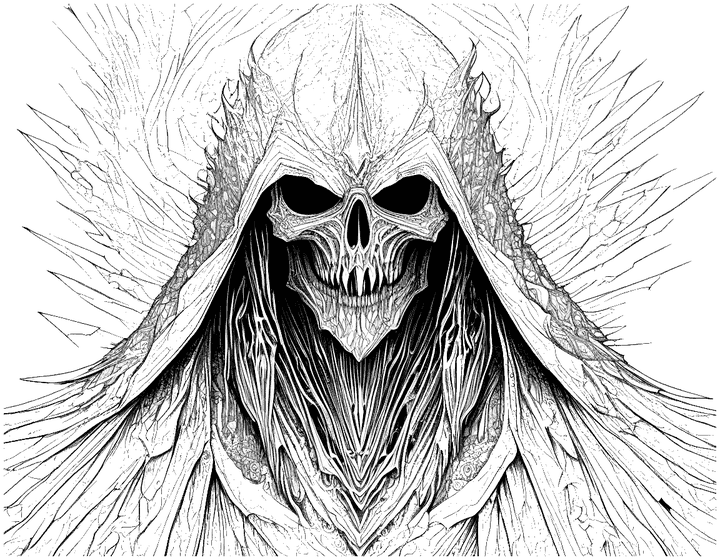
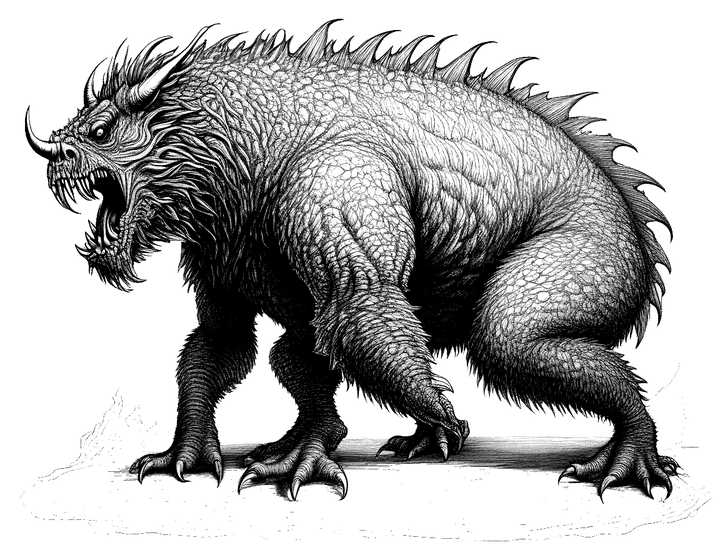
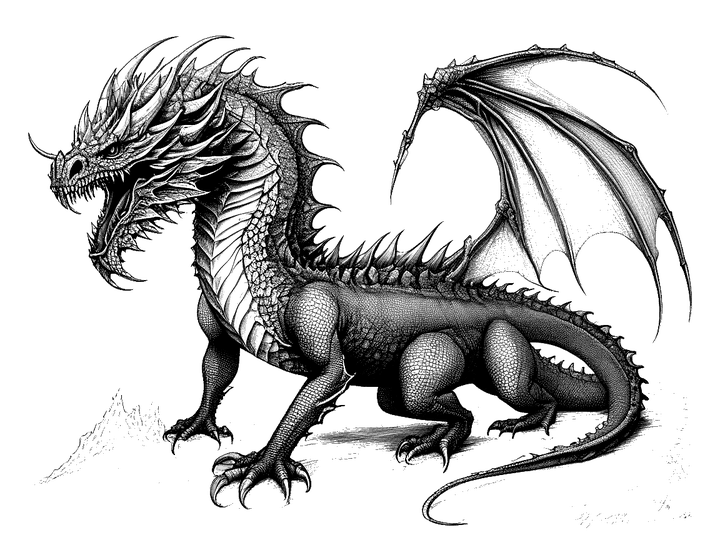
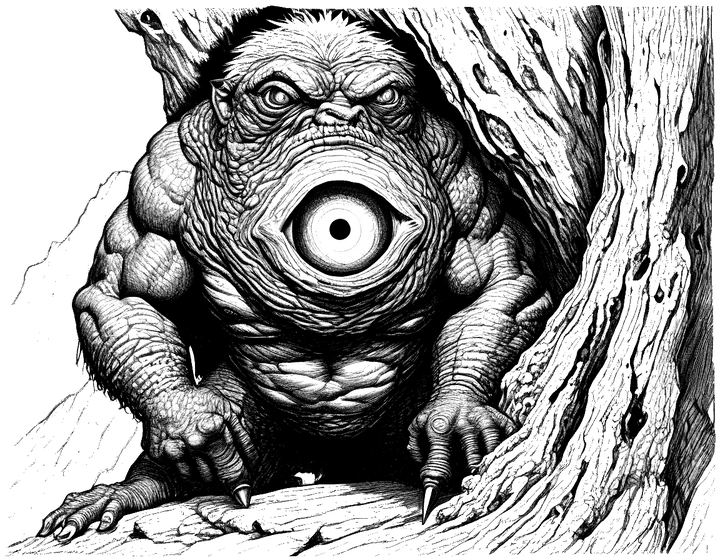
Beasts, monsters, enemies and the dread, drawn from life by people who mostly did not survive the sitting. Every entry gives the creature's tier, SKILL and STAMINA, and any special rule (see monster tiers).
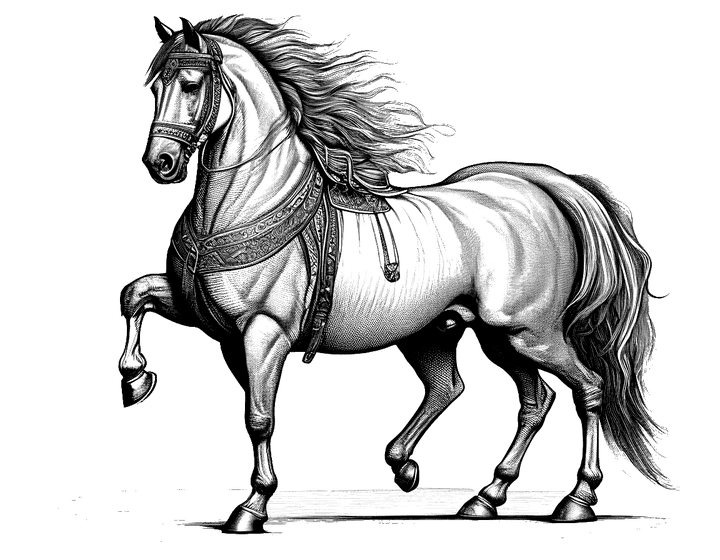
Small, shaggy and tireless, bred to carry an archer fifty miles a day on grass alone. A Vengrian rider will forgive you for insulting his mother before he forgives you for insulting his horse.
Riding horse 12 cr, warhorse 80 cr. A steppe horse adds +1 to escape rolls on open ground.
Life & lore
Seasons
Mares foal on the open grass in Mieles and Hofjor, and the herds are driven to the high summer pastures by Rocadones. At the first full Lamp of Reaping each Hajhian clan holds the Counting, when every foal is shown to the eldest rider and named aloud under the sky. At the Sitting of Snow on 15 Longnight the horse-ancestor stories run for three nights.
Living with it
Breakfast is mare's-milk curd and millet, eaten standing beside the horse. A rider sleeps with the halter-rope round his wrist, a child sits a pony before it can walk, and dried dung is the only fuel on the cold desert. The camp smells of horse, smoke and sour milk, and nobody notices.
Charms & taboos
A Hajhian bride rides to the groom's tents on her father's best mare, and the mare goes home again as the pledge that she will be well treated. A dead rider is buried with his bridle while his horse's skull is set on a pole over the grave. Never step over a halter, and never swear an oath under a roof.
Folklore
Every Vengrian child learns Gumusz csodor zhosz kósz, ‘a man without a horse is a stone’, and its harder twin, Tólócs ígyer muka csodor, ‘a broken oath is a dead horse’. Herders say a horse that whinnies on a Lampless night smells a thief, and that a white foal born in Rostovund will outlive its rider.
History
The Year of Two Winters in 817 killed about a third of the Hajhian herds where they stood. Clans that had laughed at Igyoszavas ponies paid steppe groats for them by the hundred, and the cross-bred ‘winter greys’ that came of it now carry half the Queen's lancers.
Notable
Hozh Bala keeps the Erenc royal bloodline at a camp she will not name, and wants it kept from Balsozhian buyers. Szovár Gyozómos is a Balsozhian remount officer who pays in horse-dinars and weighs nothing. Fenc Zolt, once of the Montaso Sharks, now trains horses for anyone who will forget where he got them.
This year
Horses in Hajhia cost double this summer. The Queen's riders have taken every sound remount between Erencszasz and the Tiszaujfa hills, and refugee families in the Tent Sea are selling their last mares to Orcosian dealers for bread at Dearth prices.
The war
Balsozhian requisition parties work northern Hajhia village by village, and clans drive their herds south into Igyoszavas at night to save them. The Montaso Sharks steal from both armies' horse lines and sell the animals back to the other side. A clan that loses its horses loses its vote at the fire.
Bounty & law
A riding horse costs 12 crowns, or 150 steppe groats, and a warhorse 80 crowns; in Hajhia this year double both. Breeders refuse the debased horse-dinar or weigh it first. Horse-thieves are dragged behind the horse they stole, and no horse may leave a clan without a knife-notch cut in its ear by the clan's eldest.
Wounds & cures
Kicks, falls and broken collarbones are the rider's lot, set by a bone-setter for 6 d. Saddle-galls on horse and man are washed in fermented mare's milk and rubbed with horse-fat. The worst injured are sent to the Satorbapios Springs, where riders and woolly Rhunari are supposed to keep to separate pools.
Adventure seed. Hozh Bala will give a hero a steppe horse free if they drive forty royal mares through Montaso Shark country to Erencszasz before Szovár Gyozómos finds her camp.
Asrahan racing camel
Mount · Asraha, Al Tubar, Haruwayha
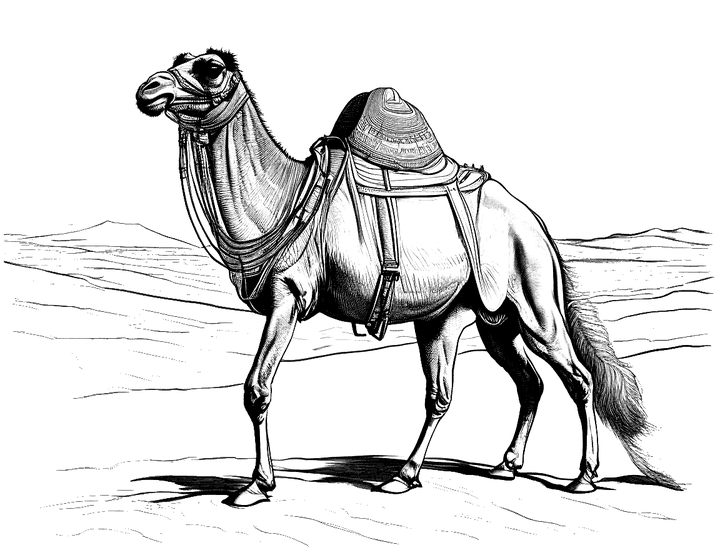
Long-legged and bad-tempered, it can go a week without water and outrun a horse in the deep sand. Horses that have never met camels panic at the smell.
Horses facing camels for the first time fight at −1. A camel needs water only every five days in the desert.
Life & lore
Seasons
Calves drop in Reaping and Uxbridmanch, the southern spring, and the herds are moved to the wells before the dry months. At Wellwater, the first rain of the water-year, every camel in Qaqah is watered before any person drinks. The Wellwater race runs from the Well of the Successors to the city gate, eleven miles, and the winner's dam is hung with silver bells.
Living with it
Caravan people drink camel milk warm from the animal, burn its dung, weave its hair into tent-cloth and wear kohl against glass-eye. A camel needs water only every five days in the desert, so drovers plan their routes from well to well. A camel's groan before dawn means it smells sand on the wind.
Charms & taboos
A Qashari bride-price is counted in camels, and a racing camel counts for ten. A guest's camel is watered before the guest is, because guest-right covers the beast. When a caravan master dies, his camel walks riderless at the head of his last caravan to the next well, and is then given to the poorest family there.
Folklore
Qashari say Duhoor dahar dun rathar, ‘a guest is water in the desert’, and add that a camel is the guest who never leaves. Tallian drovers end every tale owing the camel a song: Tofino mosi zinlo banosi, ‘the camel remembers every debt’. Many believe a camel will not cross a line drawn in salt.
History
In 788 the Successor's courier-camel Ghanaq the Grey carried word of a breached dam at Zalfamaq to Qaqah, four hundred miles, in eight days, and the water-engineers saved the lower town. The Grey's skull is kept in a niche above the Zalfamaq well-house, and racers touch it before every race.
Notable
Buhaafah al-Jafeezi trains racers at Zalfamaq and has won the Wellwater race three years running. Zatiq al-Nareethi buys remounts for the Caliphate's camel cavalry and pays in mithqal. Remelvo Quick-Camel, a Tallian who came south on a Chain ship, wants breeding stock to take home to the cold desert.
This year
The Asraha–Mashian War has drawn the best racing lines into the camel cavalry, and owners hide their animals in the Taif Palm Grove's villages. A rumour runs through Zalfamaq that the Glassborn have started buying camels, paying in polished glass.
The war
Caliphate cavalry and Company hired regiments both requisition camels, and caravans to Meedihar now travel with half their usual beasts. Company outriders have learned the hard way that horses facing camels for the first time fight badly, and now buy camels of their own.
Bounty & law
A plain baggage camel fetches 6 mithqal (about 8 crowns), and a proven racer 40 mithqal and up. Laming another's camel is paid for with a camel. Fouling the well a camel drinks from is a capital crime, the same as fouling it for people.
Wounds & cures
Camels bite, kick sideways and spit half-chewed cud, and a bite to the forearm often festers. Drovers pack it with camel-hair ash and honey, which helps a little; leopard-priests clean it with boiled water and wine, which helps more. Riders' backs ache from the gait, and Al Tubar's Nafhadawa springs are full of them.
Adventure seed. Buhaafah al-Jafeezi's champion has vanished the week before Wellwater, and the only tracks lead into the Glass Waste beside the print of a bronze foot.
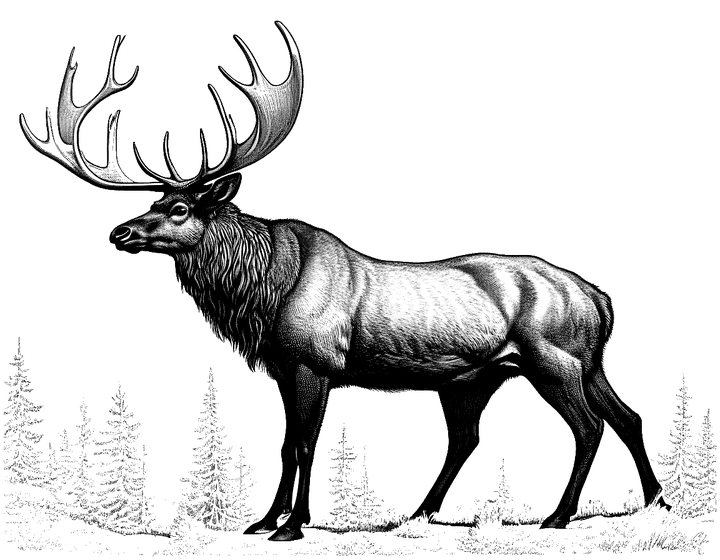
Tier IISKILL 7STAMINA 9Kovavikia, Raugaria. Killing one outside a holy hunt: +1 SHADOW in Raugaria.
Life & lore
Seasons
Bulls shed their antlers in Hofjor. On 10 Hofjor, the Shedding, the Fagervik faithful comb the forests for antlers and the year's holy hunts are drawn by lot. The rut fills the taiga with roaring in Reaping and Uxbridmanch, and the calves are born in Mieles.
Living with it
Taiga families fence their hay-ricks with birch poles twice a man's height, because an elk will eat a winter's fodder in a night. Shed antler makes knife-handles, buttons, combs and sledge-runners. In the rut, nobody walks the forest roads at dusk, and children are taught to put a tree between themselves and a bull.
Charms & taboos
A Kovavikian groom gives his bride an antler comb he found himself, and a bought one is a bad sign. The Raugarian holy hunter who kills an elk must eat the first slice of its heart raw at the kill and leave the head facing north. Under Fagervik law, killing one outside a holy hunt is a sin against Hofjor.
Folklore
Hunters say Hofjor mefø bjil fikisin, ‘Hofjor hears the free hunter’, but old Kovavikians add that he hears the elk as well. Children sing Old Crownless in the Snow, about a bull with no antlers who was the god in disguise. Many believe an elk that lies down on a road means a death in the nearest house.
History
The first Antler of the Antler Cathedral was raised in 402 as a single shrine. Ten thousand sheds later its vault is taller than any stone church, and rain falls through it by design. In 525, the Long Winter, starving Kovavikians ate the elk to near extinction, and the herds took a century to recover.
Notable
Hvisla Bramdottir is the Antler-warden of the Cathedral Close and buys every perfect shed. Pålk Hemdsson of Hofjor village poached elk for twenty years under Kjelheim law and now finds he is a sinner under Raugarian law. The bull called Old Crownless has not grown antlers in eleven years and is said to walk into Gogur's Sledge Gate in winter.
This year
This is the first summer Raugarian hunting law has been enforced in Kovavikia. Taiga families who have always taken an elk for winter are being fined, and three men in Findyr have been ‘turned out’ to be hunted for it.
The war
The Theocracy's longbow regiments march east through the taiga and live off the land, and Kovavikians notice that soldiers on campaign kill elk without any lot being drawn. Kjelheim priests feeding the insurrection make a great deal of this.
Bounty & law
A perfect shed antler fetches an ounce of hacksilver (1 crown) at the Cathedral Close, and a pair 3 crowns. An elk hide sells for 2 crowns in Gogur. Killing one outside a holy hunt carries the sin before Hofjor and a fine of 10 ounces of silver, or ‘turning out’ for a second offence.
Wounds & cures
Bulls in the rut gore and trample, and a forehoof can break a man's ribs through a fur coat. Taiga folk rub elk-fat and snow into winter-black, which is wrong, and the Norse know it. Antler shavings boiled in milk are given for weak bones, and barber-surgeons in Gogur sell them at 2 d a twist.
Adventure seed. This year's Shedding lot fell to a Kovavikian for the first time, and someone in the Wild Hunt has paid to make sure he never leaves the forest.
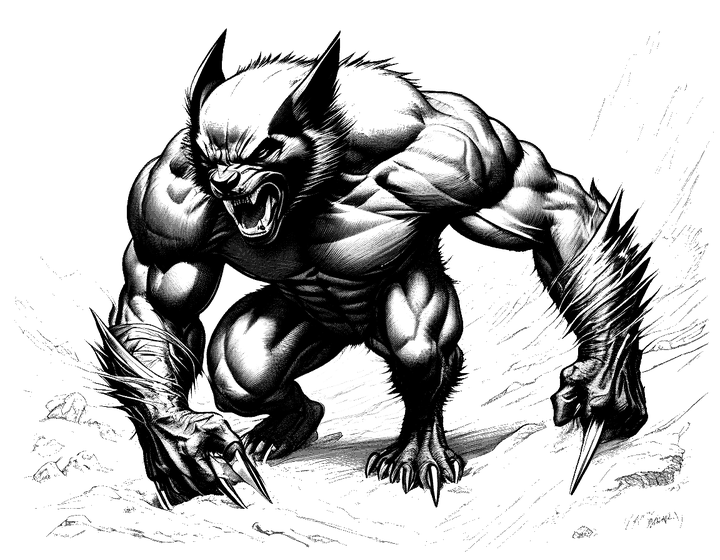
Kovavikian wolverine
Tier IISKILL 7STAMINA 6Kovavikian taiga, near Hofjor
A huge migration is under way this year. They hunt in packs of two to four and fear nothing, including bears and armed men.
Fight them as a group: each extra wolverine adds 1 to their Attack Strength.
Life & lore
Seasons
Wolverines den under snow in Rostovund and Thaw and are seen most in autumn, when they follow the elk. This year's migration, a hundred miles from Hofjor in Findyr province, started in Thaw, the same month as the comet. Kjelheim households hang a wolverine tail over the door on Wormwake Eve, 6 Rostovund, ‘so the Father knows we are not afraid’.
Living with it
Trappers lose half their catch to wolverines, which rob traplines, break into caches and spray what they cannot eat. Meat is hung in iron cages from the eaves. The sign that one is near is a musk smell, like a tanner's yard in summer, and a sledge-dog that will not leave the fire.
Charms & taboos
A boy who kills a wolverine single-handed may take it as his beast-name. A wolverine-fur ruff is sewn on a bride's hood, because frost does not stick to it. Taiga folk will not speak the animal's name in the forest; they call it ‘the glutton’ or ‘Grandmother Musk’.
Folklore
Kovavikians say Renin er flytbrøn trulo banutåld, ‘the wolf in a house is a dog’, and add that a wolverine in a house is still a wolverine. A nursery rhyme counts them: ‘One for the cache, two for the dog, three for the hunter, four for the bog.’ Many believe a wolverine can smell a lie.
History
In 790 a pack of four broke into the Gogur Fur Market's cold-store and stayed for three days, eating and spraying a winter's worth of pelts. The fur-merchants sued the town watch and lost, and since then the cold-store has had an iron door.
Notable
Hjalk Ternsson, called Hjalk Wolverine-Bane, has killed nine and charges 2 crowns to clear a trapline. Harn Skelmsson, a Gogur furrier, wants a hundred wolverine pelts before Isgard and does not care where they come from. The pack the trappers call the Four Sisters has followed the same trapline south from Findyr for two months.
This year
The migration is the largest anyone remembers, and nobody knows why. Kjelheim priests call it a sign of the Worm stirring; Raugarian priests call it Hofjor's gift; trappers in Findyr have stopped working alone.
The war
With the young men gone to the taiga archers or the insurrection, trap-lines go unwatched and the wolverines grow bold. The Raugarian garrison at Hofjor village has lost a supply sledge to a pack that fears nothing, including armed men.
Bounty & law
A wolverine pelt fetches 1 crown in Gogur, 3 if it is a winter coat, and a hood ruff sells for 5 shillings. The Jarl-Protector's court pays a bounty of 5 shillings a tail this summer. There is no law against killing one; the only rule is the Fagervik one, take only what you need.
Wounds & cures
Their bites crush bone and tear rather than cut, and they bite again and again. Trappers wash the wound in birch-spirit and bind it with spruce resin, which keeps the rot out better than most physicians manage. A sprayed man is scrubbed with wood-ash and left outside for a night.
Adventure seed. The Four Sisters have driven the trappers out of a Findyr valley where the migration began, and a Kjelheim priest says they are guarding something under the snow.
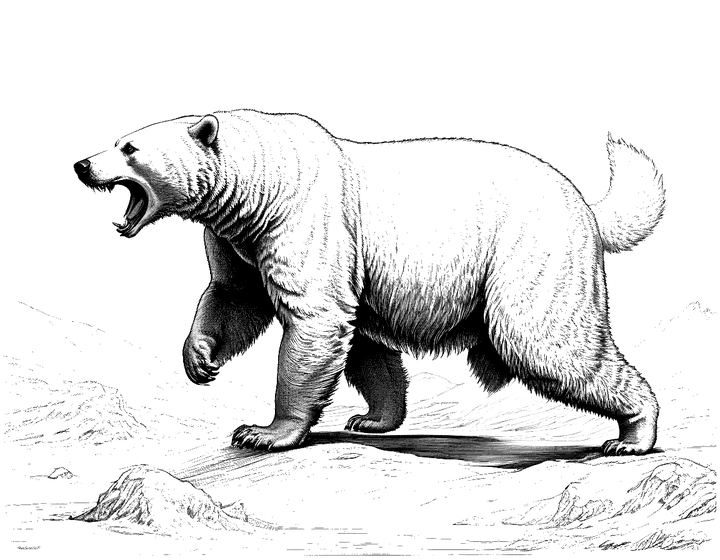
Northern-isle ice bear
Tier IISKILL 8STAMINA 10Blikstur, Vopeid and Hrafjor
Hunts seal-hunters as readily as seals. Its white pelt sells for 40 crowns in Gogur.
Life & lore
Seasons
Bears come ashore on Blikstur, Vopeid and Hrafjor when the sea-ice breaks in Thaw and Mieles, hungry after the winter's hunting. She-bears den in Isgard and come out with cubs in Thaw. Seal-hunters keep the Bear's Supper on 29 Isgard, the night before Ashnight, leaving a seal carcass on the ice so the bear eats that and not them.
Living with it
Seal-hunters on the isles live in turf huts with whalebone doors and keep dogs whose only job is to bark at bears. Nobody goes to the shore alone, nobody goes at night, and a hunter carries a spear long enough to hold a bear off at arm's length. Bear sign is a fresh seal-hole with a red stain beside it.
Charms & taboos
A hunter who kills a bear eats none of its liver and buries it on the ice where dogs cannot reach it. The bear's skull is turned to face the sea so its ghost goes home. A child born on the isles is shown to the sea at Thaw, so the bears know it belongs.
Folklore
Hunters say the bears are Skjoldis the Drift-Queen's hounds, sent ashore to count the people for her. An old saying runs, ‘The bear walks behind you on the ice, and in front of you in the story.’ Many believe a white bear cannot see a man who stands perfectly still, and many are dead.
History
In 779 the keeper of the Feltonese Lighthouse found a bear asleep in his lamp-room and kept the light going for three nights by climbing the outside wall. The broadsheets made him famous in Merland, and the lighthouse still has the claw marks on its door.
Notable
Sælk Fabemsson leads the seal-hunters of Vopeid and has killed four bears, and wants to be left alone. Brask Hølmsson, a Gogur fur-dealer, pays the best price for a white pelt and sails north every Rocadones to buy. The she-bear the hunters call Blue Ear has taken two seal-camps on Blikstur and is still loose.
This year
The ice broke late this year, and the bears came ashore starving in Mieles. A raider crew off Malocsermat was found on Hrafjor with nothing left but their boat and their boots.
The war
With the Gogur fur-buyers drawn south to the armies' supply trade, fewer hunters sail north, and the bears have the isles more to themselves. Pelt prices in Gogur are up, because Raugarian officers want white bear rugs for their tents.
Bounty & law
A white pelt sells for 40 crowns in Gogur, a cub's for 12. Bear fat is 6 d a pound as lamp-oil. Nobody holds the isles, so there is no law but the hunters' custom: whoever first draws blood owns the bear.
Wounds & cures
A bear's swipe takes off a scalp or a face, and few survive a bite to the body. Eating the liver brings a sickness of peeling skin, headache and fits, which hunters cure by not eating it. Claw wounds are packed with snow, then sewn with sinew.
Adventure seed. Brask Hølmsson will pay 100 crowns for Blue Ear's pelt, unmarked, but Sælk Fabemsson says she has a den near the Drift-Queen's bay, and only fools go there.
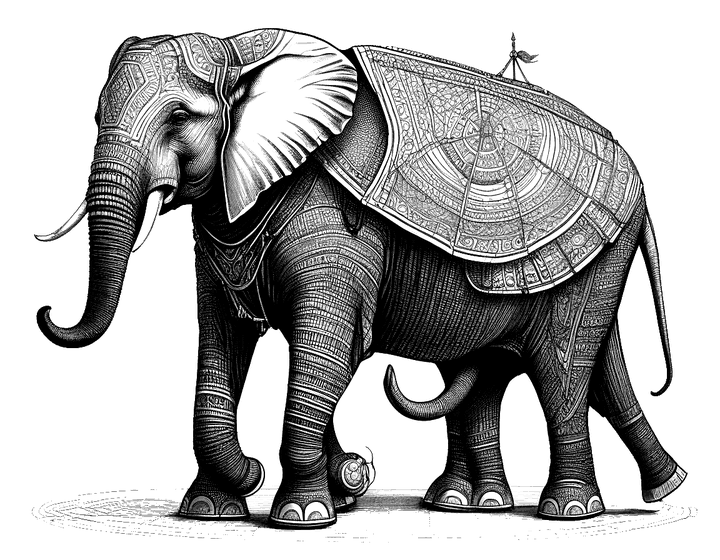
Magenta war-elephant
Tier IIISKILL 9STAMINA 18Kahpia, Sag, Jowshia
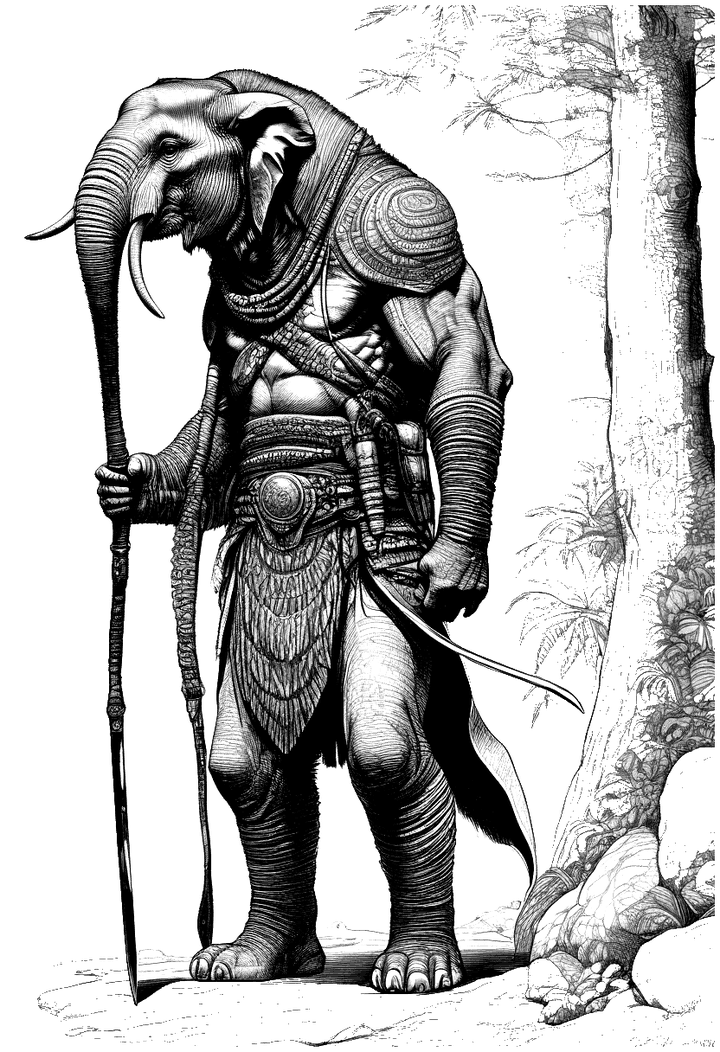
Dyed magenta for Tugan, armoured in plates, with a tower of archers on its back and blades on its tusks. Kahpia mounts its bought cannon on them.
Each round it wins, you lose 3 STAMINA.
Life & lore
Seasons
On 1 Thaw, the Kneeling of the Elephants, the magenta elephants are paraded through Shahpabad and the Shah is re-crowned when the great elephant kneels. On 1 Isgard, Mahrang's Drum, war-elephants are bathed in the first rain. Wild herds migrate south through Kahpia in the dry months, and elephant-catchers follow them.
Living with it
Every war-elephant has a mahout who sleeps beside it, eats with it and is often buried next to it. The Elephant Lines of Shahpabad smell of hay, dung and dye, and the dyers' hands are stained magenta to the elbow. Children in Kahpia learn to step aside from an elephant before they learn to walk on a crowded street.
Charms & taboos
Kavarri weddings are blessed by an elephant laying its trunk on the bride's head, and a newborn is carried under an elephant's belly for strength. An oath-breaker who swore on Tugan's tusk is put to death by an elephant. Killing an elephant is a sin, and the Magenta Elephant's name is never used in a curse.
Folklore
Kavarri say Povar zinghar hikfoz, ‘the elephant remembers the king’, meaning both loyalty and grudges are long. Mothers tell children that Tugan carries the sky, and that if every elephant lay down at once it would fall. Many believe an elephant that refuses to cross a bridge has seen the bridge break in a dream.
History
In 700 the dragon Ankhorra was seen over Shahpabad, and the Magenta Colossus was raised in the square. That same year the elephant-priests began dyeing the war-elephants magenta, so that, they said, the dragon would know whose they were.
Notable
Varzand Bekdari, Master of the Elephant Lines, wants the cannon taken off his elephants' backs. Darush Venkari, an elephant-catcher from Chudeshk, has brought in forty wild elephants from this year's migration. Aghun Merzi, an old mahout, rides the bull Kuramesh, who has killed more men than the cannon on his back.
This year
A great elephant migration near Chudeshk is moving south faster than usual. The Shah wants two hundred new war-elephants trained by Thaw, and the catchers are bringing in more than the mahouts can handle.
The war
In the Jowshia–Kahpian War, Kahpia mounts its bought cannon on elephant-back, and the rebel satrap's capital of Nastan faces its walls with elephant-proof stakes. The Grey Walls, owed six months' pay, have hinted that they might take payment in elephants.
Bounty & law
A trained war-elephant is beyond price and may not be sold out of Kahpia; a wild calf fetches 300 siglos (36 crowns). Ivory from a dead elephant belongs to the temple. Kahpians refuse light Jowshian siglos in every elephant market.
Wounds & cures
Crushed feet, broken legs and gored bellies are the mahout's injuries. Kahpan elephant-priests set bones with splints of bamboo and pack wounds with turmeric paste. Elephants themselves suffer foot-rot in the wet season, and mahouts boil neem leaves to soak their feet.
Adventure seed. Kuramesh has refused to kneel at a rehearsal for the Kneeling, and the priests say the Shah's crown is in danger unless someone finds out why.
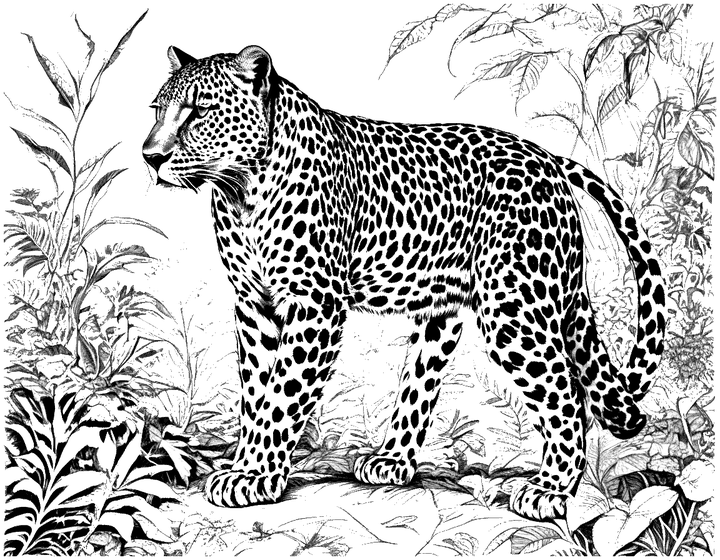
High leopard
Sacred beast · Haruwayha and the Leopard Highlands
The sacred cat of Asheena. Leopard Wardens raise them from cubs, and a leopard walking into a village is taken as the goddess's judgement.
Tier IISKILL 8STAMINA 7the Leopard Highlands. Killing one: +2 SHADOW, and the Wardens will hunt you.
Life & lore
Seasons
High leopards breed in the southern spring of Reaping and Uxbridmanch, and the cubs are seen in Tunarejo. On 18 Hofjor, Groving, every family plants a tree on the desert edge, and leopard-priests hunt the year's salters. A leopard walking into a village on Groving is taken as a sign of the goddess's favour on the planting.
Living with it
Haruwayhan villagers leave their gates open at night, because a leopard walking into a village is Asheena's judgement and shutting it out is worse. Herders lose a goat a month and do not complain. Every child knows the leopard's cough, a sawing sound at dusk, and what it means.
Charms & taboos
When a leopard enters a village, the villagers stand in their doorways, and the house it stops at must confess a wrong to the Wardens. Leopard Wardens raise cubs, and a boy or girl who wants to be a priest must care for one for a year. Killing one is a sin, and the Wardens will hunt you.
Folklore
Highland grandmothers say a child's first word should be kajah, ‘leopard’, so the goddess knows the house. A saying runs, ‘When the leopard comes, count your sins, not your goats.’ Many believe the leopards can smell salt on the hands of a man who has salted land.
History
In 612 a leopard walked into the Emir's palace at Haruwayh during a feast and lay down at the feet of the Emir's brother, who confessed he had poisoned the old Emir. The Wardens have kept a cub in the palace ever since.
Notable
Ilvaren of the Ninth Lamp, First Warden, was raised with a leopard and still walks with one. Lis ith Hor, a Bretborn Warden at Fuluwai, raises cubs and teaches them the smell of salt. Zathaaj al-Gharazi, a goatherd of the Najrah hills, has had three leopards visit his village this year and is very worried.
This year
Leopards have been seen in the Najrah hills more often than for years, and the Wardens say they are hunting the Cyclops. The Hunters of the Barren are raiding the Jowshian and Tubari borders with leopards trained to track.
The war
Haruwayha has joined the war on Kahpia's side, and Warden infantry march with leopards on chains. Jowshian soldiers are terrified of the cats, and some have deserted rather than face them.
Bounty & law
A leopard may not be bought, sold or killed in Haruwayha; doing so is a capital crime. Killing one elsewhere carries the sin before Asheena, and the Wardens will hunt you to your death. Leopard-whisker charms from Kahpia are fake, and the Wardens hunt the sellers too.
Wounds & cures
A leopard's claws rip deep, and its bite goes to the bone at the neck. The leopard-priests are the best healers in the highlands, and they also treat glass-eye with a salve made in the Grove-Temple. A wound from a sacred leopard is never treated with marrow-salt.
Adventure seed. A leopard has walked into the Successor's embassy at Haruwayh and lain down at the feet of a Qashari envoy who is not what he claims.
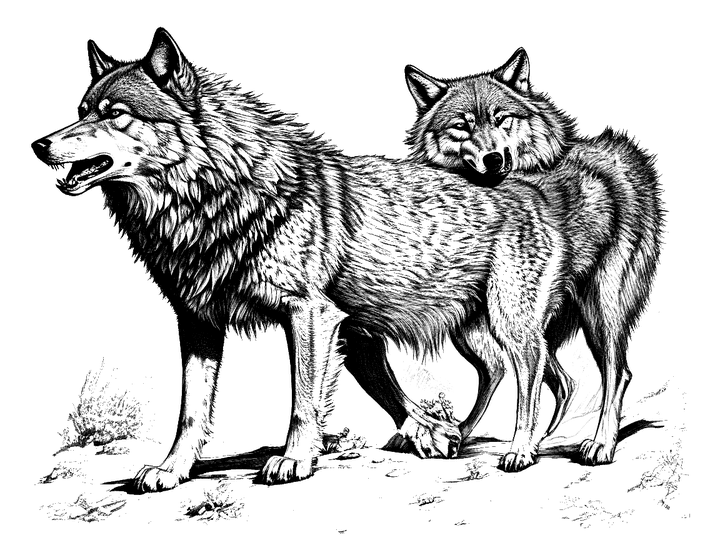
Hoarspine wolves
Tier IISKILL 7STAMINA 7the Hoarspine and the northern forests
Grey wolves that follow travellers up the passes in winter, waiting for the weakest to fall behind.
Usually a pack of three. If you have a fire, they will not attack until it goes out.
Life & lore
Seasons
Wolves den in Thaw and Mieles and raise their pups through the summer. In winter, from Isgard to Thaw, they follow travellers up the passes, waiting for the weakest to fall behind. On 1 Longnight, New Fire, Hoarfolk at the Thousand-Step Hold light a beacon so the wolves on the Stair know where the fire is.
Living with it
Anyone crossing the Hoarspine in winter keeps a fire burning all night, and walks in a tight group with the strongest at the back. Hoarfolk post wolf-watchers at the toll-gates. The sign that wolves are near is three sets of tracks walking in one line, so it looks like one wolf.
Charms & taboos
A traveller who reaches the Thousand-Step Hold safely in winter leaves a strip of cloth on the Wolf Post at the gate. A Hoarfolk child who kills a wolf is given a wolf-tooth to wear. Never leave the fire after dark to relieve yourself; use a pot.
Folklore
Norse travellers say Som fåk bigryrelin pistbe renin burdpø, ‘snow hides the road, but the wolf finds it’. Hoarfolk say the wolves are the Worm's dogs, set to guard the passes. Many believe a wolf will not cross a line of iron filings, which is why wise travellers carry a bag.
History
In 525, the Long Winter, wolves came down to the villages of Kovavikia and took children from their beds. The Hoarfolk of the Thousand-Step Hold opened their gates to refugees for the first time, and the wolves followed them up the Stair.
Notable
Buk Stunhalul, wolf-watcher at the Thousand-Step Hold, has killed thirty wolves and counts every one. Slep Varnsson, a Raugarian smuggler, guides people over the glacier for 5 crowns and has lost four to wolves. The grey she-wolf called Patience has led the same pack on the Stair for nine winters.
This year
With the northern passes closed, smugglers lead refugees over the glacier, and the wolves follow them. Three bodies were found on the Stair in Thaw, and the Hoarfolk have doubled the wolf-watch.
The war
The war has sent many people over the Hoarspine, and the wolves have learned that refugees carry little fire and walk slowly. Hoarfolk say the wolves are fatter than they have been in a generation.
Bounty & law
A wolf pelt fetches 5 shillings in Gogur, a full winter coat 1 crown. The Thousand-Step Hold pays an ingot-mark for every wolf killed on the Stair, proven by the right ear. Raugarian law counts a wolf as Hofjor's own predator, honoured not hated, and fines anyone who poisons one 2 ounces of silver.
Wounds & cures
Wolf bites go deep and turn bad within days; more travellers die of the rot than of the bite. Hoarfolk at the toll-gates cauterise a bite with a hot iron for 6 d. Norse travellers pack the wound with honey and spruce resin from a pot they carry, which works better than it sounds.
Adventure seed. Patience's pack has stopped following travellers and begun leading them, and Buk Stunhalul wants to know where they are being led.
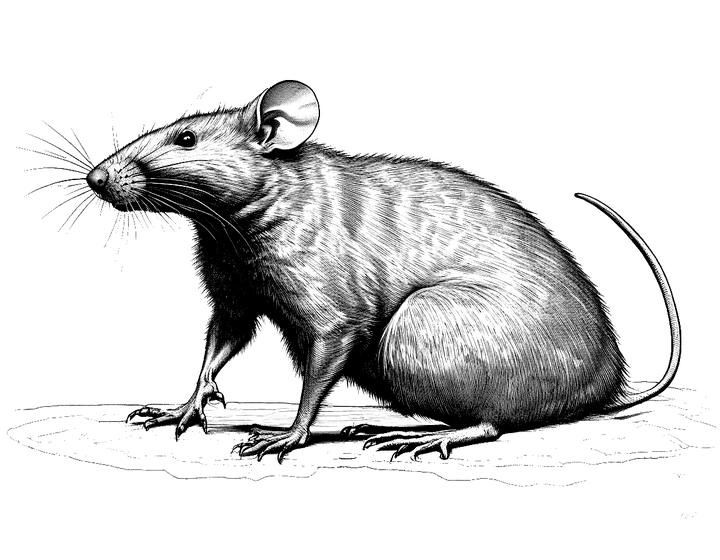
Giant rat
Tier ISKILL 5STAMINA 4cellars, sewers and mines everywhere
As big as a dog and twice as clever. Gamebook heroes meet them in the first ten sections and never again.
A bite causes fever on a double six: lose 1 SKILL until healed at a temple.
Life & lore
Seasons
Giant rats breed all year, but cellars are fullest after Last Sheaf on 15 Reaping, when the grain is stored. Macham holds the Rat-Baiting on the last Smithsday of every month, terriers against rats in a pit behind the Tanners' Steps. During the Ferrying, 1–9 Tunarejo, doors are left open for the dead, and householders say the rats come in with them.
Living with it
City folk keep bread in tin boxes, hang cheese from the rafters on wire, and send no child into a cellar alone. Rat-catchers walk the lanes with tongs, sacks and a terrier on a string. The signs are a gnawed hole the size of a fist, grease-marks along the wainscot, and a smell of wet fur and old cheese.
Charms & taboos
A Merlish bride is given a terrier pup as a wedding present, and a wedding without one is thought to be bad luck. Thetletown priests bless cellars on Forgefire, 1 Uxbridmanch, by touching a hot iron to the lintel. Never feed a rat, never name one, and never let one see you cry, because it will come back.
Folklore
Merlish children skip to ‘Rat in the cellar, rat on the stair, rat in the cradle, and nobody there.’ The guide's own joke is that gamebook heroes meet them in the first ten sections and never again. Hoarfolk miners say Ûrgrakê rîtazd khoz, ‘do not dig without a prayer’, because something has always dug there first.
History
In 772 the Great Fire of Bustogollo drove the rats out of the burning cellars into the streets by the thousand. The guilds paid Rhunari porters a penny a rat to stamp on them, and the Rhunari still call Bustogollo ‘the city that paid us to dance’.
Notable
Maud Pellow runs the Rat-Catchers' Company of Shifton and is petitioning the Moot of Fifty for a monopoly. Wat Ferrier keeps the Macham baiting-pit and his terrier, Old Debt, has killed four hundred rats. The rat the Ledger House prisoners call the Bursar has lived in the debtors' prison for six years and steals keys.
This year
The Teracleanian Dearth has emptied the southern granaries, and rats have followed the grain barges north into Merlish warehouses. The Shifton Weathervane now prints a rat tally beside the casualty lists every Smithsday, and readers say the rats are winning.
The war
Army depots lose a tenth of their biscuit to rats, and the camp flux in the Hajhian refugee camps spreads where rats foul the water. Merlish quartermasters have started buying terriers by the cartload, and a good ratting dog now costs as much as a pair of boots.
Bounty & law
Rat-catchers charge 1 d a tail in Merland, 2 d in wartime, and a terrier costs 3–5 shillings. In Shifton only Company members may charge for the work, and an unlicensed catcher is fined 5 shillings. Orcosian Fuempild priests disapprove of killing anything on a feast day, rats included.
Wounds & cures
A giant rat's bite brings a fever on a double six, and the victim loses 1 SKILL until healed at a temple, at 5 shillings a wound. Herb-wives sell a poultice of garlic and vinegar, which smells strong and does nothing. Physicians wash the bite with wine and burn it, which helps.
Adventure seed. The Bursar has stolen the countersign tablet from Calloway & Daughters' Ledger House office, and the Quiet Hands and the bank are both paying for whoever catches it first.
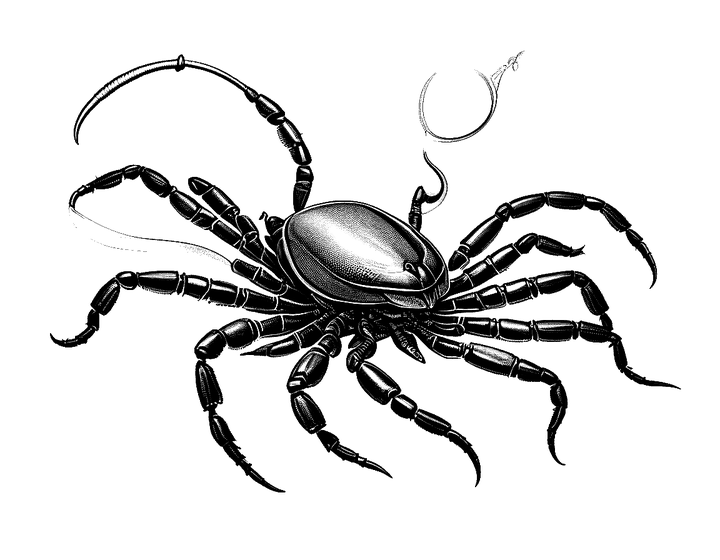
Glass scorpion
Tier IISKILL 7STAMINA 6the Asrahan desert
Its body is clear as glass, and its sting brings visions.
If it wounds you, test your LUCK or lose 1 SKILL until you rest.
Life & lore
Seasons
Glass scorpions breed after the first rain of Wellwater in Longnight, and their young swarm under every stone in Thaw. On the Unspoken Night, the dark of the Lamp in Haymonth, Qashari say the scorpions carry the Hidden Ones' messages, and nobody kills one between dusk and dawn.
Living with it
Desert travellers shake out boots and bedding every morning and sleep on rope cots raised off the sand. The scorpion is clear as glass, so the only sign is a glint of light where none should be, or the small moving shadow it throws at noon. Children are taught to look for shadows, not scorpions.
Charms & taboos
A child who survives a sting is said to have ‘glass in the eye’ and is watched for the gift of seeing. A scorpion found in a well means the well is blessed again before anyone drinks. Qashari never kill one inside a tent, but carry it out on a palm-leaf and let it go past the threshold.
Folklore
Qashari call it sabam ghanaq, ‘the glass scorpion’, and say it is made of the Glass Waste's own tears. A drovers' saying runs, ‘The scorpion shows you the road, then takes your legs.’ Many believe the visions it brings are true, and are especially afraid when they are pleasant.
History
In 744 a sting on the road to Soraidah gave the caravan-master Kinzah al-Raleeti a vision of a dry well she had never seen. She found it two hundred miles off the road, dug it out, and the Kinzah Well is still on every Asrahan caravan map.
Notable
Zafeekah al-Basheeti, a seer at Jizayd, has been stung eleven times and charges 2 mithqal to interpret a stranger's vision. Madhir al-Mabeesi collects living scorpions for Ucillamope-trained physicians in Qaqah. A Glassborn Stray at Zalfamaq is said to let them crawl over its hands and chime at them.
This year
Seers in Jizayd and Soraidah say the visions this year are all of the same thing, bronze doors standing open in the sand. The Successor-Caliph's court has started paying for every vision recorded, and stung men are suddenly in demand.
The war
Soldiers in the Asraha–Mashian War sleep on the bare sand, and both armies lose men to stings before they lose them to arrows. Company officers dismiss the visions as fever; Caliphate officers write them down.
Bounty & law
A live glass scorpion fetches 2 mithqal from a seer or a physician, and its clear shell is sold as a curiosity in Meedihar for 5 shillings. There is no law about killing them, except custom on the Unspoken Night.
Wounds & cures
A wound from the sting brings visions: test your LUCK or lose 1 SKILL until you rest. Drovers give the stung man sweet tea and tie him to his saddle so he does not wander. Leopard-priests have a salve of bitter resin that dulls the visions without stopping them.
Adventure seed. Every stung seer in Jizayd now sees the Gates of Bretbury open, and Zafeekah al-Basheeti wants someone to go and look before the Successor's men do.
Steppe-eagle
Tier ISKILL 6STAMINA 4the Hajhian steppe and the royal eagle-cliffs near Erencszasz
A brown eagle wider across the wings than a lancer's reach, which takes marmots, lambs and the eyes of anything lying still. The Queen's Wings wear its moulted feathers into the charge.
It stoops from above: it fights at +2 in the first round, and if it wins that round you fight at −1 until you wipe the blood from your eyes (lose your next attack).
Life & lore
Seasons
Pairs lay in Thaw and the young fledge by Haymonth, which is when the old birds moult and the cliffs are littered with flight feathers. Candidates for the Queen's Wings climb the eyries in this month. On the second night of the Sitting of Snow (15 Longnight) the tale of the eagle that carried the first horse's soul up to the Sky-Mother is told.
Living with it
Shepherds hang strips of red felt on poles over the lambing pens in Mieles, and a marmot's whistle sends every lamb under its mother. Riders scan the sky out of habit and can tell an eagle from a kite at a mile. Anyone who finds a long feather on the grass picks it up, because a frame-maker will buy it.
Charms & taboos
Wing candidates swear to harm no bird, and an eagle killed by accident is buried like a rider, under open sky. When an eagle lands on the horse-skull over a grave, the dead rider is said to have been fetched home. A newborn's first cut of hair is left on a cliff ledge for the nest.
Folklore
Herders say 'The eagle counts the lambs before the shepherd does.' An eagle circling a tent three times means a son who will ride with the Wings, and one that drops its prey near you means you are about to be robbed. Children believe an eagle can see a lie, which is why they are told to look up when they deny things.
History
In 806 an eyrie-warden found a Balsozhian envoy's signet ring woven into a nest; the envoy had lost it at a hunt in 799 and had accused his Hajhian host of theft. The ring was returned with a dead marmot as an apology, and the joke is still told in Erencszasz.
Notable
Hela Vorcsány makes and mends the Wings' frames and pays for every honest feather. Kelsz Varóna is the last eyrie-warden on the royal cliffs, a one-eyed woman of seventy who knows each nest by its smell. Mosányi Dob, a goatherd's boy, has climbed four eyries this summer and will climb a fifth for anyone with groats.
This year
Real eagle feathers are running out, and a frame takes a hundred and twenty. Feather-thieves are robbing nests of live young to pluck them, which spoils the birds and the feathers both. Frames of dyed goose have turned up in the Wings' remount lines.
The war
Balsozhian outriders shoot eagles for sport and to spite the Wings, and leave them on posts by the road. The birds feed well on the dead below Vasvár this year, and steppe folk will not eat a lamb an eagle has touched until a shaman has seen it.
Bounty & law
A moulted primary fetches 2 sh in Erencszasz (about two and a half steppe groats); a plucked one is worthless, because the frame-makers can tell. Killing a steppe-eagle within sight of the royal cliffs is a flogging, and selling a live eaglet to a foreigner is outlawry.
Wounds & cures
Talon wounds fester. Herders wash them with fermented mare's milk and pack them with the ash of burned felt. An eye torn by a talon is bound with honey for three days, and a shaman sings over it, which is the part people pay for.
Adventure seed. A Wing's frame has shed dyed goose feathers mid-charge. Hela Vorcsány wants the forger found, and the trail runs to an eyrie someone has been robbing nightly.
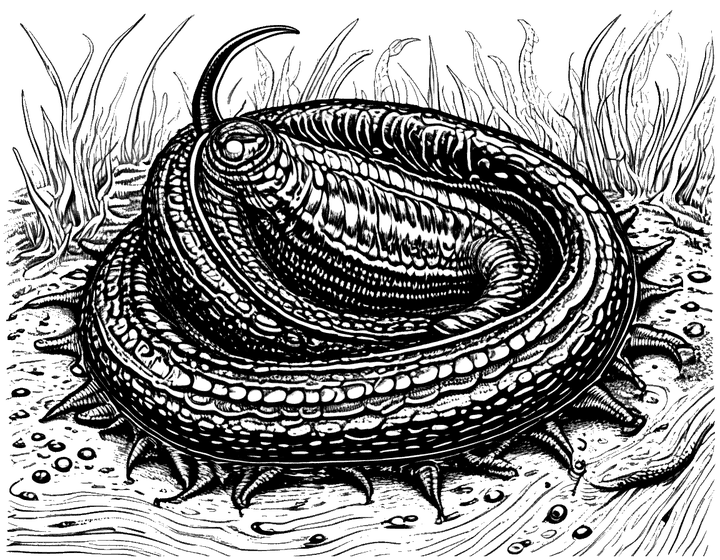
Ruin adder
Tier ISKILL 5STAMINA 3the ruins of Sag: near Habibifi, Shahjatama and Yeremran
A thick, sand-coloured snake no longer than an arm, which lives in the warm dark of every Elder doorway in Sag. Treasure-hunters meet it before they meet anything else.
If it wounds you, lose 2 more STAMINA from the venom unless you cut and bleed the bite at once (lose your next attack instead).
Life & lore
Seasons
Adders sleep through the cool dry months (Longnight to Thaw in the south) in the deepest chambers, and come up to the warm doorways in Hofjor. They breed in Rocadones, and that is when the bites are worst. Diggers in Meybid keep Snake-Out on the first day of the digging season, smoking every ruin mouth with dung before going in.
Living with it
Every guide carries a knife and a black stone. A stick is pushed ahead into every crevice, and nobody puts a hand where they have not first put a light. Diggers wear leather leggings to the knee in the hottest weather, and the sound of a dropped stone hissing back means stop.
Charms & taboos
Kavarri diggers leave a coin at every ruin's mouth, and a coin with a snake curled on it the next morning means the ruin has refused. A bitten digger may not go back underground until he has given the guide a goat. Killing an adder inside a ruin is taboo, because the ruin keeps the body; they are carried out first.
Folklore
Diggers say Bazamdun hou, pu khour, 'Give a gift, then sell', and add that the adder takes the first gift whether you give it or not. Mothers say a ruin adder is a scribe of the Elder Crowns who stayed behind to guard the writing. A shed skin over the door keeps lesser snakes away.
History
In 811 a Merlish collector carried a 'sleeping snake' out of the temple near Shahjatama in a jar of spirits to sell in Shifton. It was not dead. It bit him on the Meybid road, and the Prince's toll-house kept the jar, which still stands on the toll-keeper's shelf.
Notable
Ardesh Vekani has guided diggers out of Meybid for thirty years and been bitten nine times, which he counts as proof the black stone works. Farzan Odari, a boy of twelve, catches adders by the tail for the venom-sellers at a siglos apiece.
This year
More treasure-hunters than ever pass through Meybid this year, many of them deserters from the Jowshian war, and more of them are carried out bitten. A Bretborn scholar says the adders are thicker round any doorway that still has Elder script on it, and has paid for counts.
The war
Deserters and armed diggers sleep in the ruins rather than pay the Prince's toll twice, and the adders have done well on their rats. Kahpian recruiting officers will not take a man with a fresh bite.
Bounty & law
Venom milked into a cockle-shell sells for 2 siglos to physicians in Shahpabad, who thin blood with it. A live adder in a pot fetches 5 siglos from the snake-charmers of the Square. There is no law about killing them outside the ruins, and nobody needs one.
Wounds & cures
Bites swell, blacken and kill one in five who is not bled. Guides cut the bite and press the black stone to it, and only the knife does any good. Kahpan healers sell a paste of crushed date-stones and tamarind that soothes the swelling and nothing else.
Adventure seed. The toll-keeper's jarred adder at Meybid has vanished, jar and all. A scholar says it was the only adder with writing on its scales.
Hoarfolk pit-mule
Mount · the Hoarspine Stair, the seven holds and the Sunhold steel road
A short, deep-chested mule bred in the holds for the dark: it walks a ledge without a lamp, never steps where it has not first smelt, and kicks like a falling roof.
Tier I · SKILL 5 · STAMINA 6. A pit-mule costs 9 cr and carries two hundredweight; while you lead one, you never need to test your LUCK on a narrow path or ledge.
Life & lore
Seasons
Pit-mules foal in the holds in Isgard, so that the foals are strong enough for the Stair when it is busiest in summer. On Wormwake Eve (6 Rostovund) each hold's oldest mule leads the procession that seals one old tunnel, and it gets a pail of beer afterwards.
Living with it
A pit-mule wears a bell with the clapper tied and untied only in fog, and felt shoes on the ice. Stair porters feed them on barley and salt, which is why they bite anyone who smells of salt. Drovers on the Sunhold steel road to Shahpabad tie their mules nose to tail and let the oldest choose the pace.
Charms & taboos
A mule is named for the tunnel it was foaled beside, and the name is cut into the hold's record wall. A Hoarfolk drover never sells his first mule; when it dies its shoes are nailed over his door. Striking a mule on the Stair is bad luck, and on the top gate it is a fine.
Folklore
Stair porters say Ûrgald torg, 'The stone does not lie', and add 'and the mule does not walk on a lie', meaning a mule that stops has felt the ice move. Children are told that the Worm's ribs were first found by a mule that refused to walk over them.
History
In 525, the Long Winter, the Thousand-Step Hold kept its gate open only because a string of forty pit-mules carried the food up through a blizzard; thirty-one came back. The holds count the 'Thirty-One' in their records, and the mule-masters still get the first cup at the gate feast.
Notable
Gravdal Hekruk breeds mules under Gravdalla Deep and is short of stallions since the lower gates were sealed. Saski Thorgith leads the steel-trains from Sunhold to Shahpabad and will hire anyone who can walk behind a mule for a month without complaining.
This year
The closed northern passes have pushed every smuggler onto the glacier road, and smugglers pay for pit-mules at double the price. Two strings have been lost on the glacier since Mieles, mules and all, and the holds have stopped selling to strangers.
The war
Armies on both sides want pit-mules for their guns. The Hoarfolk close the Stair to armies and sell no mule to a quartermaster, so Balsozhian buyers send men dressed as merchants, and the mule-masters can smell a soldier.
Bounty & law
A pit-mule costs 9 cr at the holds (9 ingot-marks), 15 cr on the Hajhian side of the Stair and 20 cr in Shahpabad. Hold law forbids selling a mule to anyone who has not signed the Hold's book. Stealing one is treated as stealing a hold's tools: the thief is sent up and never let back down.
Wounds & cures
Mule-bites and kicks are the drovers' injuries, and the Hoarfolk set the bones with iron splints. Mules get hoof-rot on the wet lower Stair and are stood in buckets of brine. Sky-sickness on the high gate takes men, never mules, and drovers ride down on the mule's tail rope until it passes.
Adventure seed. A pit-mule has come down the Stair alone, wearing a Gravdalla bell with the clapper tied, and its packs are full of sealed letters addressed to nobody living.
Bone-vulture
Tier ISKILL 5STAMINA 5the Balsozhian cold desert and the dry Hajhian steppe
A huge, rust-breasted vulture that drops bones from a height to split them and eats the marrow. It follows wounded riders for days, and does not much mind if they are not dead yet.
It attacks only the wounded: if your STAMINA is below half, it joins any fight against you and adds 1 to its side's Attack Strength.
Life & lore
Seasons
Bone-vultures nest on the red cliffs north of Csorke and lay one egg in Longnight, in the depth of winter, so the chick hatches when the thaw uncovers the winter's dead. In Ondaria they wander south over the steppe. Tetmik Spiders leave their dead masked on high dunes for the vultures and the Sky-Mother.
Living with it
Camel-drivers on the cold desert keep their dead covered and their wounded moving. A vulture circling over a camp is taken to mean somebody in it is hiding an injury. Herders collect split bones under the cliffs for fuel and glue, and children hunt for the bright stones the birds swallow and drop.
Charms & taboos
A dead Tetmik Spider is laid face up so the vultures take him to the sky, and to drive them off a sky-burial is a curse on the family. Caravans never camp on a bone-field, the flat rock where the birds drop their bones. A child born under a circling vulture is given a second, secret name.
Folklore
Caravan drivers sing The Spider's Wedding and add a verse in which a bone-vulture is the only wedding guest who brings a present. The Vengrian curse Törgel csodor törest gipegyönd, 'Your horse will forget you', has a desert sequel: 'and the vulture will not'.
History
In 793 a bone-vulture dropped a human thigh-bone through the roof of the governor's house in Csorke during a feast. Inside the bone was a rolled tax receipt, and the governor's clerk was hanged for the fraud it showed. Nobody has explained how it got there.
Notable
Tóth Varenka, a Tallian-schooled bone-gleaner of Csorke, buys split bones and sells the marrow-glue to bow-makers. Cazeli Ash-Song, a Tallian drover, swears a vulture has followed her camel-string for three years and that it is her late husband.
This year
Army supply trains on the cold desert leave dead mules and worse along every track, and the vultures have followed them south in numbers nobody has seen. Tetmik Spiders watch the circling birds to find the trains.
The war
Both armies' wounded lie out on the steppe longer than they should, and the vultures are there first. Balsozhian officers order the birds shot near the supply roads, which tells every brigand where the roads are.
Bounty & law
Marrow-glue from split bones sells at 3 d a pot in Csorke. Vulture quills make the best desert pens, at 1 sh a dozen. Killing a vulture over a sky-burial is a blood-matter among the Spiders, and they will come for the shooter.
Wounds & cures
Vulture wounds are rare and filthy, because the birds eat carrion; drovers wash them with salt water and sear them. Desert healers burn a bone-vulture feather under a fevered patient's nose, which does nothing but wake him.
Adventure seed. A bone-vulture has dropped a Balsozhian officer's sealed despatch case in a Hajhian village; the Spiders, the army and Queen Dorottya's riders all want it.
Pepper-monkey
Tier ISKILL 4STAMINA 3the pepper estates of Masha, round Kulparand and Jinazilah
A small grey monkey with a black face and fingers like a pickpocket's, which lives in troops of forty in the pepper groves and steals anything that shines. It bites when cornered and screams when it does not need to.
A troop steals rather than fights: unless you win the first round, it takes one item of your choice (not a weapon) and is gone into the trees.
Life & lore
Seasons
Troops raid hardest in the pepper harvest, which in Masha falls in Reaping and Uxbridmanch, and give birth in Isgard. At the Harvest Bell on the estates the pickers bang pans to drive the troops off, and the noise of it carries for miles.
Living with it
Pickers wear their purses round their necks under their shirts. Estate houses have barred windows and a boy with a sling on the roof. A troop's warning bark means a leopard or a tax-collector, and the pickers stop work either way.
Charms & taboos
A child who is robbed by a pepper-monkey is told it has 'paid the grove', and gets a sweet. A troop that comes to a wedding is fed first, so it will not take the rings. Killing one on an estate is held to bring blight to the vines.
Folklore
Pepper-pickers say a note that rustles on a still night has been touched by a monkey and is going to lose value. Masha has a saying, 'The monkey knows the Board before the Board does', meaning gossip moves faster than ledgers. Children believe the monkeys keep a hoard of stolen coins in the oldest tree on every estate.
History
In the Pepper Crash of 789, a troop at Kulparand was found to have a nest lined with Company notes, which the estate owner tried to bank. The Sea Exchange refused them as 'chewed', and the phrase 'chewed money' still means a worthless promise in Meedihar.
Notable
Zulaamah al-Rumashahi, the Land Lord drilling her pickers as militia near Kulparand, lost her signet ring to a troop at drill. Ruqaad al-Tharimi, a picker of eleven, has trained a monkey called Clerk to fetch her coins from the troops' hoards, and it mostly does.
This year
Pickers have gone to the militia and the groves are half empty, so the troops have moved into the estate houses. A troop stole the dispatch-bag of a Caliphate scout near Jinazilah in Rocadones and dropped its contents in a Company square.
The war
The Caliphate's raiders cut the pepper vines to spite the Company, and the troops follow the fighting to strip the abandoned houses. Company soldiers shoot them as forage; Land Lords pay a reward for live ones.
Bounty & law
Land Lords pay a picker 2 qirat for every monkey trapped alive and sent inland. A tame one sells for a Company note in Meedihar, and the clerks' wives keep them on chains. Shooting one in a picking season is fined at a day's wage, because of the blight story.
Wounds & cures
Monkey bites fester and give a fever that pickers call grove-ague, treated with lime juice and pepper-leaf poultice. Children who are bitten are kept from school for a week, which is why so many claim to have been.
Adventure seed. A pepper-monkey has stolen a brass key from the Board's courier on the Kulparand road, and the Board will pay well, and quietly, for whoever climbs the oldest tree.
Hive-hornet
Tier ISKILL 5STAMINA 4Orcosia's river valleys and the heath hives of Ortonzania
A hornet the length of a thumb, gold and black, which raids beehives for the grubs and drives off anyone who comes to save them. They come as a swarm, and the swarm is the creature.
Fight the swarm as one creature. Armour does not help, and smoke or fire makes it flee after two rounds.
Life & lore
Seasons
Queens wake in Mieles, just as the Fuempild keep Hiving on 1 Mieles, and the nests are biggest in Ondaria and Reaping, when the raids on the hives begin. The first frost of Uxbridmanch kills all but the queens. Orcosian villages burn nests on the eve of Last Sheaf.
Living with it
Beekeepers wear veils, gloves and yellow, because the hornets are said to hate it, and carry a smoking pot of wet straw. A drone like a drawn bowstring means a raid at the hives. Ortonzanian heath folk paper their window gaps with honey-cloth to keep the hornets out of the larder.
Charms & taboos
Every village tells the bees of a death, and a hornet that comes in during the telling means the dead will not rest. Brides at Hiving wear yellow, and a hornet landing on a bride is said to mean a quarrelsome husband. A nest is never burned on a feast day.
Folklore
Orcosians say a wasp in the house means a lie will be found out, and that a hornet means a lie already has been. Mothers teach Puevo nu iper, 'The lion does not hide', but add that hornets do. The Year Without Bees (674) is blamed on a priest who forgot to tell the bees; the hornets are said to have been the bees' revenge.
History
In 677, three years after the Year Without Bees, the Sun Temple paid a bounty of a sun-real for every hornet queen brought to the Lion Gate, and in one spring nine thousand were counted. The bounty book lies in the Temple archive, open to anyone who wants to laugh at it.
Notable
Brother Tirso of Mondiejon is the Sun Temple's bee-brother and burns nests with a long pole and a hymn. Agnes Thorne keeps two hundred heath hives on the Ortonzanian coast and pays boys a penny a nest.
This year
Floods at Mantena and Orco drowned the low-lying hives this spring, and the hornets have moved uphill into the temples' honey stores. The wildfires at Ouvaakosjar drove swarms east, and farmers blame them for the dear honey.
The war
Orcosia is 'still deciding', and its villagers are still keeping their bees. Ortonzanian heath honey has gone up with the price of everything, and beekeepers who once sold to Shifton now sell to the army quartermasters, who pay late.
Bounty & law
A queen brought in at Mieles fetches a penny from any Orcosian temple. Honey sells at 1 d a cake and 3 d a jar. Burning a nest that hangs in a church porch needs a priest's leave, on pain of a sun-real fine.
Wounds & cures
One sting is a nuisance; a swarm can kill a man, and old people die of stings every summer. Herb-wives press a cut onion to each sting and give honey-wine; Orcosian physicians bleed the patient, which helps nobody. A barber at the Lion Gate sells a sting-ointment of lime and vinegar for 2 d.
Adventure seed. The hornets in a church porch near Orcos ignore the priest's smoke and only attack people who lie in the confessional. The priest wants to know why before Lionsday.
Raugarian kennel hound
Tier IISKILL 7STAMINA 6the Kennels of Fagervik and the Bliksberg margins
A rough-coated grey hound, half wolf by its look, bred by the Wild Hunt to run down prisoners turned out into the forest. It hunts in silence until it has its quarry in sight, then bays.
It follows a scent through anything but running water: you cannot escape it by fleeing unless you cross a river first. Usually two.
Life & lore
Seasons
Pups are whelped in Thaw and first run at the Loosing, when the year's prisoners are turned out at the Penner's Gate. At the Shedding (10 Hofjor) the hounds are blessed in the cathedral close. A white hound born in the Kennels is a sign of war.
Living with it
Villages along the Bliksberg margin know the baying and bolt their doors, even though locking a door is a sin. Hunters say a kennel hound will not cross a stream at night, so outlaws build their camps on islands. The Kennels smell of tallow, wet dog and boiled offal for a mile downwind.
Charms & taboos
Raugarians keep no caged bird and lock no door, but a kennel hound is chained, and the priests call it the Penner's due. A turned-out prisoner who reaches the Bliksberg's edge before the hounds may ask a hunter for bread, and the hunter must give it. Killing a kennel hound is hanging; it is the Wild Hunt's property and Hofjor's.
Folklore
The proverb carved over the Kennels reads Renin er flytbrøn trulo banutåld, 'The wolf in a house is a dog', and the insurgents chalk 'and the dog in a house is a priest' underneath. Children sing that a hound that bays three times at the same house is calling the Penner to it.
History
In 787 the Kennels' great bitch Kolsvart ran a turned-out murderer for nine days and came back without him; he was found living in a root-cave a year later with the bitch's pups. The Wild Hunt took the pups back and bred from them, and half the Kennels now descend from them.
Notable
Resto Pekråmsson, Huntsman-Priest of the Wild Hunt and master of the Kennels, wants war and hounds enough to fight it. Havdis Grimsdottir is his kennel-mistress and the only person the hounds obey without the whip. Ulvar Kettilsson Hound-Bane, a turned-out poacher, killed two of them in 829 and lives on in the forest as a story.
This year
The insurgents have promised to free this year's prisoners at the Penner's Gate before the Loosing, and Resto has doubled the hounds in the close. A white hound pup was born in Mieles. Nobody in Fagervik is surprised.
The war
The longbow regiments took village kennel dogs east, so the Kennels' hounds are the only trackers left in the west, and they are being used to hunt deserters as well as prisoners.
Bounty & law
A kennel hound is never sold; a cast-off one goes to a farm for nothing. A pup bought from a Kennels groom, illegally, fetches an ounce of hacksilver (1 cr). Harbouring a runaway hound is treated as stealing from Hofjor.
Wounds & cures
Bites go deep and tear, and hunters wash them with juniper spirit and close them with gut. Lodge-priests heal for a share of the next hunt, never for coin. Hound-bite fever, red streaks up the arm, is burned out with a hot arrowhead.
Adventure seed. Resto Pekråmsson is paying runners to hunt with his hounds at the Penner's Gate this year, and one of the turned-out prisoners is somebody the hero owes a life.
Northern-isle walrus
Tier IISKILL 6STAMINA 10the shores and ice of Blikstur, Vopeid and Hrafjor
A bull walrus weighs as much as a small boat and uses its tusks to haul itself onto the ice and to hole anything that annoys it. On land it is slow; in the water it is not.
In water or in a small boat, it fights at +2 and each round it wins holes the boat; on a beach, you fight it at +1.
Life & lore
Seasons
The herds come ashore on Blikstur's south beaches in Ondaria to moult and lie there in heaps till Reaping. Calves are born on the floe in Thaw, and that is when the cows are most dangerous. Island hunters hold the Haul in Ondaria, the one great walrus hunt of the year.
Living with it
Hunters go out in pairs with a lance and a hook-rope, and never between a bull and the water. Walrus hide roofs the turf huts on Blikstur and walrus fat burns in their lamps. The herd sounds like a tavern of drunks and smells worse.
Charms & taboos
A hunter's first walrus is shared with every hut on the beach, and he keeps nothing but one tooth. The skull of every Haul's largest bull is set on a stake facing the sea, so its ghost goes home. A child born on the isles is shown to the sea at Thaw so that the walrus and bears know it belongs.
Folklore
Hunters say the walrus are Skjoldis the Drift-Queen's oarsmen, who row her bergs south. A walrus that comes up beside a boat and looks in is counting the crew for her. Islanders say 'The bear walks behind you on the ice, and in front of you in the story', and say it of the walrus too.
History
In 783 a bull walrus holed and sank a Merlish privateer's longboat off Vopeid, and the privateer's captain sued the island hunters in Shifton for keeping 'a vicious animal'. The Moot threw the case out, and the hunters still toast the walrus at the Haul.
Notable
Teg Poldsson keeps the Wyrmwatch post on Vopeid and reports walrus herds as well as ice. Brynja Tolfsdottir leads the Haul on Blikstur and has never lost a hunter. A huge old bull with one tusk, which hunters call the Ferryman, has sunk three boats.
This year
The herds came ashore early this summer, which islanders take as a sign the ice is moving south. Raiders from Felderoy and Malocsermat have started hunting walrus for ivory, wastefully, and the island hunters are furious.
The war
Kovavikian fishermen fleeing the levies have crowded onto the isles and hunt the herds out of season. Merlish privateers buy ivory from anyone, which makes everyone a hunter.
Bounty & law
Walrus ivory sells at 1 cr a tusk on the beach and 3 cr in Gogur; seal oil and walrus oil at 2 cr a barrel. There is no law but the beach's: a hunter who kills out of the Haul is barred from the next, and that is hunger.
Wounds & cures
Tusk wounds go deep and the cold makes them worse. They are washed with aquavit and stuffed with moss. Walrus liver is said to cure gum-rot and in fact makes people ill, so the islanders eat cloudberries and scurvy-grass instead.
Adventure seed. The one-tusked bull called the Ferryman has been seen hauling something ashore on Hrafjor's forbidden coast: a carved figurehead from the Drift-Queen's frozen collection.
Balsozh great pike
Tier IISKILL 6STAMINA 8Lake Balsozh and the slow reaches of the Witfordge
A pike as long as a rowing boat, green-barred and old, that lies under the reeds and takes ducks, dogs and children who dangle their feet. Fishermen say the biggest are older than the Lake Palace.
It strikes from the water: if you are on a boat, jetty or ford, test your LUCK or be pulled in, and fight at −2 while you are in the water.
Life & lore
Seasons
The great pike spawn in the shallows just after Breakice (1 Thaw), and the Emperor's barge is launched over their spawning beds for luck. They feed hardest in Reaping and go deep in Isgard. Lake folk hold Pike-Night at the first full Lamp of Hofjor, spearing by torchlight.
Living with it
Children on the lake shore are told never to wash their feet from the jetty, and dogs are kept off it. Raftsmen on the Witfordge trail a weighted rope behind their rafts in the deep reaches, to be bitten instead of a man. Clay-baked pike, wrapped in lake mud and laid in the embers, is the shore dish.
Charms & taboos
A fisherman who lands a great pike gives its head to the Severe Virgin's shrine and keeps the rest. The jawbone of a big one is hung over a cradle to frighten off drowning-spirits. Nobody speaks the name of a drowned person while a boat is on the water.
Folklore
Lake folk say a great pike swallowed a Balsozhian prince's crown in the 400s and wears it in its gut still, and every fisherman who cuts one open looks. 'Feet in the boat' means mind your own business.
History
In 761 a great pike took a courtier's lap-dog from the causeway of the Lake Palace in front of the Emperor's guests. The Emperor ordered the lake netted, and the fishermen netted nothing for a month, then quietly brought in a different pike to please him.
Notable
Csóka Belény is a lake fisherman of Nyirdoroszha who has landed eleven great pike and has the jaws on his barn. Lady Rimászné, a courtier, has offered a horse to whoever brings her the pike that ate her husband's ring in Mieles.
This year
The Open Forge cannon go to Erencszasz by barge on the Witfordge, and two bargemen were taken by pike at the Varcag reach in Rocadones. Bargemen say the boat's noise draws them.
The war
Press-gangs work the river towns, so the fishermen who knew the lake have gone and boys fish it. The pike have grown bold and the jetties are empty at dusk.
Bounty & law
A great pike fetches 3 horse-dinars (about 2 cr) at the palace kitchens, and its jaw sells for 5 sh as a charm. Lake law reserves every pike over six feet to the Emperor's table, and a fisherman caught selling one privately loses his boat.
Wounds & cures
Pike bites tear and fill with lake-water, and lake fever follows. Fishermen wash them with vodka and bind them with birch bark. The barbers of Balsozha stitch them for 6 d and swear by it.
Adventure seed. Lady Rimászné's ring was a Hajhian betrothal ring, and whoever finds it inside the pike may also find proof of a marriage the Emperor would rather forget.
Chain grey shark
Tier IISKILL 7STAMINA 8the Chain and the reefs of the southwestern isles
A grey shark as long as two men, which follows ships down the Chain for their scraps and patrols the pearl beds for divers. It comes in fast, from below.
In water only: it fights at +1, and if it wins two rounds in a row you lose 2 extra STAMINA from blood loss and draw another shark.
Life & lore
Seasons
Grey sharks gather on the Chain in Rocadones, during Sail-Dipping, when the convoys sail and the galleys throw out the most refuse. They pup in the lagoons of Hawon in Reaping. Halmi divers do not dive in the week of the full Lamp, when the sharks feed at night.
Living with it
Divers go down with a sharpened stake and come up with their pearls in their mouths. Convoys throw their dead overboard with a weight, and the cooks dump slops on the leeward side. Ship's boys fish for sharks with a hook baited with salt pork, for the fins.
Charms & taboos
No Halmi boat sails without a shaman, and the shaman's first offering is a fish thrown to the sharks. A shark's tooth is tied into a newborn diver's hair. Eating shark is forbidden to divers, who say the sharks would know.
Folklore
Halmi say Meolgo ma monutmu seon reon ma tahammu, 'The sea forgets, but the clan remembers', and add that the shark remembers too. Sailors on the Chain say a shark that follows a ship for three days means a death aboard. Tebek pirates call each other 'shark' as a compliment, and the Montaso Sharks of Hajhia have never seen one.
History
In 798 the tsunami that struck Hwasun drove the sharks into the lagoons for a month, and the clans that had gone up the peaks at the shaman's warning came down to find them in their fish-pens. The clans still count it as the shamans' greatest omen.
Notable
Mokdal Hyeonsi, the pearl-diver of Yeongju, says she has dived among them for years. Gimdo Seoha, a fin-trader on Beolgyo, sells dried fins to Kushi merchants and pays divers to kill sharks near their own beds. A one-finned shark the divers call the Governor patrols the beds off Yeongju.
This year
With Kushi's Admiralty gathering for its attack on Tebek, more ships are in the Chain than ever, and the sharks have followed. Two marines fell overboard at Ichi in Mieles and were not found.
The war
The Jowshia–Kahpian and Asraha–Mashian wars have scattered the escorts and sent bodies down the Chain from both. Pirates off Wansan and Dareh feed their prisoners' dead to the sharks and make the survivors watch.
Bounty & law
Dried fins sell for a string of cash (1.5 cr) a pound in Kamiechia, and shark-skin for sword grips at 2 strings a hide. Kushi law forbids fin-fishing within sight of a shore shrine. Tebek's Articles say nothing about sharks, which every captain agrees is the point.
Wounds & cures
Shark bites take whole limbs and kill by bleeding. Halmi divers pack them with ground coral and palm spirit, and shamans sing over them. Reef-cuts from fleeing a shark fester in the heat and are washed in palm spirit.
Adventure seed. Mokdal Hyeonsi says she found her black pearl on the beds the Governor, the one-finned shark, patrols. Two divers who went to look have not come up.
Iron-hill boar
Tier IISKILL 7STAMINA 8the iron hills of Ilbarescia and the Lutondole Forest of Merland
A black, bristle-backed wild boar with tusks like curved knives, which roots for acorns in oak-woods and charges anything that comes between it and them. Old boars hunt alone.
It charges: it fights at +2 in the first round unless you have a spear or polearm, in which case you strike first and it fights at −1.
Life & lore
Seasons
Sows farrow in Mieles, and the boars are maddest in the acorn months of Uxbridmanch and Tunarejo. The great boar hunts of Ilbarescia are held on 1 Uxbridmanch, when the soldiers of Chuejon are released from drill for one day. On Tool-Wake (14 Thaw) pilgrims in the Lutondole Forest tie their worn-out tools to trees the boars have scarred.
Living with it
Swineherds drive their pigs into the oak-woods in autumn, and lose sows to the wild boars, who also leave piglets behind. Charcoal-burners build their huts on stilts. Torn turf and mud on the tree trunks at a man's knee mean a boar is near.
Charms & taboos
Raugarians eat no meat from penned beasts, so the Raugarian officers in Ilbarescia eat wild boar with relish and pork never. An Ilbarescian youth's first boar is presented at the cathedral door in Chuejon. Merlish foresters will not hunt boar on Smithsday.
Folklore
Ilbarescians say Puevo nu iper, 'The lion does not hide', and add 'the boar does not turn'. Children in Lutondole sing about the Wheelwright's Boar, which carried off a cart wheel on its tusks. A boar crossing the road in front of a wedding means twins.
History
In 776 an Ilbarescian boar killed the Raugarian tribute-collector on the Ponyma road, and Prelate Inés's predecessor sent its head to Fagervik instead of the tribute. Raugaria sent it back salted, with the bill. The story is the Ilbarescians' favourite.
Notable
Marsela of Duervo, sergeant of the Alben levy, trains her pikemen on boars, which she says are cheaper than Raugarians and more honest. Walter Pegg is a Lutondole forester who has been gored twice and keeps both tusks. A boar with a white blaze, called the Bishop, has killed three hounds near Oranilluno.
This year
Raugarian officers buying emeralds at Oranilluno have taken to boar-hunting there and have shot two Ilbarescian swineherds' pigs by mistake. In Lutondole the boars raided a pilgrim camp at Tool-Wake and ate the offerings.
The war
Ilbarescia's soldiers drill instead of hunting, and the boars have spread into the hill farms. Merland's foresters have gone with the mercenary companies, so the Lutondole Forest is half wild again.
Bounty & law
A boar's carcass fetches 6 sh in Chuejon market and the tusks 1 sh a pair. Poaching boar in the Prelate's forests is fined a sun-real; in Lutondole the forest belongs to the Moot, and a poacher pays a crown or sits a month in the Ledger House.
Wounds & cures
Boar gorings are to the thigh and belly and kill by bleeding or by fever. Barber-surgeons stitch them for 6 d. Ilbarescian herb-wives pack the wound with comfrey and holy water, and the Raugarian lodge-priests burn it out with a hot arrowhead.
Adventure seed. The Bishop, the white-blazed boar of Oranilluno, is rooting up the floor of an old gem-pit. Brother Merulo wants it dead before someone notices what it has turned up.
Thuq sand-hyena
Tier IISKILL 7STAMINA 7the Thuq road, Haruwayha and Al Tubar
A spotted, sloping-backed hyena that follows caravans across the desert edge, waiting for a camel to fall or a sleeper to roll too far from the fire. Its laugh carries for miles at night.
They come in threes: each extra hyena adds 1 to their Attack Strength, and they flee if one is killed.
Life & lore
Seasons
Hyenas whelp in the rains of Isgard and Longnight (the southern summer), in dens dug into the Wall of Forty's footings. They follow the caravans hardest in the dry months, Thaw to Haymonth. At Groving (18 Hofjor) the leopard-priests hunt them from the new tree-lines.
Living with it
Caravans on the Thuq road ring their camps with thorn and keep a fire all night. A cameleer sleeps with his sandals under his head, because hyenas eat leather. The laugh at dusk means a pack has found the road.
Charms & taboos
Qashari guest-right covers anyone at the fire, and a traveller chased in by hyenas is a guest at once, whatever he is. A hyena's head is never brought into a tent. Hidden Ones' priests say a hyena that will not cross a doorway smells a spirit.
Folklore
Drovers say Nakh hadoob daqar al, 'Nobody owns the well', and the hyena is the proof, since it drinks from all of them. Children are told that hyenas are thieves who broke guest-right, condemned to laugh at their own shame. A hyena's laugh near a newborn is said to make it a liar.
History
In 799 the caravan of the Thuq Clan was crushed under the rock-slide started by the Najrah Cyclops, and for three nights afterwards the hyenas of the whole road came to the place. The clan built the Wall of Forty partly to keep them off the dead.
Notable
Kajeed al-Sasali, who lost a brother at the Split Rock, now guides caravans on the Thuq road and shoots hyenas on sight. Saffanah al-Juweedi, a well-keeper of Al Tubar, feeds a tame one called Debtor that warns her of riders.
This year
The Cyclops' boulders have killed more camels this year, and the hyenas have grown fat and bold. A pack attacked a sleeping Mashan merchant at Jafinah in Rocadones, which the town took personally.
The war
Al Tubar's 2,500 riders have gone with Jowshia, so the caravans run without escort and the hyenas follow them. Battlefields on the Jowshian border have drawn packs south.
Bounty & law
Haruwayhan towns pay a qirat for every hyena tail. A hyena-skin cloak, which nobody wants, fetches 3 sh from Kahpian drum-makers. Leopard-priests forbid killing a hyena inside a grove, because the goddess's leopards hunt them there.
Wounds & cures
Hyena bites crush bone and fester. The Grove-Temple's healers set and splint them, and well-priests wash them with water from the bottom step. Rabid hyenas turn up most years, and a bitten man is shut in a room for forty days and fed through the door.
Adventure seed. Saffanah's tame hyena has started leading her to a dry well outside Tubar, where it digs every night beside a buried camel-saddle with a Caliphate seal.
Tomama moon-bear
Tier IISKILL 7STAMINA 9the cedar forests of Tomama and Kuraji, and the Mikagabohi Forest
A black bear with a white crescent on its chest, smaller than a northern bear and far better at climbing. It raids orchards and beehives, and in a bad year it raids houses.
It climbs: you cannot escape it by going up a tree, and if you are in one it fights at +1.
Life & lore
Seasons
Moon-bears wake in Mieles and feed on bamboo shoots; they gorge on chestnuts and acorns in Uxbridmanch, when the Deer-Calling is held at Tonan, and sleep from Isgard. Cubs are born in their dens in Longnight.
Living with it
Woodcutters and timber-reeves carry bells to warn the bears they are coming. Every hearth-shrine in the forest villages has a bear-bell hanging in the eaves. Chestnut cakes are kept in clay jars with lids, because a bear can open a wooden box.
Charms & taboos
A moon-bear killed by a hunter is thanked at the forest shrine, its skull set facing the mountain. A child who sees one first is given a white sash at the next Shrine-Sweeping (1 Thaw). Walking in silence through the Mikagabohi Forest on Forest Night is partly, villagers admit, to avoid the bears.
Folklore
Tsuruma tell of a moon-bear that married a woodcutter's daughter and came to the wedding wearing her father's hat. Children say the white crescent is the Lamp's thumbprint, put there to mark the one bear that may enter heaven. 'Hungry as a moon-bear in Hofjor' means a man on the edge of crime.
History
In 742 a moon-bear walked into the Prince's palace in Kamiechia during a poetry contest and ate the prize, a box of sugared chestnuts. The poem that won second place was about the bear, and it is still recited at court.
Notable
Takimama ke Niyasu, timber-reeve of Rorotoroto, needs a thousand cedars and loses woodcutters to the bears. Hanaroto ke Isomi, a hunter of Kuraji, has killed nineteen moon-bears and will not kill a twentieth, for reasons she keeps to herself.
This year
The Admiralty's demand for cedar has sent woodcutters deeper into the Kuraji forests than before, and three have been mauled since Thaw. A white moon-bear was seen near Nizu in Mieles, and the shrine-priests are arguing about what it means.
The war
The fishermen being pressed into the marines have left their hill orchards to wives and grandmothers, and the bears have found them easy. Balsozhian officers on Ritata hunt them for sport and leave the carcasses unthanked, which the villagers take badly.
Bounty & law
A bear's gall-bladder fetches 3 strings of cash (4.5 cr) from Kushi physicians, and a pelt 1 string. Killing a moon-bear in the Mikagabohi Forest is desecrating a shrine, punished by exile to an islet without one.
Wounds & cures
Moon-bears maul the face and scalp, and village doctors trained in Kushi stitch the wounds at 200 cash a face. Bear-gall dissolved in rice wine is the cure for every fever on Tomama, at a price; it works on none of them.
Adventure seed. The white moon-bear near Nizu has been seen carrying a lacquered dispatch-box sealed with the Prince's own crest. The shrine-priests want it back unopened.
Taiga lynx
Tier IISKILL 8STAMINA 6the taiga of Kovavikia and Balsozhia
A grey cat as heavy as a wolf, with tufted ears and feet like snowshoes, that lies along a branch above a deer trail and drops. It will take a child, or a man who is already down.
It drops from above: you lose 2 STAMINA before the fight unless you test your LUCK.
Life & lore
Seasons
Lynx mate in Rostovund, the month nobody marries, and Kovavikians say that is why. Kittens are born in Hofjor. They hunt hardest in the deep snow from Isgard to Thaw, when the deer cannot run. At the first full Lamp of Isgard trappers in Gogur hold the Pelt Moot.
Living with it
Trappers walk under trees looking up, and children carry a staff over their heads in the forest. Woodcutters in the taiga sing as they work, because a lynx will not drop on a singing man. Hare-skins on a branch, half eaten, mean a lynx is near.
Charms & taboos
A trapper never says 'lynx' in the forest, only 'the grey neighbour'. A lynx-tufted cap is worn by a boy who has killed his first, and he may then court. A lynx skull is buried under the threshold of a new house to keep out thieves.
Folklore
Kovavikians say Fikisin ratråm ul gohørnin, 'The hunter does not fear the night', and add that the lynx does not need to. Children are told a lynx can see through walls, which is why houses in Kovavikia have no windows on the forest side. It is said the lynx's ear-tufts hear lies.
History
In 812 a lynx was found asleep in the Rib Temple at Gogur, curled on the white bone, on the morning after Wormwake Eve. The priests let it go and called it a sign. The rebels say it was the last free thing in Kovavikia.
Notable
Saski Kumdis, the Hoarfolk fur-trader of Gogur, wants the roads open before the moth gets her lynx pelts. Ulvar Kettilsson Lynx-Bane is a Kovavikian trapper who has killed sixty and lost an eye to the sixty-first.
This year
The wolverine migration has pushed the lynx out of the deep forest towards the villages, and two children were taken near Bjerksey in Thaw. Trappers blame the wolverines for empty traps and the lynx for everything else.
The war
Raugarian levies have taken the young trappers, and Kovavikian pelts cannot go over the closed Hoarspine passes, so trappers have stopped trapping and the lynx have grown bold. Smugglers carry a few pelts over the glacier at 5 cr a guide.
Bounty & law
A lynx pelt fetches 2 cr in Gogur and 6 cr in Shifton if it gets there. Raugarian law requires a licence from the Antlers to trap in the holy forests; trapping without one gets you turned out.
Wounds & cures
Lynx claws tear scalps and necks. Trappers stitch with gut and pack the wound with spruce resin. A scratch that turns red and hot is cut and burned, because cat-scratch fever kills trappers every winter.
Adventure seed. The rebels have taken a lynx as their sign, and a Raugarian officer will pay 10 cr for a lynx pelt with a rebel mark branded on the hide.
Savanna lion
Tier IIISKILL 9STAMINA 12the savanna of Kahpia and Sag
A tawny, black-maned lion that hunts the cattle-country under the baobabs in prides of six or more. A herder who loses one cow a month counts himself lucky; a man walking alone at dusk is not a herder.
A pride hunts together: after you defeat one lion, test your LUCK, and if you fail a second (SKILL 8 · STAMINA 10) attacks before you can rest.
Life & lore
Seasons
Prides follow the herds to the river grazing in the dry season (Rocadones to Reaping in the south) and break up into hunting pairs in the rains, after Mahrang's Drum on 1 Isgard. Cubs are born in Thaw. Kahpian princes hold the Lion Drive in Uxbridmanch, beating the long grass with drums.
Living with it
Herders bring the cattle into thorn kraals every night and sleep in a hut raised on the kraal wall. Boys guard the herd in pairs with spears and cowbells, and a lion's cough in the dusk sends every cow to the middle. Kavarri women grind millet in the morning, never at dusk, because the noise is said to call lions.
Charms & taboos
A youth who kills a lion with a spear wears its claw at his throat and may marry without a goat-gift. A lion that walks through a village unharmed is taken as a judgement on the headman. Lion-killers do not eat meat for nine days, to let the lion's ghost get away.
Folklore
Herders say Tugan mashab vabghe, 'Tugan carries the sky', and that the lion carries nothing, which is why it roars. Orcosian travellers who say Puevo nu iper, 'The lion does not hide', are laughed at by Kavarri herders, who have watched lions hide in grass shorter than a goat. A lion's whisker in a pouch makes a man eloquent at court.
History
In 762, the year of the Bloody Murrain, the lions of the Hornlands ate the dying cattle and then turned on the herders, and the Rhunari clans that went into Kahpia that year say the lions drove them as much as the plague did. Rhunari still call a lion 'the Murrain's dog'.
Notable
Seikar Tashani, the court poet, has written a hundred verses on the Lion Drive and never attended one. Morvesh Kalidari, a herdsman near Urin, has killed four lions with a spear and lost a son to a fifth. A pride led by a maneless lioness, called the Widow, takes a herder a year near Kabnak.
This year
The war with Jowshia has drawn the Kahpian herders' sons into the army, and grandmothers and boys guard the kraals. Lions have taken more cattle and three boys since the rains ended, and the Prince of Sag has offered a bounty.
The war
Battlefields on the Jowshian border have fed the prides, and the lions near Nastan have learned to follow the armies. Grey Wall Rhunari, owed six months' pay, hunt lions for food.
Bounty & law
The Prince of Sag pays 20 siglos (2.4 cr) for a lion's head brought to Meybid. A pelt fetches 10 cr in Shahpabad and three times that in Orcosia, where the Lion-Pontiff's guard wears them. Killing a lion on a royal hunting ground without leave is a flogging.
Wounds & cures
Lion wounds go bad in a day. Kahpan healers wash them with sour sorghum beer, pack them with turmeric paste and bind them with bark, and a quarter of the wounded still die of the fever. The fever is called 'the lion's second bite'.
Adventure seed. The Widow's pride has stopped hunting cattle near Kabnak and started following a single Jowshian deserter, who carries something the lions seem to want.
Valsiarian forest tiger
Tier IIISKILL 9STAMINA 11the forests of Valsiaria, round Kanpaa and Kutio
A great striped cat of the southern forests, longer than a war-elephant's trunk is high, which hunts deer, buffalo and the occasional mahout. It moves without a sound, which in Valsiaria is admired.
It ambushes: unless you test your LUCK successfully, it gets one free attack before the fight.
Life & lore
Seasons
Tigresses give birth in the monsoon (Hofjor and Rocadones), when the jungle tracks are closed. The tigers hunt the elephant herds' calves in Mieles, around the Tusking (5 Mieles), when the elephants are scrubbed in the rivers. Druids leave honey for Utturi at the roots of great trees, and the tigers are said to be his hunters.
Living with it
Villagers on the forest edge keep Silent Days on the 10th, 20th and 30th of the month, which the tigers seem to know. Mahouts sleep on their elephants' backs in the forest. Woodcutters wear masks on the backs of their heads, because a tiger attacks from behind and hesitates at a face.
Charms & taboos
A tiger killed by a Soumi hunter is buried at the foot of a great tree with honey, for Utturi. The Tulpio Tiger bandits are tattooed with a stripe for each year survived; a real tiger's stripe, scratched on a warrior's arm, is the mark of a man who has met one and lived. Nobody speaks a tiger's name in the forest.
Folklore
The Soumi say Sululo jashe on puhai, 'The silent man is strong', and say the tiger is the proof. Forest folk believe the Light Manticore will take one Tiger bandit for every elephant they kill, and that the tigers do the taking for him. A tiger that roars twice means rain.
History
In 788 the Royal Stables' Tusk Roll records a tigress that killed eleven elephant calves in a season near Pylataskihi and was finally driven off by an old bull elephant, which pinned her against a tree. The bull's name, Nuusta, is still the commonest name for a bull calf.
Notable
Aikku Ravelinen, a Kanpaa hunter, will track a man-eater for the price of its pelt and says nothing for days. Vaanu Pettajonen is a mahout of the Royal Stables whose elephant has killed two tigers. A tigress with a broken fang, called the Silent Judge, has taken four Tulpio poachers this year and nobody else.
This year
The Tulpio Tigers have been poaching elephants faster than ever to feed the ivory trade, and the forest tigers have been following the carcasses. Two poachers were found near Kanpaa in Mieles, unrobbed and uneaten, laid out under a great tree. Villagers say the Silent Judge did it.
The war
Valsiaria refuses to fight, while Manttamite crusaders march through it. The crusaders hunt tigers for sport, noisily, and have been hunted back. A crusader camp near Kutio lost two sentries in one night in Rocadones.
Bounty & law
A tiger pelt fetches 15 elephant marks (about 2 cr) in Valsiari and 20 cr in Bustogollo. Killing a tiger is lawful but frowned on; killing one on a Silent Day is fined in silence. Poaching elephants is a capital crime.
Wounds & cures
Tiger wounds are deep and torn and often cripple. Druids heal them with Utturi bark (1 sh a dose) against fever and silence against pain. Patients who scream are thought to heal more slowly, and mahouts bite on a stick.
Adventure seed. The Silent Judge has laid a third poacher under a great tree near Kanpaa, and this one is not a Tulpio Tiger but a Valsiarian noble's son.
Delta crocodile
Tier IIISKILL 8STAMINA 13the river deltas of Kaporesia and the Valsiarian rivers
A crocodile as long as a river-barge, grey-green and patient, that waits under the brown water at the fords and takes cattle, washerwomen and the occasional Gardener's spore-boat. It drowns what it catches.
If it wins two rounds in a row it rolls you under: lose 4 STAMINA at once and fight on at −1 until you break free by winning a round.
Life & lore
Seasons
Crocodiles bask on the sandbanks from Mieles and nest in the banks before the monsoon in Hofjor. The young hatch in Ondaria, just as the Floodwake candle-boats float down the rivers, and boatmen say the hatchlings follow the candles. In the dry months they crowd into the deep pools.
Living with it
Washerwomen and water-carriers go down to the river in groups, with a boy and a pole. Fords are marked with a white post on one side and a skull on the other. A swirl in still water, or a row of birds lifting off a sandbank, means a crocodile is moving.
Charms & taboos
Elladan healers and boatmen ask the river spirit before they cross, and a crocodile seen at the moment of asking means no. A child taken by a crocodile is mourned at the ford, and the family throws an obol into the water so the river will not take another. Nobody eats crocodile meat; the river would notice.
Folklore
Kaporesians say Ak kinkein teza keteidea, 'Do not steal from the sea', and say it of the river too. Boatmen believe a crocodile weeps for what it eats, and that its tears in a bottle cure lying. Children are told the crocodiles are drowned sailors who forgot to pour wine for the harbour.
History
In 811 a crocodile swallowed the brass seal of the Despot's river-tax collector at Histhos, along with most of the collector's arm. The river towns paid no tax that year, because nothing could be sealed, and Histhos still keeps a holiday for it.
Notable
Doros Nemides, a ferryman of Lampsaratis, has been bitten twice and charges double at dusk. Phelia Kassaridou is a crocodile-catcher who sells the hides to the leather-workers of Hubros and the teeth to soldiers as charms. An old crocodile with a broken jaw, called the Tax-Man, lives at the Histhos ford.
This year
The floods have pushed the crocodiles into new channels this year, and fords that were safe for a generation now are not. A Bloomed walker was seen wading into the river at Theomis and was taken; the boatmen are frightened of what that does to a crocodile.
The war
The war has not reached the Kaporesian rivers, but the Dearth has: grain barges come up guarded, and their crews shoot at anything that moves, including crocodiles and smugglers.
Bounty & law
A crocodile hide fetches 3 cr in Hubros, and a tooth 1 obol (half a penny) as a charm. River law makes the ferryman liable for any passenger taken at his ford, up to the price of the fare, which is generous of the river law.
Wounds & cures
A crocodile's bite crushes and tears and festers with marsh ague. Healers wash it with sea-water and treat the fever with Utturi bark at 1 sh a dose. Marsh ague, the shaking fever, often follows anyone who has been in the water long enough to be bitten.
Adventure seed. The Tax-Man has surfaced at the Histhos ford with the Despot's new brass river-seal caught in his teeth. Every smuggler on the river wants him alive.
River-horse
Tier IIISKILL 8STAMINA 14the rivers and reed-swamps of Jowshia and southern Kahpia
A barrel-bodied beast the weight of three oxen, with a mouth that opens wider than a door and tusks to match. It grazes at night and kills more boatmen than lions do, usually by accident and always by turning the boat over.
If you meet it on the water, test your LUCK or your boat is overturned and you fight it swimming at −2.
Life & lore
Seasons
River-horses calve in the rains (Isgard and Longnight in the south), and the bulls fight for pools in the dry months, when Reed-Burning in Tunarejo drives them from the marsh edges. The Jowshians hold a River-Horse Night at the full Lamp of Thaw, beating drums on the plank walks to keep them off the rice.
Living with it
Jowshian houses stand on stilts above the wet, and the planks are drawn up at night. River-horse paths through the reeds are deep, straight trenches, and nobody plants a fish-trap in one. Fishermen tap the side of the boat with a paddle as they go, so the river-horse hears them and is not surprised.
Charms & taboos
A child born in the reeds is called 'river-horse's cousin' and is supposed to be safe on the water. A drowned boatman is buried on a raised mound, never in the reed-beds. Spearing a river-horse calf is a curse on the village.
Folklore
Jowshians say a river-horse yawning at you means it is laughing, and it is. Children are told that the river-horses were Tugan's oxen, who fled south when he asked them to carry the sky. 'Quiet as a river-horse' means not quiet at all.
History
In 742 a Kahpian river-fleet tried to sail up the Bageshahr channels to punish the Jowshian rebels, and the river-horses overturned eleven boats in a night. The Jowshians still claim it as a victory and leave melons on the banks every year on the anniversary.
Notable
Shirin Tazhdari, a Jowshian river-pilot, takes boats through the channels for 2 siglos and never at night. Kumbar of Qahpabas, a fisherman, was bitten in half below the knee and now carves river-horse ivory for a living.
This year
Kahpian war-boats have been coming up the channels towards Nastan, and the river-horses have overturned two. The Satrap's people say the beasts are on their side.
The war
The Jowshia–Kahpian War has stopped the rice barges, and the river-horses are eating the unharvested paddies. Jowshian deserters hide in the reeds and are killed by them more often than by Kahpians.
Bounty & law
River-horse ivory sells at 5 siglos a tusk in Shahpabad, where it is passed off as elephant to people who do not know better. The meat is cheap, a pul a pound, in Jowshia. Kahpia forbids taking river-horse ivory into the temple ivory-markets.
Wounds & cures
River-horse bites crush and sever, and the drowned are more common than the bitten. Jowshian healers bind crushed limbs in reed splints and give palm wine for the pain. Fever from swamp water follows, and is treated with bark from the Kahpian forests at 1 siglos a dose.
Adventure seed. A river-horse has overturned a Kahpian paymaster's boat in the Bageshahr channels. The pay-chest is in the mud of its pool, and so is the river-horse.
Hoarspine cave bear
Tier IIISKILL 9STAMINA 13the caves and high valleys of the Hoarspine, near Saski and the Stair
A brown bear as tall as a doorway when it stands, which sleeps the winter in the same caves the Hoarfolk would like to mine. It is slow to wake and slower to forgive.
If you fight it in its den, it fights at +1, and every round it wins costs you 3 STAMINA, not 2.
Life & lore
Seasons
Cave bears go to their dens in Isgard and come out in Thaw, thin and furious. They feed in the high valleys on roots, marmots and the herders' sheep through the summer. The Hoarfolk of Saski keep Bear-Waking in Thaw, a feast of honey-beer on the day the first bear is seen.
Living with it
Herders in the high valleys keep a bell on the lead sheep and a horn by the door. Hoarfolk tunnel-cutters knock three times on any cave wall before they break through it. Claw-marks on a tree higher than a man can reach are the bear's boundary.
Charms & taboos
Hoarfolk carve a bear on the lintel of any tunnel that once held a bear's den, so the bear knows it has been asked. A herder who kills a cave bear gives its skull to the nearest hold, which sets it in the gate. A bear's tooth is given to a child cutting its first teeth.
Folklore
Hoarfolk say Kârd torg drakost gor skalk dath, 'The stone sings when you strike it', and that a cave bear sings back. Herders say the bears are the Worm's watchdogs, sleeping in his ribs. A bear dream in Rostovund means a death in the hold.
History
In 689 the Hoarfolk of Saski broke into a cave on the Silver Seam and found a cave bear sleeping on a heap of Elder bronze. They let it sleep until Thaw, then dug the bronze out from under it while it was out feeding. The bronze paid for the Saski hall-gate.
Notable
Watch-Sergeant Dukhdur of Saski has kept the Wyrmwatch post for thirty years and claims to know every bear on the slope by its track. Buzdgrim Sastul is a Saski tunnel-cutter who has woken two bears and lived. A huge old bear called the Abbot dens below the Stair's middle gate.
This year
The avalanches since the Comet of Thaw have buried dens and woken bears early. Two smuggler parties on the glacier road were attacked in Mieles, and a third came back with a cub they meant to sell in Gogur.
The war
Smugglers on the glacier road, avoiding the closed passes, camp in caves, and the bears have found them. The Wyrmwatch fears that cannon fire in the passes will wake the bears and the dragon both.
Bounty & law
A cave bear's pelt fetches 5 cr in Gogur, its fat 1 sh a jar for burns and its claws 2 sh each as charms. Hold law forbids killing a bear inside a hold's tunnels, because the blood brings bad luck to the stone.
Wounds & cures
Cave bear wounds crush ribs and tear scalps. Saski Hoarfolk set the ribs and stitch the scalps without a word. Bear fat rubbed on frostbite is the herders' cure, and it works better than snow.
Adventure seed. The Abbot, the old cave bear under the Stair's middle gate, has dug into a sealed tunnel. The Hoarfolk will not go in, and something is coming out.
Igyoszavas aurochs
Tier IIISKILL 8STAMINA 14the grasslands of Igyoszavas and the foothills of Foleleyme
A black wild bull a head taller than any farm ox, with forward-swept horns as long as a man's arm. The herds graze the long grass between the forests and the volcano, and a bull alone is worse than a herd.
It charges: in the first round, if it wins, you lose 4 STAMINA, not 2.
Life & lore
Seasons
Aurochs cows calve in Mieles, and the bulls fight for the herds in Ondaria, roaring across the grass at night. In Reaping the herds come down to the river meadows. Vengrian herders of Igyoszavas hold a Bull-Run at the first full Lamp of Uxbridmanch, racing horses round the herds.
Living with it
Herders move their cattle away from the aurochs herds in the rut, because the wild bulls kill tame ones and mount tame cows. Fences round the river meadows are thorn and ditches, because aurochs walk through rails. Steam rising off the grass at dawn in Ondaria means the herd is close.
Charms & taboos
A young rider who touches an aurochs bull's horn and rides away is sworn a man under open sky. Igyoszavas leaves honey for Utturi at the roots of great trees, and an aurochs bull killed by a hunter is given a portion too. Never camp in an aurochs wallow.
Folklore
Herders say Gumusz csodor zhosz kósz, 'A man without a horse is a stone', and add 'and an aurochs will walk over a stone'. Children believe the aurochs bulls carry the souls of horse-ancestors who were too proud to be ridden.
History
In 798 Kettlekin scavengers looking for marrow-gas in the vents of Foleleyme were treed by an aurochs bull for two days. Their notes, kept in the gas-works ledger, are the first record of marrow-gas, scribbled on the back of a bull-sketch.
Notable
Zozh Zevela, a Vengrian herd-woman, has moved her cattle across the river twice this summer and charges the gas-works for every cow that dies. Wuggit Valvebiter, a Kettlekin gas-fitter, rides the tethered sky-ships over the herds and counts them for a fee.
This year
Ash from Foleleyme has greyed the eastern pastures and the herds have moved west into farmland. An aurochs bull walked through the market at Nadaros in Rocadones and stood in the Root Oak's shade until evening.
The war
Hajhian refugees on the move have been driving their herds into Igyoszavas, and the aurochs bulls have been killing the tame bulls. Hunters who might have thinned the herds have gone to the war.
Bounty & law
An aurochs hide fetches 2 cr, a horn 5 sh as a drinking-horn, and the meat feeds a village. Killing a cow with a calf at foot is fined a steppe groat per tooth of the calf, which herders count carefully. Valsiaria's overlords forbid hunting within a day's ride of the Root Oak.
Wounds & cures
Horn wounds are deep and in the thigh or belly. Herders close them with horsehair stitches and give fermented mare's milk. Gas-works crews who have been gored and then work near the vents heal badly, and the shamans say the volcano drinks their blood.
Adventure seed. An aurochs herd has stampeded through the gas-works' outer tanks at Foleleyme, and the Kettlekin say someone drove it. Zozh Zevela's cattle are missing too.
Rogue tusker
Tier IIISKILL 10STAMINA 14the savanna of southern Kahpia, near Chudeshk
A wild bull elephant cast out of the migrating herds, which wanders alone, raids millet and kills anyone it meets. The Kavarri do not hunt it, because it is Tugan's; they move the village.
It tramples: each round it wins you lose 3 STAMINA; if you have no horse or tree to escape to, you cannot flee.
Life & lore
Seasons
The herds migrate south through Kahpia in the dry months, and the young bulls are driven out in musth in Thaw, just as the Kneeling of the Elephants is held. Rogues raid millet stores most at harvest. Kavarri villages hold no Tusk-Washing (9 Reaping) if a rogue has been seen, in case it comes for its kin.
Living with it
Villages near Chudeshk keep drums on poles at the field edges and boys to beat them at night. Elephant-catchers mark a rogue's path with magenta dye on the trees, to warn travellers. The smell of a bull in musth, sharp and sour, carries half a mile.
Charms & taboos
A rogue tusker that enters a village is honoured with millet beer poured at the gate, then driven out with drums. Killing one is a sin, and the killer must feed a temple elephant for a year. A newborn's name is whispered first into an elephant's ear, never a rogue's.
Folklore
Kavarri say Povar zinghar hikfoz, 'The elephant remembers the king', and that a rogue remembers the king who wronged it. Mothers say rogues are elephants that refused to carry Tugan's sky, and that the sky has never forgiven them. A rogue's dropped tusk-tip, found in the grass, brings a court favour.
History
In 776 a rogue tusker walked into the Shah's hunting camp near Esfabares, overturned the Shah's pavilion and stood over him for a long minute before walking away. The Shah gave it a name, Lord Patience, and forbade anyone to hunt it; it died in 801, and its skull hangs in the Elephant Lines.
Notable
Darush Venkari, the elephant-catcher of Chudeshk, has brought in forty wild elephants this year and will not try a rogue. Bahrek Kozdi, a Kahpian ivory smuggler, pays villagers to tell him where rogues have died. A one-tusked rogue called the Reckoner has trampled two villages near Chudeshk.
This year
The migration near Chudeshk is moving south faster than usual, and more young bulls have been driven out. The catchers are bringing in more elephants than the mahouts can handle, and the rogues are the ones they let go.
The war
The Shah wants two hundred war-elephants trained by Thaw, and the catchers have been taking cows from the herds. The rogues have turned violent. Grey Wall Rhunari, owed pay, hint they could take payment in elephants.
Bounty & law
Ivory from a dead elephant belongs to the temple, and a rogue's ivory is no different. A pair of tusks smuggled out of Kahpia fetches 200 cr in Meedihar. Killing a rogue without the elephant-priests' leave is death, carried out by an elephant.
Wounds & cures
Rogue trampling crushes ribs and pelvises, and few survive. Kahpan elephant-priests set bones with bamboo splints and turmeric paste. Mahouts injured by rogues are tended free at the temples, as a debt Tugan owes.
Adventure seed. The Reckoner is heading for the Elephant Lines in Shahpabad, and the elephant-priests say he is coming for the skull of Lord Patience. Someone must turn him.
Hrafjor bull whale
Tier IVSKILL 10STAMINA 20the northern sea, past Hrafjor's headland
A grey-black whale longer than a whaler, with a blunt, scarred head it uses like a ram. The cows and calves are harmless; a bull with a harpoon in it is not.
Fight it as a ship: every round it wins, the ship takes a hole. It attacks only if someone has harpooned it or a calf.
Life & lore
Seasons
The herds come south past Blikstur in Thaw, with the bergs, and go north past Hrafjor in Uxbridmanch. Calves are born in the far north in Longnight. Norse and Kovavikian crews keep Ship-Gift on 29 Isgard, throwing a carved ship into the sea for the Drift-Queen, and whalers throw a carved whale after it.
Living with it
Whalers sail from the Kovavikian coast and Blikstur in summer, and the cutting-in is done on the beach in a stink that can be smelled at Vopeid. Blubber is boiled in iron pots, and the oil goes south in barrels. The blow of a whale, a white plume on a still sea, is the sound of money.
Charms & taboos
A harpooner never names the whale he is hunting, and the first cut of the blubber goes back into the sea. A whaler who dies on a hunt is wrapped in a sail and given to the sea, and the next whale taken is called by his name. Praising a ship's looks within sight of the ice is taboo, as everyone knows.
Folklore
Islanders say the bulls are Skjoldis's rams, sent to break ships she wants. 'The whale does not count the boats' means a big man does not notice small enemies, until he does. The saga of the whale that took a whaler's whole crew down and spat back only the cook is sung on Ship-Gift night.
History
The Kovavikian whaling fleet of 611, forty-one ships, was taken by Skjoldis when it went past Hrafjor's headland chasing whales. In 704 the Merlish whaler Margery went into the bay to salvage it and came out frozen solid. Whalers still do not follow a whale past the headland.
Notable
Sigvat Hrolfsson is a Kovavikian harpooner of Gogur who has taken thirty whales and lost two boats. Bjørga Femsdottir, a scholar of Gogur, catalogues the frozen fleet. A great scarred bull whalers call Old Ram has holed four boats since 829.
This year
The herds came south early this year, and Old Ram was seen off Vopeid in Mieles with a Merlish harpoon in him. The Brethren of Tebek have sent buyers north for whales to feed Murrowmaw, paying in black doubloons.
The war
Merlish privateers chasing Balsozhian fur ships have sailed too close to Hrafjor and two have not come back. Kovavikian whalers who fled the levies are whaling from the isles in any boat they can find.
Bounty & law
Whale oil sells at 2 cr a barrel on the beach and 4 in Shifton; a whole whale is worth 60 cr to the Brethren of the Black Ledger, who spend about 400 cr a year on whales and oxen. There is no law at sea north of Gogur but the whaler's: the first harpoon owns the whale.
Wounds & cures
Whalers die of drowning and the cold, not of the whale. Rope-burns and crushed hands are bound with tar and sailcloth. Gum-rot comes by Ondaria on long voyages and is cured with cloudberries and scurvy-grass.
Adventure seed. The Brethren of the Black Ledger will pay 300 black doubloons for Old Ram delivered alive to the Black Buoy, and three crews from Gogur have already tried.
Monsters
Swamp leech
Tier IISKILL 6STAMINA 8the Raugarian wetlands and Kaporesian rivers
A leech as long as a man that lies in wait in black water.
Once it has hit you it clings on: you lose 1 STAMINA each round until you kill it.
Life & lore
Seasons
Swamp leeches wake when the ice leaves the Raugarian wetlands in Thaw, and are worst in Haymonth and Ondaria, when the water is warm and low. In Kaporesia they spread with the monsoon floods in Hofjor and Rocadones. At Floodwake, 1 Ondaria, wetland villages throw a salted loaf into the water before setting their candle-boats out.
Living with it
Wetland folk wade only in oiled leather leggings bound at the knee, and cross black water by pole-boat, never on foot. Every household keeps a salt-pot by the door. The sign of a leech is still black water with no frogs in it, and a slow ripple moving against the wind.
Charms & taboos
A Raugarian wetland boy proves himself by poling alone across the Black Mere at dusk. A drowned body is not buried until it has been checked for leeches, which are burned with salt. Never wash a newborn in standing water, and never let a pregnant woman wade.
Folklore
Wetland mothers warn children, ‘Black water has a mouth.’ Elladan rowers on the Kaporesian rivers say the leeches are the river's tax-collectors and pay them in salt. Many believe a leech that has tasted a man's blood will follow his boat for a week.
History
In 761 a Kaporesian physician, Theodys Marnides, found that a giant leech's spittle kept blood from clotting. His ‘thin-blood’ tincture made him rich, and Kaporesian river-boys have been catching leeches for physicians ever since.
Notable
Dedone Red-Road, a Tallian leech-trader, buys live leeches on the Kaporesian rivers and sells them in Orcos. Smål Fervsson, a ferryman on the Black Mere, has been bitten nine times and shows the scars for a penny. A leech the size of a canoe has been seen in the Mysos harbour channel since Rocadones.
This year
The insurrection hides in the Raugarian wetlands, and Theocracy patrols that wade after rebels come back missing men. The Kaporesian monsoon has carried leeches further downriver than usual, into the harbour channels.
The war
Raugarian rebels lure patrols into leech-water and wait on the bank. Longbow regiments sent east have taken the wetlands' young men, so fewer hands clear the leeches from the village fords, and the fords are worse.
Bounty & law
A live swamp leech fetches 1 shilling from a physician, its dried spittle 5 shillings an ounce as ‘thin-blood’. There is no law about killing them. Salt is the only defence, at 2 d a pound, and wetland folk buy more than they eat.
Wounds & cures
Once a leech has hit you it clings on, and you lose 1 STAMINA each round until you kill it. Salt or a hot iron makes it let go; pulling tears the wound open. Leech wounds bleed for hours, and marsh ague often follows.
Adventure seed. Smål Fervsson says the canoe-sized leech in the Mysos channel came from the Black Mere, and someone must have carried it south in a barrel.
Giant spider
Tier IIISKILL 8STAMINA 10the Bliksberg Forest, crypts and old mines
Hunts in the dark and spins webs across corridors that a careless hero walks straight into.
If you walk into its web, it gets two free attacks before you can fight.
Life & lore
Seasons
Giant spiders spin their great webs in Reaping, when the forest is full of moths and the dew shows them at dawn. Eggs hatch in Thaw. In a selection year the sacred hunt for the High Huntress passes through the Bliksberg Forest, and the hunters say the spiders keep to the high branches for the hunt.
Living with it
Bliksberg villagers walk the forest paths with a stick held out in front, to catch the web before the face. Miners carry torches into old workings and burn webs before stepping through. The sign is a web strung across a corridor at head height and a stink of rotten meat.
Charms & taboos
Raugarians leave the Bliksberg spiders alone, because it is death for anyone but the High Huntress to hunt there, and spiders count. Old crypt-robbers leave a penny at the first web they burn, ‘for the weaver's trouble’. A miner who walks into a web and lives must buy the whole shift a drink.
Folklore
Bliksberg children are told, ‘The spider knits for the dead.’ The Tetmik Spider brigands are said to take their name from the beast, though the black silk for their masks comes from Kushi by way of Tallian traders. Many believe a giant spider's web will catch a lie spoken under it.
History
In 799 the Mistwood Bretborn tried weaving giant-spider silk into rifle-cloth. It was stronger than linen, but the spiders came for it, and the Bretborn gave it up after two weavers vanished from their looms.
Notable
Pheudra Kallimidou, a Kaporesian silk-merchant, pays 5 crowns a pound for giant-spider silk and asks no questions. Krosk Vemdsson, a Bliksberg forester, has mapped every web in his patch for twenty years. A spider the miners of Gravdalla call the Weaver lives in the abandoned Ninth Gallery.
This year
Gravdalla's silence has left the old Hoarfolk workings unguarded, and spiders have moved into the upper galleries. Bliksberg foresters say the webs are larger this year, and two charcoal-burners have gone missing.
The war
With the Theocracy's foresters sent east to the longbow regiments, nobody clears the old mine-mouths of the Bliksberg, and the spiders spread. Rebel bands hide in caves the spiders have left, and Theocracy patrols will not follow them in.
Bounty & law
Giant-spider silk fetches 5 crowns a pound in Myrnamon and Kushi, and a whole web 20 crowns. There is no law about killing spiders except in the Bliksberg Forest, where hunting anything is death.
Wounds & cures
If you walk into its web, it gets two free attacks before you can fight, so most wounds are in the back and neck. The bite numbs, swells and rots if left. Barber-surgeons cut the dead flesh out and pack the hole with honey, and herb-wives sell cobweb plasters, which is a joke nobody in the Bliksberg finds funny.
Adventure seed. Pheudra Kallimidou wants a whole web from the Bliksberg, where hunting is death, and swears that taking silk from a living spider is not hunting.
Marsh horror
Tier IIISKILL 8STAMINA 11the Raugarian wetlands
A thing of mud, roots and drowned bones. The Wormwakers say the marsh horrors are the Worm's fingers.
It drags its prey under: test your LUCK or be pulled down, and fight on at −2.
Life & lore
Seasons
Marsh horrors are said to rise in Ondaria, when the late-summer storms flood the wetlands, and to sink back into the mud by Isgard. On Wormwake Eve, 6 Rostovund, the Drowners pour offerings into the marsh-holes. At Last Sheaf on 15 Reaping the wetland villages drown the ‘Worm's Bride’ in the mere rather than burn her.
Living with it
Wetland houses stand on stilts with their ladders drawn up at night. People walk the causeways in pairs, roped together, carrying long poles to sound the mud. The sign of a horror is a smell of drowned leaves, bones sticking out of the mud where no bones were, and silence from the frogs.
Charms & taboos
Drowners keep the marsh horrors fed with offerings: livestock, salted fish, and in bad years worse. A wetland bride throws her girlhood ribbon into the mere so the Worm's fingers take the ribbon and not her. The dead are buried on dry islands, never in the marsh.
Folklore
Wetland Kjelheimers say the horrors are the Worm's fingers reaching up to feel for the living. A rhyme runs, ‘Mud and root and finger-bone, leave the mere-side well alone.’ Villages say the Huntress takes their sons while the Kjelheim rebels feed their daughters, and nobody says to what.
History
In 683 a Fagervik priest, Hvinur Teggsson, tried to drain the Black Mere to prove the horrors were only mud. His dykes broke in Ondaria, and three villages were drowned. The Drowners still celebrate the day.
Notable
The Bone Speaker, who leads the Wormwakers, is rumoured to have walked into the Black Mere and out again. Gudrel Hamsdottir, a wetland herb-wife, sells charms against the horrors and believes in them. Trøst Ambsson, a Theocracy patrol-captain, has lost six men to the marsh this year and wants a priest who can stop it.
This year
The insurrection hides in the wetlands, and the marsh horrors take Theocracy patrols more often than rebels. Rumours say the Drowners have made a pact with the rebels to feed the horrors only with soldiers.
The war
The Theocracy's patrols in the wetlands are afraid of the marsh horrors, and the Drowners use that fear. Wormwakers drown offerings in the meres, some say prisoners among them, and nobody is sure whether it feeds the horrors or only frightens the living.
Bounty & law
There is no market for marsh horrors, but Drowners sell charms against them for 1 shilling and offerings to them for whatever they can get. Feeding a horror a person is murder under Theocracy law, punished by turning out.
Wounds & cures
A marsh horror drags its prey under: test your LUCK or be pulled down and fight on at −2. Those who survive often catch marsh ague from the water. Herb-wives give willow-bark tea, and the Theocracy's priests burn the victim's clothes.
Adventure seed. A Drowner has offered to stop the horrors taking Theocracy patrols, if the Theocracy will hand over the Bone Speaker.
Zircsifalva lake monster
Tier IIISKILL 9STAMINA 14Lake Zircsifalva, near Raluna
About eleven feet long by the most modest account. The fishermen will not cast their nets.
Life & lore
Seasons
It is seen most in Thaw, when the ice breaks, and in Ondaria, when the storms stir the lake. On Breakice, 1 Thaw, Raluna holds no celebration but posts watchers on the shore. At Floodwake, 1 Ondaria, the town sets its candle-boats on the lake's outflow stream, never on the lake itself.
Living with it
Raluna's fishermen will not cast their nets in Lake Zircsifalva and fish the rivers instead, two days' walk away. Children may not swim there, and washing is done in buckets carried up the bank. Herders water their sheep at troughs filled by hand, and the town smells of wool and lake-weed.
Charms & taboos
A Raluna bride and groom drink lake water from the same cup and pour the rest back, so the monster knows they are one household. The drowned are not searched for, because the lake keeps what it takes. Never throw bread into the lake, and never point at the water.
Folklore
Raluna folk say the monster guards the drowned Elder town on the lake bottom, which on still days you can see through the clear water. Children sing The Long Fish of Zircsifalva, which grows a foot longer every verse. Old women say Hitin zügest gipegy zhaza bösz baj, ‘the grass forgets the fire, but the earth remembers’, and nod at the lake.
History
In 731 a Varcag merchant, Sász Bád, paid divers to bring up carved stone from the drowned town. Two of them came back with an Elder gem that glowed in the dark; the third did not come back, and nobody has dived since.
Notable
Tenc Zodaka keeps the Raluna inn by the lake and says she has seen the monster three times. Vozh Tád, a Varcag fisherman, swears it is eleven feet long by the most modest account and fourteen by his. Fenytenc Lüma, a Ucillamope scholar, has come to sketch the drowned town and wants a boat.
This year
Since the Comet of Thaw, the monster has been seen near the surface almost weekly. A Balsozhian press-gang that tried to commandeer Raluna's boats in Rocadones lost one of them, with two men aboard, in the middle of the lake.
The war
Balsozhian press-gangs work the river towns, and Raluna's young men have hidden in the reeds. The monster's reputation has kept the press-gangs off the lake shore, and some say the town is grateful.
Bounty & law
Fish caught in the lake are thrown back by law, and selling one is fined 1 horse-dinar. An Elder gem from the drowned town would fetch 5,000 crowns or more, and the town council claims every stone on the lake bottom as its own.
Wounds & cures
It drowns rather than bites, and the few it has let go come back with ribs cracked and lungs full of cold water. Raluna's herb-wife warms the half-drowned between two sheep and gives them pepper-vodka. Physicians in Varcag say the pepper does nothing and the sheep do a great deal.
Adventure seed. Fenytenc Lüma has found Elder script on a stone in the shallows, and she will pay well for someone to row her over the drowned town on a still day.
Mirage-lure
Tier IIISKILL 9STAMINA 10the Glass Waste, near Zalfamaq, Jizayd and Soraidah
A shimmering oasis that walks. Inside it is a mouth.
You fight it only if you follow it. Otherwise test your LUCK or lose a day wandering.
Life & lore
Seasons
Mirage-lures walk in daylight in the Qabahran summer, Tunarejo to Longnight, and lie still at night. Drovers keep the Unspoken Night, the dark of the Lamp in Haymonth, with special care near the Waste, saying the lure listens for names. The first rain of Wellwater drives the lures back into the deep glass.
Living with it
Caravans skirt the Glass Waste, travel before dawn and after dusk, and rope their camels nose to tail. A shimmering oasis that seems to move with you is the sign, and drovers are taught never to follow anything that shines. Travellers tie themselves together with a rope at noon rest.
Charms & taboos
A Qashari caravan-master gives every new drover a blindfold to wear when the lure walks, and the drover keeps it for life. The dead lost to a lure are mourned with an empty water-skin left at the next well. Never call out to an oasis, and never follow one that has no birds.
Folklore
Qashari say Thaloosh hurk meerikhal kil zadhooloo qulaagh adoh, ‘the wind hides the road, but the stars show it’, and travel by stars near the Waste. Drovers say the lure is the ghost of Bretbury's last well, still trying to give water. Many believe a lure can take the shape of your mother calling you.
History
In 590 the caravan of Zabeethah al-Tazeeri followed a lure for six days and found a ruined Elder town instead of a well. Three came back, with gold and no water, and the gold was buried at the next well so no one would go back for it.
Notable
Khaleedah al-Shuwafahi leads caravans from Zalfamaq along the Waste's edge and has never lost a drover to a lure. Banim al-Dudhabahi, a young drover, followed a lure for a day and came back speaking a language nobody knows. The lure the drovers call the Smiling Well walks near Jizayd and has eaten nineteen.
This year
Mirage-lures have been seen closer to the caravan roads this year, and the Successor's agents are paying for anyone who can lead them into the Waste. The Smiling Well was seen walking towards Soraidah in Rocadones.
The war
The Asraha–Mashian War has pushed caravans onto the edge of the Glass Waste, and more travellers are lost to lures. Caliphate soldiers chasing Company spies have followed lures into the Waste and not come back.
Bounty & law
There is no trade in mirage-lures, but guides who know the Waste charge 2 mithqal a day. A drover who loses a camel to a lure owes the owner nothing, by Qashari custom.
Wounds & cures
You fight it only if you follow it; otherwise test your LUCK or lose a day wandering. Survivors come back burned by sun and glass, with glass-eye. Leopard-priests treat the eyes with salve; Qashari kohl and veils prevent it.
Adventure seed. Banim al-Dudhabahi's new language matches the Glassborn's Chime, and the Successor wants him taken back to the Smiling Well to see what else it knows.
Marrow-wraith
Tier IIISKILL 9STAMINA 12deep mines and the Foleleyme gas-works
A ghost of crystallised magic, born where marrow-salt is dug too fast.
Ordinary weapons do 1 damage; marrow-salt shot or a rune-forged blade does full damage.
Life & lore
Seasons
Marrow-wraiths rise where marrow-salt is dug too fast, and miners say they are worst in Isgard and Longnight, when the cold drives men to dig deeper. On Wormwake Eve, 6 Rostovund, the Hoarfolk seal one old tunnel each year, and miners say a wraith is sealed in each one.
Living with it
Hoarfolk miners carry cold iron at the belt and a pouch of marrow-salt shot, because ordinary weapons barely touch a wraith. Kettlekin at the Foleleyme gas-works watch for a blue glow in the pipes. The sign of a wraith is a glow in the dark that moves against the draught, and a taste of iron in the mouth.
Charms & taboos
A Hoarfolk miner digging marrow-salt says a prayer at every new face. When a miner dies of marrow-burn, his pick is buried with him so the wraith does not use it. Never dig marrow-salt alone, and never whistle in a marrow-seam.
Folklore
Hoarfolk say Ûrgrakê rîtazd khoz, ‘do not dig without a prayer’, and Ghôl krath grakruk dûr, ‘the deep miner finds the marrow’, and add that the marrow finds him too. Kettlekin say a wraith is the ghost of a gas-bubble. Many believe a wraith remembers the name of the man who dug it out.
History
In 798 Kettlekin scavengers found marrow-gas in the vents of Foleleyme, and the first marrow-wraith at the gas-works was seen in 803. The Lanternwrights blamed the Hoarfolk, and the Hoarfolk blamed the Kettlekin. The Boiler Purists blame everyone.
Notable
Sarrdur Ghardunul, a Wraith-Caller who left Ember Deep before it was sealed, now binds wraiths into blades at Sunhold and never takes off his gloves. Dibbit Mox-Zrum-Kri, a gas-fitter at Foleleyme, has seen eleven wraiths and wants danger money. The wraith Ember Deep's traders call the Lamp shows in the sealed hold's vents every night.
This year
Gravdalla's sealed lower gates have miners in every hold whispering that something deep has woken. The Foleleyme gas-works report more wraiths this summer than in the last five years together, and the Lanternwrights are hiring Hoarfolk guards who carry rune-forged blades, at 4 shillings a day.
The war
Marrow-salt for Bretborn riflemen and Kettlekin sky-ships is in high demand, and the Marrow-Delvers dig faster than ever. Bound wraith-blades from Sunhold reach both armies through Open Forge dealers, and the oldest Hoarfolk call every marrow-digger a dragon-feeder.
Bounty & law
A pinch of marrow-salt costs 5 crowns or more, and a rune-forged blade 500 crowns or more. A bound wraith-blade is beyond price. Hoarfolk law forbids selling marrow-salt to strangers, though the Marrow-Delvers ignore it.
Wounds & cures
A wraith's touch brings marrow-burn: glowing veins and burns from inside. Rest and cold iron worn against the skin are the cure. Ordinary weapons do 1 damage; marrow-salt shot or a rune-forged blade does full damage.
Adventure seed. The Last Shift is tapping messages through Ember Deep's walls, and Sarrdur Ghardunul says one of them names the Lamp, and asks for him.
The Tiszaujfa Monster
Tier IVSKILL 11STAMINA 18the Tiszaujfa hills, near Lenhalas
Said to eat children whole. The iron miners of Lenhalas Under have seen its tracks, and have stopped working the night shift.
Life & lore
Seasons
Its tracks are seen in the Tiszaujfa hills from Thaw to Isgard, and miners say it hunts most at the dark of the Lamp. On the Lampless night of every month Lenhalas keeps the Shutting: every door barred at dusk, every child counted aloud, and a lamp left burning in the mine-mouth.
Living with it
Lenhalas is an iron town of five and a half thousand, and its miners have stopped working the night shift since the tracks were found. Children are walked to school by armed men. The smell of iron-smoke and the clang of the furnace stop at dusk, and the town listens.
Charms & taboos
A Lenhalas mother ties an iron nail into her baby's swaddling. Hoarfolk of Lenhalas Under bless the mine-mouth with a hammer-blow every morning. Never let a child walk the hill road alone, and never say the monster's name after dark.
Folklore
It is said to eat children whole, and Lenhalas children are told that if they cry at night the monster will hear. Hoarfolk say Khark gald ûk, ûk sokhinri thrûn, ‘if I lie, the mountain will break me’, and that the monster is the mountain breaking someone. Tallian drovers say it is only a very large bear with a very bad temper.
History
In 808 a Lenhalas iron-master, Dory Mos, opened a new seam in the Tiszaujfa hills and found a cave full of child-sized bones. He sealed it and told nobody; the seam was worked for twenty years, and the tracks were first seen the year it closed.
Notable
Hordith Dhûrrdunul, hold-warden of Lenhalas Under, has seen the tracks and stopped the night shift. Lozh Tos, a Vengrian hunter, says he has tracked it for a month and wants the 500-crown bounty. Bellotto Late-Song, a Tallian drover, swears he saw it from the hill road and is telling the story for drinks.
This year
The iron miners are offering 500 crowns for the monster's head. Two children have gone missing from the hill farms since Mieles, and the miners are close to closing the mine.
The war
Hajhia needs iron for the war, and the stopped night shift costs the Queen's army a third of its supply. Balsozhian agents have been seen in Lenhalas, and some say they are feeding the monster rumours.
Bounty & law
The bounty is 500 crowns, paid by the iron miners in ingot-marks. Lenhalas iron fetches 2 crowns a bar, double before the night shift stopped. Killing the monster is not forbidden, but nobody has managed it.
Wounds & cures
Nobody taken by it has come back, so its wounds are guesswork; a hill farmer who lost an arm to ‘something’ in Rostovund is the only living witness. Lenhalas Under's Hoarfolk healers cauterise such wounds with hot iron, and the town's barber charges 6 d for anything less.
Adventure seed. Hordith Dhûrrdunul has found Dory Mos's sealed cave open, and she wants someone to go inside before the miners do.
Hoarspine frost-wyrm
Tier IVSKILL 12STAMINA 18high passes and ice caves
A wingless cousin of the dragons, long as a ship, that lairs in the ice caves above the Hoarspine Stair.
Its breath freezes: lose 3 STAMINA unless you test your LUCK successfully.
Life & lore
Seasons
Frost-wyrms lair in the ice caves above the Hoarspine Stair and hunt the high passes from Isgard to Thaw. On Wormwake Eve, 6 Rostovund, the Hoarfolk of the Thousand-Step Hold seal one old tunnel against them. Kjelheimers say the wyrms wake on the Ash Days and hunt on Ashnight.
Living with it
Travellers on the Stair keep a fire lit, walk in silence, and climb in the early afternoon, when the wyrms bask. The Thousand-Step Hold's wyrm-watchers flash lamps down the whole road when one moves, since bells are banned on the Stair in winter. The signs are a groove in the ice as long as a ship and frost on the inside of your hood.
Charms & taboos
A Hoarfolk survivor of a wyrm's breath is warmed at a forge, never a hearth, before anyone may ask what happened. Kjelheimers who see a wyrm cut the Worm's rune into the ice and walk away backwards. On the Stair, travellers do not sing, shout or quarrel aloud, and the Hoarfolk fine anyone who does a shilling.
Folklore
Kjelheimers call them the Worm's breath and say the glaciers advance where they sleep. Hoarfolk say the wyrms are cousins of Hrimgard the White, who kills anything that disturbs the glaciers. Many believe a wyrm cannot cross running water, so travellers carry a skin of melting snow.
History
In 525, the Long Winter, the glaciers advanced in a single year, and the first frost-wyrm was seen on the Hoarspine Stair. The Hoarfolk of the Thousand-Step Hold sealed three tunnels against it and lost one of their gates.
Notable
Drakdur Ghîskul, wyrm-watcher at the Thousand-Step Hold, has seen four wyrms and wants a cannon on the high gate. Slylul Nimgedsson, a Raugarian army scout, is looking for an Elder road under the glaciers. The wyrm the Hoarfolk call the Long Cold has lived above the Stair for sixty years.
This year
Smugglers leading refugees over the closed northern passes at 5 crowns a head take routes the wyrms hunt, and two parties vanished in Thaw. A Raugarian army party looking for a lost Elder road under the glaciers, sent out from Gogur, has not been heard from since Mieles.
The war
Because the Hoarfolk close the Stair to armies, the war must go round the Hoarspine, and both sides now look for other ways through the ice. Each new route brings soldiers to caves where wyrms lair, and the Thousand-Step Hold has stopped warning them.
Bounty & law
A frost-wyrm scale fetches 50 crowns as armour, and a whole hide would be beyond price. The Hoarfolk forbid hunting wyrms on the Stair, because it brings the ice down.
Wounds & cures
Its breath freezes: lose 3 STAMINA unless you test your LUCK successfully. Survivors come down with winter-black in their fingers, toes and faces, and the Norse cure of elk-fat and snow makes it worse. Thousand-Step Hold healers thaw them slowly in warm water by the forge and take off what turns black, for an ingot-mark.
Adventure seed. Slylul Nimgedsson has found the Elder road under the glacier, and the Long Cold lairs at its mouth.
The Najrah Cyclops
Tier IVSKILL 11STAMINA 20the Najrah hills, near Fuluwai
Said to prefer eating children. It throws boulders at caravans from the hilltops.
It attacks once from range before melee: 4 damage unless you test your LUCK.
Life & lore
Seasons
The Cyclops throws most in the cool months of Hofjor to Haymonth, when caravans use the hill road between Fuluwai and Thuq. At Groving, 18 Hofjor, the leopard-priests' hunt of the year's salters goes nowhere near the Najrah hills. Fuluwai keeps the Night of Stones on the last night of Haymonth, when every family throws one pebble off the town wall ‘to give him something to eat’.
Living with it
Caravans on the Thuq road travel the Najrah stretch at a run, two hundred yards apart, so one boulder cannot take two loads. Hill shepherds build their pens under overhangs. Children in Fuluwai are kept indoors when a thud echoes off the hills, and grown men duck when a door slams.
Charms & taboos
A child born in a hill village is not named aloud until it can walk, so the Cyclops cannot call it. Caravan-masters leave a goat tethered at the Split Rock as they pass. Never camp within sight of the hilltops, and never light a fire there after dark.
Folklore
Fuluwai mothers say he prefers eating children because grown-ups are too salty, and that a child who eats his greens tastes of grass. Locals insist the Mirqah Cavern near Haruwayh is ‘totally empty’, and the Cyclops is the reason they give for not looking. Many believe his single eye sees only what moves.
History
In 799 the caravan of the Thuq Clan, forty camels, was crushed under a rock-slide the Cyclops started from the ridge. The clan built the Wall of Forty along the road, a dry-stone parapet a mile long, and it has turned aside two boulders in three since.
Notable
Kajeed al-Sasali, who lost a brother at the Split Rock, now guides caravans past the hills and reads the ridge like weather. Can ith Chor, a Bretborn Warden at Fuluwai, is collecting volunteers to claim the leopard-priests' blade of watered steel. A shepherd-girl, Ziffah al-Khaseeyi, says the Cyclops waved at her.
This year
The leopard-priests offer a blade of watered steel to whoever kills the Cyclops of the Najrah hills. Leopards have been seen on the ridges in numbers this year, and the Wardens say Asheena is hunting him herself.
The war
Haruwayha's war on Kahpia's side sends supply caravans along the Thuq road, and the Cyclops has destroyed three this year. Some at court whisper that Jowshian agents are paying him, which nobody has explained how.
Bounty & law
A caravan guard on the Najrah stretch earns 2 mithqal for the crossing, five times the usual. The leopard-priests' blade is the only bounty, and a Cyclops eye, if anyone ever brought one, would fetch whatever the Wardens asked.
Wounds & cures
It attacks once from range before melee: 4 damage unless you test your LUCK. Survivors suffer crushed limbs and broken skulls. Leopard-priests set bones with splints and packed sand, and Fuluwai's barber charges 6 d to pull a shard of rock from a wound.
Adventure seed. Ziffah al-Khaseeyi says the Cyclops waved at her because he is lonely, and that he will trade the Mirqah Cavern's secret for a friend.
Hatbury sea monster
Tier IVSKILL 10STAMINA 20the waters off Laomera
Sailors claim it is fourteen feet long; others say much more. It attacks the ship, not the crew.
Fight it as a ship: every round it wins, the ship takes a hole.
Life & lore
Seasons
It is seen off Laomera in the autumn gales of Ondaria and Reaping, and fishermen say it sleeps in the cold months. On Floodwake, 1 Ondaria, the village floats its candle-boats out past the harbour bar, and any boat the monster takes is counted a gift to the drowned.
Living with it
Laomera is an Elladan fishing village of about a thousand on the Merlish coast, and its boats fish the near water only. Every boat carries a bucket of pitch and a sheet of sail-cloth to stop a hole. The sign of the monster is a calm patch on a rough sea, and gulls that will not land on it.
Charms & taboos
Laomera captains address the bay in the Elladan courtesy form, and a captain who speaks to the harbour as ‘you’ will not find a crew. A new boat is given a wooden patch nailed to its keel ‘to show the monster it has been bitten already’. The drowned are mourned with an obol thrown into the sea.
Folklore
Laomera says Xidenlia meisoun patoxos, ‘the wave remembers the ship’, and that the monster remembers every hull that has passed. Sailors claim it is fourteen feet long; others say much more, and the number grows with the drink. Many believe it attacks the ship, not the crew, because it is hungry for wood.
History
The monster takes its name from the Hatbury, a Merlish treasure ship carrying a year's coin to the Shifton Standard's new mint in 712. It went down off Laomera with every crown aboard, and every Laomera child knows where it lies.
Notable
Dorkos Melanides, the oldest captain in Laomera, has been holed twice and still fishes. Tope Melanidou, his daughter, wants to salvage the Hatbury and needs a hull the monster cannot sink. Edmund Harrowgate, a Shifton broadsheet writer, has come to Laomera to write about the monster and has not left the inn.
This year
The Shifton Weathervane has printed a story that the monster sank a Merlish supply ship in Rocadones. Laomera says the ship was holed by its own crew, who sold the cargo.
The war
Merland's war-supply ships sail past Laomera, and two have been holed since Mieles. The Admiralty has asked Laomera's fishermen to watch for the monster and fly a black flag when it rises, and has not paid them a penny for it.
Bounty & law
Laomera's fish sells for 1 d a pound in Shifton. The Hatbury's cargo is claimed by the Merlish crown, which pays a salvor a tenth of what is brought up. Fishermen get nothing for spotting the monster, and want something.
Wounds & cures
It holes the ship rather than biting the crew, so the injured are sailors thrown into cold water or crushed by a stove-in hull. Laomera's herb-wife wraps the half-drowned in fleece and gives them hot wine with pepper. The barber-surgeon sets bones for 6 d, and a Thetletown priest comes from Shifton twice a year.
Adventure seed. Tope Melanidou has found the Hatbury, and she wants a crew brave enough to sail over the monster to bring up the crowns.
Noskirk sea monster
Tier IVSKILL 11STAMINA 24off Lantern Cove
Sailors say it is thirty-nine feet long. It is only the tail of Murrowmaw, and the pirates feed it.
Life & lore
Seasons
Strangers see it off Lantern Cove in every month, a black back sailors measure at thirty-nine feet, and log it as a sea monster. Lantern Cove knows it is only the tail of the sea-dragon Murrowmaw. At Sail-Dipping in Rocadones the Halmi boats dip sail to the tail as it passes, and most pirates copy them, because it costs nothing.
Living with it
The pirates feed it, and it leaves them alone. Every evening the Feeding Barge rows out from the Drowned Market with offal, spoiled stores and whatever the Ledger says is owed, and tips it over at the Black Buoy; on Lampless nights it carries the great Feeding, a whale or three oxen. Ships that do not know the cove's ways steer wide of the buoy's slick; ships that do steer straight past it.
Charms & taboos
The Brethren hang their own on Gallows Wharf, and the bodies go out on the evening barge. A captain's first prize must give one barrel of its cargo to the tail before the shares are cut. Halmi fishermen will not sail until a shaman has given the Grandmothers' omen, and the omen usually concerns the tail's mood.
Folklore
Halmi say Meolgo ma monutmu seon reon ma tahammu, ‘the sea forgets, but the clan remembers’, and that the tail remembers every ship that did not dip its sail. Old hands at the Mast Field like to bet newcomers a doubloon that it is ‘only a big eel’. Many in the cove believe the Ledger Clerks can tell its temper from the colour of the slick.
History
It is named for Hal Noskirk, a Merlish chart-maker whose 781 survey of the southwestern isles marked ‘a great sea-serpent, 39 ft’ off the town that was then Jinsan. His chart is still copied in Shifton, and still wrong about what it saw.
Notable
Gimheon Wopyol, the Feeder, has rowed the Feeding Barge for thirteen years, since the Captaincy began, and has never missed a night. Hokjak Jennael, a Halmi shaman, reads the omens for the fishing fleet and says the tail is restless this summer. Bokket Mox-Zrum-Kri, a Free Balloonist, has flown over the slick at noon and refuses to say what he saw under it.
This year
The Admiral's election is in a month, and the Sea Captains claim Admiral Mae Corrin has been short-feeding the tail to save money. Two Kushi prize-ships, brought in under prize crews who did not know the buoy, were lost at the harbour mouth in Rocadones.
The war
The Jowshia–Kahpian and Asraha–Mashian wars have thinned the Chain convoys, so fewer prizes reach Lantern Cove and there is less to feed. The Ledger Clerks have priced the tail's keep into every captain's share, and the captains are not pleased.
Bounty & law
The Ledger Hall takes one part in fifty of every prize ‘for the Buoy’, and the evening barge costs about a black doubloon a night, and the Lampless-night oxen far more. Feeding the tail without the Feeder's leave is fined; harming it is a hanging matter on Gallows Wharf. Shore and Hearth shrine-priests sell harbour charms at 2 d.
Wounds & cures
It attacks the ship, not the swimmer, so the injured are sailors thrown from a stove-in deck, with crushed ribs and lungs full of water. Lantern Cove's barber-surgeons charge a doubloon to set a bone. Halmi grandmothers dose the half-drowned with kelp broth and ginger and swear by it.
Adventure seed. Gimheon Wopyol says the Ledger's feeding tallies have been forged since spring, and the Sea Captains will pay well for the true book before the election.
Elder Crown guardian
Tier VSKILL 12STAMINA 24ruined cities near Aroksparombek, Sugarvines and Lefka
Bronze and glass, still walking the avenues of its city eight centuries after its makers died.
Only tier-4 or tier-5 weapons can harm it.
Life & lore
Seasons
Guardians walk the avenues of their cities in every season, eight centuries after their makers died. Treasure-seekers reach Lefka in Thaw and Mieles, before the Kaporesian monsoon closes the jungle tracks for Hofjor and Rocadones. Lefka villagers say the guardian slows on the five Ash Days, and the bravest go in then.
Living with it
The villages at Lefka, Aroksparombek and Sugarvines live within sight of their ruins and never enter after dark. Lefka children sell ‘Crown shards’ of green bottle-glass to visitors. The signs are a clean-swept avenue in the middle of a jungle, a steady tread like a mill-wheel, and a chime of glass in still air.
Charms & taboos
Lefka households leave a bowl of rice on the ruin's edge at every new Lamp, and the guardian has never touched it. A treasure-seeker who comes back alive buys a round for the whole inn, by custom. Never run on a guardian's avenue, and never speak to it, in any tongue.
Folklore
Villagers say the guardians are waiting for their makers to come home and will know them by a word. A Lefka rhyme runs, ‘Bronze and glass, it will not rest, it guards the gold the Crowns loved best.’ Many believe an ordinary sword that strikes a guardian rusts within the week.
History
In 622, the year the Glassborn woke in Asraha, the Lefka guardian stopped for nine days in the middle of its avenue. Villagers stripped the nearer houses of gold before it moved again, and the families who did it still own most of Lefka.
Notable
Zapoudo Tazides, the Despot's tax-farmer at Lefka, charges every party a crown a head to go in. Ralil Tazides, his brother and a Myrnamon scholar, has timed the Lefka guardian's round for six years and wants a partner. The Aroksparombek guardian is called the Widow by Hajhian villagers, for reasons they will not give.
This year
Treasure-seekers are racing the monsoon to Lefka again, and four parties went in during Thaw. Hajhian refugees have camped in the outer streets of the Aroksparombek ruin, and the Widow has started walking closer to them.
The war
War-refugees shelter at Aroksparombek because soldiers will not follow them into the ruin. Raugarian quartermasters at Sugarvines tried to quarry stone from the ruined settlement for the war; the guardian there ended the attempt.
Bounty & law
Elder Crown gems glow faintly in the dark and fetch 5,000 crowns or more. Lefka's tax is 1 crown a head going in and a tenth of anything coming out. Only tier-4 or tier-5 weapons can harm a guardian, which means Hoarspine steel or rune-cut axes at 500 crowns and up.
Wounds & cures
A guardian's blow crushes ribs and skulls, and the survivors are those who were hit once. Spellcasters near Elder Crown ruins work at half cost, so hedge-healers set up shop at the ruin's edge. Lefka's herb-wife treats jungle fever as often as wounds, with Utturi bark at 1 shilling a dose.
Adventure seed. Ralil Tazides has found a nine-minute gap in the Lefka guardian's round, and needs someone carrying a tier-4 weapon to walk in with him.
Sand-drowned guardian
Tier VSKILL 13STAMINA 26the buried Gates of Bretbury
An Elder Crown guardian half sunk in the sand, which wakes when anyone touches the gates.
Only tier-4 or tier-5 weapons can harm it. It cannot leave the sand that holds it, so you can outrun it.
Life & lore
Seasons
It wakes whenever anyone touches the buried Gates of Bretbury, at any hour of any month. The Qashari reckon the Five Ash Days, which commemorate the Burning, the worst time to go near; drovers say the guardian moves under the sand then without being woken. At Wellwater the first rain hisses on the fused glass around the Gates.
Living with it
Nobody lives near the Gates: two bronze doors ten men high, standing upright in sand fused to glass, with Glassborn guards before them night and day. Caravans skirt the Waste, and drovers who must pass within sight cover their camels' eyes. The sign of the guardian is a bronze shoulder breaking the glassy crust, and a hum through the ground.
Charms & taboos
Qashari who see the Gates from a distance pour a cup of water on the sand and turn away without speaking. Asrahan treasure-seekers draw lots for who touches the doors, and the others stand ready to run, because it cannot leave the sand that holds it. A drover who has seen it move never again sleeps facing the south.
Folklore
Asrahans say Nakh hadoob daqar al, ‘nobody owns the well’, and the old ones add that nobody owns the Gates either, whatever the Successor says. Children are told the guardian is half sunk because it bowed too low to the last Crown and could not rise. Many believe it will kneel to a true Successor.
History
In 699 a Successor-Caliph's cousin, Rujaasah al-Mumalahi, laid her hand on the Gates to claim them for her house. The guardian woke; her escort ran and lived, she stood her ground and did not. Her house still pays a well-keeper to tend a stone at the edge of the glass.
Notable
Successor-Caliph Zayd al-Qaqahi will pay a fortune for proof that the Glass Waste hides Bretbury. Bidzah al-Sulasahi, a former treasure-seeker, touched the Gates in 829, outran the guardian and now sells her account in Qaqah's coffee-houses. A Glassborn sentinel the drovers call the Bell stands nearest the guardian and is said to speak to it.
This year
Glass-scorpion seers in Jizayd and Soraidah all see the Gates standing open, and the Successor's agents are offering money to anyone who will go and look. Three parties have set out from Zalfamaq since Rocadones.
The war
The Asraha–Mashian War has drawn the Caliphate's desert foot away from the Waste's edge, and unlicensed treasure-seekers are slipping past the old patrol wells. Company agents are rumoured to want proof the other way, that Bretbury lies somewhere else.
Bounty & law
There is no trade at the Gates. Only tier-4 or tier-5 weapons can harm it, and it cannot leave the sand that holds it, so you can outrun it. Guides who will take a party within sight charge 5 mithqal and stop a mile short.
Wounds & cures
Those who live are the ones who ran: they come back with broken arms from a single glancing blow, cut feet from the glass and glass-eye from the glare. Leopard-priests treat the eyes with their salve. Qaqah physicians splint the arms and send the bill to the Successor's agents.
Adventure seed. Bidzah al-Sulasahi says that when she touched the Gates, the guardian stopped short and chimed a question; the Successor will pay to know what it asked.
Glass-wasp
Tier ISKILL 5STAMINA 4the edges of the Glass Waste, near Zalfamaq, Jizayd and Soraidah
A wasp with a body as clear as the fused sand it nests in, so that you see its last meal inside it. A swarm sounds like a handful of thrown gravel and stings like one.
Fight the swarm as one creature. Each wound leaves glass splinters: after the fight, lose 1 more STAMINA unless you spend a turn picking them out.
Life & lore
Seasons
Glass-wasps wake when the sand is hottest, from Rocadones to Reaping, and sleep through the cool months inside the swirls of the Waste. They swarm at noon. During the Unspoken Night, at the dark of the Lamp in Haymonth, caravans halt and the swarms are said to circle the camps in silence too.
Living with it
Salt-cutters wrap their hands in felt and their faces in two veils. A glitter in the air over the glass at noon means a swarm, and the caravans lie down under their cloaks until it passes. Children of Soraidah collect dead wasps for the glass-beaders.
Charms & taboos
A guide who leads a caravan into the Waste leaves his dead mother's name at the last well, as is proper. Killing a glass-wasp is not taboo, but crushing one indoors is, because the splinters stay in the floor. A sting on a bride's wedding morning means her children will see clearly.
Folklore
Drovers say the Glass Waste is the Worm's skull, which Tugan trampled, and the glass-wasps are the Worm's last thoughts, buzzing in it. 'He has a wasp in his glass' means a man who cannot stop talking. Many believe a glass-wasp's sting cures glass-eye, which is backwards.
History
In 590 the caravan of Zabeethah al-Tazeeri followed a mirage-lure for six days and found a ruined Elder town instead of water. Its survivors said they were driven out of the town by glass-wasps nesting in every window. Scholars have looked for the town since, and found only wasps.
Notable
Ramidh al-Hulanahi, a salt-cutter, guides scholars into the Glass Waste for three mithqals and never past the second mirage; he has been stung so often his hands shine. Khulood al-Bazeerahi, a beader of Soraidah, makes necklaces from dead glass-wasps that sell in Meedihar.
This year
Orcosian copyists have come in greater numbers since the Comet of Thaw, and most have learned about glass-wasps the hard way. A swarm has nested in the base of the Alrad Column, and rubbings have stopped.
The war
The Asraha–Mashian War is the sheikhs' war, and the desert riders who come back are scarred by glass-wasp stings from camping on the Waste's edge to avoid each other.
Bounty & law
Glass-wasp beads sell at 2 qirat each in Soraidah and a shilling each in Shifton, where they are passed off as Elder Crown glass. A dead swarm's nest, intact, fetches a mithqal from Orcosian lens-grinders. Bringing a live swarm into a town is punished like fouling a well.
Wounds & cures
Stings swell and itch, and the glass splinters fester if left. Leopard-priests' glass-eye salve, about 3 sh from Haruwayhan pedlars, soothes them. Drovers pick out splinters with a thorn and a lens by the fire.
Adventure seed. Glass-wasps at the Alrad Column have built a nest shaped like an Elder glyph. The Orcosian copyists want a rubbing; the swarm wants them gone.
Spark-bat
Tier ISKILL 4STAMINA 3the Foleleyme gas-works and Brasswhistle's Drift
A bat with wings like oiled paper that roosts in the gas-works' pipes and drinks marrow-gas from the leaks. It glows faintly, and when it is hit it pops.
When you kill it, it bursts: you lose 1 STAMINA, and if you are carrying a lit lantern or a loaded firearm, 3.
Life & lore
Seasons
Spark-bats breed in the warm pipes in Isgard, when the rest of Igyoszavas is cold, and swarm over the vents on still nights in Ondaria. On Kettlemoot (12 Haymonth), when every balloon goes up, the Drift's crews ring bells all day to keep them out of the envelopes.
Living with it
Gas-works crews work by marrow-lamp in wire cages, never by flame, and sweep the pipes for roosts every Smithsday. A faint green glow under the scaffolds means a roost. The crews hang onion sacks over the valve-wheels, because the bats dislike the smell.
Charms & taboos
Kettlekin of the Drift tie a brass bell to every new hull's rigging, so the spark-bats know it is spoken for. A crewman who kills a spark-bat with his bare hand gets a cog from every man on the shift. A burned hand is held up at the shift-change so everyone can see it was honest work.
Folklore
The Whistle teaches that you never seal a valve you don't understand and never let a bearing run dry, and the crews add 'and never swat a glowing bat'. Hoarfolk say the spark-bats are Vyrnax's breath, leaking.
History
Spark-bats were first noticed in 799, a year after Kettlekin scavengers found marrow-gas at Foleleyme; there had been ordinary bats in the vents before. In 806 a roost in a gas-bag burned the sky-ship Brass Hen at her moorings, and the Drift has insisted on bells ever since.
Notable
Wuggit Valvebiter, a Kettlekin gas-fitter, keeps a cage of spark-bats as gas-finders; where they cluster, the pipe leaks. Mother Pell Tanworth, an Angshire boarding-house keeper on the Drift, pays a cog for every dead one and grinds them for her lamp-paint.
This year
Foleleyme began to smoke this year, and the spark-bats are glowing brighter and swarming in daylight. A swarm drifted into the Kettle Quarter's moorings in Rocadones and two balloons burned.
The war
The Kettlekin are being offered double pay to fly for the war, and the crews who stayed are short-handed. The roosts have grown in the pipes nobody has time to sweep.
Bounty & law
Dead spark-bats ground for lamp-paint sell at 1 cog each on the Drift. Lamp-paint glows for a week and costs 1 sh a pot. Bringing a live spark-bat aboard a sky-ship is against the Drift's rules and every captain's, and the offender is put off at the next mooring.
Wounds & cures
Spark-bat burns are small and blister. Gas-works crews dress them with lard and onion. Ash-lung, a dry cough from the vents, has spread among the crews since Thaw, and the crews blame the bats; the only cure is to leave.
Adventure seed. Wuggit Valvebiter's caged spark-bats have all turned to face the same way, towards a sealed pipe that the gas-works ledger says does not exist.
Sky-ray
Tier IISKILL 7STAMINA 8the sky-lanes, from Kamiechia to Balsozha and over the Foleleyme gas-works
A flat, kite-shaped creature as wide as a sail, which rides the warm air under clouds and feeds on birds and anything else at altitude. Its whip-tail has a barb that cuts gas-bags open.
In the air only: every round it wins against a balloon or sky-ship, test your LUCK or the envelope is torn and the craft must land at once.
Life & lore
Seasons
Sky-rays drift north with the warm winds in Hofjor and south again in Uxbridmanch, which is why the sky-lanes are busiest in winter. They mate high over the sea in Rocadones in great slow wheels. On Lantern Night (15 Ondaria) paper lanterns float from the Sky-Docks for lost crews, and the rays come down to look at them.
Living with it
Sky-crews carry a long hook and a cutlass and sew patches all the way. The Kettlekin say a shadow on the clouds that moves against the wind is a ray. Riggers in Kamiechia keep their mooring-lines greased so a ray cannot cling to them.
Charms & taboos
A sky-crew that kills a ray throws its barb over the side so it goes home. New crews are blessed at the First Tower with a cut from a ray's skin tied to their wrists. A ray sighted on a launch day means waiting until the next day.
Folklore
Kettlekin call rays 'sky-sharks', and the Free Balloonists claim to have tamed one, which nobody believes. The squeal of a pump-whistle overhead in fair weather means a kite, and the flap of wet canvas with no wind means a ray. Children of Kamiechia believe rays are the souls of crews lost in the air.
History
In 818 the sky-ship Thousand Cranes was brought down over the sea off Tomama by a pair of sky-rays, and her crew came home in a fishing boat. The Lanternwrights added the ray-hook to every crew's kit that year.
Notable
Dibbit Ropeburner, a Kettlekin in the ballooning trade, carries a ray-barb as a lucky piece. Kurechia ke Taharu, a mooring-master at the Sky-Docks, logs every ray sighting and swears they are growing larger.
This year
The new Kamiechia–Balsozha sky-lane is the busiest in the world, and sky-rays follow it like gulls follow a fishing fleet. Three ships have come into the Docks this summer with torn envelopes.
The war
Sky-pirates of the Free Balloonists have begun to bait sky-rays with dead birds to bring down merchant ships, and both Kushi and Balsozhia accuse each other. Merlish envoys counting cargoes at the Docks are not amused.
Bounty & law
A sky-ray's skin sells for 3 strings of cash (4.5 cr) in Kamiechia, for sword-grips and envelope patches. A barb fetches 1 string as a charm. The Prince's law makes it an offence to bait a ray within sight of the Sky-Docks, punished by forfeiting the ship.
Wounds & cures
Ray-barb cuts are long and clean and bleed hard. Sky-crews close them with stitches and shrine-priests treat ill luck afterwards. Sky-sickness after a ray attack is common; the cure is climber's leaf, or coming down.
Adventure seed. A sky-ray has been seen following the Balsozhian envoy's ship with a coloured streamer tied to its tail. Somebody tamed it, and the Free Balloonists deny it.
Stonegrub
Tier IISKILL 6STAMINA 9the deep workings of the Hoarfolk holds, in the Hoarspine and the Sunward Range
A pale, blind grub as long as a pony, which eats its way through soft rock and ore and leaves smooth round tunnels behind it. Its mouth is a ring of iron-hard teeth that can grind a pick to nothing.
Its teeth eat metal: if it wins a round, test your LUCK or your weapon is chewed and you fight at −1 until you get another.
Life & lore
Seasons
Stonegrubs feed through the winter, when the holds are busiest, and grow fat by Thaw. In Hofjor they spin cocoons in the rock and nobody has seen what comes out. On Wormwake Eve (6 Rostovund) every hold seals one old tunnel, often one that the grubs have opened.
Living with it
Hoarfolk miners listen for the grubs' grinding with a brass cup against the rock. A tunnel that is smoothly round, not cut square, is a grub tunnel and is walled up. Miners carry spare pick-heads, and a hold's smith sees more grub-chewed tools than broken ones.
Charms & taboos
Hoarfolk carve the Worm's warning over every sealed grub tunnel in the dragons' own tongue. A miner who finds a cocoon must tell the hold's elder and must not open it. Eating anything a grub has touched is forbidden.
Folklore
Hoarfolk say Ûrgald torg, 'The stone does not lie', and that a grub is a liar inside the stone. Mothers in the holds say the grubs are the Worm's maggots, and that is why the Hoarfolk are told 'Dig too deep and the Father bites.' Kjelheimers say every grub tunnel leads to the Worm in the end.
History
In 712, the year the Shifton Standard was declared, a stonegrub ate through the ingot-vault of the Thousand-Step Hold and was found asleep in a heap of silver. The silver it had swallowed was recovered in the usual way and re-struck, and the Hoarfolk call those ingot-marks 'twice-made'.
Notable
Gravdal Hekruk, a mule-breeder, says the lower workings of Gravdalla Deep were full of grubs before the gates were sealed. Thurn Dukhhalul is a Sunhold miner who has killed eleven stonegrubs with a cold-iron spike and sells the teeth.
This year
Gravdalla Deep sealed its lower gates in Hofjor and has not explained, and the Hoarfolk of other holds have noticed that it was the month the grubs spin. Grub tunnels have appeared in the cellars of Saski.
The war
Thunder-salt has doubled since the Open Forge sale, and the holds are mining faster for the war, into rock nobody has worked before. The grubs are found more often, and so are the miners' bodies.
Bounty & law
Stonegrub teeth sell for 1 ingot-mark each to Hoarfolk smiths, who set them in drills. A grub hide makes a waterproof sack. Hold law sends up anyone who opens a cocoon, and the shame-wall records his name.
Wounds & cures
Grub bites crush and grind, and the wounds are packed with stone-dust that never quite comes out. Hoarfolk healers wash them with hot brine. Grey lung troubles the miners who work grub-country more than others, and they retire to the surface at sixty.
Adventure seed. An unopened cocoon lies in a sealed tunnel above Saski. A Balsozhian buyer offers a thousand crowns for it, and the elder will not say what is inside.
Bowing imp
Tier IISKILL 7STAMINA 6the rice paddies and river mouths of Tomama and Kuraji, in Kushi and Ritata
A child-sized thing with a turtle's shell, webbed hands and a bowl-shaped hollow in its head that holds water. It pulls swimmers and children under the paddies. It is also, unfortunately, very polite.
Before the fight, bow: if you do, test your LUCK, and on a success it bows back, spills the water from its head and is helpless (you may kill it or pass).
Life & lore
Seasons
Bowing imps come up into the paddies in Hofjor, when the rice is planted, and are most dangerous on the hot evenings of Rocadones and Haymonth. At Sail-Dipping in Rocadones fishermen dip their sails to every shrine, and some villages dip a cucumber into the river too, because the imps like them.
Living with it
Children are taught to bow before they are taught to swim. Paddy-workers throw a cucumber into the water before they wade in. A wet footprint going down into the river from a house means an imp has been visiting.
Charms & taboos
Shoes stay at the door in every Tsuruma house, and a wet footprint inside means a hearth-shrine must be swept three times that day. Children who drown in the paddies are buried with a cucumber in each hand. Writing a child's name on a cucumber and throwing it into the river keeps the child safe for a year.
Folklore
Tsuruma tell of an imp that lost its arm to a Kushi marine's sword and came to his house every night to bow until he gave it back. Children sing a rhyme in which an imp keeps a cup of tea on its head and never drinks it. An imp that bows to you is said to bring you a catch of fish the next day.
History
In 604, the year the Ichi-maru was launched, a bowing imp was found in the slipway's flooded dock at Rorotoroto and refused to leave until the shipwrights had bowed to it. They did, and the ship sailed. Rorotoroto's shipwrights still bow to the water before every launch.
Notable
Shibaechia ke Soto, a shrine-priest near Yoshimato, keeps a ledger of every imp-drowning in Ritata for three centuries. Fukoroto ke Nomasa, a Kuraji paddy-farmer, claims an imp taught him to set bones.
This year
Balsozhian officers on Ritata do not bow to anything, and two have been pulled into the paddies at Ninakashi since Thaw. The villagers say nothing, politely.
The war
Ritata owes archers and harbours to the Emperor, and Balsozhian marines are drilling on the paddy-dykes. Paddy-workers who cannot be in the fields are losing their children to the imps, the villagers say.
Bounty & law
A dried imp shell sells for 2 strings of cash (3 cr) to Kushi physicians, who grind it for bone-setting. Kushi law forbids killing an imp that has bowed, on pain of exile to an islet without a shrine.
Wounds & cures
Imps drown rather than wound. Those pulled out alive have bruises shaped like webbed hands and a cough for a month. Village doctors trained in Kushi press the water out of the lungs and charge 200 cash.
Adventure seed. A bowing imp bows at the Brave Tavern's door every night. The innkeeper thinks it wants something from the cellar the Balsozhians mean to search.
Hushwing
Tier IISKILL 6STAMINA 7the forests of Valsiaria and the Kanpaa woods
A moth the size of a hawk, brown and soft as felt, that hunts by sound. It cannot see, and it does not need to. It goes for the loudest thing in the forest, and the loudest thing is usually a foreigner.
It hunts sound: if you have fired a gun, shouted, or fought anyone else within the last section, it fights at +2.
Life & lore
Seasons
Hushwings hatch in Mieles from cocoons spun in the bark of great trees, and fly through the monsoon. On the Long Silence (20 Thaw), when whole towns keep silence, the cocoons are said to grow. They are most active on the Silent Days, the 10th, 20th and 30th of each month, which the Soumi believe is not a coincidence.
Living with it
Forest people walk softly and speak low, and wrap their axes in cloth. A soft fluttering against the shutters at night means a hushwing is listening. Children are taught to freeze, not run, if one comes.
Charms & taboos
Soumi couples are betrothed after a Day of Sitting in silence, and a hushwing that lands near them blesses the match. A child is named only when it first sleeps through a storm. Mourners keep thirty days of silence, and hushwings are said to keep them company.
Folklore
The Soumi say Paruulull sunanut on vuusu, 'Loud words are small', and the hushwing eats them. Tales say Utturi the Light Manticore sends hushwings to listen at doors. Children are told that a boasting child will be carried off by a hushwing and dropped in the lake.
History
The Church of the Silent War teaches that its founder kept silence for a year to avoid a hushwing swarm that had settled on her house. Her house near Huitsarala is a shrine, and pilgrims walk round it without a word.
Notable
Ilmeri Soukkala, a silent judge of Valsiari, has never been troubled by a hushwing and says it is because she has never raised her voice. Puuku Laiskanen, a Kanpaa bark-cutter, catches them in silk nets for their wing-dust.
This year
The Manttamite crusaders marching through Valsiaria sing hymns on the road, and the hushwings have found them. A crusader camp near Kutio was swarmed in Rocadones and lost its colours, which a hushwing dropped in a lake.
The war
Valsiaria refuses to fight, and the hushwings are the nearest thing it has to an army against the crusaders. Valsiarian guides have begun leading the crusaders, very politely, on the noisiest roads.
Bounty & law
Hushwing wing-dust sells for 3 elephant marks a pinch to the Silent Church, which uses it to stop coughing. A live hushwing is never sold. Killing one on a Silent Day is fined in silence.
Wounds & cures
Hushwing bites are small but numb a limb for a day. Druids treat them with Utturi bark and silence. A crusader bitten by many was found deaf, and the Silent Church considers this a mercy.
Adventure seed. The crusaders' marching-drum has been stolen by a hushwing swarm and hung in a great tree near Kutio. The crusaders will march on Valsiari unless someone brings it down quietly.
Dimcat
Tier IISKILL 8STAMINA 6Orcosia and Ilbarescia, in shadows
A lean black cat the size of a hound that can only exist where light does not fall, and moves from shadow to shadow faster than the eye. It cannot cross sunlight, so it lives in cellars, crypts and the gaps under bridges.
It cannot enter light: if you carry a lit lantern or fight in daylight, it fights at −2; in total darkness, it fights at +2.
Life & lore
Seasons
Dimcats are most dangerous in the long nights of Isgard and the five Ash Days, when fires are put out on Ashnight. On Lionsday (21 Rocadones), the longest day, Orcosians open every cellar to the sun to drive them out. They are said to breed in the Ferrying, 1–9 Tunarejo, when doors are left open for the dead.
Living with it
Orcosian houses have their cellar stairs facing south and a lamp kept burning at the bottom. Knights of the Lion of Light never strike in darkness, so dimcats are left to the servants. A cold draught from a shadow with no wind behind it means one is there.
Charms & taboos
A squire spends the night before his knighting unarmed in an unlit chapel, and dimcats are said to test him. A lamp is lit at a deathbed so a dimcat cannot take the soul. Nobody may keep a secret on Lionsday, and dimcats are said to be the secrets people did not tell.
Folklore
Orcosians say Ponozos nu jiasarear cafias soa, 'A lie does not live in the light', and that a dimcat is a lie with teeth. Children are told that a dimcat purrs only when someone in the house is hiding something. Ilbarescians say the dimcats came in with the Raugarian tribute-collectors.
History
In 772 the Great Fire of Bustogollo burned a third of the City of a Thousand Bells, and the guilds blamed a dimcat that had knocked over a lamp in the bell-founders' cellars. The founders' guild still keeps a black cat's skull in a lantern over its door.
Notable
Brother Tirso of Mondiejon, the Sun Temple's bee-brother, keeps a lantern on his belt for the dimcats as well as the hornets. Liraza of Dehermatmik is a lamp-seller who claims every lamp she sells has killed one.
This year
The floods at Mantena and Orco filled the cellars with water and drove the dimcats up into the houses, where people keep their lamps lit day and night. Lamp-oil is dear. Two Glassborn Strays walking north through Orcosia were followed by dimcats, which the Strays did not seem to notice.
The war
Every envoy is in Orcos, and their servants' quarters are dim. Dimcats have been found in the embassies, and each envoy accuses the others of keeping them as spies.
Bounty & law
A lamp-seller's lantern costs 6 sh; one blessed against dimcats by a Sun Temple priest costs 2 cr. Dimcat pelts cannot be taken into daylight and have never been sold. Keeping a dimcat is necromancy in Orcosian law, burned at noon so the Lion sees.
Wounds & cures
Dimcat wounds are cold and slow to bleed, and do not heal in the dark. The Sun Temple's healers lay the wounded in the sun for a day, and charge 5 sh a wound. A wound left in the dark turns grey and festers.
Adventure seed. A Sun Temple priest went into the Balsozhian envoy's cellar in Orcos to kill a dimcat and has not come up. The envoy has locked the door.
Reed-strider
Tier IISKILL 7STAMINA 8the reed-swamps and stilt-villages of Jowshia
It looks like a grey heron standing in the reeds until it unfolds, and is taller than the stilt-houses. It wades between them at night and reaches in through the windows with a beak like a spear.
It strikes from above: in the first round it fights at +2, and if you are inside a stilt-house it can only be fought from the doorway.
Life & lore
Seasons
Reed-striders breed in the reeds in Thaw and hunt hardest during Reed-Burning in Tunarejo, when the fires drive the fish into the open. They follow the rice harvest. On the night of the full Lamp of Hofjor Jowshians light every lamp on the plank walks, to show the striders the houses are awake.
Living with it
Jowshian windows have bamboo slats, and children sleep in the middle of the house. A heron-shape too tall for a heron, standing in the reeds at dusk, means a strider. Planks are drawn up at night, which keeps out river-horses and does nothing about striders.
Charms & taboos
A strider's feather is set in the thatch of every new house as a sign the house is taken. Burying a dead child on a raised mound with a lamp keeps the striders from the grave. A Jowshian bride's family gives the groom a heron-spear.
Folklore
Jowshians say a strider is a heron that ate a man and learned to be greedy. Children are told that if they look out of the window at night, a strider will be looking in. 'Long in the leg' means a tax-collector.
History
In 829, in the first month of the revolt, rebels hid in the reeds near Raybid while Kahpian troops searched the stilt-villages. The striders took the Kahpian sentries one by one, and the troops withdrew. The rebels made the strider their badge, and the satrap's banner still shows one.
Notable
Shirin Tazhdari, a Jowshian river-pilot, will not take a boat past the Raybid reeds at night. Kumbar of Qahpabas, a fisherman, keeps a strider skull on his roof and says it scares away the live ones.
This year
Kahpian war-boats coming up the channels have been attacked by striders at night, and the Satrap's people take it as a sign. A strider walked into the marketplace of Komeshcheh in Mieles and took a goose from a stall.
The war
The Jowshia–Kahpian War has driven villagers off the marsh edges, and the striders have taken over the empty stilt-houses. Deserters hiding in the reeds are found with neat holes in their skulls.
Bounty & law
A strider's beak sells for 3 siglos as a spear-head, and its plumes for 1 siglos to Kahpian court ladies. The Satrap of Jowshia forbids killing a strider within sight of Nastan, because it is the banner.
Wounds & cures
Strider wounds are deep punctures that rarely bleed much outside and kill from inside. Jowshian healers probe them with a reed and pack them with rice-straw ash. Fever follows, treated with bark at 1 siglos a dose.
Adventure seed. Kahpian agents are offering 30 siglos for a live reed-strider. They want to set it loose in Nastan under the Satrap's banner and call it an omen.
Salt-wyrm
Tier IIISKILL 9STAMINA 13the salt pans of the cold desert, near Csorke and on the Tallian Long Road
A pale, legless wyrm as long as a caravan of six camels, which lies under the crust of the salt pans and comes up through it when something heavy walks over. Its hide is crusted white, and it bleeds brine.
It bursts up from below: unless you test your LUCK, you fight the first round at −2; anyone who has drunk fresh water in the last day is the one it goes for.
Life & lore
Seasons
Salt-wyrms are said to sleep through the summer and hunt in the cold months, Isgard to Thaw, when the crust is hard enough to carry a camel and thin enough to break. The Tallians sing a debt-song to the salt at the first salt-cutting in Thaw, and leave a little of every load behind.
Living with it
Salt-cutters work in pairs roped together, and test the crust with an iron rod before every step. Tallian caravans cross the pans in a single line, the lead camel's bell untied. A crack running across the pan where nobody has walked means a wyrm has moved beneath it.
Charms & taboos
A salt-cutter who dies on the pan is left there, and the salt is said to keep him. Tallians never spill fresh water on the salt, because the wyrm smells it. A child born on the Long Road is rubbed with salt and given a camel-name, so the wyrm will think it a camel and leave it.
Folklore
Tallians say Tofino mosi zinlo banosi, 'The camel remembers every debt', and add that the salt-wyrm collects them. Drovers believe the wyrms are the Worm's tears, dried into the earth. A camel that will not step onto the pan has heard one.
History
In 791 the Balsozhian salt-tax collectors at Csorke built a toll-house on the pan's edge. A wyrm came up through the floor in its first winter, and the collectors moved the toll-house a mile back. The old floor, with a wyrm-shaped hole in it, is still there.
Notable
Fosco Dry-Song, a Tallian salt-cutter, has crossed the Csorke pans forty times and says he has seen a wyrm three times and been seen by one twice. Vetely Csóka, a Balsozhian tax-clerk at the toll-house, keeps a list of wyrm sightings and sends it to the Emperor, who has not read it.
This year
Army supply trains have been sent across the salt pans to avoid the Tetmik Spiders, and two wagons went through the crust near Csorke in Mieles. The Spiders are said to drive the trains onto the pans on purpose.
The war
Balsozhia's war has pushed salt prices up, and the cutters work longer and further out on the pans, where the wyrms are thickest. Soldiers who drink their water ration on the pan are taken first.
Bounty & law
Salt-wyrm hide, crusted white, sells for 3 horse-dinars (about 2 cr) to Balsozhian armourers for shield-facing. Its brine is boiled for a pink salt sold in Balsozha at 1 sh a pound. The Emperor's law taxes every pound of salt taken from the pans, wyrm or no wyrm.
Wounds & cures
Salt-wyrm bites crush and the brine in them burns. Salt-cutters wash the wounds with camel's milk and bind them with felt. A wound left to the salt dries out and cracks, and is treated with camel fat, which is the cure for everything on the Long Road.
Adventure seed. A Tetmik Spider guide is leading army supply trains onto the Csorke pans on purpose. The Spiders say they have tamed a wyrm; the wyrm has not been asked.
Hoarspine snow-ape
Tier IIISKILL 9STAMINA 12the high passes of the Hoarspine, above the Wyrmwatch posts
A white, long-armed ape taller than a man, which lives above the snowline and throws ice at anything that climbs into its country. It screams like a woman before it attacks.
It throws ice from above: before the fight, lose 2 STAMINA unless you test your LUCK. It will not follow you below the snowline.
Life & lore
Seasons
Snow-apes come down to the passes in the deep winter, Isgard to Thaw, when the glaciers drive them from their caves. They are heard calling in Rostovund, 'the month nobody marries', and Hoarfolk say they are courting. In summer they go up beyond where anyone goes.
Living with it
Herders in the high valleys wrap their ponies in felt and speak in low voices outdoors, for fear of Hrimgard, and the apes too. The Wyrmwatch posts keep a horn to answer the screaming, because an answered ape will not attack. Footprints with long toes and knuckle-marks in the snow mean one is near.
Charms & taboos
The Hoarfolk carve an ape on the lintels of the Stair's high gates and give it a cup of beer on Wormwake Eve. A child who hears a snow-ape scream and is not frightened will be a Wyrmwatch man. A snow-ape's skull is never brought into a hold.
Folklore
Herders say the apes are the souls of travellers who died on the passes without being buried. Som fåk bigryrelin pistbe renin burdpø, 'Snow hides the road, but the wolf finds it', is said here with 'ape' for 'wolf'. Smugglers believe an ape will not attack a man who carries a mirror.
History
In 525, the Long Winter, snow-apes came down to the Thousand-Step Hold's gate and were let in, and stayed until Thaw, and left again without harming anyone. The Hoarfolk have never explained why they opened the gate.
Notable
Watch-Sergeant Dukhdur of Saski has kept the Wyrmwatch post for thirty years and has seen Hrimgard's tail twice and the apes every winter. Vesku Lahkonen, a Soumi climber, wants to reach the summit of Rostovund's Crown and says the apes will show him the way.
This year
Avalanches since the Comet of Thaw have buried the apes' caves, and they have come down to the passes in summer for the first time anyone remembers. A smuggler party on the glacier road was driven back in Hofjor by apes throwing ice.
The war
The Emperor has closed the northern passes, and smugglers take the glacier road under the Crown, where the apes are. The Wyrmwatch fears that cannon fire in the passes will wake Hrimgard; the apes already seem to know something is coming.
Bounty & law
A snow-ape pelt fetches 10 cr in Gogur, and nobody will buy one in a hold. Smugglers charge 5 cr to guide someone over the glacier and 7 cr in ape country. Hold law forbids killing an ape at the Stair's gates.
Wounds & cures
Snow-ape wounds are ice-bruises and broken bones. The Saski Hoarfolk set them and amputate frostbitten limbs. Sky-sickness strikes anyone who climbs high enough to see the apes, and the cure is climber's leaf or coming down.
Adventure seed. A snow-ape has been seen at the Wyrmwatch post carrying a Balsozhian officer's sword. Smugglers say there is a lost patrol in the apes' caves, and its pay-chest too.
Fog-stalker
Tier IIISKILL 9STAMINA 11the Mistwood and the fog-bound Raugarian coast
A long, grey, many-jointed thing like a stick insect the height of a horse, which walks in the afternoon fog and is almost invisible in it. It catches its prey with forelegs like scythes and eats it slowly.
In fog it fights at +2 and gets one free attack before the fight; a marrow-lamp cancels both.
Life & lore
Seasons
Fog comes off the sea every afternoon, and the stalkers walk in it all year. They breed in Thaw and lay their egg-cases in the root-houses' eaves, which is why the Mistwood folk scrape them every spring. On Ashnight, when fires are put out, the Mistwood Bretborn sing the Memory through to dawn with marrow-lamps lit.
Living with it
Paths of split cedar run between the root-houses, and marrow-lamps hang along them. Mistwood folk walk in pairs back to back in the fog. A grey branch moving against the wind means a stalker, and a soft clicking means two.
Charms & taboos
The dead are buried under saplings, so every tree in the old stands is somebody's grandmother. A stalker egg-case found in a sapling is burned with prayers. A Mistwood marriage is made for a century, and a stalker at the wedding means it will last.
Folklore
The Mistwood Bretborn say the Elder Crowns planted the Bliksberg, and the stalkers were the gardeners they left behind. Fikisin ratråm ul gohørnin, 'The hunter does not fear the night', is answered here with 'but he fears the fog'. Children are told a stalker can hear a lie, and that it eats liars first.
History
In 690 Mistwood mapmakers charted the Bliksberg root-caves and burned the map, because, they said, the stalkers had followed them to every cave. In 799 the giant-spider silk experiments failed, and a stalker was found in one of the abandoned looms.
Notable
Dan ith Thothmun, a Mistwood elder, keeps the egg-case records for the root-houses. Krosk Vemdsson, a Bliksberg forester, has mapped every web in his patch for twenty years and every stalker track he has seen.
This year
The fog has come earlier every afternoon this year, and stalkers have been seen in daylight on the coast road. A Raugarian patrol vanished in the fog near Utstad in Mieles, and the Theocracy blames the rebels.
The war
Rebel bands hide in caves the spiders have left, and Theocracy patrols will not follow them in. The stalkers do. Raugaria's longbow regiments have gone east, and nobody clears the paths.
Bounty & law
A stalker foreleg makes a sickle and fetches 1 sh. Egg-cases are burned, never sold. Raugarian law has nothing to say about stalkers, because they do not count as beasts; the Antlers call them 'the forest's thoughts'.
Wounds & cures
Stalker wounds are long clean cuts that bleed hard. Mistwood healers close them with marrow-salt quietly, and with stitches openly. Marsh ague comes with the fog, cured with willow-bark and Utturi bark.
Adventure seed. A fog-stalker has walked into the Antler Cathedral's nave and stood there for an hour. Half of Fagervik says it is a sign; the other half says it is hungry.
Totrinch spring-serpent
Tier IIISKILL 8STAMINA 12the new spring near Totrinch, Merland, and the Lympsford Fault
A blind, mottled serpent as thick as a man's thigh, which came up out of the earth with the new spring when the Lympsford Fault shook Merland in Mieles. It has not gone back down.
It coils: if it wins two rounds in a row, you are caught and lose 2 STAMINA every round until you win one.
Life & lore
Seasons
The serpent appeared in Mieles 834, after the earthquake. It basks in the warm water of the spring in the mornings and goes down at dusk. Gatefair (1–3 Haymonth), when boundary stones are walked and beaten, ran past the spring this year, and the beaters walked round it.
Living with it
Totrinch farmers have fenced the spring and keep their cattle off the field. The broadsheet sellers have set up a stall at the gate. A sound like a wet sack being dragged, at night, means the serpent has come up into the field.
Charms & taboos
A Merlish marriage is a contract, and since Mieles couples in Totrinch have added a clause about the serpent. Coffins leave by the gate they came in by, and the Totrinch gate faces the spring field. The chapel priest strikes the anvil once for the serpent at every service.
Folklore
Broadsheet astrologers say the serpent is the Comet of Thaw come to earth. 'Gabingdon sees you through', the Angshire say, but Totrinch now adds 'and the serpent sees you back'. Children dare each other to touch the fence.
History
On Tool-Wake, 14 Thaw, pilgrims walk the Lutondole Forest near Totrinch and dip worn-out tools in its springs. This year, after the earthquake opened the new spring, the pilgrims tried dipping their tools in it, and the serpent took a pilgrim's arm.
Notable
Silas Rook, a Totrinch farmer, owns the field and charges a penny to see the serpent. Ada Merriman, a Shifton antiquary, has taken rooms at the inn to study the spring and says the water is Elder Crown water. Father Ambrose Kell of the Totrinch anvil chapel wants it killed.
This year
The serpent has grown since Mieles. Broadsheets in Shifton have printed engravings of it, all different. The Lympsford Fault shook again in Rocadones, and a second spring opened near Thaxted, with nothing in it yet.
The war
Merland pays for the war with Calloway loans, and the Moot has been asked to pay for a serpent-hunt and has refused. Mercenary captains have offered to kill it for 2 sh a day each.
Bounty & law
Silas Rook charges a penny a look. A serpent-scale from the field's edge sells for 1 sh in Shifton. Merlish law treats the serpent as a nuisance on Rook's land, so he is liable for its damages, which he finds unfair.
Wounds & cures
The serpent's coils crack ribs. The Thetletown hospital at Shifton treats crushed chests free on Smithsday. The spring water itself is said to heal, and people are bottling it for 2 d a bottle; it is warm and tastes of iron.
Adventure seed. Ada Merriman believes the serpent guards an Elder stone at the bottom of the new spring, and wants divers. Father Ambrose wants the serpent dead first.
Lamp-eater
Tier IIISKILL 9STAMINA 10the Shushan Sepulchre, in the desert 67 miles from Esfabares, Kahpia
A thing that has never been seen, because it eats light. Where it goes, lamps gutter and go out, and in the dark it feels for you with long cold hands.
It puts out every light, marrow-lamps included: you fight at −2 in the dark, unless you carry Glassborn glass, which it cannot dim.
Life & lore
Seasons
The dark has crept three paces nearer since Rocadones, and the mahout-priest who trims the lamps at the Sepulchre mouth is keeping count. Kahpians believe the lamp-eater feeds most at Mahrang's Drum, 1 Isgard, when the rains start and nobody lights fires outside.
Living with it
The mahout-priests who camp at the Sepulchre door never let their lamps go out, and Esfabares people never cross the desert road after dark. Lamps are never lit inside the Shushan Sepulchre, because they go out anyway. A lamp that flickers on a windless night means the lamp-eater is near.
Charms & taboos
A Kavarri bride walks under the temple elephant's raised trunk with a lamp in her hand, so the lamp-eater will know she is married. The dead are buried sitting on a wooden howdah, facing east, and a lamp is left lit beside them. Putting out another person's lamp is a curse.
Folklore
Grandmothers in Esfabares say the lamp-eater is the dark that Tugan swallowed when he carried the sky, leaking out. Children are told that if they blow out the lamp at bedtime, the lamp-eater will come to see who did it. A lamp that burns blue means the eater has passed by.
History
In 708 a Kahpian prince took a hundred lamps into the Sepulchre to light it for a feast. Every lamp went out, and the prince and his guests came out in a line holding hands, one fewer than went in. The missing guest's name is not recorded.
Notable
Teshar Gondi, a mahout-priest at Esfabares, trims the lamps at the Sepulchre mouth and wants to know why the dark is creeping nearer. Bahruz Nadari, a lamp-seller of Esfabares, has doubled his prices and stopped selling oil after dusk.
This year
The dark has crept three paces nearer since Rocadones, and lamps in the mahout-priests' camp by the door have begun to go out. Someone has been leaving unlit lamps at the Sepulchre mouth, as if feeding it.
The war
The war with Jowshia means more petitions about dead sons, and more mourners bring lamps to the Sepulchre. The elephant-priests say the lamp-eater is fat with grief this year.
Bounty & law
A shard of Glassborn choir-glass, the only light it cannot put out, sells for 20 cr in Esfabares, and most shards sold are bottle-glass. Marrow-lamps sell at 5 cr to people who have not been told. Kahpian law makes it a temple offence to enter the Sepulchre without a priest.
Wounds & cures
Those touched by the lamp-eater come out cold and with grey hands, and do not warm up for days. The elephant-priests wrap them in hot elephant blankets and feed them ginger, and they recover. Some do not remember their names.
Adventure seed. The dark at the Sepulchre door has crept another pace, and a child of Esfabares walked into it singing. Teshar Gondi needs someone to follow her.
Berg-crab
Tier IIISKILL 8STAMINA 13the bergs and floes of the northern sea, off Blikstur, Vopeid and Hrafjor
A white crab as wide as a cart, which rides the bergs south from the Hrafjor Ice and comes ashore when they ground. It eats seals, walrus calves and anything else on the beach.
Its shell is armour: your weapon does only 1 damage unless you strike the soft joints (on any round you win with a double, you do 3).
Life & lore
Seasons
Berg-crabs come south with the bergs after Breakice (1 Thaw), and are worst in Haymonth, when the bergs ground on the isles' south shores. Bergs in Haymonth are a bad sign. On Ship-Gift (29 Isgard), crews throw a carved ship into the sea for the Drift-Queen, and Blikstur folk throw a carved crab after it.
Living with it
Islanders fish in small boats and never sail north of Hrafjor's headland. A berg that has grounded is watched for crabs before anyone goes near the beach. A ticking sound on the ice at night means crabs are moving.
Charms & taboos
A new hull is named after someone the crew has never met, so that Skjoldis will think it already belongs to someone; the crabs are said to check. Praising a ship's looks within sight of the ice is taboo. A crab shell is set on the roof of a hunter's hut to show he has killed one.
Folklore
Islanders say the crabs are Skjoldis's tax-collectors, sent to take a share of every catch. Røfan hvo ul vahas kræson, 'The oath does not die with the man', is said of the crabs too: a hunter who kills one is marked for the next. Many believe the crabs carry the drowned of the frozen fleet in their claws.
History
In 611 Skjoldis took the Kovavikian whaling fleet; in 612 the first berg-crabs came ashore on Vopeid. The islanders have always said the two were related. In 704 the Margery's frozen crew drifted ashore with crabs clinging to the hull.
Notable
Brynja Tolfsdottir leads the Haul on Blikstur and has killed four crabs with a walrus-lance. Hådel Brosson, keeper of the Feltonese Lighthouse, has not been seen to leave his rock this year, but crab shells are piled at its foot.
This year
The bergs started south early this year, and the crabs came with them. A Kushi trader, the Jun-maru, vanished north of Vopeid in Mieles, and crabs have been seen wearing its rope.
The war
Kovavikian fishermen fleeing the levies have crowded onto the isles, and the crabs find them easy prey. Raiders off Malocsermat and Felderoy have started using crab shells as shields.
Bounty & law
A berg-crab shell fetches 3 cr in Gogur as a shield-facing or a cradle. The meat is good and sells at 2 d a pound. There is no law about crabs, but taking one off a grounded berg is said to anger Skjoldis.
Wounds & cures
Crab claws crush bones and the cold makes it worse. The islanders splint with walrus-bone and wrap the limb in sealskin. Ice-bear wounds go bad quickly and are washed with aquavit; crab wounds the same.
Adventure seed. A berg-crab has come ashore on Vopeid wearing a Kushi captain's sash. The Jun-maru is somewhere north, and the Kushi Admiralty wants it found.
Water-mare
Tier IIISKILL 8STAMINA 12the steppe lakes and rivers of Hajhia, near Kevecsa and Erencszasz
A black mare, beautiful and saddled, that stands at the water's edge at dusk as if waiting for her rider. Anyone who mounts her is carried into the lake and not brought back.
If you mount her, test your LUCK: on a failure you are drowned (lose 6 STAMINA and everything you carry); otherwise you may fight her as normal.
Life & lore
Seasons
Water-mares are seen most in Mieles, at Foal-Naming, and at the Sitting of Snow (15 Longnight), when riders are far from home. They rise when the lakes thaw at Breakice. Shamans say they are drawn to oath-breakers.
Living with it
Vengrian riders keep their horses hobbled at night and never ride a loose horse they do not know. A saddled horse with no rider at the water's edge is reported to the camp. A wet saddle on a horse that has not been in the water means a water-mare has passed.
Charms & taboos
A Vengrian bride rides to the groom's tents on her father's best mare, and the mare goes home again as a pledge; if a black mare comes back instead, the marriage is cursed. Never step over a halter, and never take a halter from a lake.
Folklore
Every Vengrian child learns Tólócs ígyer muka csodor, 'A broken oath is a dead horse', and the water-mare is the dead horse come for its rider. Herders say a horse that whinnies on a Lampless night smells a thief or a water-mare. Children are told never to admire a horse at the water's edge.
History
In 788 King Lajos Erenc raised the Wings from his eyrie-wardens, and that same year one of them mounted a water-mare on the shore below Erencszasz and was not found. His feather-frame washed up in Reaping.
Notable
Mively Csánd, the oldest lancer in the Wings, says he has seen a water-mare and turned his back on it. Gyenc Pala, a Hajhian shaman, says she can tell from a horse's eye whether it is a water-mare, and charges a groat a look.
This year
Hajhian refugees going south have been camping by the lakes, and riders who have lost their horses have been seen mounting strange mares at dusk. Four have not come back since Thaw.
The war
Four riders in five from the Hajhian camps have gone to war, leaving grandmothers, boys and the lame, who mount whatever they find. Horses cost double, and a saddled mare standing alone is a temptation.
Bounty & law
A water-mare's bridle, if one is ever taken, is said to command any horse and would fetch a fortune. Horse-thieves are dragged; mounting a water-mare is counted as horse-theft from the lake, and the shamans give the drowned no funeral.
Wounds & cures
Those who escape a water-mare come out half-drowned and shaking. Shamans carry them outside so the Sky-Mother can see them. Burns get mare's-milk curd, and drowning gets nothing but a fire and a blanket.
Adventure seed. A water-mare has been seen on the shore below Erencszasz wearing Queen Dorottya's own saddle. The Queen's saddle is in the royal stables, as far as anyone knows.
Forest manticore
Tier IVSKILL 11STAMINA 17the forest edge of Valsiaria and Igyoszavas, round Kanpaa and the Root Oak
A lion-bodied beast with a scorpion's tail and the face of an old man who has heard everything twice. The Soumi call it a child of Utturi and do not hunt it; it asks travellers a riddle and eats those who answer too quickly.
Before the fight, it asks a riddle: test your LUCK, and on a success it lets you pass. Its sting costs 1 extra STAMINA per wound, and killing one costs 2 SHADOW in Valsiaria.
Life & lore
Seasons
Forest manticores are said to walk the forest edge at dusk all year, but are seen most in the monsoon, Hofjor and Rocadones, when the tracks are closed. At the Tusking (5 Mieles), when elephants are scrubbed and honey is left for Utturi, druids leave a second honey-pot for the manticores.
Living with it
Forest villagers keep Silent Days and never answer a question from the forest edge quickly. Travellers carry honey in clay pots, because a manticore will take honey instead of a traveller. A scent like old books on the evening wind means one is near.
Charms & taboos
The dead are buried at the roots of a great tree with honey for Utturi, and a manticore that comes to the burial means the dead will be remembered. A child is named only when it first sleeps through a storm, and a child named on a night when a manticore was heard is called 'riddle-born'.
Folklore
Grandmothers say Utturi walks the forest edge at dusk and that anyone who sees his face will never lie again; his children, the manticores, are less particular. Mikhuu jaalu lepu sunan, 'The forest hears every word', is said to them. The riddles are always about silence.
History
In 640 a Balsozhian envoy riding to Valsiari was stopped by a manticore and answered its riddle at once. The Soumi buried what was left of him with honey, and the Prince of Valsiaria sent the Emperor a letter explaining why the envoy should have waited. The letter is in the Ucillamope Library.
Notable
Nusaa Taltusinen tends the Root Oak above Nadaros and says the manticores have never come within its shade. Aikku Ravelinen, a Kanpaa hunter, has met one and answered its riddle a day later; it waited. A manticore with a white beard, called the Grandfather, walks the forest edge near Kanpaa.
This year
Forest folk believe the Light Manticore will take one Tulpio Tiger for every elephant killed, and the manticores have taken three poachers since Thaw. The Manttamite crusaders call them demons and want to hunt them.
The war
Valsiaria refuses to fight, and the crusaders marching through it have tried to burn the forest edge to drive the manticores out. They were stopped by the druids, silently.
Bounty & law
A manticore's sting, if ever taken, would fetch 100 cr from Orcosian collectors. Killing one is a sin in Valsiaria and Igyoszavas, and the Silent Church exiles the killer, the worst sentence it has.
Wounds & cures
Manticore stings bring fever and visions that last a week. Druids give Utturi bark and sit with the patient in silence. Those who answered a riddle wrongly and escaped are said to talk in riddles for the rest of their lives.
Adventure seed. The Grandfather has stopped a Manttamite crusader captain at the forest edge near Kanpaa and asked him a riddle. He has not answered yet, and his crusaders are waiting.
Chain sea-serpent
Tier IVSKILL 11STAMINA 20the Chain, between the Lamp of the Chain and the Toll at Ichi
A serpent longer than a three-masted ship, blue-black and finned like an eel, which follows the beam of the Lamp of the Chain on dark nights. It coils round ships and crushes them.
Fight it as a ship: every round it wins, the ship takes a hole; if it wins three rounds in a row, the ship is crushed and sinks.
Life & lore
Seasons
The serpent is seen most on Lampless nights from Hofjor to Reaping, when the convoys sail. At Sail-Dipping in Rocadones every ship dips its sail to every shrine, and the Chain's crews dip a second time for the serpent. On Lantern Return (15 Tunarejo) paper lanterns float out of harbour for the dead.
Living with it
Ships on the Chain steer by the Lamp's beam, and on Lampless nights they keep closer to the islands. Crews carry axes by the shrouds and look down as often as up. A long wake with no ship to make it means the serpent.
Charms & taboos
No Tsuruma ship sails without a shrine, and on the Chain every shrine has a serpent-charm. A dead sailor is given to the sea with an obol and a fish, so the serpent will not want him. Naming the serpent at sea is taboo.
Folklore
Kushi say an oath at sea is a wave, and the serpent is the oath-breakers' wave. Old hands at the Lamp say the serpent is the Lamp's shadow, and that it would go away if the light did. Children in Ichi sing that the serpent counts the masts.
History
In 604 the Ichi-maru, the first three-masted ocean ship, was launched, and the Chain route became routine. The serpent was first recorded in 609, when it wrapped a Kushi junk off the Lamp; the Toll of the Chain was raised that year 'for the serpent', and has never been lowered.
Notable
Yorimama ke Tanoyasu, a Chain pilot, has seen the serpent four times and charges a string of cash per sighting to tell the story. Ichi ke Hogoro, the Lamp's Head Keeper, keeps the beam lit on Lampless nights despite the serpent.
This year
With Kushi's Admiralty gathering for its attack on Tebek, more ships are in the Chain than ever. The serpent wrapped a Company ship off Ichi in Mieles and let it go, which nobody can explain.
The war
The Jowshia–Kahpian and Asraha–Mashian wars have scattered the escorts, and the Chain convoys sail thinner. Company notes trade at 7 crowns, not 9, in Flokburgh ports, partly because of ships the serpent has taken.
Bounty & law
The Toll of the Chain is a string of cash (1.5 cr) per mast plus a twentieth of the declared cargo. A serpent-scale fetches 20 cr in Meedihar. Kushi law forbids hunting the serpent, because the Toll pays for its keep, the Toll-keepers say.
Wounds & cures
Those crushed by the serpent drown, and survivors come out with broken ribs and the sea in their lungs. Tsuruma physicians, the best surgeons in the world, set the ribs; shrine-priests treat ill luck.
Adventure seed. The serpent let a Company ship go off Ichi in Mieles. The ship's captain says it was looking for something on board, and he has hidden it in his cabin.
Crown-roc
Tier IVSKILL 10STAMINA 18the crags of the Sunward Range, above Sunhold and the Kahpian foothills
A red-brown bird of prey big enough to carry off a bullock, which nests on the crags below the Sunward Crown and hunts the foothill herds. The Kavarri say it is the only creature on the mountain Ankhorra lets live.
It strikes from the air: if it wins two rounds in a row it carries you off (test your LUCK; on a failure you fall for 4 STAMINA, on a success you land in its nest).
Life & lore
Seasons
Crown-rocs lay one egg in Thaw and the chick fledges in Reaping. They hunt hardest when feeding the chick, from Hofjor to Haymonth (the southern winter), and come down to the foothill herds then. Kavarri foothill families marry at dawn, facing the Crown, and a roc overhead is a blessing on the match.
Living with it
Foothill herders bring the cattle into stone kraals with roofs of thorn, and a boy watches the sky all day. The Crown glows red at dawn and long after dark, and the villages light no lamps until it fades; a shadow across that glow means a roc. Steel-traders on the Sunhold road travel under canvas.
Charms & taboos
A roc's moulted feather is laid on a newborn's cradle to make it fearless. A herder whose cow is taken by a roc gives the next calf to the temple. Shooting at a roc that is flying towards the Crown is taboo, in case it is carrying a message to the dragon.
Folklore
Kavarri say the rocs are Ankhorra's messengers, and that she lets them nest on her mountain because they carry news. Semesh izantomvin venta nirde birikvin jedar san, 'The shah has sweet words and sharp swords', is said of the roc too: fine feathers, sharp claws. Children are told a roc can lift an elephant, and no one has disproved it.
History
In 700 Ankhorra was seen over Shahpabad, and the Magenta Colossus was raised. That same year a crown-roc took a white bullock from the Shah's sacrifice and flew it to the Crown, and the elephant-priests said the dragon had accepted. The Shah has sent a white bullock up the mountain every year since.
Notable
Saski Buzdgrim, the Hoarfolk steel-trader from Sunhold, lost a mule-train to a roc in 830 and now travels by night. Kuramesh Nezhdari, a foothill herder, climbed to a roc's nest in his youth and came back with an egg and no fingers on one hand.
This year
The Wyrmwatch say Ankhorra moved on the summit during the Comet of Thaw, and the rocs have come lower since, taking cattle near Vatanzful. A roc took a Grey Wall Rhunari off the Sunhold road in Mieles, and the Grey Walls want revenge.
The war
Kahpia's war with Jowshia has taken the foothill herders' sons, and the rocs take the cattle that grandmothers and boys cannot guard. The Shah's war council wants roc feathers for its archers' fletching.
Bounty & law
A roc feather fetches 2 cr in Shahpabad as fletching or a fan; an egg 100 cr from collectors, and nobody has sold one in twenty years. Killing a roc is not a sin, but the elephant-priests disapprove, and the Shah's white bullock still goes up the mountain.
Wounds & cures
Roc wounds are talon-punctures through the back and shoulders, and falls from a height. Kahpan healers set bones with bamboo splints and turmeric paste. Sun-blindness on the high crags is treated with kohl and dark cloth.
Adventure seed. The roc that took the Shah's white bullock up the mountain came back next day and left the bullock's collar on the palace roof.
Delve-worm
Tier IVSKILL 11STAMINA 20the deepest workings of the Hoarspine holds
A worm as thick as a hold's gate and longer than anyone has seen, which moves through solid rock in the deep places where the Hoarfolk will not dig. The stonegrubs are said to be its young.
It comes through the wall: you lose 4 STAMINA before the fight unless you test your LUCK, and you cannot flee back the way you came, because the tunnel has collapsed.
Life & lore
Seasons
The delve-worm is said to move in Rostovund, the month of the Dead Worm, and the Hoarfolk seal one old tunnel each year on Wormwake Eve (6 Rostovund) so the Father sleeps and the worm does too. In Hofjor, when the stonegrubs spin, the holds go quiet.
Living with it
Hoarfolk miners listen for the delve-worm with brass cups against the rock, and a grinding that comes from below the deepest working sends everyone up. Deep tunnels are cut square, never round, so that a round tunnel can only mean the worm. Steam pipes run under the streets of the holds and stop shaking only when the worm passes.
Charms & taboos
The Hoarfolk carve a warning in the dragons' own tongue over every tunnel they seal on Wormwake Eve. A miner who has heard the worm is given a day's silence by his hold. Digging too deep is forbidden by hold law, and the law is the worm's.
Folklore
Mothers in the holds warn: 'Dig too deep and the Father bites.' Hoarfolk say the delve-worm is the Worm's tongue, licking at the bottom of the world. Ûrgald torg, 'The stone does not lie', and the delve-worm is what the stone says when it is cross.
History
In 612, the year thunder-salt was first mixed at Gravdalla Deep, a delve-worm broke into the lowest gallery of the hold and took the first powder-mixers and their mill. The Hoarfolk say the worm was angry at the noise; their enemies say the Hoarfolk invented it to frighten off rivals.
Notable
Gravdal Hekruk says the lower workings of Gravdalla Deep were full of stonegrubs before the gates were sealed. Ghumith Kurhalul, an elder of the Thousand-Step Hold, keeps the record wall where every delve-worm sighting is cut, and there are nine since 300.
This year
Gravdalla Deep sealed its lower gates in Hofjor and has not explained. Rumour in the other holds is that the delve-worm has come up. The Hoarfolk, asked, look at their feet.
The war
The holds are mining faster for the war, into rock nobody has worked before, and the Hoarfolk fear the noise of cannon will wake the worm as well as the dragons.
Bounty & law
A delve-worm's tooth would be beyond price; none has ever been sold. Hold law sends up anyone who digs below the hold's permitted depth, and the shame-wall records his name.
Wounds & cures
Those caught in a delve-worm's collapse are crushed or buried. Hoarfolk healers dig them out and set their bones with iron splints. Grey lung afflicts the survivors, who retire to the surface at sixty, if they reach it.
Adventure seed. Gravdalla Deep's sealed lower gate has been knocked on from the inside, three times and a scrape. The Hoarfolk want someone who is not Hoarfolk to answer it.
Ink-mother
Tier IVSKILL 10STAMINA 18the pearl beds and reefs of the southwestern isles, off Yeongju and Tebek
An octopus as wide as a fishing boat, red-brown and clever, that lives in the deep reef below the pearl beds and takes divers and small boats. It squirts ink like a storm cloud and vanishes in it.
It grapples: while it holds you (after it wins any round), you fight at −1 for each round it has held you; it releases you if you win two rounds running.
Life & lore
Seasons
Ink-mothers lay their eggs in Thaw, in reef caves, and guard them until they hatch in Hofjor; they starve while guarding and come out ravenous. Halmi clans hold Peak-Climbing in Mieles, after the rains, carrying first catches to the Mountain Grandmothers, and the divers carry one to the ink-mother.
Living with it
Divers go down in pairs with a knife, and the boat-tender pulls the diver up at the first sign of ink. A circle of still water on a calm sea, with no wind, means the ink-mother is below. Islanders eat octopus stewed with sugarcane vinegar, but never one larger than a dog.
Charms & taboos
No Halmi boat sails without the shaman, and the shaman's first offering is to the ink-mother. A diver who sees the ink-mother and lives is given a clan-feast. Eating a large octopus is forbidden, because it might be her child.
Folklore
Halmi say Bingsim hamung ma nyankyo dal wibimu, 'Every island has a grandmother', and the ink-mother is the reef's. Children are told she keeps every lost pearl in her cave. Tebek pirates call her 'the Admiral', and nobody is sure which admiral they mean.
History
In 798 a tsunami struck Hwasun, and the shamans had warned of it, so only nine died. Afterwards an ink-mother was found stranded on the beach, alive, and the clans pushed her back into the sea with their boats. They say she has spared Hwasun's divers ever since.
Notable
Mokdal Hyeonsi, the pearl-diver of Yeongju, says she dives deeper than anyone, which the other divers say means she has been to the ink-mother's cave. Pyeonggu Rami, a Tebek pirate, has lost three boats to her and keeps a severed arm, dried, on his mast.
This year
The Kushi Admiralty's marines have been blasting reefs with thunder-salt to clear channels for the attack on Tebek, and an ink-mother has been sinking their boats off Yeongju. The clans do not mourn the marines.
The war
Kushi's Admiralty is gathering for an attack on Tebek, and the isles are full of marines who want food and boats. The ink-mother has made the reefs between Kushi's isles and Tebek's impassable to small boats, which the pirates say proves she is on their side.
Bounty & law
A good pearl fetches 100 cr in the north and 30 cr on the beach; a pearl from the ink-mother's cave is said to fetch double. Building on a sacred peak is forbidden by clan law, and so is diving to the ink-mother's cave.
Wounds & cures
Ink-mother wounds are sucker-bruises and drowning. Halmi healers press the water out and sing over the patient, and shamans read whether the diver may dive again. Divers go deaf in middle age, and those who have met the ink-mother go deaf sooner.
Adventure seed. Since Mieles the ink-mother has sunk every boat that carried Mokdal Hyeonsi, except the one she is on now.
Lefka rain-ape
Tier IVSKILL 11STAMINA 18the ruined Elder city inland from Lefka, in the Kaporesian rainforest
A grey-furred ape twice the height of a man, which lives in the split stepped buildings of the ruined city and throws masonry at intruders. It keeps out of the way of the bronze guardian, and that is all anyone knows about its intelligence.
It throws stone first: one attack from range before melee, 3 damage unless you test your LUCK. It never fights within sight of the Elder Crown guardian.
Life & lore
Seasons
Rain-apes breed in the monsoon, Hofjor and Rocadones, when the jungle tracks are closed and nobody comes to the ruin. At Floodwake (1 Ondaria) the Gardeners float spore-boats along the rivers, and the apes are said to come down to the riverbanks to watch.
Living with it
Explorers come in after the monsoon and camp outside the walls. The apes roar at dawn, and the roar carries for miles. A pile of stones on a step, neatly stacked, means an ape has claimed the step.
Charms & taboos
Lefka villagers leave fruit at the edge of the ruin for the apes before anyone goes in. A dead explorer is buried outside the walls, because the apes take anything left inside. Killing an ape is said to wake the guardian.
Folklore
Kaporesians say Xidenlia meisoun patoxos, 'The wave remembers the ship', and that the rain-ape remembers the Elder Crowns. Children are told the apes are the Crowns' servants, still waiting for orders. An ape that throws a stone and misses on purpose is giving a warning.
History
In 788 a Kaporesian expedition reached the ruin's central plaza and was driven out by rain-apes throwing roof-stones, losing four men. The survivors' report described the apes as 'carrying lamps', which the Despot's scholars dismissed and the apes have never done since.
Notable
Phesasys Lyminpidou, who guides expeditions into the ruin, says the apes keep to the guardian's rounds at a careful distance, and paints both on his arm. Raxos Melanides, a Lefka guide, takes explorers in for 5 cr and never past the second wall.
This year
The Rot Communion's Mother of Moulds lives in a drowned temple inland, and the Bloomed have been seen walking towards the ruin. The apes have thrown them back out, which is the first good news about the Bloom in years.
The war
The Dearth has emptied the Despot's treasury, and he has licensed expeditions to the ruin for Elder relics to sell as weapons. The apes have killed three expeditions since Thaw.
Bounty & law
Elder relics from the ruin fetch hundreds of crowns in Meedihar. A rain-ape's skull fetches 10 cr from collectors in Hubros, and the Despot's law forbids taking one, because he says the apes guard the city.
Wounds & cures
Rain-ape wounds are crushed bones from thrown masonry. Kaporesian healers ask the local spirit before they treat a patient, and refuse if the answer is no. Marsh ague takes those who survive the apes, cured with Utturi bark.
Adventure seed. The rain-apes have started carrying lamps again, as in the 788 report, and walking in a line through the ruin at night. Phesasys Lyminpidou wants to follow them.
The Chudeshk Matriarch
Tier VSKILL 12STAMINA 30the elephant migration, southern Kahpia near Chudeshk
The oldest elephant anyone has seen, a cow with tusks that drag furrows in the earth, who leads the great migration through southern Kahpia. The Kavarri say she is Tugan's daughter, and nobody may lift a hand against her.
She is never alone: at the start of the fight, test your LUCK, and on a failure a second elephant (SKILL 9 · STAMINA 14) joins her. Killing her costs 4 SHADOW, and every Kavarri will know.
Life & lore
Seasons
The migration moves south through Kahpia in the dry months and back north in the rains; the Matriarch is seen at its head. At the Kneeling of the Elephants (1 Thaw), when the Shah is re-crowned, the elephant-priests say the great elephant in Shahpabad kneels to her, far away.
Living with it
Villages near Chudeshk move out of the migration's path, and the millet stubble of eleven villages has been flattened this year. Nobody may lift a hand against the migration. Drums are beaten to warn the next village, and children climb trees to watch.
Charms & taboos
A Kavarri bride walks under the temple elephant's raised trunk; a bride who walks under the Matriarch's is said to bear a king. A newborn's name is whispered first into an elephant's ear, and Chudeshk families try to reach the Matriarch's. The dead are buried sitting on a wooden howdah, facing the way she walks.
Folklore
Kavarri say Povar zinghar hikfoz, 'The elephant remembers the king', and that the Matriarch remembers every king. Mothers tell children that if every elephant lay down at once the sky would fall, and that the Matriarch is the one who decides when. Many believe she has lived since the Elder Crowns.
History
In 700 the dragon Ankhorra was seen over Shahpabad, and the Magenta Colossus was raised. The Matriarch's herd is said to have walked round the Colossus's foundation-pit once and gone south, and the elephant-priests have marked her route every year since in the Tusk Book.
Notable
Darush Venkari, the elephant-catcher of Chudeshk, has brought in forty wild elephants this year and will not go near her. Hesh Ombari, an elephant-priest, follows the migration on foot and records every village it passes. Zhavesh Orani, a Chudeshk drummer, swears he rode the Matriarch for a mile in 819 and has the scars to prove he fell off.
This year
The migration near Chudeshk is moving south faster than usual, and the elephant-priests take it as a good sign; the war council takes it as a source of war-elephants. Tulpio Tiger poachers from Valsiaria have been seen near Chudeshk.
The war
Rumour says the war council will take temple elephants for the Jowshian front. The Matriarch's herd would supply two hundred war-elephants if the catchers dared, and the Shah wants two hundred by Thaw.
Bounty & law
Her tusks would fetch thousands of crowns in Meedihar, and every ivory-smuggler from Valsiaria to Kushi knows it. Killing her would be death by elephant in Kahpia, if the killer lived long enough to be tried. Ivory from a dead elephant belongs to the temple.
Wounds & cures
Those trampled by the migration are crushed and few survive. Kahpan elephant-priests set bones with bamboo splints and turmeric paste and tend the injured free, as a debt the Matriarch owes Tugan.
Adventure seed. Tulpio Tiger poachers have crossed the sea to Chudeshk with a Balsozhian buyer's gold. They are after the Matriarch's tusks, and the elephant-priests want someone to stop them quietly.
Enemies
Cutpurse of the Quiet Hands
Tier ISKILL 6STAMINA 5Shifton, Macham and Torkburgh
Young, fast and gone before you notice the purse is missing.
If it wins a round, it steals 2d6 crowns and flees instead of fighting on.
Life & lore
Seasons
The cutpurse's year follows the crowds: every Smithsday market, the three days of Gatefair (1–3 Haymonth) and the Forgefire contract-signings on 1 Uxbridmanch. The Quiet Hands forbid work on the Ash Days, on the grounds that a purse lifted then 'is not binding', and spend the Five Days at the Merlish gambling tables picking the winners instead.
Living with it
Cutpurses work in pairs, a 'bump' who jostles and a 'dip' who cuts, and are mostly ten to sixteen years old. Shifton folk sew a 'Torkburgh pocket' inside the coat, carry coin on a chain, and distrust any child who apologises too much. Two knocks, a pause and one more at a cellar door mean the Hands are home.
Charms & taboos
An apprentice is not a guild member. To be taken on, a child lifts a purse from a lantern (a watchman) and returns it to him empty, unseen. The full oath is sworn on a weeping crown, which the thief keeps for life and is buried with under the tongue. Full membership costs 10 crowns, a tithe of a tenth, and a bad conscience.
Folklore
Shifton children skip to 'Knock twice and once, the Hands are come; / count your crowns, and count them dumb.' The Merlish proverb 'Every crown weeps in the end' is said to be the guild's motto. Many believe a purse tied with red thread cannot be cut; the Hands sell red thread at the Macham fair.
History
In 791 a girl called Kit Fenning cut the seal-purse from a burgess's belt during the opening of the Moot, then sold the seal back to him for a crown. The Moot passed the Purse Act the same week, making theft inside the Moot chamber a hanging offence. Nobody has been hanged under it, because nobody has been caught.
Notable
Jenny 'Quickthumb' Marlow, fifteen, is the best dip in Torkburgh and wants to be a Roof-Runner. Abel Crouch runs a 'school' in a cellar under the Macham Hiring Halls and takes half of what his pupils lift. Watch-sergeant Hester Bly of Shifton keeps a ledger of six hundred young faces, and has caught Jenny twice.
This year
Hajhian refugee children have arrived in Shifton by the thousand, and the Hands are recruiting them. Purses now hold as many steppe groats as crowns, which annoys the fences. A Torkburgh banker lost a purse in Mieles holding a letter the Whisperers now own, and he has been voting very strangely in the Moot ever since.
The war
The Smithsday casualty lists draw crowds to the broadsheet stalls, and the crowds draw cutpurses. Mercenary captains pay recruits 2 sh a day in Macham, and the bounty shilling rarely survives the walk to the barracks. Some cutpurses enlist to dodge the T-brand; the Merlish army has learned to count its pay-chests twice.
Bounty & law
A fence pays a third of a purse's worth, or half to a guild member, and a cutting knife (a 'nip') costs 4 d. Merlish law fines a first offence at twice the sum taken or a month in the Ledger House, and brands a T on the second. The Shifton Watch pays 5 sh for a cutpurse taken in the act.
Wounds & cures
Most wounds are small: a nip in the victim's palm or a thief's thumb sliced by a chain purse. The T-brand is dressed with goose-grease and, Shifton says, 'heals in a fortnight and lasts for ever'. Cellar schools breed fevers from giant-rat bites, which the Thetletown hospital treats free on Smithsday.
Adventure seed. A cutpurse lifts your purse, and with it a forged letter of credit you were carrying unawares. The Ledger-Men want it back before Calloway & Daughters see it.
Tetmik Spider brigand
Tier IISKILL 7STAMINA 7the Balsozhian cold desert, near Csorke
Desert brigands who wear black silk masks and strike at night. This year they raid army supply trains.
Life & lore
Seasons
Like all Vengrians, the Spiders count by the Lamp, and they raid only on Lampless nights. Their season runs from Thaw, when the cold desert dries enough for wagons, until the first snow in Isgard. On 15 Longnight they keep the Sitting of Snow with everyone else, and the caravans of Csorke know they are safe for exactly three nights.
Living with it
The Spiders live in black felt tents in the dry gullies north of Csorke and drink fermented mare's milk thinned with snow-water. Caravans out of Csorke travel by day only, circle their wagons at dusk and tie bells to the axles. A strand of black silk caught on a thornbush is the sign that a Spider has passed.
Charms & taboos
A new Spider buys black silk from Tallian traders with the first loot he takes and sews his own mask; a mask bought ready-made is a coward's mask. The oath is sworn under the open sky so the sky hears it. A dead Spider is left masked on a high dune, face up, for the vultures and the Sky-Mother.
Folklore
Caravan drivers sing The Spider's Wedding, in which a merchant's daughter marries a Spider and robs him blind. The Spiders reply with the proverb Tólócs ígyer muka csodor, 'a broken oath is a dead horse', and they do keep their word to anyone who pays the 'thread-toll'. Csorke mothers say the masks are woven from real spider silk. They are not.
History
In 808 the Spiders robbed the governor of Csorke's own salt caravan and sent back the empty wagons with a bill for 'carriage'. The governor paid the bill to save face, and the thread-toll was born: since then a caravan that pays a crown a wagon in advance passes untouched, which most merchants now think cheaper than guards.
Notable
Senc Hila, called the Weaver, has led the Spiders for eleven years and has never shown her face. Rády Hér is master of the Csorke caravan-yard and pays the thread-toll with a straight face. Captain Tazhozh Komtos of the imperial light horse has sworn to bring the Weaver's mask to Balsozha by Reaping.
This year
This year the Spiders have turned from merchants to army supply trains bound for Erencszasz. In Rocadones they took forty wagons of oats and a paymaster's chest in a single night. Balsozha says they sell the grain to Hajhian riders; the Spiders say they sell it to anyone hungry, at Dearth prices.
The war
The war has made the Spiders rich and hated. Army trains will not pay the thread-toll, so the Spiders raid them, and the army hangs the drivers it suspects of tipping them off. Press-gangs in Csorke have driven young men into the desert, and many of them come back in black silk.
Bounty & law
The imperial governor at Csorke pays 10 cr for a Spider's head and 200 cr for the Weaver's, in crowns, since nobody trusts the debased horse-dinar. A Spider's silk mask fetches 5 sh as a curiosity in Balsozha. Vengrian law drags captured Spiders behind horses, and an oath-broken Spider is 'given to the wind' by his own band.
Wounds & cures
Spider raids leave arrow wounds from short horn bows and frostbitten fingers on drivers who hid in the snow. The cold desert's shamans burn felt over a wound and pack it with mare's-milk curd, which does less harm than it sounds. Csorke's one physician charges 2 sh, and is usually drunk by noon.
Adventure seed. The Weaver offers you a thread-toll pass if you carry a sealed letter to a Hajhian captain. The letter names the next army paymaster's route.
Montaso Shark bandit
Tier IISKILL 8STAMINA 8the Hajhian steppe, near Lanellevici
Mounted bandits now taking pay from both armies.
Horse thieves first: if you camp near them, test your LUCK or wake to find your horse gone.
Life & lore
Seasons
The Sharks steal hardest in Hofjor, when mares are heavy and herders are busy with foals, and they ransom through the summer. On 15 Longnight they ride in to the Sitting of Snow like any clan and renew their oaths. They give back one stolen horse at every Sitting, to remind the steppe that they could have kept it.
Living with it
The Sharks live in the saddle around Lanellevici, eat dried mutton and millet, and sleep under their horses' bellies in rain. Herders hobble horses with chain, tie the halter rope to their own wrist at night, and hang a bell on the lead mare. Dogs that fall silent at once are the surest sign the Sharks are near.
Charms & taboos
A Shark is sworn in by stealing a horse from a camp while its owner sleeps and riding it back before dawn. Each member wears a shark's tooth bought from a Kaporesian trader, though few have seen the sea. Their dead are buried with the last horse they stole, its throat cut so it can carry them up to the Sky-Mother's tent.
Folklore
Vengrians say Gumusz csodor zhosz kósz, 'a man without a horse is a stone', and the Sharks make stones of a hundred men a year. In the tale of the Two Bridles, a Shark steals the same horse from two brothers in one night and sells it to each of them. Steppe children believe a horse that has been stolen once is always restless.
History
The Sharks take their name from Montaso the Tallian, a horse-dealer who in 776 sold the same remount herd to the Hajhian crown three times over. When the crown came to collect, he fled to the steppe with the money and the herd. His band kept the name and dropped the pretence of trade.
Notable
Gory Matád, the present chief, rides a grey mare stolen from Queen Dorottya's own lines and boasts of it. Nász Dösila, a widow of Lanellevici, carries ransom between the Sharks and the families and takes a tenth from both. Nela Fülozh, a Hajhian scout, hunts the Sharks for the queen and has taken six heads this year.
This year
The Sharks now take pay from both armies: Balsozhia hires them to steal Hajhian remounts, and Hajhia hires them to steal them back. In Rocadones they sold a Balsozhian colonel's own warhorse to a Hajhian lancer, who rode it back into the colonel's lines. Both sides call them traitors and keep paying.
The war
With horses at double price in Hajhia, the Sharks have never been richer. Refugee families crossing the steppe lose their last horse to them and walk south. The queen's riders have no time for bandits, so Lanellevici has hired its own watch of old men with bows.
Bounty & law
A stolen riding horse goes for 6 cr on the steppe, half its price, and a warhorse for 40. Ransom for a herder's son runs 3 to 10 cr; for a minor noble, 100. Vengrian law drags a horse-thief behind the horse he stole. Queen Dorottya has offered 20 cr for Gory Matád's head, payable in steppe groats.
Wounds & cures
Most wounds are rope burns, broken collarbones from falls and lance cuts. Vengrian shamans set bones with horsehair splints and chant over them. A herder dragged by a stolen horse's halter rope, still tied to his wrist, is common enough that steppe healers have a name for the injury: 'the Shark's handshake'.
Adventure seed. Your horse vanishes in the night. The Sharks will sell it back for 6 cr, or for one favour: retrieve a stolen mare from a Balsozhian camp.
Tulpio Tiger poacher
Tier IISKILL 7STAMINA 8the Valsiarian forest, at Kanpaa
Forest outlaws who poach elephants for ivory and take hostages for ransom.
Life & lore
Seasons
The Tigers poach in the dry season, from Longnight to Thaw, and vanish when the monsoon closes the forest tracks in Hofjor and Rocadones. They keep the Soumi Silent Days on the 10th, 20th and 30th of each month by striking only then, when foresters and priests are under vows and will not call for help.
Living with it
The Tigers camp in the deep forest above Kanpaa, eat smoked monkey and sour cassava, and paint black stripes on their faces with charcoal and fat. Kanpaa's elephant-keepers chain bells to their herds and sleep in the stalls. Freshly cut tusk-stumps and drag-marks to the river mean the Tigers are working the valley.
Charms & taboos
A new Tiger cuts his first tusk alone and gives it whole to the band. He is then tattooed with a single stripe for each year he has survived. Captured Tigers keep silence, as their Soumi mothers taught them. Their dead are buried at the foot of a great tree with honey and blood for Utturi, in hope of forgiveness.
Folklore
The Soumi say Hoka oi luumuili, 'an elephant does not run', and the Tigers have made a cruel joke of it. Forest folk believe the Light Manticore will take one Tiger for every elephant killed. Kanpaa children sing that a Tiger's stripes go deeper with each tusk, until there is nothing left between them.
History
In 802 the Tigers kidnapped a Valsiarian prince's tutor and demanded ivory, not gold, as ransom. The court paid with the tusks of a war elephant that had died of age. The Tigers sold them for twice their worth in Myrnamon, and the Silent Church still debates whether the payment was a sin.
Notable
Moku Taavinen leads the Tigers and is said never to have spoken a word in front of a captive. Tatle Rumorinen, an elephant-keeper at Kanpaa, lost a hand to them and now guides the hunters who track them. Rauko Hilvanen, an ivory carver in Valsiari, buys from anyone and asks nothing.
This year
With Valsiaria refusing to march, its war elephants are idle, and the Tigers have raided the royal stalls at Kanpaa twice since Thaw. They took a Manttamite preacher hostage in Mieles and demanded he be ransomed by the Silent Church, which declined. He is still in the forest, preaching loudly.
The war
The Manttamite crusade has drawn foresters and rangers away from the forest, leaving the herds unguarded. Kaporesian gun-runners passing north sell the Tigers hand-gonnes. Ivory prices have risen with the war, since Balsozhian officers want ivory-gripped pistols and are not choosy about their source.
Bounty & law
Raw ivory fetches 3 cr a pound at Kanpaa and 6 cr in Orcos. Ransom for a merchant runs 20 to 50 cr. Valsiarian law punishes killing a royal elephant with exile, the worst sentence it has, and the Prince pays 15 cr for a Tiger taken alive. The Tigers sell carved stripes of tusk as charms for 2 sh.
Wounds & cures
The Tigers leave trampled survivors and hostages with marsh ague from weeks in the wet forest. Utturi bark at 1 sh a dose treats the ague. Druids of the Soumi forests set crushed limbs in clay and moss. A Tiger who is gored keeps silent through the setting of the bone, as a matter of pride.
Adventure seed. A Silent Church abbot asks you to ransom the loud Manttamite preacher. The Tigers want ivory, not coin, and the abbot hopes you will fail.
Sky-pirate boarder
Tier IISKILL 7STAMINA 7anywhere under the sky-lanes
A Kettlekin of the Free Balloonists, dropping on a rope from a pirate kite.
Fights at +1 in the first round.
Life & lore
Seasons
The Free Balloonists keep Kettlemoot on 12 Haymonth by flying every pirate kite over Lantern Cove at once and shouting the year's best raid. They raid hardest from Haymonth to Reaping, when the trade winds are steady, and never on a Lampless night, since a kite needs to see the ship it drops on. Every three years they vote for the Admiral.
Living with it
Boarders live in the rigging, eat ship's biscuit and pickled fish, and drink whatever the prize carried. Coastal captains carry axes by the shrouds to cut boarding ropes, and look up as often as out. The squeal of a pump-whistle overhead, in fair weather and no cloud, means a kite is coming down.
Charms & taboos
A new boarder's first drop is made with no weapon, to prove nerve, and the crew votes on his share. The Free Balloonists never sink a balloon, since it is the worst luck in the sky. A boarder who dies at sea is cut loose with a small gas-bladder tied to his wrist, 'so he goes up, not down'.
Folklore
Their motto is the Kettletalk proverb Plangko zat titut zezuk, 'the sky has no toll'. Sailors believe a pirate kite cannot cross a ship whose crew all whistle at once, and so many convoys whistle all day. In the tale of the Upside-Down Captain, a Kettlekin raider falls into a cargo of feathers and claims it as salvage.
History
In 822 a Free Balloonist crew dropped on a Kushi treasure ship, found its hold full of Company notes, and spent them all in Lantern Cove before anyone thought to ask whether they were forged. They were. The Ledger Clerks have printed a note-checker's guide for captains ever since.
Notable
Tukkit Kri-Zak-Zin, a boarder of nineteen, holds the record for the longest drop, three hundred feet onto a moving galley. Nizzet Kri-Zrum-Kri-Zak-Tef ki Fupkrak-Kri captains the kite Bad Penny and stands for the Sky Captains' vote. Retired Merlish bosun Ned Harrow sells rope-cutting axes in Myrnamon.
This year
The new Kamiechia–Balsozha sky-route opened last year, and the Sky Captains say Merland has quietly offered them a fee to prey on it. The Admiral's election is a month away, and every boarder has a vote. A kite was seen over Bingford during the tsunami there, which sailors call an omen.
The war
Merland and Balsozhia both want to hire the sky-pirates and both hang them. Boarders now prefer army cargo, which is guarded by soldiers who never look up. Thunder-salt has doubled in price since the Open Forge sale, and the Balloonists pay for it in captured wool and Kushi spice.
Bounty & law
Merland hangs captured sky-pirates at the Shifton docks, and Kushi pays 25 cr for a living one. Kaporesia taxes the free captains and has never thought to ask what flies over its coves. A pirate kite's marrow-gas bladder fetches 30 cr in Macham. Under the Articles of the Captaincy, a boarder who sinks a balloon is marooned.
Wounds & cures
Boarders suffer rope burns, broken ankles from bad drops and sky-sickness at height, treated with climber's leaf. Lantern Cove's surgeons are deserters from every navy and set a leg for 6 d. Kettlekin live short lives anyway, and most boarders reckon a broken neck saves them a slow old age.
Adventure seed. A Sky Captain will carry you anywhere for nothing, if you will cast a vote for her at the Admiral's election. Her rival has already offered your captain the same.
A Rhunari mercenary in horn-plate. Two companies of them stand in Balsozhia's army, facing their own woolly cousins.
Charges for +2 Attack Strength in the first round. It will never lie to you, and never retreat.
Life & lore
Seasons
Grey Walls keep Hornday on 20 Tunarejo, carving the year's deeds onto their horns and paying or forgiving horn-debts. Their contracts run from Uxbridmanch to Uxbridmanch, the end of the war season, and are blessed by the Hornmoot. A company that breaks a contract early is mocked at the next Hornday with pushing contests it is not allowed to win.
Living with it
Grey Walls eat their wages in grain and sorghum beer, sleep in barracks such as the Grey Wall Barracks in Kahpia, and polish their horn-plate every evening with fat and ash. Folk who hire them never need guard against them, since they will not lie; folk who face them in battle learn to stand aside from the first charge.
Charms & taboos
A calf becomes a champion when the Hornmoot accepts his first contract and he carves its terms into his horn. Every promise thereafter is cut beside it, so a Grey Wall's horn is his ledger. A champion who lies has his horn shaved and is exiled. The dead are buried facing the enemy, horn-plate on.
Folklore
The Rhunari say ǂoru ngoro ngambuurru, 'a crooked horn does not heal', and Merlish thieves have taken 'a crooked horn' into cant as a word for a liar. Kahpians tell of a Grey Wall who held a bridge alone for a day because his contract said 'until relieved', and his relief got lost.
History
The Grey Walls began in 711, when three Rhunari brothers hired themselves to a Kahpian shah to settle a debt of honour, and found pay more reliable than honour. When the Hornmoot banned firearms to all Rhunari in 810, the Grey Walls were the first to give theirs up, and they sold them at a profit.
Notable
Mbahowa Splits-the-Line commands a Grey Wall company in Balsozhian pay and has written to the Hornmoot asking what happens if he meets his cousins. Karawa Waits-at-the-Door is a Kahpian captain owed six months' pay. Khungano Mahowe of the woolly clans is the champion most likely to face Mbahowa this summer.
This year
Two Grey Wall companies stand in Balsozhia's army, facing the woolly clans sworn to Queen Dorottya, and Rhunari will charge Rhunari this year for the first time in a century. In Kahpia the companies are owed six months' pay, and they have mentioned, honestly, that Jowshia pays on time.
The war
The Grey Walls are the war's most expensive honest men. Balsozhian and Kahpian officers trust them with payrolls and prisoners, since they will neither steal nor lie. The Hornmoot is split, and many Rhunari herders refuse to sell grain to Grey Wall quartermasters until the companies march home.
Bounty & law
A Grey Wall champion costs 1 cr a day, five times a common mercenary, and a company of a hundred costs a city's yearly rent. Rhunari law has no prisons: a lying champion's horn is shaved and he is exiled. Horn-plate fetches 30 cr second-hand, and nobody sells it willingly.
Wounds & cures
Rhunari horns crack in charges, and a horn-healer seals the crack with heated acacia resin and binds it with rawhide for a season. Grey Walls go to battle without firearms, and they reach the healer with lance wounds and the broken shoulders of a charge that hit a wall. They refuse marrow-salt healing as 'a crooked cure'.
Adventure seed. A Grey Wall champion has promised to kill the next man who lies to him, and your employer has just lied to him.
A Successor's Eye
Tier IIISKILL 9STAMINA 9anywhere the Caliphate wants to be
An agent of the Veiled Vizier: a merchant, a servant, a scholar, until the moment it is not.
Strikes first from hiding: lose 3 STAMINA before the fight unless you test your LUCK.
Life & lore
Seasons
Eyes keep Wellwater, the Qashari new year, wherever they are, by pouring a cup of water into the ground at the first rain. The Unspoken Night, at the dark of the Lamp in Haymonth, is their holiest night, since no name may be spoken from dusk to dawn. Agents abroad pass their reports in that one silence.
Living with it
An Eye lives as a merchant, a servant or a scholar, often for twenty years, and is most dangerous when most ordinary. Courts guard against them by changing servants often and never letting a Qashari copyist work alone in the Ucillamope Library. A stranger who knows too much about your household is the usual sign.
Charms & taboos
A recruit gives up his name at the Well of the Successors and receives a well-name, known only to his handler. He swears on water, the only oath a Qashari cannot break. An Eye who dies abroad is buried as whatever he was pretending to be, and his well-name is cut into a stone at Qaqah that no outsider has seen.
Folklore
The proverb Duhoor dahar dun rathar, 'a guest is water in the desert', is twisted by Flokburgh courtiers to 'a guest is an Eye in the house'. Orcosians believe an Eye cannot lie on Lionsday and keep watch on Qashari scholars that day, without result. Shifton children are told the Veiled Vizier has no face, only a veil.
History
In 788 an Eye who had served as the Orcosian Readers' librarian for thirty years retired, wrote a thank-you letter to the Lion-Pontiff, and sailed home with copies of every rubbing the Readers owned. The Order still uses his catalogue, because it is the best one it has.
Notable
Lawin al-Bareeri sells kohl and dates near the Ucillamope Library and has done for fourteen years. Huraazah al-Kutahahi is a lady's maid in a Shifton banking house. Master Reader Ysolda Marren suspects at least three Eyes among her scholars and has chosen not to find out which, since all three work hard.
This year
Queen Dorottya's envoys are in Qaqah, and the Successor-Caliph has not answered, so the Far Eyes are counting cannon and grain in Erencszasz. Some at the Library suspect the Eyes in the Ucillamope theft of Mieles, though the Library has not said what was taken. The Old Eyes are said to be recruiting.
The war
The Eyes do not fight the Flokburgh war; they watch it. Agents in Orcos follow every envoy, and those in Lantern Cove watch the sky-pirates. At home the Well-Watchers keep the desert sheikhs loyal while the Caliphate fights the Company, and they hang informers on the wells.
Bounty & law
Spies are hanged in Merland and burned at noon in Orcosia if they used poison. An unmasked Eye is worth 50 cr to the Orcosian court and more to the Old Eyes. Eyes pay well for news: a crown a line for a court secret, 5 sh for a ship's cargo list. They sell nothing they have not copied first.
Wounds & cures
Eyes favour poison: Glass Waste scorpion venom on a blade, which brings fevered visions. Their victims are treated with charcoal and milk, and leopard-priests' salve is the best cure. Eyes carry Qashari kohl against glass-eye and an antidote sewn into the hem of their sleeve.
Adventure seed. Your new servant is an Eye, and she knows you know. She offers a trade: her silence about your secret for your help finding the Ucillamope rubbing.
Ledger-Man of the Quiet Hands
Tier ISKILL 5STAMINA 4Shifton, Macham and Torkburgh
A forger of letters of credit who works at a slanted desk like any counting-house clerk and earns more. He fights only when cornered, with a penknife and an inkpot.
He would rather bargain than bleed: if you win one round he offers a forged letter worth 2d6 crowns to be let go (gain 1 SHADOW if you take it and spend it).
Life & lore
Seasons
The Ledger-Men are busiest before Forgefire, 1 Uxbridmanch, when contracts are renewed and every bank changes its countersigns. They do not work on the Ash Days, when no contract binds and a forgery is worth nothing, and they spend the Five Days copying signatures from the Merlish gambling chits.
Living with it
A Ledger-Man rents a garret with a north window for steady light, keeps oak-gall ink, a burnisher and three penknives, and smells of size and lamp-oil. Shifton bank clerks are told to look for ink in the cuticles and a callus on the middle finger, which every honest clerk also has.
Charms & taboos
A new forger is set to copy the Calloway ship-stamp freehand until the Hand of Hands cannot tell it from the true one. He is then given his own pen-knife, which he must never lend. A Ledger-Man who is caught burns his practice sheets before he talks, or the guild burns his garret.
Folklore
Merlish clerks say 'Ink lies, wax tells', and press a thumbprint into every seal. Children are told that a forged crown weeps if you leave it out under the Lamp. The Hands' own saying is that a burgess's dream is only ever one letter long.
History
In 791 a Ledger-Man named Absalom Thring forged a letter of credit drawn on the Counting-Towers for 9,000 crowns, so good that Calloway & Daughters paid it rather than admit a forgery could pass. They later hired him. He died in their employ in 820, and his desk is still kept locked.
Notable
Crispin Vowles, the best Ledger-Man in Macham, can forge a Calloway letter in an evening but not its countersign. Hob Tarrant, a seal-engraver on Wicket Lane in Shifton, cuts the brass dies and swears he thought they were for a play. Clerk Judith Sallow of the Calloway countersign room has been offered 300 cr for the Haymonth word.
This year
War loans have filled Merland with letters of credit, and the Ledger-Men forge them faster than the banks can change countersigns. In Mieles a forged letter drawn on the Torkburgh Lanterns bought a whole barge of grain at Witfordge. The banks now change countersigns weekly, and honest merchants complain more than the forgers.
The war
Mercenary captains are paid in letters of credit, and a forged one passed in a Macham hiring hall can buy a company for a month. Quartermasters on both sides have learned to weigh the paper. The Ledger-Men have also forged Balsozhian requisition orders, and sold them to Hajhian villagers as protection.
Bounty & law
A forged letter sells to a passer for a tenth of its face value. Forging the crown is a hanging offence, and forging a letter of credit brings the T brand and seven years in the Ledger House. The banks pay 20 cr for a Ledger-Man and 100 cr for his engraver.
Wounds & cures
Ledger-Men are half-blind by forty from small writing, and buy Orcosian reading-lenses at 2 cr. They suffer writer's cramp, treated with goose-grease and a wrist-strap. Oak-gall ink in a cut stains and festers, so most carry a phial of spirit.
Adventure seed. Clerk Judith Sallow has been offered 300 cr for the Haymonth countersign. She will take it, unless someone can tell her who is really asking.
Roof-Runner
Tier IISKILL 7STAMINA 6the roofs of Shifton and Macham
A Quiet Hands burglar in soft shoes and a dark smock, with a coil of knotted rope and a jemmy. Roof-Runners still talk about the Counting-Towers job as if they had been there.
Met on a roof: if it wins a round, test your LUCK or fall (see falling); if you lose two rounds running it leaps to the next roof and is gone.
Life & lore
Seasons
Lampless nights are working nights, and the busiest is the dark of the Lamp before Gatefair, when Shifton houses are empty for the boundary walks. On Forgefire night the foundry glare lights every roof in Macham, so Roof-Runners keep it as a holiday and drink on Lantern Row.
Living with it
Roof-Runners sleep by day in garrets off Lantern Row and work from midnight to the first cart. Householders nail broken glass along their ridges and keep a goose in the loft, because geese hear soft shoes. A knotted rope left dangling from a chimney means a house has been looked at.
Charms & taboos
A new Roof-Runner must walk the ridge of the Moot House at night and leave a stolen key in its weathervane. The guild buries its fallen with their soft shoes on, and a runner who dies in a fall is said to have 'gone to Gabingdon by the short road'. Never whistle under the Towers' bridges.
Folklore
Shifton children chant 'Slates go click and the cat's not out, / Shut the hatch, there's a Runner about.' Many believe a Roof-Runner cannot cross a roof with a cross-tile on it. The taverns sing Seven Towers and a Ladder whenever the watch is out of earshot.
History
The Towers job made the Roof-Runners famous: the Hands robbed the Counting-Towers once, and the gold has never been found. In 806 a runner called Peg Sallis crossed all of Lantern Row from roof to roof in the rain on a bet, and fell on the last gap; the gap is still called Peg's Step.
Notable
Jenny 'Quickthumb' Marlow, fifteen, is the best dip in Torkburgh and wants to be a Roof-Runner. Cutty Fairweather runs the Lantern Row garrets and has broken both ankles twice. Watch-sergeant Amos Pettigrew of Macham has set goose-boys on the Foundry Ward roofs and caught four runners this summer.
This year
A scale-watcher's log shows the Calloway scale tipping the night before each of the Hands' known burglaries, and the runners are blamed for it. Roof-Runners have been robbing the empty houses of officers gone to Hajhia, and the broadsheets print the addresses, which helps. A runner fell through the Guild of the Scales' skylight in Thaw and was not seen again.
The war
With half the watch gone to the hiring halls at 2 sh a day, the roofs are easier than they have been for a generation. Runners steal brass fittings from foundry roofs and sell them back to the foundries. Some have joined the companies as scouts and climbers.
Bounty & law
A runner's set of soft shoes, knotted rope and jemmy costs 2 cr on Lantern Row. Fences pay members half of value. Burglary brings a T brand on the second offence; burglary of a counting-house is hanged. Macham pays 5 cr for a runner taken on a roof.
Wounds & cures
Roof-Runners break ankles and fall through skylights. They use a bone-setter on Lantern Row who asks no questions and charges 1 sh, double the honest rate. Cut hands from ridge-glass are washed in gin and bound with tarred thread.
Adventure seed. Cutty Fairweather swears someone else has been on the Counting-Towers' roof three Lampless nights running, and it is not a Hand. She pays 10 cr for a name.
Whisperer
Tier ISKILL 5STAMINA 5Shifton, among the burgesses of the Moot
A blackmailer of the Quiet Hands who dresses like a burgess's secretary and carries other people's letters in a lined coat. Whisperers own at least six burgesses of the Moot.
It calls for help rather than fight: if you do not win the first round, 1d6 hired bullies (SKILL 6, STAMINA 5) arrive; burning its letters unread gains 1 HONOUR.
Life & lore
Seasons
Lionsday, 21 Rocadones, is bad for business, because nobody in the south may keep a secret that day, and Whisperers in Orcosian service stay home. Their own season is the Moot's spring sitting in Mieles, when votes are worth most. They keep the Ferrying, when the dead visit, with unusual feeling.
Living with it
A Whisperer dines in the same chop-house as his marks, tips well and never writes anything down in his own hand. Burgesses' wives burn letters in the grate, and the cleverest burgesses dictate everything to two secretaries who distrust each other. A Whisperer's calling-card is a blank sheet sealed with plain wax.
Charms & taboos
The guild teaches that a secret is held, not owned, and a Whisperer who sells the same letter twice has his hand broken by the Hands' own law. Whisperers swear on a stolen key like any Hand. When one dies, his letters are divided among the others by lot, and nobody in Shifton sleeps well for a week.
Folklore
Merlish burgesses say 'Write it on water', meaning never write it at all. Shifton has a skipping rhyme: 'Knock twice and once, the letter's gone, / Pay the man or the Moot hears on.' Some believe the Hand of Hands is a Whisperer, since nobody else knows so much.
History
In 768 a Whisperer sold the Moot a bundle of letters proving that three burgesses had sold grain to Balsozhia in the famine year. The burgesses were ruined, the Whisperer was paid by the Moot itself, and the guild has claimed to be a public service ever since.
Notable
Lettice Gorringe, who keeps the coats at the Moot House, is the Whisperers' best ear and has never been caught carrying a letter. Barnaby Quill writes the society column for The Shifton Weathervane and knows when a burgess pays too well. A Torkburgh banker has voted very strangely in the Moot since Mieles.
This year
The Whisperers own a letter lifted from a Torkburgh banker in Mieles. They sell the casualty lists to families a day before the broadsheets print them, for 1 sh a name. A burgess of the peace party has paid twice this summer and is said to be raising a third payment by selling his town house.
The war
The war has made every burgess's correspondence valuable: letters to Balsozhian banks, to Calloway agents, to sons in the Queen's service. The Successor's Eyes are believed to buy from the Whisperers, and the Rust-Watch wants to know what they buy.
Bounty & law
A good letter sells for 50 cr to its writer and 200 cr to his enemies. Blackmail is a crime of fraud in Merland, punished by a fine scaled to the victim's wealth, which is why rich men rarely prosecute. The Hands break the hand of a Whisperer who cheats the guild.
Wounds & cures
Whisperers suffer the ailments of men who eat in chop-houses: gout, bad livers and indigestion, eased by Kettle Coast bitters at 2 d a glass. Those who are found out tend to be found in the river instead, and need no healer.
Adventure seed. Lettice Gorringe wants out of the guild and will trade her whole bundle of coat-pocket letters for passage to Lantern Cove, if someone can get her past the Hands.
Gatemule smuggler
Tier IISKILL 7STAMINA 7Ortonzanian ports, Shifract and the Midmanch coast
A smuggler who runs goods past the Prince's customs in false-bottomed carts and fishing smacks, and prays to Gabingdon before every run. Gatemules fight to get away, not to win.
Fights with a cudgel and a lantern: on its first winning roll it smashes the lantern and you fight the next round at −2 in the dark; if you let it go with its cargo, gain 1 SHADOW and 1d6 crowns.
Life & lore
Seasons
Gatefair, 1–3 Haymonth, is the Gatemules' holy feast, since road-tolls are waived and every cart in Ortonzania rolls without search. They beat the boundary stones with the rest of the Angshire, and their ribbons on the gates mean 'this gate is paid'. Lampless nights are run nights.
Living with it
By day a Gatemule is a carter, a fisherman or a tide-mill hand. Contraband moves in herring barrels with a false head, under loads of dung, and in coffins with someone sitting up in them for show. A lantern hung low on a cart-tail means 'friend'; hung high, it means 'customs ahead'.
Charms & taboos
Before a run, a Gatemule touches the lintel of a gate and says 'Gabingdon, open it', and spits through it on the way back. A new mule must carry one load through the Shifract water-gate alone. Dead Gatemules are buried at a crossroads facing the nearest gate.
Folklore
Coast children chant 'Herring at the front and brandy at the back, / Gabingdon's mule walks the coffin track.' To go to Gabingdon means to flee through the town gates. Many believe a smuggler's cart is invisible to a customs man who has been paid, and many customs men encourage this belief.
History
The Gatemules took their name in 714, when a gang drove forty mules of Raugarian silver through the Midmanch gate during Gatefair, waving tolls they did not owe. The Prince's customs house was rebuilt as a gate-tower the next year, and the mules still run under it by the old sewer.
Notable
Kit Halloran fences for the Gatemules in Shifract harbour. Dunstan Rook runs the Midmanch coffin road and has buried the same empty coffin nine times this year. Customs Riding-Officer Hal Bracegirdle has been offered so much silent coin that he is now richer than his captain, and wants to stop.
This year
The Prince's Dyke has cut three old smuggling roads, and Gatemules now pay the dyke's unseen night-workers, they say, by leaving brandy on the bank. Hand-gonnes bound for the Manttamite cells come up from Kaporesia in hemp bales and go inland by mule.
The war
Frigates from the Prince's Rock stop every Kaporesian hemp boat, so the Gatemules take guns and powder off at sea by night. Thunder-salt has doubled in price, and a barrel of it is worth more than a barrel of brandy. Gatemules will carry deserters inland for 3 cr a head.
Bounty & law
Brandy that pays 2 cr duty costs 8 sh off a Gatemule cart. Ortonzania fines smugglers the value of the cargo, brands them on the second offence and hangs anyone who smuggles powder. The customs pay 10 cr for a Gatemule's name and a tenth of his cargo.
Wounds & cures
Mules get rope-burn, rupture from barrels and the cold coast fever from wading ashore at night. The herb-wives of the Midmanch coast treat it with hot ale and mustard plasters. A customs man's sword-cut is stitched in Shifract by a barber who also stitches sails.
Adventure seed. Dunstan Rook's empty coffin came back heavy last week, and he has not opened it. He will pay 5 cr to anyone who will open it for him.
The Weaver
Tier IVSKILL 10STAMINA 15the Balsozhian cold desert, near Csorke
Senc Hila has led the Tetmik Spiders for eleven years and has never shown her face. She fights with a horse-bow and a weighted silk cord, and her riders come when she whistles.
Strikes from the dark: in the first round you fight at −2; while she stands, Tetmik Spider brigands fight at +1, and if you unmask her she gives up the fight rather than be seen.
Life & lore
Seasons
The Spiders strike hardest on Lampless nights and in the long cold of Isgard and Longnight, when the caravans are fewest and richest. The Weaver keeps the Sitting of Snow, 15 Longnight, in her own camp, and Csorke herders say the Spiders' oaths are renewed under the open sky with the rest of the clans.
Living with it
The Weaver moves camp every three nights between the dry wells north of Csorke and never sleeps in a tent. Caravans pay the thread-toll openly in the Csorke yard. A black silk thread tied to a well-rope means the Spiders have drunk there, and that the water is theirs.
Charms & taboos
A Spider is sworn by having a black silk mask tied on by the Weaver herself, in the dark, so that even recruits never see her. Oath-breakers are given to the wind under Vengrian law; the Spiders tie them to a stake in the sand with their own mask over their eyes.
Folklore
Csorke herders say a Spider who sees the Weaver's face goes blind, and that she has none, only silk. Mothers warn children 'The Weaver counts the stars, and you are one.' The Spiders quote the proverb Tólócs ígyer muka csodor, 'a broken oath is a dead horse', and mean it about their own.
History
Senc Hila took the Spiders in 823 after their old chief sold a caravan to the imperial light horse and was found in a dry well. She stopped the killing of caravan-masters, set up the thread-toll and made the Spiders richer than they had ever been. In 830 she robbed an imperial pay-train and sent back the receipts.
Notable
Senc Hila, the Weaver, has never shown her face. Captain Tazhozh Komtos of the imperial light horse has sworn to bring her mask to Balsozha by Reaping. Senád Lády, a shepherd-woman of Csorke Shire, tracks Spiders for the army and has twice been close enough to hear the Weaver whistle.
This year
This year the Spiders raid army supply trains, and press-gang runaways from the river towns join them in black silk. A Spider was taken at Csorke in Mieles, and the next night every horse in the garrison was found with its tail plaited in black silk. The Weaver has offered to sell the army safe passage.
The war
Army supply trains on the desert road now carry the richest cargoes the Spiders have ever seen, and the Weaver takes horse-dinars only by weight. The Emperor needs every rider in Hajhia, so the Csorke garrison is short. Some Spiders say she sells Balsozhian routes to Hajhian scouts.
Bounty & law
The thread-toll is a tenth of a caravan's goods, paid in silk, salt or dinars. Balsozhia offers 300 cr in good gold for the Weaver taken alive and 150 for her mask. Under Vengrian law an outlaw may be killed by anyone; a Spider taken alive is dragged.
Wounds & cures
The Weaver's silk cord leaves rope-burn and bruised windpipes, treated with mare's-milk compresses. Spider arrows are plain steppe arrows, but the cold desert turns wounds black with frost, and Csorke herders rub them with sheep-fat and pray.
Adventure seed. Captain Komtos has a silk mask with a woman's grey hair caught in its knot, and wants it carried to a horse-shaman who can tell whose it is.
Silk-novice of Csorke
Tier ISKILL 6STAMINA 5the edge of the Balsozhian cold desert, near Csorke
A river-town boy who ran into the desert from the press-gangs and came back in black silk. He has a stolen army knife and a borrowed mask, and has not yet killed anyone.
If you win two rounds it throws down its knife and begs: sparing it gains 1 HONOUR, and it will tell you where the next supply train camps.
Life & lore
Seasons
The novices run from the river towns when the press-gangs come in Hofjor and Rocadones, after the barge-hauling starts on the Witfordge. They reach Csorke in Haymonth thin and burnt, and the Spiders take them in before the cold. Their first raid is expected on a Lampless night before Reaping.
Living with it
A novice sleeps in a scrape under a felt and eats curd and millet when the Spiders feed him, and mice when they do not. He holds the Spiders' horses, digs out dry wells and watches the road. Csorke herders know them by their river-town boots, which are no good in sand.
Charms & taboos
A novice wears a borrowed mask until he has taken one thing from a supply train himself, when the Weaver ties on his own. Mothers in the river towns leave a lamp in the window for a son who has run, and a Thetletown priest says a prayer for the living who are counted dead.
Folklore
River-town women say 'A press-gang makes two soldiers: one for the Emperor and one for the Weaver.' Children sing that the desert eats boys and spits out spiders. Many believe a novice's mother can tell which of a row of masked riders is her son by the way he sits his horse.
History
The Spiders took in their first deserters in 817, the Year of Two Winters, when the army could not feed its own levies. This year the novices are so many that the Weaver has set up a camp for them at the Tazsa well, and Csorke calls it the nursery.
Notable
Father Gyemos Lory hides nine boys from the press-gangs in his bell-loft at Witfordge, and two of his first nine are now in silk. Benc Szora, sixteen, ran from Witfordge in Hofjor and has sent his mother one dinar. Rády Hér, master of the Csorke caravan-yard, feeds novices at his back gate and says it is cheaper than being robbed.
This year
Press-gangs in Csorke have driven young men into the desert, and many of them come back in black silk. Imperial light horse hanged two novices at the Csorke gate in Rocadones, and the town has not forgiven them. The nursery camp at the Tazsa well holds about forty boys.
The war
The novices are the war's runaways: barge-haulers, Kettlekin mechanics' apprentices and farm boys who would not be pressed. The army calls them deserters, though most were never sworn. Captain Komtos offers a pardon to any novice who brings him a Spider's mask.
Bounty & law
A novice owns nothing worth taking. The army pays 2 cr for a deserter returned and hangs those taken in silk; under Vengrian law a pressed man who runs before his oath is not an oath-breaker, and many herders will not hand one over.
Wounds & cures
Novices suffer sunburn by day and winter-black by night, foot-rot from bad boots and the camp flux from fouled wells. Herders give them sheep-fat for the feet and boiled water when they can be made to wait for it.
Adventure seed. Benc Szora's mother pays 3 cr to anyone who brings her son home from Csorke before Captain Komtos's next hanging day.
Montaso ransom-rider
Tier IISKILL 7STAMINA 8the Hajhian steppe and the refugee roads south
A Montaso Shark who collects the ransoms rather than the horses, riding under a white rag tied to a lance. He is polite, punctual and dangerous if the money is short.
Comes under truce: attacking it before it draws gains 1 SHADOW; if you pay the ransom it carries, gain 1 HONOUR, and the hostage is returned at the next milestone.
Life & lore
Seasons
Ransom season follows the herds: horses are taken in Mieles and Hofjor, when mares foal, and ransoms collected before the Counting at the first full Lamp of Reaping, when a clan must show its horses. The Sharks keep the Sitting of Snow, 15 Longnight, and no ransom is asked during it.
Living with it
A ransom-rider travels with a spare horse, a white rag, a bag of tally-sticks and a set of scales for weighing groats. He eats at the fires of the families he collects from, by custom, and they must feed him. The sign of a held horse is a knot of its own mane left on the owner's tent-pole.
Charms & taboos
Under steppe custom a ransom-rider is a guest while his rag is up, and harming a guest is a worse crime than horse theft. He swears on his horse's bridle to return what is paid for. A rider who fails to return a ransomed horse is given to the wind by his own band.
Folklore
Hajhian herders say 'Pay the Shark and keep the mare.' They quote Micse incsdör egyen, 'a guest is a gift from the sky', with a sour face. Children believe a Shark can smell a horse through a stable wall, and that a white rag will not burn.
History
Ransom-riding began in the 780s, when the Sharks found it paid better to sell horses back than to sell them abroad. In 819 a ransom-rider named Kotta Tóvár carried the ransom for a jarl's daughter, a stud stallion and a whole wedding herd at once, and is still sung about at the Counting.
Notable
Nász Dösila, a widow of Lanellevici, carries ransom between the Sharks and the families and takes a tenth from both. Bád Solmúvár is the Sharks' chief ransom-rider on the Erencszasz road and has never cheated a family. Lence Penc, a horse-dealer of Erencszasz, fences the horses nobody ransoms.
This year
This year the Sharks ransom people as well as horses: officers' sons, refugee headmen and a Merlish newspaperman taken at Lanellevici in Mieles. The Sharks take pay from both armies, and some ransoms are paid in horse-dinars by the Balsozhian army itself, for its own men.
The war
Horses in Hajhia cost double this summer, so ransoms have doubled too. Refugee families on the roads south have nothing to pay with but their last mares, and ransom-riders now take groats, rings and daughters' dowries. The Queen's scouts hunt them, white rag or no.
Bounty & law
A good mare is ransomed for 6 cr, a warhorse for 30 and a person for whatever the family can raise. Horse-thieves are dragged under Vengrian law, but a ransom-rider under a white rag may not be touched until he lowers it. Queen Dorottya offers 20 cr for a Shark's head.
Wounds & cures
Ransom-riders take lance-wounds and the steppe saddle-galls, treated with mare's-milk curd and felt pads. Horse-bites are common and swell badly; herders pack them with salt and wormwood.
Adventure seed. The Merlish newspaperman taken at Lanellevici is worth 200 cr to The Shifton Weathervane. Bád Solmúvár will hand him over only to someone who has never lied to him.
Well-Watcher
Tier IIISKILL 9STAMINA 10the desert wells of the Asrahan Caliphate
A domestic agent of the Successor's Eyes who rides with the desert sheikhs, drinks their coffee and counts their rifles. Unlike the Far Eyes abroad, a Well-Watcher wants to be seen.
At a well it cannot be fought without breaking guest-right (gain 2 SHADOW, and every Qashari in the section turns on you); away from water it fights with a camel-lance and is +1 in the first round.
Life & lore
Seasons
Well-Watchers renew their commissions at Wellwater, the first rain at Qaqah, when the Veiled Vizier hands each a sealed cup of Qaqah water. On the Unspoken Night, at the dark of the Lamp in Haymonth, they ride from well to well giving water to travellers and noting every face.
Living with it
A Well-Watcher lives in the sheikhs' tents, eats dates and goat's-milk with them and keeps a notched stick for every rifle he sees. He travels with two camels, a coffee-pot and a sealed date-box for reports. Desert families pour a little coffee on the sand when he leaves, to send him on.
Charms & taboos
A Well-Watcher swears on an empty cup 'to be water: seen through and never seen', like every Eye, but adds an oath to the well-keepers never to foul a well. A traitor is drowned in a well that is then sealed. When one dies in the desert, the nearest sheikh must bury him beside his camel.
Folklore
Desert riders say Nakh hadoob daqar al, 'nobody owns the well', and add under their breath 'but someone is watching it'. Children are told that the Vizier sees through every well-bottom. Many believe a Well-Watcher can taste in the water who has drunk there before him.
History
The Well-Watchers were set up by the Court of Shade in 744, after a revolt of three desert sheikhs nearly cut Qaqah off from the coast. Since then no sheikh has revolted without a Well-Watcher in his tent, and none has succeeded. In 801 one of them talked a sheikh out of rebellion over a single pot of coffee.
Notable
Zallaad al-Bakadi rides with the desert sheikhs and hangs informers on their own wells. Thaweer al-Sumaahi is the Well-Watcher at the Taif Palm Grove and suspects the Old Eyes have reached its sheikh. Hunaazah al-Zahani keeps the well at Soraidah and pays out the service's mithqals in a cup of water.
This year
Faris the Exile is said to have been seen at Soraidah, and the Well-Watchers are counting who visited the well that week. Two sheikhs of the Company frontier have stopped serving Zallaad coffee, a very bad sign. A Well-Watcher was found drowned in an unsealed well in Mieles, and the Court of Shade is furious.
The war
The Well-Watchers keep the sheikhs loyal while the Caliphate fights the Company. Sheikhs who want plunder from the Company's caravans need a Well-Watcher's nod before they raid. The Old Eyes are recruiting among sheikhs who feel they have been left out of the war.
Bounty & law
Well-Watchers are paid in mithqals through the well-keepers, a coin at the bottom of a cup of water. An unmasked Eye is worth 50 cr to the Orcosian court. Refusing guest-right or fouling a well is a capital crime among the Qashari, and a Well-Watcher may judge it on the spot.
Wounds & cures
Glass-eye from desert glare is prevented with kohl and treated with Leopard Warden salve. Camel-lance wounds are cleaned with boiled water and honey. Every Eye carries charcoal and milk against poison, and a Well-Watcher drinks first from any cup he is given.
Adventure seed. Thaweer al-Sumaahi will pay a mithqal a day to a stranger who sits in the Taif sheikh's tent and reports who brings him coffee.
Balsozhian press-gang sergeant
Tier IISKILL 7STAMINA 8the river towns of the Witfordge and Lake Balsozh
A veteran with a cudgel, a coil of rope and a writ, sent to find barge-crews and levies. He would much rather take you than kill you.
Fights to capture: if you are reduced to 4 STAMINA or less you are not killed but taken, and must test your LUCK at the next barge stop to escape; a Kettlekin or a Hoarfolk is taken on the first wound.
Life & lore
Seasons
Press-gangs work hardest after Breakice, 1 Thaw, when the barges move, and again before Uxbridmanch, when the war season ends and the dead must be replaced. They keep away from the Long Silence, 20 Thaw, since a press-gang cannot shout. River towns hold their weddings in secret this year.
Living with it
A gang is a sergeant, six men and a cart with a cage. They drink in river taverns, buy rounds and slip a dinar into a man's mug, and if he drinks it he has taken the Emperor's coin. Young men hide in reed-beds when the gang's drum is heard, and lovers meet only at night.
Charms & taboos
A pressed man is sworn on the Emperor's horse-tail standard, and under Vengrian law that oath binds even if he was drunk. River-town mothers sew a twist of their own hair into a son's coat so that he will come home. A sergeant drops a dinar in the river before a hunt, for luck.
Folklore
Witfordge folk say 'Never drink from a full mug in Rocadones.' Children play press-gangs and runaways in the reeds. Many believe a pressed man can break his oath without dying if he is first given to the wind by his own mother, and some mothers do it at the river bank.
History
The Empire has pressed barge-crews since 702, but the Witfordge villages were exempt by a charter of 760, in return for hauling the imperial barge at Breakice. The charter was suspended in Thaw 834 for the Open Forge cannon convoy, and the villages have sent a petition to Balsozha written in ox-blood.
Notable
Father Gyemos Lory, a Thetletown priest in a Witfordge village, hides nine boys from the press-gangs in his bell-loft. Sergeant Zsom Kerte has worked the Witfordge for twenty years and keeps a list of every man he has taken, and how many came back. Pozh Mos, Barge-Master of the cannon convoy, wants three hundred more haulers by Reaping.
This year
Press-gangs take Kettlekin mechanics in the river towns, and a few have come home with Hajhian groats and fewer fingers. Witfordge villages must haul the cannon barges along the towpath for a ration of bread. A gang that tried to commandeer Raluna's boats lost one, with two men aboard, in the middle of the lake.
The war
The gangs are the war, in the river towns: every man taken is a barge-hauler, a levy or a gunner's mate for Erencszasz. Runaways go into the desert and come back as Tetmik Spiders. The Anvil in Shifton cannot decide whether Father Lory is a hero or a traitor.
Bounty & law
A sergeant is paid 1 dinar a head for a sound man and half for a Kettlekin, who are wanted as mechanics. A man can buy himself out for 5 cr, if the sergeant is honest; most are not. Striking an imperial officer is a flogging; killing one is death by dragging.
Wounds & cures
Pressed men suffer camp flux on the barges and towpath ruptures from hauling. Cudgel wounds and rope-burn are common on both sides. The Thetletown field hospitals at Erencszasz boil everything, and the pressed men say the soup too.
Adventure seed. Sergeant Zsom Kerte wants his list of the taken carried to Father Lory, so that the priest can tell the mothers. He cannot be seen to send it.
Tebek boarder
Tier IISKILL 7STAMINA 7the Chain convoy lanes and the waters off Lantern Cove
A sea-pirate of the Free Captaincy in a stolen coat of three navies, with a cutlass and a boarding axe. Every boarder has a vote, and he will tell you so.
Boarders come over the rail in a crowd: fight two at once in the first round; if you surrender, gain no SHADOW, keep your life, and lose half your crowns under the Articles.
Life & lore
Seasons
The Brethren elect their Admiral every three years at the Ledger Hall in Lantern Cove, and every captain who brings in a prize votes. Boarders keep Sail-Dipping in Rocadones like any Kushi sailor, dipping a stolen flag to each shrine. The Chain convoys run thickest in Ondaria and Reaping, and so do the boarders.
Living with it
A boarder eats salt pork, rice and whatever the prize carried, and wears whatever it carried too. Off watch he gambles for shares of shares and sharpens his axe. The sign of a Tebek ship is a lantern hung from the bowsprit by day, which is meant as a joke.
Charms & taboos
A new hand signs the Articles of the Captaincy with his mark and a drop of blood, and is given a vote and a share. A crewman who robs a mate is marooned; one who betrays a ship walks the plank by a vote. The dead are sewn into hammocks with the last stitch through the nose.
Folklore
Tebek sailors quote the Tsuruma proverb Takechi komu nu gokibihese, 'do not steal from the old captain', and steal from everyone else. They say a boarder who dies on a prize's deck becomes its ghost. Every Chain island has a song about the night the boarders came, and all of them end with a wedding.
History
Tebek's piracy began when Kushi's convoys first ran the Chain in the 600s and the island clans took a share; the Free Captaincy was declared in 821. In 799 the Lamp of the Chain was lit and the toll batteries built, and the boarders learned to come in fog, by night, under the guns. The Feeding Barge in Lantern Cove still carries the first prize's figurehead.
Notable
Admiral Mae Corrin has not yet survived a full term, and knows it. Bosun Sorrel Dagget has boarded forty prizes and keeps a coat button from each. Jangteo Biyul keeps the Lantern and Lamp by Gallows Wharf, where boarders spend their shares in a night.
This year
The Kushi Admiralty wants Tebek's isles, and its marines are gathering for the fight. Convoys from Qabahrah are late and thin, and the boarders take smaller ships. The Sky Captains want the Captaincy to fly, and the Sea Captains say a boarder on a rope is not a boarder.
The war
Kushi's alliance with the Compact means more convoys, more press-gangs and more prizes. Boarders take Company notes now as readily as gold. A Tebek crew that took a Kushi rocket-junk in Mieles still has not worked out how to fire the racks.
Bounty & law
A boarder's share of a fair prize is about 4 cr in black doubloons, which changers take at 0.8 of a crown. Merland hangs pirates; Kaporesia taxes them. Kushi pays 10 strings of cash for a boarder's head, and the Articles say a ship that surrenders without a fight is spared.
Wounds & cures
Boarders get axe-cuts, splinter wounds and the pox from every port in the Chain. Tebek's ship-surgeons are mostly Kushi deserters, and the best of them variolate the crews for a share. Scurvy is treated with Chain limes stolen in bulk.
Adventure seed. Bosun Sorrel Dagget's forty buttons include one from a Kushi admiral's coat. She will sell it, and the story, for a vote in the next election.
Forsworn Sunlancer
Tier IIISKILL 9STAMINA 12the Orcos roads and the Library road
An Orcosian knight who broke his vow and struck in the dark, and now rides with his shield turned to the wall. He sells his sword to anyone who fights at night.
Armour rating 4. By day it fights at −1 and may yield (sparing it gains 1 HONOUR); after sunset it fights at +1, and a blessed sun-falchion does it +1 damage.
Life & lore
Seasons
On Lionsday, 21 Rocadones, when the Lion-Pontiff blesses the sun from Lion Hill, a forsworn lancer may not enter Orcos. On the Ferrying, 1–9 Tunarejo, they are said to ride beside the graves of the men they killed in the dark. They are most hired in the long nights of Isgard and Longnight.
Living with it
A forsworn lancer burnishes his plate with soot instead of chalk and sand, and paints out the Lion on his shield. He sleeps by day in barns and rides by night. Orcosians who see a dark rider in plate shut the door and say the noon prayer, whatever the hour.
Charms & taboos
A Sunlancer who strikes in darkness is stripped of his spurs at noon on Lion Hill and his name is read out 'so the Lion sees'. Most flee before the reading. One who seeks pardon must stand bareheaded in the sun on Lion Hill from dawn to dusk on Lionsday without water.
Folklore
Orcosians say 'A Sunlancer's war ends at sunset', and add, of a forsworn one, 'and his begins.' They quote Puevo nu iper, 'the lion does not hide'. Children are told that a forsworn lancer's plate turns black on its own, and the soot is only for show.
History
The vow never to strike in darkness dates from the founding of the order, and in its first five centuries only nine knights broke it. In 788 a lancer named Rodrejo of Vasales killed a Balsozhian envoy's guard in a dark stable, fled, and became a mercenary captain in Kahpia whose company still bears his name.
Notable
Tuerso of Pidal was a Sunlancer until Mieles, when he fought off robbers on the Library road by night, and now hires out to merchants who travel after dark. Father Vechejo the Bright hears confessions on Lion Hill and has offered Tuerso a pardon for a price. A Balsozhian envoy in Orcos is said to be recruiting forsworn lancers.
This year
A Sunlancer was found dead at dawn on the Library road, his sword bloodied: he fought in the dark. Balsozhian envoys point out that horse-archers raid at dusk, when a Sunlancer may not strike. Two forsworn lancers were seen riding with Tetmik Spiders in Rocadones, a scandal on Lion Hill.
The war
Orcosia is still deciding, and its Sunlancers drill daily on Lion Hill. A forsworn lancer can fight at night for either side, and both are said to be paying. Hajhian envoys say the Wings would be glad of Sunlancers by day; Balsozhian ones would take them by night.
Bounty & law
A Sunlancer is paid 3 sh a day by the Sun Treasury; a forsworn one asks 2 cr a night. Plate harness costs 400 cr, and a forsworn lancer would rather die than sell his. Orcosia pays 50 sun-reals for a forsworn lancer brought to Lion Hill alive, to be judged at noon.
Wounds & cures
Forsworn lancers carry the old wounds of plate fighting: crushed fingers, bad knees and the heat-sickness of riding armoured in the Orcosian summer. They cannot go to the Sun Temple, so they buy Tsuruma-trained surgeons' time at double price.
Adventure seed. Tuerso of Pidal wants to know who killed the Sunlancer on the Library road in the dark. He thinks it was a man who wanted it blamed on him.
Kushi rocket crew
Tier IISKILL 6STAMINA 8the Sky-Docks, Kushi warships and the Chain batteries
Three Kushi marines with a lacquered rocket rack on a two-wheeled frame, a slow-match and a fire-lance each. They are deadly at a distance and nervous close up.
Fight the three as one foe; before melee, roll one die: on 1–3 the rack fires and you lose 4 STAMINA, on 4–5 it misses, and on a 6 it blows up and the crew loses 4 STAMINA.
Life & lore
Seasons
Rocket crews fire the racks on the Prince's birthday and at Sail-Dipping in Rocadones, when every new hull is named and the Sky-Docks salute it. They burn a stick of incense at the powder-store shrine on the first of every month. Training shoots are held in Isgard, when the sea is calm.
Living with it
A crew sleeps beside its rack, eats rice and pickled radish, and never smokes. Each man carries a slow-match in a bamboo tube and a fire-lance. Their hands are stained grey-black from the powder, and Kushi children can tell a rocket marine by his singed eyebrows.
Charms & taboos
A rack is named like a ship, and its crew feeds its spirit a bowl of rice before every action. A new marine is given his slow-match by the oldest man of the crew. A crew killed by its own rack is burned with it, and the rack's name is never used again.
Folklore
Kushi marines say 'Point it at the enemy and pray at the shrine', and quote Kiyaaha ri yomaji zu saronomi, 'the shrine sees the harbour'. Sailors believe a rocket that turns back towards its rack is carrying a message from the dead. The Kettlekin say all rockets are theirs by right, since they built the first.
History
Kushi bought its first rockets from Kettlekin traders in the 760s, and the Admiralty founded the rocket marines in 799, when the Lamp of the Chain was lit. In 812 a rack on the First Tower of the Sky-Docks went off on its own during a typhoon and set fire to three chartered sky-junks, and the racks were moved under the eaves.
Notable
Rack-Master Kamuharu of Rashamama commands the racks of the First Tower and has lost two fingers and no crews. Nato of Suramama, a marine of nineteen, holds the record for a hit on a moving junk at a thousand paces. Tozzik Zrum-Kri-Mox, a Kettlekin powder-maker, sells the Admiralty rockets and the Free Balloonists better ones.
This year
Kushi's marines are gathering for Tebek, and every rack in the Chain has been called to the Admiralty yards. A Tebek crew took a Kushi rocket-junk in Mieles and cannot fire its racks. Kettle-rockets now sell at 10 cr, double last year's price, and the Admiralty has been buying them quietly.
The war
The northern war seems far away, but Kushi's alliance with the Compact means more ships and more racks. Rocket crews fire on Tebek's pirate kites, which burn easily. A rocket or cannon hit on a gas envelope, if the crew fails a LUCK test, brings a sky-ship down in flames.
Bounty & law
A Kushi rocket costs about a string of cash and is not sold to foreigners. A fire-lance costs 8 cr from the marines' storehouse. Selling Admiralty powder is punished by exile to the outer Chain islands. Kettle-rockets are sold openly in Lantern Cove at 10 cr.
Wounds & cures
Rocket marines suffer powder burns, lost fingers and deafness. Kushi surgeons, the best in the world, dress burns with seaweed paste and rice-paper. The scar-mothers of Nizu variolate marines against the pox, since crews from the Chain carry it everywhere.
Adventure seed. Rack-Master Kamuharu pays 5 strings of cash to learn how a Tebek crew got hold of an Admiralty firing-match. He suspects his own powder-store.
Balsozhian horse-archer
Tier IISKILL 7STAMINA 7northern Hajhia, the Cannon Road and the Tent Sea
A rider of the Emperor's light horse with a steppe horse-bow, forty arrows and a curved sabre. He would rather shoot you from a distance than fight you at all.
Shoots first: lose 2 STAMINA before the fight unless you have cover or a bow of your own; on open ground you cannot escape on foot, and in close fighting it is −1.
Life & lore
Seasons
Horse-archers keep the Sitting of Snow, 15 Longnight, in the Tent Ring at Balsozha if they can get leave. At Breakice, 1 Thaw, the light horse rides out of winter quarters, and the Emperor reviews it from the lake shore. They raid most on the three nights after a full Lamp, when the grass is bright.
Living with it
A horse-archer rides two or three remounts, eats curd and dried meat in the saddle and drinks mare's milk. He sleeps with the halter-rope round his wrist. Hajhian villages hear them before they see them: the creak of saddles and a whistling arrow shot to warn a village to open its gates.
Charms & taboos
A Balsozhian archer swears to the Emperor on his bow, not his sword, and is buried with the bow broken across his chest. Never step over a halter. A rider who loses his horse in battle must not mount another until he has made an offering of mare's milk to Dalorincsakes.
Folklore
Hajhian children sing that a Balsozhian arrow whistles your name. Balsozhian riders say Rezlert csodorasz ún nyokzon szénykind, 'many horses run on one road', meaning they are all Vengrians after all. Many believe a horse-archer can shoot backwards at a gallop and hit a coin; some can.
History
The Stone Ring of Erencszasz was built in 584, during the Hajhian Campaign, against horse-archers, and the Empire has fought from the saddle ever since. In 806 a Balsozhian archer called Okta Gyurc rode from Balsozha to Csorke in four days on a wager, and his horses are still remembered by name.
Notable
Zólt Dorvár, a horse-archer of the Csorke border, has deserted twice and come back twice, because the army pays and the Spiders do not. Captain Tazhozh Komtos of the imperial light horse hunts the Weaver. Kolt Legivár sells remounts at Vasvár at 24 cr, and the archers would like to buy them from him at sabre-point.
This year
Balsozhian armies occupy northern Hajhia, and the light horse burns the grass ahead of the Open Forge guns. Requisition parties take horses village by village. Horse-archers have been seen raiding as far as the Queen's Spade-Line, where they shoot the diggers from the saddle.
The war
The horse-lords want a war of riders, not guns, and the horse-archers are their argument. They raid at dusk, when a Sunlancer may not strike. Each rider is owed four months' pay in thin dinars, and some ransom Hajhian captives to the Montaso Sharks to make it up.
Bounty & law
A steppe horse-bow costs 12 cr, a riding horse 12 cr and a warhorse 80. A horse-archer is paid in horse-dinars worth 0.7 of a crown. Horse-thieves are dragged under Vengrian law, and the Queen's riders hang horse-archers on their own bowstrings.
Wounds & cures
Steppe arrows are barbed, and are pushed through rather than pulled out. Riders suffer saddle-galls, broken collarbones and the camp flux. Balsozhian horse-shamans treat fever by riding in trance, and the Thetletown field hospitals by boiling everything.
Adventure seed. Zólt Dorvár wants to desert a third time, for good, and will sell the light horse's next route to anyone who can get him to Igyoszavas with his horses.
Broken Wing
Tier IIISKILL 9STAMINA 11the roads south of Erencszasz and the Tent Sea
A lancer of the Queen's Wings whose company was broken, who never came back to the colours and now robs the refugee roads. He still wears the eagle-feather frame, with half its feathers gone.
Charges: +2 Attack Strength in the first round; if you tell it you have come from the Queen, test your LUCK, and on a success it lowers its lance and asks for news.
Life & lore
Seasons
Queen's Ride, 1 Mieles, the anniversary of Dorottya's crowning in 833, was kept this year with a parade of the Wings, and two of the companies that rode in it were broken at the Kölc fords a few weeks later. They still keep the Counting at the first full Lamp of Reaping, naming foals they have stolen.
Living with it
A Broken Wing rides a winter-grey stolen from the Queen's lines and lives in gullies off the southern roads. He takes food, horses and groats from refugee columns and sometimes guards them from worse. The sign of one near is a single eagle feather tied to a roadside thorn, a demand for toll.
Charms & taboos
A Wing swears to the Queen under the open sky, never under a roof, and Broken Wings say the oath died with their captain. Their old comrades call them oath-breakers and give them to the wind. A Broken Wing who wants to come back must lay his feathers at the Queen's tent and wait to be killed or forgiven.
Folklore
Refugees say 'A Wing that rattles is the Queen's; a Wing that whistles is a thief's', because the broken frames whistle in the wind. The Wings' farewell, 'ride with the wind', is now said as a curse on the roads. Children believe a Broken Wing's feathers fall out one by one for every theft.
History
The Queen's Wings lost two companies at the Kölc fords in Hofjor, when they charged a screen of Balsozhian horse-archers across burnt grass and found the far bank lined with Grey Wall maulers. About sixty survivors scattered south. The first Broken Wing robbery was recorded at the Bogardkert ford a week later, against a Tallian caravan.
Notable
Ilka Mevéd, a Wing-sergeant of the broken companies, leads twenty Broken Wings on the Igyoszavas road and swears she will return when the Queen hangs the captain who sent them across the ford. Bobado Long-Road, a Tallian caravan-master, pays her toll and calls it insurance. Nela Fülozh, a Hajhian scout, has orders to bring her in.
This year
Broken Wings rob the refugee roads south of Erencszasz and have been seen as far as Tabradozar. The Queen has offered pardon to any who return before Reaping and death to those who do not. Refugee families say the Broken Wings have also driven off Montaso Sharks, and pay them for it.
The war
The Wings were made for one great charge, and the Kölc fords showed what happens when the enemy does not wait for it. The Broken Wings are the war's first deserters on the Hajhian side, and Balsozhian envoys have offered them pay. So far they have refused, and robbed the envoys.
Bounty & law
A winter-grey costs 24 cr at Vasvár; a Broken Wing pays nothing for his. The toll is a groat a head or one horse in ten. Under Vengrian law an oath-breaker may be killed by anyone, and the Queen pays 20 cr for a Broken Wing brought in alive.
Wounds & cures
Broken Wings carry the wounds of the Kölc fords: barbed arrowheads still in the flesh and bones broken by Rhunari mauls. They avoid the Thetletown hospitals, where they might be recognised, and pay herb-wives in the Tent Sea, who pack wounds with honey and moss.
Adventure seed. Ilka Mevéd will bring in all twenty riders if someone carries her terms to the Queen and comes back alive. She doubts anyone will.
Sand Ledger wrecker
Tier IISKILL 6STAMINA 7Meedihar, Saizayd and the Company coast
An insurance fraudster of the Sand Ledger who sinks empty ships and claims full cargoes. On a sinking ship at night, he has an axe and a reason to make sure nobody sees him.
Met aboard a ship it is scuttling: each round of fighting, test your LUCK or the water rises and you fight at −1 until the fight ends; killing it before you learn its captain's name gains no reward.
Life & lore
Seasons
Wreckers work in the storms of the southern spring, in Reaping and Uxbridmanch by the Ucillamope count, when sinkings are believed. They never work on the Unspoken Night, when every name is hidden anyway. The Sea Exchange closes its books before Wellwater, and claims made then are paid fastest.
Living with it
A wrecker signs on as a ship's carpenter, a supercargo or a cook, and carries an auger and a mallet in his chest. Sea Exchange underwriters look for ships with new carpenters and old cargo-lists. A Sand Ledger ship sits light in the water when it leaves harbour, and the dockers notice.
Charms & taboos
A wrecker swears on a ledger with a sand-filled spine, and is paid only when the claim pays. A crewman who drowns in a sinking is entered in the Ledger as 'a loss', and his family receives his share. Betrayers are tied to a cargo-crate of sand and sunk.
Folklore
Meedihar dockers say Salood shabbaar kil ramooq dahhaar, 'the merchant counts, but the host gives', and add 'and the Ledger sinks.' Sailors believe a ship that leaves harbour light will call storms. Many believe the Sand Ledger's founders are on the Board of Nine; some of them may be.
History
The Sand Ledger began in 790, when a Meedihar shipping house sank the same unlucky dhow twice under different names and was paid twice. In 822 the Sea Exchange hired a Qashari diver to inspect wrecks, and he found sand in the holds of nine 'spice ships' and drowned on the tenth.
Notable
Jaghih al-Wunakahi fences forged notes for the Sand Ledger on the Ledger Docks. Qumaar al-Feesahi is a ship's carpenter who has survived five sinkings and owns a house in Saizayd. Underwriter Prudence Mallory of the Calloway Meedihar house has refused every claim since Thaw and is sure someone wants her dead.
This year
Company notes trade at 7 crowns, not 9, in Flokburgh ports this summer, and the Sand Ledger now claims for cargoes in crowns to be paid in notes. The Toll Office at Ichi found forged Company notes in this year's takings. Three ships sank in the same calm week in Mieles.
The war
The Asraha–Mashian War makes sinkings easy to believe: every loss can be blamed on Caliphate raiders. The Sea Lords moving gold and families to Kushi insure everything, and the Sand Ledger sinks some of it. The Board of Nine has ordered every claim checked by a diver.
Bounty & law
A sunk 'spice ship' claims up to 4,000 cr at the Sea Exchange. The Company hangs wreckers from the Sea Exchange crane and pays 50 cr for a name. A wrecker's auger and mallet cost 5 sh in any shipyard, which is the problem.
Wounds & cures
Wreckers swim well and still drown. Survivors suffer salt-sores, lung-fever from swallowed water and the pox of every port. The Company's surgeons treat them for free, as witnesses, and then hand them to the Exchange.
Adventure seed. Prudence Mallory wants a passenger aboard the dhow Patience when it sails for Kushi, because its carpenter is new and its cargo-list is old.
Røskut Bjegåmsson
Tier IVSKILL 10STAMINA 16Felderoy, off Malocsermat in the Northern Isles
A Felderoy raider who calls himself a jarl, and nobody has disagreed with him and lived. He fights with a bearded axe and a seal-hide shield, and claims to have walked among the frozen ships of Skjoldis.
Armour rating 3; while he stands his raiders fight at +1, and if you beat him and spare him he swears an oath of debt to you (gain 1 HONOUR), which he keeps because the oath does not die with the man.
Life & lore
Seasons
Røskut raids when the sea-ice opens in Thaw and the whalers come north, and stops when it closes in Isgard. He keeps Breakice, 1 Thaw, by launching his longship over the first crack. On Wormwake Eve he pours seal-blood into a crack in the Felderoy rocks, 'so the Father sleeps', and dares the Wormwakers to object.
Living with it
Røskut's hall on Felderoy is a turf longhouse with a whale-rib door. His men eat seal, auk eggs and fermented shark, and drink sour milk from stolen Kovavikian cows. He keeps his frozen sea-chest under the high seat, and has never opened it.
Charms & taboos
A raider swears to Røskut on his axe and a ring of hacksilver, and is buried in his boat. Røskut gives a ring to every man who kills a whaler's harpooner. A captive who can name his own father's father is ransomed; one who cannot is put to work.
Folklore
Raiders quote Røfan hvo ul vahas kræson, 'the oath does not die with the man', and Røskut means it about debts owed to him. Seal-camps sing that he was born in a storm and his mother was a seal. Many believe his sea-chest holds the Drift-Queen's own heart, frozen.
History
Røskut took Felderoy in 828 by killing its old jarl in a holmgang on the ice, which broke beneath them both; only Røskut climbed out. In 831 he walked into the drift where Skjoldis's frozen fleet lies, and came back three days later with the sea-chest and no fingers on his left hand.
Notable
Røskut Bjegåmsson leads the raiders off Malocsermat. Sølva Krandottir leads the biggest seal camp on Blikstur and has already paid Røskut once, and he took the silver and a boat besides. Hrek Hvåmsson, Røskut's steersman, is the only man who has seen what is under the chest's lid, through a crack.
This year
Røskut raids Kovavikian and Balsozhian whalers this year more than ever, because their escorts have gone to war. Sølva wants him paid off or hanged, whichever costs less. Røskut offers a share of his frozen sea-chest to whoever can thaw it without waking what froze it.
The war
The war has emptied the northern seas of warships, and Røskut has taken four whalers since Thaw. He sells their oil to anyone, including Balsozhian agents who pay in thin dinars that he weighs and complains about. The Raugarian insurrection has offered him a jarldom if he raids Fagervik's ships.
Bounty & law
Hacksilver is weighed at 1 cr an ounce. Røskut's ransom for a whaler is 40 cr; for a jarl's son, 400. The Theocracy offers 100 cr for his head, and turns out raiders it catches into the Bliksberg to be hunted. Whale-oil he sells at half the Gogur price.
Wounds & cures
Raiders lose fingers to winter-black and treat it with elk-fat and snow-rub, which the Norse know is wrong. Axe-wounds are sewn with sinew and packed with moss. Røskut's own missing fingers ache, he says, whenever Skjoldis turns over.
Adventure seed. Hrek Hvåmsson says something in Røskut's sea-chest knocks back when you knock. He wants to sell the chest before Røskut opens it.
Southern free captain
Tier IIISKILL 9STAMINA 12off Wansan and Dareh, in the southwestern isles
A pirate captain of the southwestern isles who preys on Kushi convoys and pays the Toll of the Chain in forged Company notes. She fights with a short sword and a brace of pistols, and keeps her own counsel.
Fires a pistol in the first round: lose 2 STAMINA before the fight unless you test your LUCK; if you beat her, her crew votes, and on a roll of 1–3 they surrender her to you.
Life & lore
Seasons
Free captains keep Sail-Dipping in Rocadones at the island shrines, and feed their ancestors fish and rice like any islander. The Kushi convoys run thickest in Ondaria and Reaping, and so do the free captains. They avoid the typhoon weeks of Haymonth, when even pirates go to temple.
Living with it
A free captain sails a fast two-masted junk with a crew of thirty from Wansan or Dareh. The crews eat squid, rice and pickled greens, and dry their catch on the rigging. Island villages leave a bowl of rice on the jetty for a free captain, so that she will rob somebody else.
Charms & taboos
A captain is chosen by her crew's vote under the Articles of the Captaincy, though few have ever seen Lantern Cove. She swears on the ship's shrine and a cup of seawater. A captain who loses a vote must step into a boat with a cask of water and row, and some come back with a new crew.
Folklore
Islanders say Niko ri munasa chi sema iami, 'an oath at sea is a wave', and do not believe a captain's promises. Shaman Hwakdang Jennael reads omens for captains and convoy-masters alike, and will not say who will win. Children believe a free captain's ship can sail through a forged note.
History
The southern free captains were island fishing clans until the Chain convoys began in the 600s. In 799 the Lamp of the Chain was lit and the toll batteries built, and the clans began paying the Toll in forged notes rather than run the guns. In 818 one captain paid the Toll with notes so good that Kushi gave her a receipt.
Notable
Captain Kaen Seoha of Dareh is the most feared of them, and pays her crew in pearls. Mokdal Hyeonsi, a pearl-diver of Yeongju, found a black pearl worth 500 crowns and is being watched by every pirate off Wansan. Heka ke Suharu, a toll-clerk at Ichi, is paid a bonus for every forged note he spots.
This year
Pirates off Wansan and Dareh have grown bold, because Kushi's marines are gathering for Tebek. The Toll Office found forged Company notes in this year's takings and blames the free captains. A Kushi press-gang landed on western Hawon in Rocadones and was eaten, by most accounts, by the sea.
The war
The Jowshia–Kahpian and Asraha–Mashian wars have scattered the convoy escorts, and the free captains take the stragglers. Kushi wants Tebek's isles and has no ships to spare for the south. Some captains have offered to sell the Admiralty the Tebek channels for a pardon.
Bounty & law
A forged Company note costs a free captain 2 cr and pays a 7-crown toll at Ichi. Kushi hangs pirates on the Toll Fort's beach and pays 20 strings of cash for a captain. Pearls are the islands' coin, and a free captain's share of a convoy is about 60 cr.
Wounds & cures
The islands' shamans treat pistol wounds by cutting and poulticing with seaweed, and pox by prayer. Kushi surgeons are better, and some free captains kidnap one for a season. Reef cuts on wading crews turn bad, and are washed in seawater and sour wine.
Adventure seed. Captain Kaen Seoha will trade a Kushi toll-clerk's ledger for Mokdal Hyeonsi's black pearl. She says the ledger names who really prints the forged notes.
Crypt-carrier
Tier ISKILL 6STAMINA 5the foot of the crypt hill near Litta
A grave-robber hired by the day to carry torches, rope and loot for people who go into the Winedihul Crypt. He has been in further than he admits and come out with less than he wanted.
Fights with a pick and runs at the first wound unless cornered; if you let it guide you, it knows one safe way past the Wardens, and on a 6 on one die it leads you into them instead.
Life & lore
Seasons
Carriers will not work the Ferrying, 1–9 Tunarejo, when Litta leaves its doors open for the dead and the dead are said to answer. They do their best trade in the three nights before the Lamp is full, because those are the Marshal's nights and the Legion is out on the road.
Living with it
A carrier owns a pick, a hooded lantern, forty feet of rope and a sack, and rents them with himself for 2 sh a day. He drinks at the Crooked Spire in Litta and sleeps in barns. Litta families know the carriers by the grave-dirt under their nails, and lock their sheds.
Charms & taboos
A carrier puts salt in his own mouth before he goes in, the way Litta buries its dead now, and spits it out on the hillside when he comes out. He never says a dead man's name inside. Carriers who do not come back are listed on a board behind the Crooked Spire's bar.
Folklore
Litta children chant 'Rusted hat and rotten shield, / Grandad's marching from the field.' Carriers say the Wardens can be passed by walking backwards, and many have died finding out. They believe that loot from the crypt must be sold before the next Lamp, or it walks home.
History
Grave-robbing around the crypt hill was a trade before the Legion woke; antiquaries paid for Elder armour rubbings and old rings. In 799 a carrier called Mattie Hogg brought out a Warden's gauntlet, which is now in the Midmanch museum and is said to clench on the first night of every Ferrying.
Notable
Cedric Vane, a self-styled Penitent, hires carriers for the Winedihul Crypt at the foot of the hill. Will Scarrow has carried for Vane eleven times and is the only carrier who has gone in more than ten. Martha Crane, who keeps the Crooked Spire at Litta, holds the carriers' wages until they come back.
This year
The Prince forbids anyone to enter the Crypt, so the carriers' rates have tripled. The Wardens stand closer to the crypt gate than ever, and three carriers have not come back since Thaw. Gilbert Rowe's 200-crown offer for the iron crown has brought fortune-hunters from as far as Macham.
The war
With the Prince's soldiers on the Balsozhian front, only the border-fort men patrol the hill, and they can be paid. Carriers sell crypt-rusted blades as 'battlefield relics' to Merlish officers on their way east.
Bounty & law
A carrier costs 2 sh a day and a share. A plate of Warden armour fetches 100 cr. The Prince brands anyone caught on the hill and hangs grave-robbers; looting a Legion soldier is legal and nearly worthless. An iron grave-cage costs 2 cr in Midmanch, and carriers steal those too.
Wounds & cures
Carriers come out with grave-fever from rusted blades, which Litta's herb-wife packs with honey and garlic. Those who meet the Wardens come back with a cold in the bones that no fire warms. People who come back from the crypt will not sleep in the dark.
Adventure seed. Will Scarrow says that on his eleventh carry he saw a living child asleep past the Wardens. Cedric Vane told him to keep quiet, and paid him double.
Rust-Watch scourer
Tier IIISKILL 8STAMINA 12Merland, Ortonzania and the Balsozhian foundries
An inquisitor's man of the Thetletown Church, in a leather apron, carrying a lodestone, a bag of sand and a warrant. He hunts the Rusted Brethren and anyone he decides is one.
If your SHADOW is 4 or more it attacks on sight; if your HONOUR is 6 or more you may show it your hands and talk your way past; killing it gains 2 SHADOW, since it is doing its duty.
Life & lore
Seasons
Forgefire, 1 Uxbridmanch, is the Rust-Watch's own feast: scourers stand guard at every relit forge in Merland, since the Brethren salt forges on that night. They fast on Smithsdays in Isgard, when the cold cracks iron and the Brethren strike. On the Ash Days they keep a vigil by the cold forges.
Living with it
A scourer walks the foundries checking hands, barrels and boilers, and carries a lodestone on a cord to test for filings. He eats in the works canteen with the men he watches, and nobody sits beside him. Macham foremen keep a list of who wears gloves in summer and give it to him.
Charms & taboos
A scourer is sworn at the Anvil in Shifton with his hand on a cold ingot, and promises 'to keep the iron waking'. A Brother who repents has his hands scoured with sand, which does not take the stain out. A scourer killed by the Brethren is buried with a new nail in each hand.
Folklore
Merlish foundrymen say: 'Rust on the hands, salt in the bag, / Coldharbour's man is the one with the rag.' They also say the scourer's man is the one with the sand. Many believe a lodestone swings towards a liar, and the scourers encourage it.
History
The Rust-Watch was founded within the year after 744, when the first broadsheet press was found rusted solid before its first printing. In 782 a zealous scourer of Macham accused a whole foundry crew of forty, and the Church hanged six before the real saboteur, the foreman, was found. The Watch never mentions it.
Notable
Inquisitor Margaret Thorne of the Rust-Watch hunts the Brethren and suspects the Ashworth Circle. Scourer Josiah Pennock has checked every pair of hands in the Foundry Ward twice and wants a third time. Ezra Pilling, a Macham locksmith, is believed to be a smith of the Stillborn Forge and has never been caught with a blade.
This year
Two Open Forge cannon on the Erencszasz barges were found salted in Haymonth, and the scourers have been sent east. Ned Caxton, a Macham foreman, was hanged in Mieles for salting a cannon. The Rust-Watch has two theories about the Patrons and no proof of either.
The war
The Brethren work both sides, so the Rust-Watch has scourers in Balsozhian foundries as well as Merlish ones, under the same faith. Merland's foundries hire guards at 4 d a day to watch their own workers, and the scourers watch the guards. The Anvil says the Brethren serve Balsozhia; the Bellows want them hanged quietly.
Bounty & law
The Rust-Watch pays 20 cr for an Orange Hand and 100 for a smith of the Stillborn Forge. Merland hangs saboteurs under the same statute as counterfeiters of the crown. A scourer is paid 1 sh a day and a share of the bounty.
Wounds & cures
Scourers' own hands crack from sand-scouring and are dressed with lanolin. They treat 'Coldharbour's kiss', the lockjaw fever from Stillborn blades, by scouring the wound with spirit and hot iron at a Thetletown hospital for 5 sh. Macham herb-wives draw a lodestone over it instead.
Adventure seed. Josiah Pennock wants a stranger to take a job in the Foundry Ward and wear gloves in summer, to see who approaches him.
Manttamite zealot
Tier IISKILL 7STAMINA 7Valsiaria and the Kaporesian rivers
A crusader of the Loud, the Manttamite militants, with a drum on his hip, a hand-gonne smuggled from the Open Forge and a voice he uses all the time. Silence, to him, is the enemy.
Fires its hand-gonne in the first round (lose 3 STAMINA unless you test your LUCK); after that it fights with a goad-lance; if you keep silent through the fight, it fights at −1, unnerved.
Life & lore
Seasons
The Loud keep the Long Silence, 20 Thaw, by marching through the silent towns with drums, which has started riots in four of them this year. They also break the Soumi Silent Days on the 10th, 20th and 30th of each month with sermons. Their own feast is the anniversary of the crusade's first drum.
Living with it
A zealot marches with a column of three hundred, sleeps in fields and eats what Valsiarian villages give him, which is little and in silence. He wears a red sash, carries a drum and preaches at every halt. Valsiarians know a column is near by the drumming, which is the point.
Charms & taboos
A Manttamite is sworn in by shouting his vow three times, as loudly as he can, in a church of the Silent War. His dead are buried with drums and singing. A zealot who keeps silent for a whole day is suspected of backsliding and must preach for a night.
Folklore
Valsiarians say Paruulull sunanut on vuusu, 'loud words are small', and stare at the Manttamites until they leave. The Loud say that the Silent Church's quiet is the silence of a war that never ends. Children believe a Manttamite's drum can wake the dead.
History
The Manttamite heresy began as a split in the Silent Church over whether the Silent War had to be fought in silence. Preacher-General Aune Halkola took it on the march, and the Loud were born when a column drummed through the Quiet Temples of Valsiari and the Silent Church sisters simply stared at them until they went home.
Notable
Preacher-General Aune Halkola leads the crusade. Sermon-Captain Raiku Hiljamaanen leads the column quartered at Valkea without anyone's leave and wants the Quiet Fort for the crusade. Bastys Orinides, a Kaporesian hemp-grower, ships hand-gonnes north in his rope bales.
This year
The Loud want Princess Emese's peace salon closed by force, and a column has camped outside Valsiari. The Reconcilers are hated by both churches. Manttamite boats carry guns upriver, and have carried the Bloom with them; Manttamite crusaders kill Gardeners on sight.
The war
Valsiaria refuses to fight, while Manttamite crusaders march through it to the war. The Kaporesian Cells buy hand-gonnes from the Open Forge, so the Loud are armed with Balsozhia's ally's guns while fighting for Hajhia. Frigates from the Prince's Rock search hemp boats for them.
Bounty & law
A smuggled hand-gonne costs 15 cr in the Kaporesian coves and 30 in Valsiaria. Valsiaria settles disputes by a staring contest before a silent judge, and the Loud refuse to attend; the worst sentence is exile, and the Loud say they are already exiles. A drum costs 4 sh.
Wounds & cures
Hand-gonnes burst and take fingers; zealots carry Utturi bark for the marsh ague of the river roads. Silent Church physicians treat Manttamites who need it without a word, which the Loud find worse than refusal.
Adventure seed. Sermon-Captain Raiku Hiljamaanen wants a drum carried into the Quiet Temples and beaten at noon on a Silent Day. He offers 10 cr and a martyr's crown.
Huntsman of the Wild Hunt
Tier IIISKILL 9STAMINA 11the Bliksberg and the Raugarian forests
A hunter-priest of the Wild Hunt, the zealots who think the High Huntress is soft, with a Raugarian longbow and two hounds from the Fagervik Kennels. He hunts those the Theocracy has turned out, and is not particular about who.
Shoots first at range: one free hit (2 STAMINA) before melee; fight its two hounds (SKILL 6, STAMINA 5 each) first; a follower of Hofjor gains 1 SHADOW for killing it.
Life & lore
Seasons
At the Shedding, 10 Hofjor, the year's holy hunts are drawn by lot, and the Wild Hunt draws the convicts turned out into the Bliksberg. In a selection year they ride in the sacred hunt for the High Huntress. They keep Wormwake Eve by hunting Wormwakers, whom they call the only fair game.
Living with it
A huntsman lives at the Kennels in Fagervik between hunts, smells of hound and sleeps among them. He eats elk, rye bread and blood sausage, and wears a cloak of wolf-hide with the head as a hood. Bliksberg villages hear the Hunt by its horns, and shut in their dogs, which the Hunt's hounds kill.
Charms & taboos
A huntsman is sworn on an elk-tine at the Antler Cathedral and given a hound-pup to raise. He must kill his first quarry with a bow, never a blade. Turned-out convicts who survive the hunt are free, and the Wild Hunt hates that law more than any other.
Folklore
Raugarians say Fikisin ratråm ul gohørnin, 'the hunter does not fear the night', and the Wild Hunt add 'the hunted should.' They also say Renin er flytbrøn trulo banutåld, 'the wolf in a house is a dog', and use it of the High Huntress. Children believe a hound of the Hunt can follow a scent across water.
History
The Wild Hunt grew from the old kennel-priests, who drove game for the sacred hunts. In 829 a huntsman named Brynd Vedursson ran a turned-out convict for five days and lost him at Utstad; the convict, Fjelm Dårksson, now tracks for hire from the same inn. Brynd has not forgiven the Bliksberg.
Notable
Resto Pekråmsson, Huntsman-Priest of the Wild Hunt, is master of the Kennels and wears a Sunlancer's gilded spur at his throat. Brynd Vedursson still hunts the Bliksberg and has run eleven convicts down. Fjelm Dårksson, who survived the hunt in 829, tracks for whoever pays and will not track for the Hunt.
This year
The Wild Hunt want war on Orcosia as well as Hajhia. With the longbow regiments gone east, the Kennels' huntsmen have been set on the Kjelheim rebels in the wetlands, and on anyone they find there. A Wild Hunt party crossed into Orcosian land in Hofjor after a convict, and Lion Hill has protested.
The war
The Huntress's archers have gone east and left the wetlands to the Wormwakers and the Wild Hunt. Huntsmen say the war in Hajhia is a war for the High Huntress's pride and should have been against Orcosia. Some have joined the Kjelheim Remnant's enemies as freelance rebel-hunters.
Bounty & law
A Raugarian longbow costs 60 cr and a trained hound of the Kennels 10 cr. Raugaria has no prisons, and the turned-out are hunted with a day's start. The Theocracy pays 5 cr for a Wormwaker mask and 20 cr for a cultist alive, and the Hunt collects most of it.
Wounds & cures
Hound-bites are cleaned with hot salt water and tarred. Longbow archers suffer bowman's shoulder, and hunt-priests treat it with pine-tar plasters. The turned-out who survive bring frostbite and broken feet out of the Bliksberg, treated at the Bowstring in Utstad with elk-fat, wrongly.
Adventure seed. Brynd Vedursson has drawn Fjelm Dårksson's name a second time at the Shedding, which the law forbids. Fjelm wants to know who changed the lot.
Free-company captain
Tier IVSKILL 10STAMINA 15the Macham Hiring Halls and the Hajhian front
A mercenary captain who signs anyone who can hold a sword at 2 shillings a day and sells the whole company to whoever pays the next month. Gideon Saltash has changed sides twice this year and lost no men doing it.
Armour rating 3; while he stands, his sellswords (SKILL 7, STAMINA 7) fight at +1; he will stop any fight for an offer, and if you outbid his paymaster (20 cr) his company is yours for a section, with 1 SHADOW for the bribe.
Life & lore
Seasons
Free-company captains sign their men at Forgefire, 1 Uxbridmanch, when apprentices are bound in the Hiring Halls, and the war season ends the same month, so contracts run from Thaw to Uxbridmanch. On the Ash Days no contract binds, and a captain whose men are unpaid on Ashnight may find himself without a company on New Fire.
Living with it
A captain keeps a tent with a table, a ledger, a strongbox and a good horse, and his company follows the pay. His men eat what the contract feeds them: bread, bacon and small beer in Merlish pay, millet and mare's-milk in Hajhian. A company's banner is sewn onto both sides of the cloth, with different colours.
Charms & taboos
A sellsword signs the company roll with his mark in the Hiring Halls and is given a shilling in advance, which binds him until the shilling is earned. The captain drinks a cup with every man the night before a battle. Dead sellswords are buried in the field with their pay in their mouths, if there is any.
Folklore
Macham says 'A crown buys a sword, two crowns buy the man holding it.' Hajhian riders quote Tólócs ígyer muka csodor, 'a broken oath is a dead horse', of free companies, and free companies answer that a contract is not an oath. Children believe a mercenary's shadow walks a step behind him, because it is paid later.
History
Free companies have fought in every Merlish war, since Merland has no army of its own and the banks pay others to fight. In 790 Captain Joseph Raikes sold his company to both sides of a border quarrel at once, took both advances, and marched home; the Hiring Halls still call a double contract 'a Raikes'.
Notable
Captain Gideon Saltash commands three hundred sellswords and a Rhunari sergeant, and has served Calloway gold and Balsozhian dinars since Thaw. Tamsin Rudd, his paymaster, keeps the ledger and is the only person he trusts. Edith Calloway's agents in Macham have stopped paying Saltash in advance.
This year
Mercenary captains recruit in Macham and Shifract at 2 sh a day, and Rhunari queue with farm boys. Saltash's company crossed to Balsozhian pay in Mieles when Calloway gold was a week late, and crossed back in Rocadones when the dinars came in thin. Both sides want him hanged and both are still bidding.
The war
Merland pays for the war with Calloway loans and buys free companies to fight it. Free companies are why the Hajhian front has as many Merlish accents on one side as on the other. The Torkburgh Lanterns, deep in Balsozhian silver, are said to pay some companies to lose slowly.
Bounty & law
A sellsword costs 2 sh a day in wartime, and a captain takes a fifth. A free company of three hundred costs a client about 30 cr a day. Merland hangs a captain who breaks a written contract, if it can catch him, and Vengrian law gives an oath-breaker to the wind.
Wounds & cures
Free companies have barber-surgeons who set bones for 6 pennies and pull teeth for 2, and the camp flux follows every army. Sellswords who are wounded are paid off at once, which is the cruellest thing in the trade, and walk home with the refugees.
Adventure seed. Tamsin Rudd says Saltash has signed a third contract in secret, and it is with nobody she can name. She will pay 20 cr to learn whose seal it bears.
Tier IISKILL 6STAMINA 6around Litta and the Winedihul Crypt
The dead of Litta's churchyard and older battlefields, marching in rusted helmets with their old shields.
Feels no fear and never flees. A blessed sun-falchion does +1 damage.
Life & lore
Seasons
The Legion marches on the Midmanch road by night, most of all on Lampless nights, and has done since spring. Litta dreads the Ferrying, 1–9 Tunarejo, when custom says doors are left open for the dead. This year the parish priest has told everyone to keep them shut, and half the town means to defy him out of habit.
Living with it
Nobody in Litta walks the east road after dark. Graves are now dug twice as deep, weighted with millstones and caged in iron, and the Crooked Spire inn bars its shutters at dusk. The clink of rusted mail on the road, and a smell of turned earth on the wind, mean a column is passing.
Charms & taboos
Litta now buries its dead with salt in the mouth and the hands tied with hemp cord and then with cold iron wire, and some families burn their dead, which the Thetletown Church calls a waste of the soul's metal. The Diggers were Litta's own: the dead of its churchyard. Mourners now say goodbye twice, once at the grave and once on the road.
Folklore
Litta children chant 'Rusted hat and rotten shield, / Grandad's marching from the field.' Many believe a soldier of the Legion stops if you call it by its living name, and several widows have tried. The Ortonzanians say a sun-falchion blessed in Orcos bites them harder, and they are right.
History
In Thaw 834 the sexton of Litta, Walter Pyke, found three fresh graves open from inside and reported grave-robbers. In Mieles he found thirty. He resigned in Hofjor and moved to Midmanch, where he now charges 1 d a time to tell the story at the Plough and Harrow.
Notable
Anne Pyke, the sexton's daughter, has taken over her father's post and digs at night to watch her own graves. Sergeant Osric Dunn of the Prince's border guard has fought the Legion three times and says they march in old Ortonzanian drill. Brother Ivo Fenn, a Penitent, warns the farms where the Diggers will go next.
This year
Columns of the dead have been seen on the Midmanch road since spring, and fresh graves are found empty in the morning. The Diggers are tunnelling towards something under the hill. Children have gone missing from Litta, and the Prince forbids anyone to enter the Crypt.
The war
Ortonzania's soldiers are on the Balsozhian front, and the Prince will spare few men to guard Litta. Battlefield dead from older wars have joined the Legion, wearing the helmets they died in. Merlish broadsheets call the Legion a Balsozhian hoax; the Balsozhians call it a Merlish one.
Bounty & law
A blessed sun-falchion, bought from the Sun Temple's agents in Shifract, costs 12 cr and adds +1 damage against the Legion. Iron grave-cages cost 2 cr from Midmanch smiths, who have never been busier. The Prince's law brands anyone caught on the Winedihul hill, fines anyone who enters the Crypt 50 cr on top, and hangs grave-robbers; looting a Legion soldier's gear is legal and nearly worthless.
Wounds & cures
Legion blades are rusted and dirty, and wounds turn to 'grave-fever' with clenched jaws. Litta's herb-wife packs them with honey and garlic, and a Thetletown hospital cleans them properly for 5 sh. Many survivors suffer night-terrors that the Church treats with sleeping draughts and long services.
Adventure seed. Anne Pyke has seen her own grandfather marching with the Legion. She will pay 5 cr to anyone who brings him back to his grave.
A skeleton in Elder armour that has guarded the crypt since before Ortonzania had a name.
Armour rating 3.
Life & lore
Seasons
The Wardens keep no calendar but the crypt's. Penitents say they stand to attention at the old Elder solstices, the longest and shortest days, 21 Rocadones and 21 Isgard, when light falls through the spires. Treasure-seekers who time their raids by this are usually wrong about the date.
Living with it
The Wardens guard the Winedihul Crypt and never leave it, so ordinary folk need only keep out of it. Litta's farmers hear them marching in the halls on still nights, a sound like dropped cutlery. Bones laid in neat rows across a threshold mean a Warden walks there.
Charms & taboos
Ortonzanian treasure-seekers leave a copper at the crypt gate 'for the doorman' before going in, and few come out to claim it back. Penitents salute the Wardens as they pass, in the belief they were soldiers once. A Warden that is destroyed is laid face down, so it cannot see the way back to its post.
Folklore
Litta says the Wardens were once Elder Crown guards who swore to hold the crypt 'until the Crowns come back'. The saying 'as patient as a Winedihul warden' means a man who will never get what he waits for. Scholars of the Unread Script believe the glyphs on their armour are their orders.
History
In 701 a Merlish adventurer named Hugh Tarrant came out of Winedihul with a Warden's breastplate and sold it to Josiah Calloway, who hung it in his first counting-house. It hangs there still. The bank never found the rest of Tarrant, who went back in for the helmet.
Notable
Brother Ivo Fenn of the Penitents has walked past the Wardens forty times and maps their beats. Dame Margery Coulter, a Reader of the Unread Script, pays for rubbings of Warden armour. A Litta boy, Tom Hobb, claims a Warden once let him pass; nobody believes him, and he will not go back in.
This year
Since the Diggers began tunnelling under the hill, the Wardens have been seen closer to the crypt gate than ever, as if drawn up to meet something coming. Two of the missing children were glimpsed walking past them, untouched, singing. The Prince's guards have stopped patrolling the gate.
The war
The war has not touched the Wardens, though it has sent desperate men to the crypt looking for Elder relics to sell as weapons. The Open Forge's sale of cannon has made Elder armour newly interesting: Hoarfolk smiths want to know how it stops a ball.
Bounty & law
A Warden's armour is Elder work with armour rating 3, and a single plate fetches 100 cr from collectors and rather more from the Hoarfolk. The Prince's law brands anyone caught on the hill, adds a 50 cr fine for entering the crypt, and hangs anyone caught carrying a bone or relic out. The Order of the Unread Script pays 2 cr for a clean rubbing.
Wounds & cures
Warden swords are Elder steel and leave clean, deep cuts that heal well if the victim lives to see a surgeon. Litta's herb-wife stitches them for 6 d. Those who come back from the crypt often refuse to sleep in the dark, a complaint locals call 'crypt-eyes'.
Adventure seed. The Order of the Unread Script will pay 10 cr for a rubbing from a Warden's helmet. The Warden is still wearing it.
The Hollow Marshal
Tier IVSKILL 11STAMINA 20the Midmanch road, by night
A skeleton in black plate and an iron crown who leads the Legion's dead cavalry. Nobody knows whose bones they were.
Armour rating 4. While it stands, Hollow Legion soldiers fight at +1.
Life & lore
Seasons
The Marshal first rode the Midmanch road on the last night of the Comet of Thaw in 834, and Ortonzanians now read his appearances by the Lamp: he rides on the three nights before it is full. Litta has cancelled its Ondaria quarter-day fair, the first time in living memory.
Living with it
Travellers on the Midmanch road stop at Midmanch or Litta by sunset and pay double at the inns. Farmers along the road leave gates open at night, because the Marshal's Hundred ride through closed ones. The sound of many hooves and no horses breathing means the Hundred is on the road.
Charms & taboos
Coaching inns along the road hang an iron horseshoe upside down over the door, 'so the luck runs out on him'. Soldiers at the border forts swear a new oath, 'to the Prince living', with the word living stressed. A rider who meets the Marshal and lives is expected to give his horse to the Church.
Folklore
Theories of whose bones wear the iron crown fill the Midmanch taverns: a forgotten king of Ortonzania, an Elder Crown general, the Prince's grandfather. A ballad, The Iron Crown Rides, sells for 1 d a sheet. The common belief that the Marshal cannot cross running water has not been tested.
History
Ortonzanian chronicles record a 'King of Iron' who led riders to the Midmanch road in 520 and was buried with his crown somewhere near Litta. No grave was ever found. The Midmanch antiquary Gilbert Rowe has written to the Prince that the Marshal is that king, and has had no reply.
Notable
Gilbert Rowe, antiquary, wants the iron crown for the Midmanch museum. Captain Elinor Vane holds the border fort at Quatford and has seen the Marshal's Hundred from her walls twice. Jack Tolley, a carter who outran the Hundred in Mieles, now drives the Midmanch road only by day and charges triple.
This year
The Marshal's Hundred has been seen as far as the Prince's border forts. Each sighting brings the Legion nearer the living, and while the Marshal stands, his soldiers fight harder. Rumour says the Prince's envoys rode out to meet him in Rocadones and came back silent.
The war
The Prince's best cavalry are on the Balsozhian front, so the Marshal rides unopposed. Merlish officers fear the Hundred will strike the League's rear. Balsozhian agents in Shifract are said to be offering gold for anyone who can tell them what the Marshal wants.
Bounty & law
The iron crown is the prize: Rowe offers 200 cr, the Rust-Watch more to destroy it. The Marshal's black plate is armour rating 4 and beyond price. The Prince's law forbids hunting him without licence; licences are not being issued. Midmanch smiths sell blessed iron horseshoes at 2 sh each.
Wounds & cures
The Hundred's lances leave terrible wounds, and horses that see them often go mad and must be shot. Survivors complain of a cold in the bones that no fire warms, which Thetletown priests treat with hot iron held near the skin. It does nothing, but the patients like it.
Adventure seed. The antiquary Rowe has found what he thinks is the King of Iron's grave. He needs someone to open it before the Marshal finds out.
Ghoul
Tier IIISKILL 8STAMINA 11graveyards, crypts and battlefields
Grey, gaunt and hungry, it digs up the dead and prefers the living.
Its claws paralyse: if it wins two rounds in a row, you miss your next attack.
Life & lore
Seasons
Ghouls feed most in Tunarejo, the month of the dead, when the Ferrying fills graveyards with offerings and fresh mourners. They follow armies through the war season and grow fat after Uxbridmanch, when campaigning ends and the dead are left unburied. In winter they sleep under the snow in burial grounds.
Living with it
Gravediggers work in pairs and carry lamps; sextons fill graves with thorny brambles. Villages near battlefields burn their dead or bury them under stone cairns. Signs a ghoul is near include gnawed bones scattered around opened graves and a smell of wet earth and old meat.
Charms & taboos
Graves are sealed with salt, iron nails driven into coffin lids, and in Orcosia a lit candle placed in the grave for the Lion. Mourners at the Ferrying leave obols on graves and watch them all night. A body that is dug up is reburied face down with a sun-coin in its mouth.
Folklore
Every land has its ghoul rhyme; the Merlish one runs 'Dig him deep and pack him tight, / or he'll have company tonight.' People believe ghouls were once grave-robbers cursed by the dead. In Orcosia they say a ghoul fears a mirror, since it hates to see what it has become.
History
In 347, during the Grey Sweat, ghouls grew so numerous in Orcosia's mass graves that the Sun Temple organised its first Graveguard, an order of priests who sat with the dead. The Ferrying festival's custom of watching the graves comes from those nights. The Graveguard was disbanded in 412 and is talked of again now.
Notable
Sister Ines of Oia, an Orcosian Graveguard revivalist, travels with refugee columns to bury their dead. Eadric Holt, a Merlish gravedigger at Macham, has killed nine ghouls with a spade. Csér Dory, a Hajhian scavenger, follows the armies and sells ghouls' locations to hunters.
This year
Battlefields across northern Hajhia have drawn ghouls in numbers not seen since the Grey Sweat. Refugee columns lose the old and sick at night. In Haymonth a ghoul was found in the cellar of a Shifton church, the first in Merland in thirty years.
The war
The war feeds ghouls well. Battlefields in Hajhia lie unburied, and the camps of refugees in Igyoszavas and Orcosia offer easy prey. Hunters have gone to war, so parishes now pay bounties again, and the Thetletown Church has begun sending gravewatchers to the front.
Bounty & law
Parishes pay 3 to 5 cr for a ghoul's head. Ghoul claws are sold as charms against paralysis at 1 sh each, which is illegal in Orcosia. Disturbing a grave is a hanging offence in Ortonzania and a branding in Merland, even for a ghoul-hunter without licence. Gravediggers' wages have doubled to 6 d a day in Hajhia.
Wounds & cures
Ghoul claws paralyse briefly and leave wounds that fester. Herb-wives pack them with wormwood and vinegar; temple healing at 5 sh is surer. Gravewatchers suffer 'grave-cough' from the damp. A bite left untreated rots the flesh, and barber-surgeons cut it away for 6 d.
Adventure seed. A ghoul has been digging in the private cemetery of a Shifton banking house. The family will pay you to kill it, provided you never look inside the graves.
The necromancer of Winedihul
Tier VSKILL 12STAMINA 20the deepest hall of the Winedihul Crypt
Older than the crypt's oldest bones. The Prince of Ortonzania may have bargained with it; the Penitents are trying to destroy it; it has outlived both kinds of visitor before.
Each round, raise one Hollow Legion soldier to fight beside it. Gain 3 SHADOW if you accept any bargain it offers.
Life & lore
Seasons
The necromancer keeps no festival, but Ortonzanians say it wakes fully only on Ashnight, when every fire is out, and that it bargained with the Prince's grandfather on the Ash Days, when no contract is binding. Penitents say its year begins on 1 Tunarejo, the first night of the Ferrying, when the doors of the dead stand open.
Living with it
It lives in the deepest hall of the Winedihul Crypt, and Litta lives in its shadow. Mothers keep children indoors after dusk and sew bells into their clothes. A child who hums a tune nobody taught it, or walks towards the spires in its sleep, is locked in and watched.
Charms & taboos
Those who bargain with it are said to sign in their own blood, and Penitents claim it marks the bargain with a ring of cold on the wrist. Litta now buries children in the churchyard at Midmanch, out of reach. Breaking any bargain it offers is worse than keeping it, by every account.
Folklore
Litta mothers sing: 'Hush now, sleep, don't hum that song, / the spires have waited very long.' People believe the necromancer was once an Elder Crown priest who refused to die when Bretbury burned. The proverb 'He's bargaining in Winedihul' means a man is selling something he does not own.
History
Every century or so a hero goes down into Winedihul to destroy it. In 698 the Orcosian crusader Fernan of Llire led forty knights into the crypt; three came out. In 733 a Merlish scholar went to bargain with it and returned twenty years later, younger. Both stories are true, which is why nobody can agree what it wants.
Notable
Brother Ivo Fenn, a Penitent, says he was once its servant and now wants it destroyed. Inquisitor Margaret Thorne of the Rust-Watch believes the Prince bargained with it and wants proof. An old woman of Litta, milk-white of eye, sits by the well and offers the way in for silent coin.
This year
Children have gone missing from Litta, walking to the spires on their own feet, singing, while the Prince's men stood and watched. The Penitents say it wants an army before the living finish their war. The Prince forbids anyone to enter the Crypt.
The war
The war gives it time and bodies: Ortonzania's soldiers are away, and the dead of old battlefields walk to its call. Some say the Prince bargained with it for help against Balsozhia. Others say it is waiting for the living to exhaust themselves.
Bounty & law
Necromancy is a crime everywhere, and Orcosia burns necromancers at noon. The Rust-Watch pays 100 cr for proof of anyone's bargain with Winedihul. Accepting any bargain the necromancer offers costs a soul three SHADOW. Its relics fetch fortunes in the black markets of Shifract, and the buyers rarely live long.
Wounds & cures
Its touch leaves a cold that spreads from the wound and greys the hair. Thetletown priests treat it with cold iron and prayer, and Orcosian priests with sunlight. Children who return from the spires never speak of it, and sleep badly. Temple healing at 5 sh helps the body, not the dreams.
Adventure seed. The milk-eyed woman at the Litta well will show you the way in for silent coin. She is one of the necromancer's oldest bargainers, and she wants out.
Bloomed plague-walker
Tier IISKILL 7STAMINA 9Kaporesia and the Valsiarian rivers
A victim of the Rot in its last stage, lichen-skinned and silent, walking towards the jungle.
Feels no pain: it cannot be made to flee. If it wins two rounds, test your LUCK or catch the Rot.
Life & lore
Seasons
The Bloomed walk most in the Kaporesian monsoon, Hofjor and Rocadones, when the rot spreads fastest in the wet. At Floodwake on 1 Ondaria, river towns float candle-boats for their walkers. In the Valsiarian river villages, families of the Bloomed keep a 'green wake' on the night their kin walk into the jungle.
Living with it
River villages in Kaporesia and Valsiaria post watchers at night and burn anyone with lichen on the skin before it spreads. Children wear marrow-salt charms, which do nothing, but parents believe in them. A sweet smell like rotting fruit on the river breeze means a walker is near.
Charms & taboos
When a villager shows the Bloom, the family holds a farewell feast with honey-cakes and lets him walk while he still can. The Silent Church forbids killing the Bloomed but permits burning them once they no longer speak. Elladan families pour wine into the river to ask the spirits to carry the walkers home.
Folklore
The Elladans say Nelo seision phipon totachon, 'a dirty well kills the village', and the Bloom is believed to start in fouled water. Rhymes run 'Green on the skin, green on the bone, / walking away and walking alone.' Some say the Bloomed hear the Green Sleeper breathing.
History
The Bloom was first reported in 828, in a village above Lefka, where a fisherman came home with green on his hands and walked into the jungle a month later. The Leopard Wardens noticed it in 831, two years before the Valsiarian court did. It has followed the rivers north since.
Notable
Gaila Rhepsidou, a ferrywoman of Hubros, has carried thirty Bloomed across the river and refuses to burn any of them. Juuhe Tirusinen, a Silent Church physician, studies the Bloom in a camp outside Kutio. Rhoxos Dimides, a Lefka boy, came back from the jungle cured, and nobody can explain it.
This year
The Bloom has reached the Valsiarian rivers this year, and Prince Aarno has closed three river towns. A Bloomed was seen walking south through Theomis in Mieles, wearing a Manttamite preacher's robe. The Leopard Wardens hunt the Communion's people up the rivers.
The war
The Manttamite crusade has drawn soldiers away from the rivers, so the Bloom spreads unchecked. Refugees from the war carry it north. Some say Balsozhian agents have tried to buy Bloomed corpses as weapons, and the Leopard Wardens have vowed to kill any who do.
Bounty & law
Killing a Bloomed is legal in Kaporesia and Valsiaria, and towns pay 1 cr per body burned. Marrow-salt to burn the Bloom early costs 5 cr a pinch, more than most can pay. Selling a Bloomed body is a capital crime. Lichen scraped from walkers sells to the Rot Communion for 5 sh, illegally.
Wounds & cures
The Bloom grows mould on the skin, a sweet smell, then a slow walking death. Burned early with fire or marrow-salt, it can be stopped; after that there is no cure. The Mercy, healers inside the Communion, are said to be looking for one. Leopard-priests carry marrow-salt for the poor, and burn the Bloom out of a hand for nothing.
Adventure seed. Rhoxos Dimides came back from the jungle cured. The Rot Communion, the Leopard Wardens and the Silent Church all want him, for different reasons.
Rot Communion gardener
Tier IISKILL 7STAMINA 7anywhere the Rot is spreading
A living cultist in a beaked mask, swinging a censer of spores.
On its first attack it swings the censer: test your LUCK or catch the Rot.
Life & lore
Seasons
Gardeners keep the Floodwake on 1 Ondaria by floating spore-filled boats among the candle-boats on the rivers. Their holiest season is the Kaporesian monsoon, when they say the Green Sleeper drinks. On the first day of every month they burn a censer at the edge of the jungle and listen for the Sleeper.
Living with it
Gardeners travel from village to village as herbalists or pilgrims, wearing their beaked masks only when they swing the censer. River villages turn away strangers carrying censers. A green-grey dust on doorsteps after a visitor leaves is the sign, and the village burns the doorstep.
Charms & taboos
A Gardener is initiated by breathing spores from the Mother of Moulds' own censer and surviving the first green on the skin. He swears to 'tend the garden until the Sleeper wakes'. The dead are left in the jungle for the rot to take, which they call planting.
Folklore
River folk sing: 'Beak and smoke and censer swing, / they bring the green, they bring the spring.' Many believe the masks hold herbs that protect the Gardeners, and some villages have copied them, uselessly. Children are told Gardeners can smell a healthy child.
History
The Communion's first Gardeners were herb-sellers of Lefka who, in 829, began swinging censers in the market. The Despot of Kaporesia fined them for littering. By 831 the first villages had the Bloom, and the fines had been forgotten.
Notable
Kyrmos Thalides, a former harbour-master of Lefka, now leads the Gardeners along the coast. Lumia Kesvanen was a Silent Church nun until the Communion took her village. First Warden Ilvaren's Leopard Wardens have put a price on both their heads.
This year
Gardeners have been seen as far north as Kutio this year. A Gardener was caught in Theomis in Hofjor with a censer under his cloak and burned in the square. The Leopard Wardens hunt all three branches of the Communion, the Gardeners most of all.
The war
The war draws soldiers from the rivers, and Gardeners travel unchallenged. They mingle with refugee columns. Manttamite crusaders kill Gardeners on sight and say the Silent Church protects them, which is untrue, but helps recruitment.
Bounty & law
Kaporesia pays 5 cr for a Gardener's mask and 20 cr for one taken alive. Carrying a censer of spores is a capital crime in Valsiaria and Kaporesia. Beaked masks fetch 1 cr as curiosities in Orcos. The Communion pays its Gardeners in nothing; they work for the Sleeper.
Wounds & cures
A Gardener's censer spreads the Bloom: test your LUCK or catch the Rot. Burn it early with fire or marrow-salt, at 5 cr a pinch; otherwise there is no cure. River folk believe washing in running water within an hour helps, and it does, a little.
Adventure seed. A Gardener has joined a refugee column heading to Orcos. The column's leader begs you to find the Gardener before the column reaches the city.
The Mother of Moulds
Tier IVSKILL 11STAMINA 18a drowned temple in the Kaporesian rainforest
High priestess of the Rot Communion, crowned with fungus, who says she has heard the Green Sleeper turn over in its sleep.
Spores fill the air: lose 1 STAMINA every round of the fight, whoever wins it.
Life & lore
Seasons
The Mother keeps the Sleeper's calendar: she hears it turn over once a year in the monsoon, and on that night, in Rocadones, the Communion's drums sound from the drowned temple. Kaporesian villages along the rivers keep fires burning for three nights at that season, though no one admits why.
Living with it
She lives in a drowned temple inland in the Kaporesian rainforest, attended by the Bloomed. River villages avoid the paths that lead to it and burn fungus that grows in the shape of a crown. Treasure-seekers bound for the Elder ruins near Lefka hire guides who know where not to walk.
Charms & taboos
Her Gardeners bring her the green lichen of the Bloomed as offerings. A new high priestess of the Communion must be crowned with fungus by the old one, though the Mother has had no successor. Kaporesian villagers pour wine for the harbour spirits and ask them to keep her away.
Folklore
Village mothers hush children: 'The Mother's in the water, the Mother's in the tree, / the Mother's coming walking, and she's coming here for thee.' Many believe she was once a Lefka midwife who went into the jungle to find a cure. Her name is never spoken on the rivers.
History
She was once Deteuga Rephidou, a midwife of Lefka, who in 826 went into the jungle seeking medicines and came back three years later crowned with fungus. Her old patients still leave offerings on her doorstep in Lefka, and the Despot has had the house walled up twice.
Notable
Gouxy Belirkinides, her former apprentice, now leads the Mercy and secretly seeks a cure. Tope Tilides, a Lefka guide, has seen the drowned temple and won't go back. First Warden Ilvaren's Leopard Wardens have sworn to bring the Mother's crown to Haruwayha.
This year
The Mother says she has heard the Green Sleeper turn over in its sleep. The Bloom has reached the Valsiarian rivers. Two Kettlekin crews leaving oil offerings for the Sleeper were attacked by Bloomed this year, the first time the Communion has struck at the Kettlekin.
The war
The war draws soldiers away, and her Communion spreads unchecked. Some say Balsozhian agents have offered her gold for Bloomed to use as weapons, and that she refused because gold does not grow. The Manttamites call her the Silent Church's secret mother.
Bounty & law
Kaporesia and Valsiaria offer 500 cr between them for her head, and the Leopard Wardens offer a grove planted in the killer's name. Ucillamope alchemists would pay 50 cr for a sliver of her fungus crown. Kaporesian law burns anyone found keeping her relics, along with the relics.
Wounds & cures
Spores in her presence cost 1 STAMINA every round. Those who escape often carry the early Bloom, which must be burned early with fire or marrow-salt. The Mercy, her own healers, are said to be close to a cure. The Thetletown hospital at Myrnamon will not take the infected at any price.
Adventure seed. Gouxy Belirkinides of the Mercy says she has a cure, but needs a spore-sample from the Mother's own crown to finish it.
Wormwaker bone-mask
Tier IISKILL 7STAMINA 7Kovavikia and the Raugarian wetlands
A cultist in a mask carved from rib-bone, with the Worm's rune cut into the chest.
Life & lore
Seasons
The Wormwakers' holy month is Rostovund itself, the Dead Worm's month, when nobody else marries. On Wormwake Eve, 6 Rostovund, while Kjelheimers pour offerings into the cracks 'so the Father sleeps', the Bone-Masked pour blood 'so he wakes'. They raid hardest on Lampless nights in the long dark.
Living with it
The Bone-Masked live as ordinary folk by day: trappers, fur-traders, marsh fishers. Kovavikian villagers bar their doors at night and keep dogs; wetland farmers sleep with axes. A rune cut fresh into a doorpost, a bone left on a doorstep or a drowned dog in a well means they have marked a house.
Charms & taboos
A Bone-Mask carves his own mask from a rib of an animal he has drowned, and cuts the Worm's rune into his chest. He swears on the Rib Temple's bone in Gogur. The dead are drowned in the marshes as offerings, and the Drowners say the marsh horrors take them to the Worm.
Folklore
The Fjallic proverb Røfan hvo ul vahas kræson, 'the oath does not die with the man', is the Wormwakers' creed. Kovavikian children hear: 'Bone-mask, bone-mask, under the snow, / the Worm is waking, and so must you go.' Many believe the masks show the faces of those they have drowned.
History
The Wormwakers say they are older than the Theocracy. The first record is from 525, the Long Winter, when masked men drowned a Raugarian priest at Gogur as an offering to stop the glaciers. The glaciers stopped; the Wormwakers took the credit.
Notable
The Bone Speaker leads them, unseen; Gogur rumour says he is a Kjelheim priest of the Rib Temple. Skorri Hvinsson, a Kovavikian trapper, is suspected of being a Bone-Mask and has twice been acquitted. Fjella Rondsdottir, a Raugarian huntress, has sworn to unmask them all.
This year
The Rib Temple's bone has begun to grow frost on the hottest days, and the Wormwakers say it is a sign. Raids have doubled since Foleleyme began smoking. The insurrection uses them, and fears them; the Quiet Kin wait inside the priesthood for the Bone Speaker's word.
The war
The insurrection in the wetlands gives the Wormwakers cover, and the Theocracy's war with Hajhia has sent the Huntress's archers east. The Kjelheim Remnant feeds them information. Some say the Bone Speaker wants the war to go on until the Worm wakes.
Bounty & law
Raugaria turns captured Bone-Masks out into the Bliksberg with a day's start and hunts them. The Theocracy pays 5 cr for a mask, 20 for a cultist taken alive. Rib-bone masks sell to collectors in Fagervik for 2 cr, though owning one is suspicious. Kjelheim priests deny everything.
Wounds & cures
Their bone knives leave jagged wounds that fester. Drowning is their favoured killing, and the half-drowned suffer 'marsh lung', a wet cough, treated with steam and pine-tar. Marsh ague is common among their victims, treated with willow-bark.
Adventure seed. A Kjelheim priest in Gogur asks you to find out who among his own clergy is the Bone Speaker. He is hoping you will not suspect him.
One of the Lit
Tier IIISKILL 10STAMINA 12Ember Deep, the Sunward Range
A Hoarfolk miner veined with glowing marrow-crystal. It does not sleep, and it does not remember its name.
Ordinary weapons do 1 damage; marrow-salt shot or a rune-forged blade does full damage.
Life & lore
Seasons
The Lit keep no calendar, since they do not sleep. The Last Shift inside Ember Deep still counts shifts by tapping on the walls. Neighbouring Sunhold keeps its own Wormwake Eve on 6 Rostovund and this year sealed two tunnels instead of one, facing Ember Deep.
Living with it
The Lit work without rest, hammering and digging deeper. Traders at Ember Deep's sealed gate hear the hammering through the rock and see a light in the vents at night. Sunhold Hoarfolk now keep cold iron on every door and sleep in shifts so someone is always awake.
Charms & taboos
The Lit no longer keep Hoarfolk rites; they do not remember their names. Sunhold has cut the names of Ember Deep's lost into its shame-wall. Hoarfolk children learn that deep digging feeds the dragons' dreams; Sunhold now makes them recite it twice.
Folklore
The Hoarspeech proverb Ghôl krath grakruk dûr, 'the deep miner finds the marrow', is now said with a shudder. Sunhold miners believe the Lit can hear through stone, and they no longer sing at work. A Hoarfolk saying runs: 'Dig for the marrow, find the Worm.'
History
In 829 Ember Deep's Marrow-Delvers broke into a seam they named the Cold Garden, where marrow-salt grew like ice on the walls. The first miners to breathe its dust worked three shifts without rest and were praised for it. Last winter, under Delve-Master Kord, the hold sealed itself from the inside, and Sunhold's ingot-mark trade with it ended mid-shipment.
Notable
Delve-Master Kord leads them, if he still lives. Derith Zokgrokul, a Sunhold engineer, listens to the Last Shift's tapping messages and is decoding them. Skand Mokzâlul, a Sunhold trader, still leaves food at Ember Deep's gate and finds it taken.
This year
Traders hear hammering through the rock, and a light shows in the vents at night. The Last Shift is tapping messages through the walls; Derith says they ask for rescue. The Wraith-Callers have begun selling marrow-bound blades through Sunhold smugglers.
The war
Marrow-salt is in high demand from Bretborn riflemen and Kettlekin gas-works, and the Lit are digging more than any hold. Their blades have appeared on both sides of the Asraha–Mashian war. The Powder Moot has sent no help.
Bounty & law
Marrow-salt costs 5 cr a pinch, and a Lit's crystal veins are worth fortunes. Hoarfolk law 'sends up' to the surface anyone who digs too deep; the Lit went down instead. Ordinary weapons do 1 damage to them; marrow-salt shot costs 1 cr a ball. Sunhold pays 50 cr for proof of Kord's death.
Wounds & cures
Breathing marrow-dust brings marrow-burn: glowing veins, burns from inside. Rest and cold iron against the skin help. Those who stay too long in Ember Deep's vents begin to glow and stop sleeping. Sunhold healers wrap victims in cold iron chain and sit with them.
Adventure seed. Derith Zokgrokul has decoded the Last Shift's message: they will open a tunnel for rescuers in three days. She suspects the message was sent by the Lit.
Rusted Brethren saboteur
Tier IISKILL 7STAMINA 6Merland, Ortonzania and Balsozhia
A workman with rust-stained hands and a satchel of salt.
Its blade rusts in the wound: lose 1 extra STAMINA after the fight.
Life & lore
Seasons
The Brethren keep Forgefire on 1 Uxbridmanch in reverse, salting a forge on the night every other forge is relit. Their own feast is the Ash Days, when fires are out across the land and the world is as still as Coldharbour wishes. They strike hardest in Isgard, when the cold cracks iron.
Living with it
By day they are ordinary workmen in foundries, shipyards and gas-works. Foremen in Macham check workers' hands for rust stains, and gunners in Balsozhia check barrels every dawn. A satchel of salt, rust that will not wash off or a cracked boiler on a Smithsday are the signs.
Charms & taboos
A new Brother takes rust into the skin, rubbing iron filings and brine into his hands until they stain for good; the Orange Hands are marked for life. They swear 'to let it rest'. Their dead are laid in salt water so their bones rust.
Folklore
Merlish foundrymen say: 'Rust on the hands, salt in the bag, / Coldharbour's man is the one with the rag.' Thetletown priests teach that Coldharbour whispers in the creak of rusting metal. Some believe a Brother's blade rusts in the wound because Coldharbour himself drinks from it.
History
The Brethren first appeared in 744, when the first broadsheet press, Kettlekin-built, was found rusted solid the night before its first printing. The Weathervane printed a week late with a sermon against them. The Rust-Watch was founded within the year.
Notable
Inquisitor Margaret Thorne of the Rust-Watch hunts them and suspects the Ashworth Circle. Ned Caxton, a Macham foundry foreman, was caught salting a cannon and hanged in Mieles. A Balsozhian gunner, Kor Rasász, found dinars in a Brethren cache and was promoted for it.
This year
Since the war began someone has been paying them well: Balsozhian dinars and Merlish crowns have been found in their caches. Two Open Forge cannon on the barges to Erencszasz were found salted in Haymonth. The Rust-Watch has two theories and no proof.
The war
The Brethren salt cannon barrels, rot ships' nails, crack boilers and slit sky-ship envelopes. Both sides suffer and both suspect the other of paying. Merland's foundries now hire guards, at 4 d a day, to watch their own workers.
Bounty & law
Merland hangs saboteurs under the same statute as counterfeiters of the crown. The Rust-Watch pays 20 cr for an Orange Hand, 100 for one of the Stillborn Forge. A Stillborn blade sells for 10 cr on the black market. Salting a Church-blessed forge is sacrilege as well as sabotage.
Wounds & cures
A Stillborn blade leaves flakes of rust in the wound, and untreated cuts turn within a week to 'Coldharbour's kiss', a lockjaw fever. Thetletown hospitals scour the wound with spirit and hot iron for 5 sh. Macham herb-wives use vinegar and a lodestone drawn over the cut, which helps a little and impresses a lot.
Adventure seed. A Rust-Watch inquisitor asks you to infiltrate a Macham foundry. The foreman's hands are clean, but his son's are orange.
Digger of the Hollow Legion
Tier IISKILL 6STAMINA 7Litta churchyard and under the Winedihul hill
One of the newly dead of Litta's churchyard, in its burial shirt, digging towards something under the hill. It does not stop digging to fight unless you stand in its way.
Feels no fear and never flees; if you call it by its living name, test your LUCK, and on a success it stands still for one round; a blessed sun-falchion does +1 damage.
Life & lore
Seasons
The Diggers dig every night but dig hardest on Lampless nights, and Litta's sexton swears they speed up at the Elder solstices. Litta dreads the Ferrying, 1–9 Tunarejo, when custom says doors stand open for the dead, and has cancelled its Ondaria quarter-day fair for fear the Diggers will come to it.
Living with it
By day the Diggers lie in turned earth under the Winedihul hill; by night they tunnel. Litta now buries its dead with salt in the mouth and their hands tied with hemp and cold iron wire. A smell of turned earth on a still night, and soil on the church step in the morning, mean they have been out.
Charms & taboos
Litta families sit up with a new grave for three nights with a lantern and a spade. Some put the corpse's boots on the wrong feet so that it will walk in circles. A Digger who is put down is reburied face down, at a crossroads, with its spade broken across it.
Folklore
Litta children chant 'Rusted hat and rotten shield, / Grandad's marching from the field.' Many believe a Digger stops if you call it by its living name, and several widows have tried. Farmers near Kuhti say the Prince's Dyke was dug by men they buried.
History
In Thaw 834 the sexton Walter Pyke found three graves opened from inside, and in Mieles thirty. The Prince's Dyke, hundreds of miles long, was finished in a single summer, which is not possible; a farmer near Kuhti watched it grow forty yards in one night and recognised his father, who died in 829, among the diggers.
Notable
Elias Pyke, Anne Pyke's grandfather, digs with the Diggers, and she will pay to have him back in his grave. Anne Pyke has taken over her father's post and digs at night to watch her own graves. Martin Hollowell, sexton at Midmanch, keeps a tally of empty graves and has stopped telling anyone the number.
This year
Diggers have been seen at the Torkauste work-gang, which appears on no pay-roll. Brother Ivo Fenn warns the farms where they will go next. Children have walked from Litta to the spires singing, and two were seen passing the Wardens untouched.
The war
With Ortonzania's soldiers on the Balsozhian front, nobody guards the churchyards but sextons. The Prince's Dyke faces the Stair and the Compact's ally beyond it, though Ortonzania borders no enemy, and the Diggers dug it. Merlish broadsheets call it a hoax.
Bounty & law
An iron grave-cage costs 2 cr in Midmanch, and cold iron wire 3 d a yard. A Digger's shroud and boots are worthless; looting a Legion soldier is legal. Anne Pyke offers 5 cr to anyone who brings her grandfather back to his grave whole.
Wounds & cures
A Digger's grip leaves black bruises that smell of earth for a week, and its spade-wounds turn to grave-fever, packed with honey and garlic by Litta's herb-wife. Those who have watched a relative dig cannot sleep without a lamp.
Adventure seed. Anne Pyke has followed her grandfather's tunnel a hundred yards under the hill. It goes down, and someone has shored it with new Ortonzanian army timber.
Rider of the Marshal's Hundred
Tier IIISKILL 9STAMINA 12the Midmanch road and the Prince's border forts, by night
A dead rider in black barding on a horse that does not breathe, with a lance and a rusted Ortonzanian sword of a pattern not made since 520. A hundred of them follow the Hollow Marshal.
Armour rating 3; charges for +2 Attack Strength in the first round; you cannot escape it on a road at night, and a blessed horseshoe nailed over a door keeps it from entering.
Life & lore
Seasons
The Hundred rides with the Marshal on the three nights before the Lamp is full. Penitents say it first rode on the last night of the Comet of Thaw. Coaching inns on the Midmanch road shut their doors at dusk on those three nights and open them only after the cock crows.
Living with it
Hooves with no horses breathing mean the Marshal's Hundred. The riders do not eat, sleep or water their horses. Coaching inns hang an iron horseshoe upside down over the door 'so the luck runs out on him', and carters drive the Midmanch road only by day.
Charms & taboos
The Hundred halts at milestones as if for roll-call and rides on in old Ortonzanian drill. Border-fort soldiers now swear 'to the Prince living'. A rider who is put down is laid face down with its horse's skull turned away from the road.
Folklore
Midmanch carters say 'Hear no breath, count no horse.' The chronicles' King of Iron led riders on the Midmanch road in 520 and was buried with his crown near Litta, and Ortonzanians say the Hundred are his household. Some say the riders' visors are empty; some say they are not.
History
Ortonzanian chronicles record a King of Iron who led riders on the Midmanch road in 520. The Marshal first rode on the last night of the Comet of Thaw in 834, and the Hundred with him. In Mieles the carter Jack Tolley outran the Hundred from Quatford to Midmanch and has not driven at night since.
Notable
Captain Elinor Vane holds the border fort at Quatford and has seen the Marshal's Hundred from her walls twice. Jack Tolley outran the Hundred in Mieles and now charges triple. Sergeant Osric Dunn says the Legion drills a manoeuvre Ortonzania stopped teaching in 520 and wants the old drill-book from Shifract.
This year
The Marshal's Hundred has been seen at the Prince's border forts. Merlish officers fear it will strike the League's rear. A Hundred rider was struck down by a Quatford gunner in Mieles and rose again before dawn, minus its head, which the garrison keeps in a barrel of salt.
The war
Ortonzania's best cavalry is on the Balsozhian front, so the Hundred rides unopposed. Merlish broadsheets call it a Balsozhian hoax, Balsozhians call it a Merlish one. Some say the Hundred is the Prince's reserve, and the Prince does not deny it.
Bounty & law
A blessed sun-falchion costs 12 cr in Shifract and a blessed horseshoe 2 sh. A plate of black barding fetches 60 cr from antiquaries and nothing from anyone who has to sleep near it. Quatford pays 10 cr a skull.
Wounds & cures
Survivors of the Hundred complain of a cold in the bones that no fire warms. Lance wounds turn to grave-fever with clenched jaws, and a Thetletown hospital cleans them properly for 5 sh. Horses that smell the Hundred go lame with fear and are never right again.
Adventure seed. Quatford's salted head speaks once a night, in Ortonzanian of 520. Captain Elinor Vane wants a scholar who can understand it, before her men burn it.
Roll-caller of the Legion
Tier IIISKILL 8STAMINA 11the milestones of the Midmanch road
A dead sergeant with a rotted muster-roll who walks ahead of every Legion column and halts at each milestone to call names. Those whose names it calls are said to fall in behind.
Before the fight, test your LUCK: if you fail, it has called your name and you fight at −1 until it falls; while it stands, Hollow Legion soldiers never break ranks.
Life & lore
Seasons
The Roll-caller walks on Lampless nights with the Legion columns. On the Ferrying, 1–9 Tunarejo, Litta folk say it reads the whole roll from the churchyard wall. At the Elder solstices, 21 Rocadones and 21 Isgard, it is said to call the Wardens' names at the crypt gate.
Living with it
The Roll-caller is heard before it is seen: a dry voice at a milestone, calling names in old Ortonzanian with a pause between each. Farmers near Litta chip their names off their gates and paint them on the inside of the door. Nobody in Litta answers to their name after dark.
Charms & taboos
The Legion halts at milestones as if for roll-call, and the Roll-caller is why. Litta mothers give children a 'dark name' for use at night. A family that hears its dead father's name called pours salt on the threshold and does not open the door until morning.
Folklore
Litta folk say 'Answer at noon, never at night.' Children dare each other to shout 'Present!' at a milestone after dark, and are beaten for it. Many believe the roll in its hand holds every name buried in Ortonzania since 520, and that one day it will reach the living.
History
The first Roll-caller was reported in Mieles 834 at the ninth milestone from Midmanch. Martin Hollowell, sexton at Midmanch, heard it call nine names that night, and found nine of the graves on his tally empty in the morning. Since then he has written every new burial under a false name.
Notable
Martin Hollowell keeps a tally of empty graves and now buries under false names. Ned Hobday, a corporal killed at the Battle of Swaren in 829, has been seen marching in his own helmet behind the Roll-caller, and is known by the dent in it. Sergeant Osric Dunn wants its roll more than its head.
This year
Martin Hollowell believes the roll has reached names of the living; a Litta wheelwright answered to his name at the sixth milestone in Rocadones and has not been seen since. Gilbert Rowe has offered 50 cr for the roll itself.
The war
The dead of old battlefields have joined the Legion in the helmets they died in, and the Roll-caller is said to read the casualty lists of 829 as well as the churchyard. Ortonzanian widows have stopped reading the Merlish lists aloud.
Bounty & law
Gilbert Rowe offers 50 cr for the roll. A blessed sun-falchion costs 12 cr in Shifract. Changing one's name to escape the roll costs 5 sh at the Midmanch registry, and the registry has never been so busy.
Wounds & cures
A man whose name is called feels a cold hand on his shoulder for days, and some walk in their sleep towards the road. Litta's herb-wife ties them to the bed with hemp and iron wire, and plays the fiddle at night to drown the voice.
Adventure seed. Martin Hollowell says the roll is a real Ortonzanian muster of 520. If someone reads it, they will know whose army this was meant to be.
Crypt-Born of the Ashworth Circle
Tier IIISKILL 9STAMINA 11Ortonzania: Shifract, Litta and the Winedihul Crypt
A member of the Ashworth Circle who is no longer alive, and still dresses like a gentleman of Shifract. It keeps its old manners, its old debts and its old seat in a private box at the theatre.
Ordinary weapons do it 1 damage unless blessed; each round it wins, you lose 1 extra STAMINA from cold; accepting its offer of payment for silence gains 2 SHADOW.
Life & lore
Seasons
The Crypt-Born keep the Ferrying, 1–9 Tunarejo, as their high season, walking openly in masks among the masked living. They go nowhere near Forgefire, when the Rust-Watch watches every forge. On Ashnight, when every fire is out, they hold their dinners by candlelight in shuttered houses in Shifract.
Living with it
A Crypt-Born lives in a shuttered town house, eats nothing and receives visitors only after dark. Its servants are living, well paid and silent. Neighbours notice the cold: milk keeps for a week on a Crypt-Born's step, and frost forms inside its windows in Haymonth.
Charms & taboos
A member of the Circle who is dying is laid in the Winedihul Crypt with a coin under the tongue, and some come back. The Crypt-Born say they have 'gone on ahead'. They will not cross running water without a living hand to hold, and pay well for one.
Folklore
Shifract servants say 'Cold hands, rich house', and ask double wages to work behind shutters. Many believe a Crypt-Born cannot enter a house unless invited, which is true of the polite ones. The Prince of Ortonzania says the Circle does not exist, and the Crypt-Born say nothing.
History
The Rust-Watch says the Circle has kept members past death since at least 690. In 771 Lady Isobel Marchmont of Shifract was buried with great ceremony and attended her own memorial dinner a year later; the guests stayed for dessert. Her house in Shifract's Admiralty quarter is still shuttered.
Notable
Lady Isobel Marchmont still owns her house in Shifract and has not been seen by daylight since 770. Bess Marlow, who keeps the Anchor and Comb by the Admiralty Yards, finds crews for captains and servants for shuttered houses. Brother Ivo Fenn of the Penitents knows the names of nine Crypt-Born and has told the Rust-Watch three.
This year
The Penitents say the Crypt-Born are divided: some serve the necromancer of Winedihul and some fear it. Inquisitor Margaret Thorne has begun buying the household accounts of shuttered houses. A Crypt-Born lent the Prince 4,000 cr in Thaw, by rumour.
The war
The Crypt-Born are rich, patient and need no food, and the war has made them richer: they lend to the Prince at no interest, which frightens his ministers. Some say the Hollow Legion's road is being cleared for them. Merlish officers in Shifract are warned not to dine in shuttered houses.
Bounty & law
A Crypt-Born pays servants 1 cr a week, five times the going rate. Necromancy is a crime everywhere, rumour says except in Winedihul. The Rust-Watch pays 100 cr for proof of a Crypt-Born, and nobody has collected.
Wounds & cures
A Crypt-Born's touch leaves frost-burns that blister like winter-black and are treated with goose-fat and warmth. Its servants grow pale and sleepless, and the Thetletown hospital at Shifract treats them for anaemia with red wine and liver.
Adventure seed. Lady Isobel Marchmont pays 50 cr for a living guest to carry a sealed letter across the river to the Prince's Rock. It is addressed to her own grave.
Necromancer of the Prince's Hand
Tier IIISKILL 8STAMINA 10Ortonzania: the Prince's Dyke, Torkauste and Shifract
A living necromancer of the Ashworth Circle said to serve the crown, raising the dead as labourers and spies. It wears a surveyor's coat and carries a measuring rod of black wood, and the dead do the rest.
Each round, raise one Digger (SKILL 6, STAMINA 7) to stand between you; using its rod or its notes afterwards gains 3 SHADOW; sparing it for a confession gains 1 HONOUR.
Life & lore
Seasons
The Prince's Hand works on Lampless nights and keeps away from Lionsday, when nobody in the south may keep a secret. On the Ferrying, 1–9 Tunarejo, it is said to be busiest, since the dead are already walking and nobody counts them.
Living with it
A Hand necromancer travels as a crown surveyor with a Prince's warrant, a measuring rod and a notebook. It stays at inns by day and goes out to the works at night. Farmers near the Dyke know them by their clean boots, which have never touched the mud the dead work in.
Charms & taboos
A necromancer of the Hand is sworn in the Prince's Rock with a coin taken from a dead man's tongue. The rite of raising uses grave-earth, a spoken name and a drop of the raiser's own blood. A Hand who is caught is disowned by the Prince before the Rust-Watch can ask.
Folklore
Ortonzanian farmers say 'The Prince's men dig deep and pay nobody.' Many believe a surveyor's rod can measure a man's grave before he dies. Necromancers are burned at noon in Orcosia 'so the Lion sees', and Orcosian envoys in Shifract remind everyone of it.
History
The Prince's Hand, according to the Rust-Watch, began under Prince Godric Ashworth's grandfather, who used the dead to clear the Shifract harbour in a plague year. In 834 the Prince ordered the Dyke and it was finished in a single summer, which is not possible, dug at night by labourers nobody pays.
Notable
Prince Godric Ashworth says the Circle does not exist. Surveyor Lionel Ashby holds the Prince's warrant for the Torkauste section of the Dyke and is never seen by day. Brother Ivo Fenn, a Penitent, says the Hand and the necromancer of Winedihul are not the same thing, and that the Prince is learning this.
This year
Torkauste has a work-gang of about two hundred that appears on no pay-roll. A farmer near Kuhti watched the Dyke grow forty yards in one night and recognised his father among the diggers. Inquisitor Margaret Thorne believes the Prince bargained with the necromancer of Winedihul and wants proof.
The war
Ortonzania's soldiers and cavalry are on the Balsozhian front, and rumour says the Prince's Hand does the work of the absent living. The Dyke faces the Stair and the Compact's ally beyond it. Merlish officers want to know whose side the dead are on.
Bounty & law
A Prince's warrant cannot be refused by any innkeeper in Ortonzania. Necromancy is a crime everywhere, and the Rust-Watch pays 200 cr for a necromancer with proof. A Hand's notebook of names and graves would be worth more to the Penitents than to anyone.
Wounds & cures
Raising the dead costs the raiser blood and warmth: Hand necromancers are thin, cold-handed and suffer chilblains in Haymonth. Healing that borrows from the dead is treated as necromancy in Orcosia, and the Hand is said to offer it to the dying in Ortonzania for a price.
Adventure seed. Surveyor Lionel Ashby has lost his notebook in a Kuhti inn. He will pay 30 cr for it back unread; the Rust-Watch will pay 200 for it read.
Healer of the Mercy
Tier IISKILL 6STAMINA 7Lefka, the Kaporesian coast and the Valsiarian rivers
A Rot Communion healer who secretly wants a cure, in a Gardener's beaked mask with clean bandages underneath. She fights only to escape the Leopard Wardens, who hunt all three branches alike.
It begs before it fights: sparing it gains 1 HONOUR, and it gives you a dose that cures the Rot if caught within a day; killing it gains 1 SHADOW.
Life & lore
Seasons
The Mercy go with the Communion to the drowned temple for the monsoon in Hofjor and Rocadones, and test their cures while the Mother listens for the Sleeper. At Floodwake, 1 Ondaria, when the Gardeners float spore-boats, the Mercy float candle-boats for the dead, like anyone else.
Living with it
A Mercy healer travels as an herbalist, washes in running water after every patient and keeps a book of the sick in a cipher. She buys Utturi bark and marrow-salt she cannot afford. River folk know her by her hands, which are scrubbed raw.
Charms & taboos
The Mercy were all initiated as Gardeners and breathed the Mother's spores; they swear a second oath to Gouxy Belirkinides, in secret, 'to tend the sick, not the garden'. Their dead are burned, not planted, which the Communion would kill them for.
Folklore
Valsiarian river folk say 'Green on the doorstep, fire in the hearth', and burn whatever a stranger touched. They also say a Mercy can be told from a Gardener only by the smell: rotting fruit or soap. Children are told that Gardeners can smell a healthy child.
History
The Mother was Deteuga Rephidou, a Lefka midwife who went into the jungle for medicines in 826 and came back crowned with fungus in 829. Her apprentice Gouxy Belirkinides followed her in, and began the Mercy in 832 after she watched a Bloomed child walk into the jungle.
Notable
Gouxy Belirkinides, the Mother's former apprentice, leads the Mercy and says she is close to a cure. Rhoxos Dimides, a Lefka boy, came back from the jungle cured, and Gouxy wants to know how. Pipisis Kalenides, a Lefka herb-woman, sells Utturi bark and a Bloom cure, and the Mercy buy both.
This year
Gouxy says she is close to a cure, and the Mercy have tested it on three Bloomed at Hubros with one success. The Mother has named no successor, and the Mercy fear she will name Kyrmos Thalides. Lumia Kesvanen has written to her old abbess in Kutio asking to come home.
The war
The war draws soldiers away from the rivers, and the Mercy walk with the refugee columns tending the sick. Manttamite crusaders kill Gardeners on sight and do not stop to ask which kind. The Leopard Wardens hunt all three branches of the Communion.
Bounty & law
Burning out the Bloom with marrow-salt costs 5 cr a pinch. Carrying spores is a capital crime, and a Mercy carries them to study. Kaporesia pays 20 cr for a Gardener taken alive and does not distinguish. Her cure, if it works, is worth more than the Mother's head.
Wounds & cures
The Bloom brings mould on the skin, a sweet smell and then a slow walking death. Burned out early with fire or marrow-salt it can be stopped, and washing in running water within an hour of meeting a censer helps a little. The Mercy add a bitter tea of Utturi bark and river-moss, which may help.
Adventure seed. Gouxy Belirkinides needs one living Bloomed brought to her alive and unburned from the jungle edge above Lefka. She pays 20 cr and a dose of the cure.
Bloomed crusader
Tier IIISKILL 9STAMINA 13the Valsiarian rivers and the Manttamite boats
A Manttamite crusader who caught the Bloom on the river boats and walks on, lichen-skinned, still carrying his drum and his hand-gonne. He no longer preaches, and that is the worst of it.
Feels no pain and cannot be made to flee; armour rating 2; if it wins two rounds in a row, test your LUCK or catch the Rot.
Life & lore
Seasons
The Bloomed walk towards the jungle in the monsoon, Hofjor and Rocadones, when the Sleeper drinks. Bloomed crusaders, river folk say, still beat their drums on the Long Silence, 20 Thaw, once, at noon. The Mother is said to want them at the drowned temple when she hears the Sleeper turn.
Living with it
A Bloomed crusader walks the towpaths south, slowly, without eating, in a rusted padded coat with the Manttamite red sash gone green. River folk hear the drum before they see him, one slow beat at a time. He does not attack unless someone stands in his road.
Charms & taboos
The Manttamites bury their dead with drums and singing, but will not touch their Bloomed; they burn them where they stand, if they can. River folk tie a green rag to a stake where a Bloomed crusader has passed, to warn others. Never take a drum from a dead crusader.
Folklore
River folk say 'When the drum goes quiet, the Loud have come home.' Valsiarians quote Paruulull sunanut on vuusu, 'loud words are small', and say the Bloom has proved it. Many believe the Bloomed crusaders still hear sermons in their heads.
History
The Bloom first reached the Manttamite columns in Thaw 834, carried upriver on the gun boats from the Kaporesian coves. A whole boat-crew of the Kaporesian Cells was found at Hubros in Mieles, Bloomed and still sitting at the oars, and the town burned the boat with them in it.
Notable
Gaila Rhepsidou, a ferrywoman of Hubros, has carried thirty Bloomed across the river and refuses to burn any of them. Preacher-General Aune Halkola has forbidden her columns to speak of the Bloomed. Brother Vaasko Ruunaala, a Manttamite drummer, follows his Bloomed brother south to keep others away from him.
This year
Manttamite boats carry the Bloom upriver along with the guns, and Prince Aarno has closed three river towns. Bloomed crusaders have been seen as far north as Kutio. One still carried a loaded hand-gonne and fired it at a ferry in Rocadones.
The war
The crusade marches to the war through Valsiaria and leaves its Bloomed behind on the towpaths. Valsiaria refuses to fight, and now must burn other people's soldiers. Balsozhian agents are said to have offered gold for Bloomed to use as weapons, and the Mother refused.
Bounty & law
A Bloomed crusader's hand-gonne is worth 15 cr, and nobody will touch it. Selling a Bloomed body is a capital crime. Valsiarian river towns pay 2 cr to anyone who burns a Bloomed on the towpath, and ask no questions about who it was.
Wounds & cures
The Bloom brings mould on the skin, a sweet smell and then a slow walking death. Burned out early with fire or marrow-salt, at 5 cr a pinch, it can be stopped. Leopard-priests burn the Bloom out of a hand for nothing; the Silent Church physicians at Kutio study it in silence.
Adventure seed. Brother Vaasko Ruunaala will pay all he has, 6 cr, to anyone who can lead his Bloomed brother to the Mercy before he reaches the jungle.
Drummer of the drowned temple
Tier IISKILL 7STAMINA 8the drowned temple in the Kaporesian rainforest
A Bloomed temple-keeper who sits at a great log drum in the drowned temple and beats it on the night the Mother hears the Sleeper turn. It stops drumming only to kill.
While it drums, every Bloomed within hearing fights at +1; if you silence the drum before fighting it (test your SKILL), it fights at −1.
Life & lore
Seasons
On one night in Rocadones the Mother hears the Green Sleeper turn over, and drums sound from the drowned temple. The drummers keep the beat through the monsoon, Hofjor and Rocadones, when the Sleeper drinks. On the first of every month a censer is burned at the edge of the jungle, and the drums answer it.
Living with it
The drummers sit waist-deep in green water in the drowned temple, beside log drums carved from the trunks of strangler figs. They do not eat. The beat can be heard in Lefka on still nights, and Lefka children count it like thunder to tell how far away it is.
Charms & taboos
A drummer is chosen from the Bloomed by the Mother's touch and set at the drum with its hands bound to the sticks with vine. When a drummer falls, another walks in from the jungle within a day. Lefka people block their ears with wax on drum nights and do not sleep.
Folklore
Lefka children say 'One for the Sleeper, two for the sea, three for the Mother and four for me', and the fourth beat means run. Many believe the drums are the Sleeper's own heartbeat. Kettle Coast families who carry oil to the Sleeper swear they have never heard them.
History
The drums were first heard above Lefka in 829, the year the Mother came back. In Rocadones 833 they beat for three nights without stopping, and every dog in Lefka ran into the jungle. The Leopard Wardens noticed the Bloom in 831 and have never got close enough to see the drums.
Notable
Tope Tilides, a Lefka guide, has seen the drowned temple and won't go back. Phesasys Lyminpidou leads expeditions into the Elder ruin at Lefka and says the drums are loudest there. Maggik Oilcan, a Kettlekin who has carried oil to the Green Sleeper since she was six, swears she has never heard them.
This year
The Mother says she has heard the Green Sleeper turn over, and the drums beat in Rocadones for longer than ever. Bloomed attacked two Kettlekin crews leaving oil for the Sleeper this year, the first time the Communion has struck at the Kettlekin.
The war
The war draws soldiers away from the rivers, and nobody has been sent to silence the drums. Balsozhian agents who came to buy Bloomed for weapons were sent away, and one of them is said to sit at a drum now.
Bounty & law
A drumstick from the drowned temple, vine still on it, sells to collectors in Myrnamon for 3 cr and is illegal to own. Kaporesia and Valsiaria offer 500 cr between them for the Mother's head. The Wardens pay 10 cr for the location of a drum.
Wounds & cures
Drum nights bring headaches, nosebleeds and fits in children, which Lefka herb-wives treat with wax in the ears and willow-bark. Those who go close catch the Bloom. Burning it out with marrow-salt costs 5 cr a pinch.
Adventure seed. Phesasys Lyminpidou has timed the drum and the Elder ruin's echo, and they are drifting apart. She thinks someone has added a second drum, deeper in.
Spore-boatman
Tier IISKILL 6STAMINA 6the Kaporesian and Valsiarian rivers
A Gardener who poles a reed boat full of spore-pots down the rivers at night and sets them adrift among the fishing boats. On the water he swings a pole; ashore he runs.
Fought on the water: if you lose a round, test your LUCK or a spore-pot breaks over you and you catch the Rot; if you burn his boat before the fight, he flees and you gain 1 HONOUR.
Life & lore
Seasons
At Floodwake, 1 Ondaria, when river towns set candle-boats on the water for Ondaria and the drowned, Gardeners float spore-boats among them. The boatmen also work the monsoon floods of Hofjor and Rocadones, when the rivers run fast and nobody fishes at night.
Living with it
A spore-boatman poles a flat reed boat stacked with clay pots sealed with wax, each full of green spore-dust. He lives on river fish and jungle fruit, refuses salt and smells faintly of rotting fruit. River folk now burn any unmanned boat they find on the water.
Charms & taboos
A boatman blesses each pot with a breath from the censer before he seals it, and drops the first one of every voyage into the river 'for the Sleeper'. The Gardeners' dead are left in the jungle for the rot. River towns now send their own candle-boats out with a guard.
Folklore
Valsiarian river folk say 'Green on the doorstep, fire in the hearth.' Since this year they also say 'Count the candles', meaning that a boat without one is not for Ondaria. Children believe the spore-pots sing if you hold one to your ear.
History
The first spore-boats were found at Floodwake 833 at Hubros, where three reed boats among the candle-boats carried no candles. A fisherman pulled one in and the whole family Bloomed by Uxbridmanch. Since then Hubros has burned every boat on the river on Floodwake night, including its own.
Notable
Kyrmos Thalides, once harbour-master of Lefka, knows every current on the coast and plans the spore-boats' routes. Gaila Rhepsidou, a ferrywoman of Hubros, has sunk two spore-boats with her pole. Juuhe Tirusinen, a Silent Church physician, studies the Bloom in a camp outside Kutio and wants a sealed pot.
This year
Gardeners have been seen as far north as Kutio, and Prince Aarno has closed three river towns. A spore-boat drifted into Valsiari harbour in Haymonth and was burned by the harbour watch. Floodwake is a month away, and the river towns are arguing about whether to keep it at all.
The war
The war draws soldiers away from the rivers, so Gardeners walk with the refugee columns and float down with the barges unchallenged. Manttamite boats carry guns upriver and the Bloom down. Kaporesian frigates search hemp boats for hand-gonnes, not spore-pots.
Bounty & law
Kaporesia pays 5 cr for a Gardener's mask and 20 cr for a Gardener taken alive. Carrying spores is a capital crime. A sealed spore-pot is worth 10 cr to a physician who studies the Bloom, and more to someone who wants to use it.
Wounds & cures
The Bloom brings mould on the skin, a sweet smell and then a slow walking death. Washing in running water within an hour of a broken pot helps a little, which is easy on a river. Burned out early with fire or marrow-salt it can be stopped.
Adventure seed. Juuhe Tirusinen will pay 10 cr for a sealed spore-pot taken unbroken from a boat. She does not say why she needs it sealed.
Kyrmos Thalides, the Harbour-Master of Rot
Tier IVSKILL 10STAMINA 16the Kaporesian coast from Lefka northwards
Once harbour-master of Lefka, now leader of the Gardeners along the coast, Kyrmos carries a censer like a lantern and a harbour-master's brass-tipped staff. He is the man the Mercy fear the Mother will crown next.
On his first attack he swings the censer: test your LUCK or catch the Rot; while he stands, Gardeners fight at +1; he cannot be harmed by fire, since he has already been burned.
Life & lore
Seasons
Kyrmos keeps Lefka's old harbour feast, the Blessing of the Buoys on the first calm day after the monsoon in Haymonth, by swinging a censer over every boat that leaves. At Floodwake, 1 Ondaria, he plans the spore-boats' routes. On the first of every month he burns a censer at the edge of the jungle himself.
Living with it
Kyrmos lives in the old harbour-master's house above Lefka quay, which the Lefka headwoman has not dared to take back. He eats river fish, refuses salt, and keeps the tide-tables up to date. Lefka boatmen still pay him the harbour dues, because he still keeps the channel buoys.
Charms & taboos
Kyrmos breathed the Mother's spores in 830 and survived the first green on the skin, like every Gardener. He swears 'to tend the garden until the Sleeper wakes'. He is said to have burned out his own Bloom with fire and let it grow back where he chose.
Folklore
Lefka sailors quote Keteidea gespanein tha rephe, 'the sea hears every captain', and say it has stopped listening to Kyrmos. They say he can smell a ship's sickness from the quay. Many believe he still keeps a harbour log, and that every ship in it will Bloom.
History
Kyrmos was harbour-master of Lefka for twenty years and famous for never losing a ship in the monsoon. In 829 Lefka herb-sellers began swinging censers in the market and were fined for littering; Kyrmos wrote out the fines. In 830 his wife and sons Bloomed, and he followed them into the jungle and came back with a censer.
Notable
Kyrmos Thalides leads the Gardeners along the coast. Liin Mides, headwoman of Lefka, lives beside the Elder ruin and has not asked for the harbour-master's house back. First Warden Ilvaren's Leopard Wardens have put a price on his head.
This year
Gardeners have been seen as far north as Kutio, on routes Kyrmos planned. The Mother has named no successor, and the Mercy fear she will name him. Bloomed attacked two Kettlekin crews leaving oil for the Sleeper this year, and Kyrmos is said to have sent them.
The war
The war draws soldiers away from the rivers, and Kyrmos sends Gardeners with the refugee columns. He has turned away Balsozhian agents who offered gold for Bloomed, because the Mother refused them, and is said to have kept their gold.
Bounty & law
Kaporesia pays 20 cr for a Gardener taken alive and 200 cr for Kyrmos. The Leopard Wardens have put a price of 100 cr on him. Lefka boatmen pay him harbour dues of 1 obol a ton, which is illegal and cheap.
Wounds & cures
Kyrmos's censer brings the Bloom. His own skin is scarred from fire and patched with lichen. Leopard-priests burn the Bloom out of a hand for nothing; the Thetletown hospital at Myrnamon refuses the infected.
Adventure seed. Kyrmos's harbour log lists every ship that has left Lefka since 830. Liin Mides wants it stolen and read before Floodwake, so she knows which ships to burn.
Drowner of the fens
Tier IISKILL 7STAMINA 8the Bostrand and Hvamstan fens, Raugarian wetlands
A marsh priest of the Wormwakers who keeps the marsh horrors fed and says they are the Worm's fingers. By day she sells eels; by night she wades out with a bound offering and a hooked pole.
Fought in the fen: if it wins a round, test your LUCK or be hooked and pulled under, losing 2 extra STAMINA; if a marsh horror is near, it arrives on the third round.
Life & lore
Seasons
The Drowners feed the marsh horrors when the fen-ice breaks in Thaw, and again on Wormwake Eve, 6 Rostovund, when the Bone-Masked pour blood 'so he wakes'. The cult raids hardest on Lampless nights in the long dark. Fen villages keep Floodwake, 1 Ondaria, with more candles than anywhere else.
Living with it
Drowners live in reed huts on the Bostrand and Hvamstan fens and eat eel, duck and whatever the horrors leave. A drowned dog in the well, a bone on the doorstep or a rune on a doorpost means a house has been marked. Fen folk wade with a staff and never walk the causeways alone after dark.
Charms & taboos
A Drowner is made by being held under the fen until she stops struggling and then pulled out, and those who come back are the Worm's. The cult drowns its own dead as offerings, so the Worm gets everyone in the end. A Wormwaker who betrays the cult is drowned with a stone in each hand.
Folklore
Fen-folk say 'Feed the fen and the fen feeds you', and the Drowners mean it literally. When an eel catch fails, villagers say the Drowners fed the horrors first. Children are told never to accept an eel from a woman who is never short of them.
History
The first record of the Wormwakers is from 525, when masked men drowned a Raugarian priest at Gogur to stop the Long Winter. The Drowners of the fens are said to be older, and fen-folk say there were drowned offerings at Bostrand when Raugaria still had kings. In 817 the cult drowned a Kovavikian jarl's son, and the second winter broke a month early.
Notable
Ragnu Velksdottir, a Drowner of the Bostrand fens, sells eels in Hvamstan market and is never short of them. Fjella Rondsdottir, a Raugarian huntress, has sworn to unmask the Wormwakers and wants to know what Ragnu baits her traps with. Hvamstan's reeve, Ollo Kersson, buys Ragnu's eels for the garrison and asks nothing.
This year
The Bostrand eel catch failed in Mieles, and Ragnu still had eels. Raids have doubled since Foleleyme began to smoke. Two Hvamstan children went missing on the causeway in Hofjor, and the marsh horrors have been seen in daylight for the first time.
The war
The Huntress's archers have gone east and left the wetlands to the cult. The insurrection uses the Wormwakers and is afraid of them, and the Drowners feed the horrors with Raugarian soldiers when they can. Wetland villages say the Huntress takes their sons while the Kjelheim rebels feed their daughters.
Bounty & law
The Drowners sell fen-eels cheap. Raugaria pays 5 cr for a mask and 20 cr for a cultist taken alive, and turns captured cultists out into the Bliksberg to be hunted. Marsh-horror hide fetches 8 cr in Gogur, and the Drowners make sure nobody else collects it.
Wounds & cures
The half-drowned suffer marsh lung, a wet cough treated with steam and pine-tar. Marsh ague is treated with willow-bark and Utturi bark at 1 sh a dose. Hook-wounds from a Drowner's pole fester, and fen-folk pack them with sphagnum moss, which helps.
Adventure seed. Fjella Rondsdottir will pay 10 cr to anyone who follows Ragnu Velksdottir onto the Bostrand fen on a Lampless night and comes back to say what she feeds.
Quiet Kin priest
Tier IIISKILL 8STAMINA 10Raugarian temples, Gogur and Fagervik
A Raugarian hunt-priest in good standing who is also a Wormwaker sleeper, waiting for the Bone Speaker's word. He fights with a priest's long knife and the authority of the Theocracy.
Until unmasked, it has the law on its side: fighting it in a temple gains 2 SHADOW unless you first show proof (a rune-cut chest); once unmasked, it fights at +1 and will not be taken alive.
Life & lore
Seasons
The Quiet Kin keep every Raugarian feast with perfect devotion, the Shedding on 10 Hofjor above all, since the holy hunts are drawn by lot and a priest can choose who draws. They keep Rostovund, the cult's holy month, secretly, by fasting while appearing to feast.
Living with it
A Quiet Kin priest lives as any hunt-priest: dawn prayers in the forest shrine, elk and rye bread, a bowyer's callus. He hides the Worm's rune under his shirt and never bathes in the communal steam-house. The sign of one is a priest who will not go to the steam-house.
Charms & taboos
A Quiet Kin cuts the Worm's rune into his chest like a Bone-Mask but does not wear a mask, because his face is his mask. He swears on the Rib Temple's bone in Gogur, which he can visit as a priest without question. A Kin who is unmasked kills himself in the nearest water, as an offering.
Folklore
Raugarians say 'A priest who will not sweat has something to hide.' Kovavikians quote Renin er flytbrøn trulo banutåld, 'the wolf in a house is a dog', and say the Quiet Kin are dogs in the house of Hofjor. Many believe the Kin can hear the Worm in the cracks of the Rib Temple.
History
The Quiet Kin were unknown until 791, when a Gogur hunt-priest was found to have drawn the same Kjelheim family's names for the holy hunt three years running. He drowned himself in the Gogur river before the trial. The Theocracy has since made priests strip to the waist at the Shedding, and the Kin have learned to cut the rune lower.
Notable
Snorv Bjelksson, verger of the Antler Cathedral, is a secret member of the Kjelheim Remnant and suspects one of the cathedral priests is Kin. Brother Hallvik Tormsson, a hunt-priest of Gogur, has offered to search the Rib Temple for the rune-cutter. Fennik Dalsson, old priest of the Rib Temple, hides Kjelheim rebels under its floor and fears Hallvik.
This year
Someone keeps cutting the Worm's rune into the Rib Temple's bone at night, and only priests have keys. A Raugarian priest was found frozen upright in a forest shrine near Vasvolfos, holding a Wormwaker mask. The Antlers have ordered every priest in Kovavikia to the steam-house.
The war
The Kjelheim Remnant inside the priesthood feeds the insurrection, and the Quiet Kin feed the Wormwakers, and each suspects the other. Some say the Bone Speaker wants the war to last until the Worm wakes, and that the Kin are making sure it does.
Bounty & law
A hunt-priest is fed by his shrine and owns little. Raugaria pays 20 cr for a cultist taken alive; for a priest proved to be Kin, the Antlers pay 100 cr and ask the informer to keep quiet. Accusing a priest falsely is punished by being turned out.
Wounds & cures
Kin who cut the rune too deep get rune-rot, a weeping scar that they pack with fen-mud, which makes it worse. They cannot go to the temple healers, who would see it, and buy pine-tar from Hoarfolk traders instead.
Adventure seed. Brother Hallvik Tormsson asks a stranger to stand watch with him in the Rib Temple for three nights. He says it is to catch the rune-cutter.
The Bone Speaker
Tier IVSKILL 11STAMINA 17the Rib Temple at Gogur, and nobody knows where else
The unseen leader of the Wormwakers, said to be a Kjelheim priest of the Rib Temple. When he is met at all it is in a mask made from a whole skull of something larger than a man, with a staff of vertebrae threaded on iron.
Each round, roll one die: on a 6 the ground cracks and you lose 2 STAMINA; while he stands, Bone-Masked fight at +1; gain 3 SHADOW if you accept any offer he makes to spare you.
Life & lore
Seasons
Rostovund, the Dead Worm's month, is the cult's holy month, and on Wormwake Eve, 6 Rostovund, the Bone Speaker is said to speak to the cult through the cracks in Gogur. The cult raids hardest on Lampless nights in the long dark. He has never been seen in summer.
Living with it
Nobody knows how the Bone Speaker lives; his orders come carved on bone and left on the Rib Temple's altar. Gogur folk put a bone on their own doorstep to show the house has already given. The rune cut into the Rib Temple's bone at night is taken to be his signature.
Charms & taboos
Every Bone-Mask swears on the Rib Temple's bone, and the Bone Speaker is said to have been the first to cut the rune. He chooses offerings by sending a carved bone to a family, who have three days to give someone or flee. Those who flee are drowned when found.
Folklore
Gogur children chant 'Knock on bone, nobody's home, / the Speaker's under the floor alone.' Kovavikians say the Bone Speaker is not one man but whoever wears the skull. Many believe the skull is the Worm's own milk-tooth.
History
The Wormwakers drowned a Raugarian priest at Gogur in 525 to stop the Long Winter, and the glaciers stopped. In 817 they drowned a jarl's son in the Gogur river and the second winter broke a month early. Both times, Gogur chronicles record a man in a great skull mask standing on the bank, and nobody stopping him.
Notable
The Bone Speaker leads them unseen; Gogur rumour says he is a Kjelheim priest of the Rib Temple. Fennik Dalsson, old priest of the Rib Temple, hides Kjelheim rebels under its floor and is the rumour's favourite suspect. Sobotlik Tritasimdottir, a Kjelheim bone-priestess, keeps the old forest shrines and says the Speaker is a heretic.
This year
The Rib Temple's bone grows frost on the hottest days, someone keeps cutting the Worm's rune into it, and raids have doubled since Foleleyme began to smoke. Bone carvings have been left on the doorsteps of four Gogur families this summer, in Haymonth, out of season.
The war
The insurrection uses the Wormwakers and is afraid of them, and the Kjelheim Remnant feeds them information. Some say the Bone Speaker wants the war to last until the Worm wakes. Jarl-Protector Ulfar Brandsson has asked Fagervik for priests and been sent huntsmen.
Bounty & law
The cult trades in fear. Raugaria pays 20 cr for a cultist alive; it has never named a price for the Bone Speaker, since naming one would admit he exists. Rib-bone masks sell to collectors in Fagervik for 2 cr, though owning one is suspicious.
Wounds & cures
The Speaker's bone knife leaves jagged wounds that fester. Those he touches are said to feel cold in the marrow, and Hoarfolk traders sell them cold iron to wear against the skin, as for marrow-burn, which does nothing. Kjelheim bone-priestesses treat them with smoke and chanting.
Adventure seed. A carved bone has been left on the doorstep of a Gogur fur-trader's house. He will pay 30 cr to anyone who finds out who left it in three days.
Worm-Waker of the Wyrmwatch
Tier IIISKILL 9STAMINA 10Wyrmwatch posts by the dragon lairs, above all Foleleyme
A sworn watcher of the dragon lairs who belongs to the secret cult inside the Watch that wants every dragon awake, and the Worm with them. He knows the lairs better than anyone, and that is the danger.
Fights with a Wyrmwatch spear at +1 near a lair; if you are carrying anything taken from a dragon's hoard, it fights you to the death; unmasking it to the Watch gains 1 HONOUR.
Life & lore
Seasons
The Worm-Wakers keep Wormwake Eve, 6 Rostovund, not by pouring offerings 'so the Father sleeps' but by pouring them into the lairs' vents. They watch most closely at the solstices, when the old Wyrmwatch logs say the dragons stir. On the Ash Days they keep the post fires lit while the world's are out.
Living with it
A Wyrmwatch watcher lives at a stone post near a lair with two or three others, keeps the log, eats what the supply mule brings and listens. The Worm-Wakers keep two logs, one for the Watch and one for themselves. The sign of one is a watcher who goes down to the vents alone.
Charms & taboos
Every watcher swears on the post's log to watch and warn. A Worm-Waker swears a second oath, on a scale or a tooth from a lair, to wake and welcome. They greet each other with a phrase in Wyrmtongue that no honest watcher would bother to learn.
Folklore
Watchers say 'The one who watches longest wants to see it move.' Miners say 'Dig for the marrow, find the Worm.' Many believe a Worm-Waker can hear the dragon's breathing in his sleep and match his own to it.
History
For a century the Wyrmwatch was a joke. Since Foleleyme began to smoke, it has been recruiting, and Watch-Captain Hroth of Gravdalla admitted in 833 that the Worm-Wakers existed after a watcher at Foleleyme was found tipping lamp-oil into a vent. He said the man was mad; the Watch now inspects every post.
Notable
Watch-Captain Hroth of Gravdalla leads the Watch and suspects his own deputies. Kozh Zhona, Watch-Sergeant of the post on the Foleleyme ridge, keeps his log in triplicate and trusts nobody who volunteered for the post. Sozzik Ventwalker, a Boiler Purist at the gas-works, thinks the Worm-Wakers are helping the gas-works dig.
This year
Foleleyme is smoking, and the Wyrmwatch has doubled the post on the ridge. The Slayers want to kill the dragons in their sleep, the Speakers want to wake one carefully, and the Worm-Wakers want both factions to keep arguing. Raids by the Wormwakers have doubled since Foleleyme began to smoke.
The war
Bretborn riflemen and Kettlekin gas-works want marrow-salt, and the gas-works dig deeper every month. The Worm-Wakers welcome every new shaft. With soldiers gone to the war, the Watch's posts are thin, and new volunteers are welcomed without questions.
Bounty & law
A watcher is paid 1 sh a day and his food by whoever funds the post. A scale from a lair sells for 20 cr to collectors and is illegal to take under the Watch's own rule. The Watch pays 50 cr for proof that a watcher is a Worm-Waker.
Wounds & cures
Watchers near Foleleyme suffer grey lung from the vents and marrow-burn from the dust, eased by rest and cold iron worn against the skin. Worm-Wakers who sit too long by the vents start to glow faintly, and say it is a blessing.
Adventure seed. Kozh Zhona's third log does not match the other two, and he did not write the difference. She needs someone the Watch has never met to stand a night's watch.
Fen-walker
Tier IIISKILL 8STAMINA 13the Raugarian wetlands and the Gogur river
A drowned Wormwaker offering that came back up, blue-skinned and dripping, with the stone still tied to its hand. It walks home to the family that gave it.
Feels no pain; it swings its tied stone, and each round it wins you lose 3 STAMINA instead of 2; fire does it double damage, and it cannot cross running water above the knee.
Life & lore
Seasons
Fen-walkers come out of the water when the fen-ice breaks in Thaw, when the Drowners feed the horrors. They are said to walk on Floodwake night, 1 Ondaria, towards the candles. Fen villages burn reed-torches all night on Wormwake Eve to keep them back.
Living with it
A fen-walker leaves wet footprints on a dry floor and a smell of fen-water and eel. Fen villages bury no one near water now. A family that has given an offering keeps an axe and a pine-tar torch by the door for a month after, and does not answer a knock.
Charms & taboos
The cult drowns its own dead as offerings, so the Worm gets everyone in the end; fen-walkers are said to be those the Worm spat back. Villagers burn a fen-walker on a pyre of pine and say the offerer's name over it, so it knows who to blame.
Folklore
Fen-folk say 'What the fen takes, it lends.' Children chant 'Stone in the hand and weed in the hair, / Mother's come home and she's sitting on the stair.' Many believe a fen-walker cannot speak, but can knock in the old Kjelheim way.
History
Fen-walkers were rare enough to be a tale until 834. In Thaw, after the fen-ice broke, seven came out of the Bostrand fen in one night and walked to Hvamstan, where three families had given offerings. The reeve burned them in the market square, and the smoke smelled of eels for a week.
Notable
Ragnu Velksdottir, a Drowner of the Bostrand fens, says the fen-walkers are the Worm's refusal and are a bad sign. Skorri Hvinsson, a sable-trapper of Solkesvog twice tried as a Bone-Mask, burned his own brother when he walked home in Thaw. Fjella Rondsdottir hunts them for the Theocracy.
This year
Fen-walkers have been seen on the Gogur river for the first time this year. The Bostrand eel catch failed in Mieles. Raids have doubled since Foleleyme began to smoke, and so have the offerings, and so have the walkers.
The war
The Huntress's archers have gone east, so fen villages burn their own walkers. Insurrection fighters drowned by the cult as traitors have been seen walking back towards the rebel camps, and the rebels are less keen on the Wormwakers than they were.
Bounty & law
Raugaria pays 5 cr for a fen-walker burned and proved. A fen-walker's binding stone, with the rune cut into it, sells to collectors for 1 cr. Giving a person as an offering is murder under Raugarian law, punished by turning out.
Wounds & cures
A fen-walker's blow breaks bones, and its touch leaves marsh lung in those who breathe its breath. Fen-folk treat both with steam, pine-tar and willow-bark. Those who burn a relative come down with a fever of grief that the herb-wives treat with rest and strong drink.
Adventure seed. A fen-walker knocks every night at a Hvamstan door, and the family inside never gave anyone. They want to know who it is, and who gave it.
Wraith-Caller smith
Tier IIISKILL 9STAMINA 12Ember Deep, the Sunward Range
A Lit smith of Ember Deep who binds marrow-wraiths into blades and armour at a forge that has not gone out since the hold was sealed. Its hammer glows, and so does it.
Armour rating 3; ordinary weapons do it 1 damage, marrow-salt shot or a rune-forged blade full damage; each round it wins, roll one die, and on a 6 your weapon cracks.
Life & lore
Seasons
The Hollowed keep no calendar, because the Lit do not sleep. Sunhold says the Wraith-Callers' forge flares on Wormwake Eve, 6 Rostovund, when every other hold seals an old tunnel. Sunhold sealed two tunnels this year instead of one, both facing Ember Deep.
Living with it
The Wraith-Callers work without rest at the forge and need neither sleep nor much food. Traders at the sealed gate hear hammering through the rock and see a light in the vents at night. A blade from their forge hums, very faintly, when held near marrow-salt.
Charms & taboos
The Wraith-Callers bind marrow-wraiths into blades at the forge in a rite nobody outside has seen. Sunhold has cut the names of Ember Deep's lost into its own shame-wall, which is the worst thing one hold can do to another. A bound blade must be quenched in something living; nobody says what.
Folklore
Hoarfolk say Skith modarr kharn, 'iron remembers the forge', and add of Ember Deep's blades that they remember too much. The saying 'We are stone, and other people are flesh' has gained a line at Sunhold: 'and the Lit are neither.' Smiths believe a wraith-bound blade will turn on the hand that sells it.
History
In 829 Ember Deep's Marrow-Delvers broke into the Cold Garden, where marrow-salt grew like ice on the walls. Ember Thethgrim, the hold's best bladesmith, was the first to bind a marrow-wraith into a blade, in 832, by accident, while quenching a sword in a vent. The blade killed its first owner in a week.
Notable
Ember Thethgrim, once the hold's best bladesmith, is said to lead the Wraith-Callers, and his maker's mark has turned up on blades sold in Shahpabad. Saski Buzdgrim, a Hoarfolk steel-trader in Shahpabad, fences arms and swears he has never seen the mark. Derith Zokgrokul of Sunhold is decoding the Last Shift's tapping.
This year
The Wraith-Callers have begun selling marrow-bound blades through Sunhold smugglers. Their blades have turned up on both sides of the Asraha–Mashian War. Sunhold pays 50 cr for proof of Kord's death and cuts anyone caught trading with Ember Deep into its shame-wall.
The war
Bretborn riflemen and Kettlekin gas-works want marrow-salt, and the Lit dig more of it than any hold. The Grey Walls who guard the Shah say they would rather fight Lit Hoarfolk than go unpaid. A wraith-bound blade in Asrahan hands killed six Company soldiers at Jinazilah in Hofjor.
Bounty & law
A wraith-bound blade fetches 40 cr from Sunhold smugglers and does tier-3 damage. Marrow-salt costs 5 cr a pinch, and marrow-salt shot 1 cr a ball. Hoarfolk law sends up anyone who digs too deep, but the Lit went down instead.
Wounds & cures
Breathing marrow-dust brings marrow-burn, glowing veins and burns from inside, which rest and cold iron ease. A wraith-blade's cut stays cold and does not close for days; Sunhold healers wrap victims in cold iron chain and sit with them.
Adventure seed. A blade with Ember Thethgrim's mark is for sale in Shahpabad for 40 cr. Saski Buzdgrim says its last three owners all bought it from him.
Wraith-bound harness
Tier IIISKILL 10STAMINA 12Ember Deep, the sealed gates and the Sunhold smuggling roads
A suit of Hoarfolk plate with a marrow-wraith bound inside it and nobody wearing it. It walks, it guards, and sometimes it is sold.
Armour rating 4; ordinary weapons do it 1 damage, marrow-salt shot or a rune-forged blade full damage; it never pursues beyond the doorway or road it was set to guard.
Life & lore
Seasons
Wraith-bound harnesses do not keep time. Sunhold traders say they move at the changes of shift that the Last Shift still taps on the walls. Sunhold sealed two tunnels this year on Wormwake Eve, 6 Rostovund, because harnesses had been heard walking in both.
Living with it
A harness stands at a post, perfectly still, with a faint light behind the visor-slits. It hums like a struck bell when anything living comes near. Sunhold smugglers who carry one to a buyer travel with it walking behind them, and do not look back.
Charms & taboos
The Wraith-Callers bind a marrow-wraith into armour at the forge in a rite nobody outside has seen. A harness is set to its post with a spoken order and a pinch of marrow-salt in the helmet. Sunhold miners touch cold iron and say a dead miner's name when one passes, in case it is him.
Folklore
Sunhold miners say 'Empty armour, full grave.' They believe the wraith inside is a miner who breathed the Cold Garden's dust. They no longer sing at work, because they believe the Lit can hear through stone, and the harnesses repeat what they hear.
History
The first wraith-bound harness left Ember Deep in 833, walking out of a vent on the Sunward Range and standing on the trade road for nine days before Sunhold engineers toppled it into a ravine. It was found standing at the bottom a week later, guarding the ravine.
Notable
Derith Zokgrokul of Sunhold has studied the harness in the ravine and believes it can be given new orders. Skand Mokzâlul, a Sunhold trader, still leaves food at Ember Deep's gate and finds it taken, though not by the harness that guards it. A Shahpabad noble is said to have bought one for his treasury door.
This year
The Wraith-Callers have begun selling marrow-bound blades and harnesses through Sunhold smugglers. Two harnesses were bought by the Company for its Saizayd vaults in Mieles, and one has since stopped letting the Company's own clerks in.
The war
Armies that cannot get soldiers are buying guards that need no pay. A harness stands at the gate of a Kahpian arsenal, and the Grey Walls who guard the Shah refuse to stand watch beside it.
Bounty & law
A wraith-bound harness sells for 300 cr through Sunhold smugglers, less than plate. A plate harness costs 400 cr. Sunhold cuts anyone caught trading with Ember Deep into its shame-wall, and pays 20 cr for a toppled harness delivered to its engineers.
Wounds & cures
A harness's blows are cold, and leave bruises that glow faintly for a day. Those who stand near one too long begin to glow and stop sleeping, like anyone who stays too long by Ember Deep's vents. Sunhold healers wrap them in cold iron chain.
Adventure seed. The Company's harness in the Saizayd vaults will not let its clerks in. They pay 100 cr to anyone who can get past it to the ledgers, and back.
Miner of the Last Shift
Tier IISKILL 7STAMINA 8inside Ember Deep, the Sunward Range
A Hoarfolk miner still trapped inside Ember Deep, who wants out and has been tapping messages through the walls. Half-starved and half-lit, she will fight anyone who might be one of the Lit.
It attacks first and asks after; if you tap the old shift-signal on the rock (test your LUCK unless you are Hoarfolk), it stops and asks for rescue, and leading it out gains 2 HONOUR.
Life & lore
Seasons
The Last Shift still counts shifts by tapping on the walls, the only calendar left in Ember Deep. They tap the Wormwake Eve hymn on 6 Rostovund, and Sunhold taps it back. Ember Makhith taps her name through the wall every dawn so that Sunhold knows she is alive.
Living with it
The Last Shift hide in the old upper workings, eat cave-moss, blind fish and whatever Sunhold manages to push through a drill-hole, and sleep in turns so someone is always awake. They wear cold iron on every limb, and some have begun to glow anyway.
Charms & taboos
The Last Shift keep the old rites the Lit have forgotten, and say their names aloud at every change of shift so that they do not forget them. They seal their dead into the walls with a hold-rune, as Hoarfolk always have. A miner who starts to glow must sleep apart, chained.
Folklore
The Hoarspeech saying Torg thaz ûkum khol gorrôld thaz zûlk thrimar, 'we are stone, and other people are flesh', has gained a line at Sunhold: 'and the Lit are neither.' The Last Shift add 'and we are still stone.' Sunhold children tap 'still stone' on the walls at bedtime.
History
Last winter, under Delve-Master Kord, Ember Deep sealed itself from the inside, and Sunhold's ingot-mark trade with it stopped in the middle of a shipment. Fewer than a dozen miners of the upper shift were cut off from the Lit by a rockfall they made themselves, and began tapping on the third day.
Notable
Ember Makhith, a shift-chief of the Last Shift, taps her name through the wall every dawn. Derith Zokgrokul of Sunhold is decoding the messages and says they ask for rescue. Ember Bôrdur, a boy of the Last Shift, has been tapping riddles to Sunhold's children for a month.
This year
One message reads: 'We have found the bottom, and it is looking up.' Ember Makhith's dawn tapping stopped three days ago, and now another hand taps her name. The Powder Moot has sent no help.
The war
The Powder Moot is split over the Open Forge's cannon sale and has no time for Ember Deep. Every hold's spare engineers have been hired by armies. Sunhold has asked the Grey Walls for help and been quoted a price.
Bounty & law
Sunhold pays 50 cr for proof of Kord's death and would pay more to bring the Last Shift out. Marrow-salt costs 5 cr a pinch, and the Last Shift are sitting on a fortune of it. Hoarfolk law sends up anyone who digs too deep, and the Last Shift would be glad of it.
Wounds & cures
The Last Shift suffer marrow-burn, starvation and the grey lung of every deep miner. Cold iron worn against the skin slows the glow. Sunhold healers wrap victims in cold iron chain and sit with them, and have chains ready by the wall.
Adventure seed. Derith Zokgrokul wants someone to ask the wall a question only Ember Makhith could answer. If the answer is wrong, he wants to know who is tapping.
Delve-Master Kord
Tier VSKILL 12STAMINA 22the bottom of Ember Deep, the Sunward Range
The Delve-Master who led Ember Deep down into the Cold Garden and sealed the hold behind him, if he still lives. He is veined with marrow-crystal like ice in rock, and he does not remember that he was ever anything else.
Armour rating 4; only marrow-salt shot or tier-4 or tier-5 weapons do him full damage, others 1; each round, the Lit nearby heal him 1 STAMINA unless you have first sealed the vent behind him.
Life & lore
Seasons
Kord keeps no calendar. Sunhold says Ember Deep kept the day it broke into the Cold Garden as a feast, until it stopped keeping anything. The Last Shift tap that the Delve-Master walks the hold on Wormwake Eve, 6 Rostovund, and no one taps that night.
Living with it
Kord directs the digging from the deepest gallery, where the marrow-salt grows like ice on the walls. The Lit work without rest around him. Traders at the sealed gate hear the hammering stop when he speaks, and start again when he stops.
Charms & taboos
Hoarfolk law sends up anyone who digs too deep; Kord went down instead, and so did his hold. Sunhold has cut his name into its own shame-wall. The Last Shift say he has a rite of his own: he presses his palm to the rock each shift and listens.
Folklore
Hoarfolk say Ghôl krath grakruk dûr, 'the deep miner finds the marrow', and of Kord they say he found what finds miners. Miners now say 'Dig for the marrow, find the Worm.' Many at Sunhold believe that Kord is already dead and the crystal is walking him.
History
In 829 Kord's Marrow-Delvers broke into a seam they named the Cold Garden. The first miners to breathe its dust worked three shifts without rest and were praised for it, by Kord. Last winter he sealed the hold from the inside, and Sunhold's ingot-mark trade with it stopped in the middle of a shipment.
Notable
Delve-Master Kord leads the Hollowed, if he still lives. Ember Thethgrim, once the hold's best bladesmith, is said to lead the Wraith-Callers under him. Grand Fusewarden Brannoc of Gravdalla was Kord's apprentice-brother, and has said nothing in public about him.
This year
One of the Last Shift's messages reads: 'We have found the bottom, and it is looking up.' Gravdalla Deep sealed its lower gates in Hofjor and has not explained, and Sunhold wonders whether Kord's diggings have reached them. Sunhold pays 50 cr for proof of Kord's death.
The war
The Lit dig more marrow-salt than any hold, and Kord sells none of it, though his Wraith-Callers sell blades. Bretborn riflemen and Kettlekin gas-works would pay anything for the Cold Garden. The Open Forge is said to have sent Kord a letter, and to have had an answer.
Bounty & law
A Lit's crystal veins are worth a fortune, and Kord's more than anyone's. Sunhold pays 50 cr for proof of his death and cuts anyone caught trading with Ember Deep into its shame-wall. The Powder Moot would pay for the Cold Garden's location, if it would admit it.
Wounds & cures
Kord's touch brings marrow-burn at once: glowing veins and burns from inside. Cold iron eases it, and Sunhold healers wrap victims in cold iron chain and sit with them. Anyone who stays too long near him begins to glow and stops sleeping.
Adventure seed. Grand Fusewarden Brannoc wants a sealed letter carried to Kord through the Last Shift's tunnel. He will not say what it offers, only that it is not surrender.
Orange Hand cell-leader
Tier IIISKILL 8STAMINA 10the foundries, shipyards and gas-works of Merland and Balsozhia
A senior saboteur of the Rusted Brethren whose hands are stained orange to the elbow, who leads a cell of three or four and wears gloves in all weathers. He chooses the target; his workmen carry the salt.
Fights with a salted iron bar: each hit also rusts your weapon, which loses 1 damage until cleaned (a meal's worth of time); while he stands, Rusted Brethren saboteurs fight at +1.
Life & lore
Seasons
The Brethren keep Forgefire, 1 Uxbridmanch, in reverse, salting a forge on the night when every other forge is relit. Their own feast is the Ash Days, when fires are out across the land. They strike hardest in Isgard, when the cold cracks iron, and on Smithsdays, when the foundries stand idle.
Living with it
By day an Orange Hand is a foreman, a riveter or a boiler-man, and a good one, which is how he gets near the work. He wears gloves in all weathers. A satchel of salt, rust that will not wash off and a cracked boiler on a Smithsday are his signs. Foremen in Macham check their workers' hands.
Charms & taboos
A new Brother rubs iron filings and brine into his hands until they stain for good, and swears 'to let it rest'; a cell-leader's stain reaches the elbow. Their dead are laid in salt water so that the bones rust. A Brother who repents has his hands scoured with sand by the Rust-Watch.
Folklore
Merlish foundrymen say: 'Rust on the hands, salt in the bag, / Coldharbour's man is the one with the rag.' Miners never whistle underground, because Coldharbour answers whistling with rust and roof-falls. Kettlekin gas-workers quote Gax grumrok satik grumrok, 'a broken gun is a good gun', and do not find it funny this year.
History
The Brethren first appeared in 744, when the first broadsheet press was found rusted solid on the night before its first printing. Since then they have been blamed for every sprung seam in Merland, and about a third of the time correctly. The first cell-leader ever caught, in 766, had worked at the same foundry for thirty years.
Notable
Ned Caxton, a Macham foreman, was hanged in Mieles for salting a cannon, and the Rust-Watch believes he led a cell of four. Adah Greenhalgh, a boiler-woman at the Macham gas-works, wears gloves and is the best boiler-woman in the Foundry Ward. Kor Rasász, a Balsozhian gunner, found dinars in a Brethren cache and was promoted for it.
This year
Two Open Forge cannon on the barges to Erencszasz were found salted in Haymonth, barges have sprung their seams at Witfordge, and an envelope was slit at Kamiechia's Eleventh Tower. Someone is paying them well: Balsozhian dinars and Merlish crowns have both been found in their caches.
The war
The Brethren salt cannon barrels, rot ships' nails, crack boilers and slit sky-ship envelopes on both sides, and each side suspects the other of paying them. Merland's foundries hire guards at 4 d a day to watch their own workers. Balsozhian gunners check their barrels every dawn.
Bounty & law
The Rust-Watch pays 20 cr for an Orange Hand. Merland hangs saboteurs under the same statute as counterfeiters of the crown. Salting a Church-blessed forge is sacrilege as well as sabotage. A satchel of salt costs 4 d.
Wounds & cures
The Brethren's own hands crack and bleed from the brine, and they leave them untreated. Salted iron leaves rust in wounds that turns to 'Coldharbour's kiss', a lockjaw fever; Thetletown hospitals scour it with spirit and hot iron for 5 sh.
Adventure seed. Adah Greenhalgh has asked the Rust-Watch for protection: she says her cell wants her to crack the gas-works' great boiler on a working day, with the shift inside.
Smith of the Stillborn Forge
Tier IIISKILL 9STAMINA 10Macham, Shifract and the Balsozhian foundry towns
A smith of the Rusted Brethren who makes blades that rust inside the wound. By trade he is a locksmith, a cutler or a farrier, and his honest work is excellent.
Its Stillborn blade rusts in the wound: lose 1 extra STAMINA after the fight for every round it won (up to 3); taking and using its blade gains 2 SHADOW.
Life & lore
Seasons
The Stillborn Forge works on the Ash Days, the only time in the year when every lawful forge is cold, so that its fire is not noticed. It salts a forge on Forgefire night, 1 Uxbridmanch. In Isgard, when the cold cracks iron, its blades are said to be at their worst.
Living with it
A Stillborn smith keeps an honest shop, a second set of tongs and a brine-tub hidden under the floor. He quenches the Stillborn blades in brine and grave-water. The Rust-Watch looks for smiths whose forge is lit on an Ash Day, and for blades that smell of the sea.
Charms & taboos
A Stillborn smith swears 'to let it rest' over a blade that has never been used, and breaks it. Every Stillborn blade is quenched with a word to Coldharbour the Unforging. Their dead are laid in salt water so that the bones rust, and a smith's tools are rusted with them.
Folklore
Some believe a Stillborn blade rusts in the wound because Coldharbour himself drinks from it. Hoarfolk say Skith modarr kharn, 'iron remembers the forge', and Merlish smiths say a Stillborn blade remembers the brine. Children are told never to pick up a sword with salt crust on the hilt.
History
The Stillborn Forge was named by the Rust-Watch in 790, after an Ortonzanian duellist died of lockjaw from a scratch, and the blade, examined, was found rusting from inside although it gleamed. The smith was a respected Macham cutler, and the Rust-Watch has since examined every cutler in Macham twice.
Notable
Ezra Pilling, a Macham locksmith, is believed by the Rust-Watch to be a smith of the Stillborn Forge and has never been caught with a blade. Inquisitor Margaret Thorne wants someone to watch him make a new lock for the Rust-Watch's evidence room. Sunhal Thurn, a Sunhold steel-trader, refuses to sell Pilling steel.
This year
Stillborn blades have turned up in the hands of Balsozhian officers and Merlish ones. Ezra Pilling has been asked to make a new lock for the Rust-Watch's evidence room. A Stillborn blade sells for 10 cr on the black market, cheaper than a soldier's sword.
The war
The Brethren work both sides, and Stillborn blades are sold to both. A company issued with them fights well for a season and then loses half its men to lockjaw from their own training cuts. Each army suspects the other of buying them.
Bounty & law
The Rust-Watch pays 100 cr for a smith of the Stillborn Forge, and a Stillborn blade sells for 10 cr on the black market. Merland hangs saboteurs under the same statute as counterfeiters. An honest Macham sword costs 5–15 cr.
Wounds & cures
A Stillborn blade leaves flakes of rust in the wound, and untreated cuts turn within a week to 'Coldharbour's kiss', a lockjaw fever. Thetletown hospitals scour the wound with spirit and hot iron for 5 sh, and Macham herb-wives draw a lodestone over it.
Adventure seed. Ezra Pilling is making the Rust-Watch's new lock. Inquisitor Thorne wants someone to watch him; Pilling wants someone to watch the inquisitor.
The Patrons' paymaster
Tier IISKILL 6STAMINA 7Merland, Ortonzania and Balsozhia, wherever the Brethren have a cache
A go-between who fills the Rusted Brethren's caches with coin for whoever is paying. He wears good wool, carries a sword-cane and a strongbox, and does not know who his masters are either.
It will not fight to the death: if you win two rounds it surrenders its strongbox (3d6 crowns in mixed dinars and crowns) and a sealed note; keeping the coin gains 1 SHADOW, delivering the note to the Rust-Watch gains 1 HONOUR.
Life & lore
Seasons
The paymasters fill the caches before the Brethren's busiest seasons: before Forgefire, 1 Uxbridmanch, and before Isgard. They never travel during the Five Days, when debts may not be called in and a paymaster's own contract is not binding.
Living with it
A paymaster travels as a wool-factor or a bank's runner, with a strongbox chained to his wrist and a sword-cane. He leaves coin in agreed caches: a loose brick in a foundry wall, a salt-barrel, a drowned boat. He never meets a Brother face to face.
Charms & taboos
A paymaster is recruited by letter, paid by letter and dismissed by letter. He swears no oath to Coldharbour; he signs a contract with a name he has never seen. Paymasters who look too hard for the Patrons are found in the river with salt in their mouths.
Folklore
Merlish clerks say 'Follow the coin and find the Brethren; follow the Brethren and find the coin.' The Rust-Watch has two theories about the Patrons and no proof of either. Taverns add a third: that the Patrons are the banks, betting on both sides.
History
Before the war, the Brethren were poor and worked for faith. In Thaw 834 the first cache with good coin in it was found under a Macham foundry floor: Balsozhian dinars and Merlish crowns together, in a Calloway strongbox. Calloway & Daughters says the box was stolen in 829.
Notable
Inquisitor Margaret Thorne hunts the Brethren and suspects the Ashworth Circle of paying them. Tobias Merriweather, a wool-factor of Torkburgh, has made six journeys to Macham this summer and sold no wool. Laszolt Kász, a clerk at the Dinar Mint, knows exactly how thin the dinars in the caches are, and which batch they came from.
This year
Someone is paying the Brethren well: Balsozhian dinars and Merlish crowns have both been found in their caches. The Torkburgh Lanterns want peace on any terms before the dinar collapses, and the Rust-Watch has noticed. A paymaster was robbed on the Macham road in Mieles and the robbers were found salted.
The war
The Brethren sabotage both sides, and the paymasters pay for both. The Rust-Watch has two theories about the Patrons: Balsozhian mint-masters wanting a short war, or Merlish bankers wanting a long one. Neither has proof, and both are looking at the Torkburgh Lanterns.
Bounty & law
A paymaster is paid 2 cr a journey, by letter. The Rust-Watch pays 20 cr for an Orange Hand, 100 for a Stillborn smith, and would pay anything for a Patron. Money-changers take 10% on the road in wartime, and the caches are always counted in full.
Wounds & cures
Paymasters suffer from nerves, sleeplessness and the wrist-galls of a chained strongbox, dressed with lanolin. Those who look too hard for the Patrons are found in the river and need no healer.
Adventure seed. Tobias Merriweather's next letter tells him to leave his strongbox in a salt-barrel at Witfordge. He will pay 10 cr to anyone who watches who comes for it.