Play Books Atlas

Myths & songs

Kidaneland is a land that knows it is lying on a corpse, and its stories start there. Everyone tells the Dead Worm's story, and no two peoples tell the same ending. Below are the tales people tell at the hearth, the songs they sing at work and in the alehouse, the sayings they use in the market, and the books a hero can buy, borrow or steal. Native phrases come from each people's own tongue, with the English beside them.

On this page
  1. Myths and legends
  2. Songs
  3. Sayings, proverbs and curses
  4. Books, broadsheets and scrolls

Myths and legends

The Worm That Died Before Morning

Kjelheimers of Kovavikia and rural Raugaria; the common northern telling, as the blind cantor Dånu Brusson sings it in Gogur

Before the first morning there was nothing but the Worm, and the Worm was dying. Nobody knows what killed him. My grandmother said he was too long to keep alive, which is the sort of thing grandmothers say. He lay down across the dark and died, and where he lay is where we live. His backbone froze and became the Hoarspine. His veins kept running after his heart stopped, and those are the rivers, which is why the Witfordge runs warm when he stirs. One of his ribs is in the Rib Temple here in Gogur, and it frosts over in summer. Things woke inside him the way maggots wake in a dead elk. Isgard woke in his cold blood and became the glaciers. Skarn woke in the iron of his veins. Mora Fen woke where he rotted soft, and she is the marshes still. The southern priests call these gods. We call them lodgers. And as he died the Worm dreamed, and a dream does not know that its dreamer has stopped. Seven of the dreams were strong enough to get up and walk. Those are the dragons, and they are why you do not dig too deep. The Raugarians say Hofjor hunted the Worm down, and the Smith's people say he was only raw metal. Let them talk. He is not dead. He is sleeping, and on Wormwake Eve we pour beer into the cracks so that he stays asleep. When the ground shakes, he has turned over. When Foleleyme smokes, he is dreaming hard. At the door we say Rostovund bjanyl, 'the Worm sleeps'. Say it back, or you are not coming in.

Moral
Let sleeping fathers lie.
Heard
The Rib Temple in Gogur on Wormwake Eve (6 Rostovund), and at any Kovavikian hearth through the Quiet Months.

Tugan and the Head of the Worm

Kahpan elephant-priests and Kavarri grandmothers; the southern telling, which Rhunari and Asrahan drovers also tell

You northerners tell it from the tail, because the tail is all you have. Listen. The Worm was not dying when Tugan found him. He was eating. He had swallowed the sun twice and was working on it a third time, and the world was dark and cold and full of the noise of his chewing. Tugan was the first elephant, and his hide was the colour of the sky before rain. We call that magenta. You call it a dye. He walked up the Worm's back for a year, from the tail in your frozen north to the head in our south, and the Worm never noticed, because nothing that large notices an elephant until it is too late. At the head Tugan reared and came down with all four feet, and the skull broke like a pot. The sun rolled out of the Worm's mouth and went up, and stayed there. Where the head lay, the sand melted in the heat of its last thought. That is the Glass Waste. The skull is under it, and on the skull, much later, men built Bretbury, which was very stupid of them. Then Tugan looked up and saw that the sky had nothing to stand on, because the Worm had been holding it up. So he took it on his own back, and he has carried it ever since. Mahrang drums up the rain to cool him. Ashrin hunts for him, because he cannot put the sky down to eat. When an elephant kneels to a shah, that is Tugan's back bowing for one breath. And that is why nobody kills an elephant. If they all lay down at once, the sky would fall.

Moral
Whoever breaks a thing must carry what it held up.
Heard
Under the Magenta Colossus in Shahpabad at the Kneeling of the Elephants (1 Thaw), and at drovers' fires on the edge of the Glass Waste.

The Burning of Bretbury

The Bretborn, from the Memory as it is sung on Ashnight; this is the Mistwood telling, shortened, since the whole of it takes all night

I can give you the verses that are mine to give. The rest belong to other families, and one belongs to nobody. Bretbury stood on the sand with a lamp in every window, and the Crowns ruled from what is now Hajhia to the far side of Qabahrah. They built the guardians of bronze and glass. They built the Lens so they could speak to them. They wrote everything down in the script you see on the stones, because writing was their pride. The Memory says they found something under the city, in the dark, that was older than they were, and they wrote that down too. Under the city was the skull. Then a Crown of the last generation stood in the great hall and read it aloud. Our verse does not say what it was. Our verse says that every lamp in every window went out at once. Then the fire came up out of the ground, white, and the sand ran like water. Above the fire came the Glass Dragon, Qalisar, the Gleaming, and it spoke one word over the city: RĪZZ. Forget. The sand fused. The guardians stopped where they stood. Those who ran fast enough reached the sea, and in year three they reached the Raugarian coast, and we are their children. Here is the gap. The House of the Sixth Bell kept the verse that told what was read, and its last singer drowned off our coast in 288. We do not sing the Hollow Verse. We leave a breath where it used to be. Nimir e mos ar nimir nos e lir: we remember, and we do not read.

Moral
Some things are written down so that nobody ever has to read them.
Heard
In any Mistwood root-house on Ashnight (30 Isgard), dusk to dawn; the Leopard Bretborn sing the same verses in the groves of Haruwayha.

The Lord of Tyazar and the Stream

Vengrian herders on the slopes of Foleleyme, Igyoszavas (a tale of Vyrnax the Ashen)

My grandfather's grandfather saw this, so it is not a story. It is news that got old. Tyazar was a hill town on the north side of the mountain, with good water and a lord called Timory who wanted a mill. A stream came down off the mountain there, across the old path that herders still call the Ashen's Road, though nobody walks it. Every child in Tyazar knew the charm Rāt vōr tar shāllen, 'fire does not go into the river'. Lord Timory thought it was about cooking. He dammed the stream in Thaw to make a millpond, and for a summer Tyazar ground its own flour and sold it in Erencszasz. In Uxbridmanch of 698 the dragon came down the path, going wherever dragons go, and found the water gone. Herders on the far slope said it stood a long while looking at the dry bed, the way a man looks at a door that used to be open. Then it breathed on the town. It did not burn it. It turned it to glass, every wall and roof-beam, and in the miller's house you can still see the loaves on the table, glass. Lord Timory was never found. Two years later the dragons went to sleep, and the herders will tell you Vyrnax went to sleep angry. That is why we keep a cup of river-water by the bed. It is why the law breaks every dam within a day's ride of the mountain and flogs the man who built it. In Erencszasz the magistrates say nobody remembers Tyazar any more. We remember. We just do not go up there.

Moral
Never stand between a dragon and its road, and never take away the thing that stops it.
Heard
In herders' huts on the Foleleyme slopes, above all on 29 Isgard, when the slope villages put their hearths out a day early.

Why the White Hates Noise

Hoarfolk porters of the Thousand-Step Hold, to travellers on the Hoarspine Stair (a tale of Hrimgard the White)

Stand here by the mules. Yes, they are real. When the Worm died, the last thing to come out of him was not his breath but the quiet after it, the stillness a room has when someone in it has stopped breathing. That stillness was a dream too. It got up and lay down on the mountain, and it is the White. It does not hate you. It hates the end of quiet, the way you would hate someone who shook you awake to tell you your father was still dead. So we put felt on the bells, we whisper on the steps, and nobody sings above the trees from Isgard to Thaw. In 671 a survey party of my own people forgot all that. They were blasting a gallery under Rostovund's Crown because the seam was good and they were greedy. The White came down the glacier in the morning. There was a caravan of forty on the Stair, Hoarfolk and humans and mules, bringing up salt. It breathed once, and they stopped where they stood, in the middle of a step. The Hold fired every gun it had up the mountain, which is the only time noise has ever saved anybody, and the White turned back. In spring we cut the mules out of the ice and left them standing here. One of the forty, a girl, was dug out still breathing. She is Stair Gekhith. She is a hundred and seventy-one, and she still whispers when she orders her ale. When the dragon says anything at all, it says SĪLL: be silent. Our nurses say it to babies, and it works on them as well.

Moral
Quiet is cheaper than cannon.
Heard
In the gatehouse of the Thousand-Step Hold beside the frozen mules; porters tell it for a penny or a mug of grey ale.

The Captain Who Bought Back His Ship

Norse islanders of Blikstur and Vopeid, and Kovavikian whalers (a tale of Skjoldis the Drift-Queen)

In 611 the whaling fleet of Kovavikia went north, forty-one ships, under Gåskel Tramsson, who was a good whaler and a bad Kjelheimer. Before they sailed he went to the Rib Temple in Gogur to make his offering, and while the cantor's back was turned he took the gold torc off the Worm's rib and put it in his coat. Afterwards he said he did not know why he did it. That is the Drift-Queen's way. She reaches south and puts the idea into you. They found whales past Hrafjor's headland, where nobody goes, and while they were cutting in, the sea went white and still around them, and there she was, lying in the ice of her bay like a cat on a doorstep. YŪLL wēnhal tar ahn, she said: give me a ship. It is the only thing she has ever said. Then she took them all. Forty-one hulls froze fast, with the crews still standing at the rails. Gåskel stood on his deck and held up the torc. 'Queen,' he said, 'here is something finer than a ship, and nobody owns it but the Worm.' She looked at the gold a long while. She is vain, and she had nothing like it. She took the torc, and the ice let go of his one ship, and he sailed home with his own crew and nobody else's. The other forty are still there, and you can see the masts on a clear day. The torc has never been seen again, and the Rib Temple never forgave him. So carry something beautiful that you do not own. And never call your ship pretty where the ice can hear you.

Moral
The best bargain is paid with something that was never yours.
Heard
In the fish-sheds of Blikstur and Vopeid, and in Gogur taverns on Ship-Gift night (29 Isgard).

The Blank Book of Qulaashah

Qashari scribes and caravan-masters of Asraha (a tale of Qalisar the Glass Dragon)

In 455 there was a scholar in Qaqah named Qulaashah al-Radeeghi. She could read in nine scripts and write in eleven, and she had decided the Elder script would be her twelfth. She was told what everyone is told. She left her dead mother's name at the last well, as is proper, and walked into the Glass Waste with two camels, forty skins of water and a notebook of three hundred pages. Nobody saw her for a year. When she walked back in through the Caravan Gate she had one camel, no water and the notebook, and she was smiling. She could not say where she had been. She could not say her own name. Her sister told it to her, and she nodded politely, as if to a stranger. She had forgotten every letter she had ever learned, in every script, and she never learned them again, though she lived thirty more years, was kind and well liked, and wove very good rugs. The notebook is in the Scriptorium. Every page is blank. But (and the scribes always lower their voices here) the pages are not new. They are worn and smudged at the corners, the way a book is when it has been written in and read over for a year. Whatever she copied, something read it afterwards and took it back. The Lamp-Keepers say the Gleaming told the Crowns THĀNNvesh DRĀKK: do not read the stones. It did not say please. So leave a name at the last well, child. Not your own.

Moral
What you cannot carry out of the desert, do not carry into it.
Heard
In the Scriptorium at Qaqah, where the notebook is shown to visiting scholars, and at caravan fires on the edge of the Waste.

The Month Jinsan Forgot

Halmi exiles and the pirates of Lantern Cove; Gimheon Wopyol, Feeder of the Deep, tells it to every new hand on the Feeding Barge (a tale of Murrowmaw)

Before the pirates this was Jinsan, a Halmi fishing town, and before the Halmi it was a bay. The grandmothers say the islands float on the sea like corks and only the deep holds them in place, and the deep has a mouth. The Shore and Hearth priests call it the anchor-chain. We fed it fish, a boatload on every Lampless night, because our grandparents had. Nobody asked why. That is what grandparents are for. In 821 the Kettlekin came with their balloons and their Articles, bought the town, renamed it, and began voting on everything: the wharf, the gallows, the colour of the flag. They were so busy voting that they forgot the feeding for one month. Only one. On the next Lampless night the brig Marigold came in with a prize in tow, a fat Kushi trader, and every pirate in the Cove was on the wharf to cheer her. The tail came up out of the black water between the two ships. It was thirty-nine feet of tail, and it was only the end. It took the Marigold and the prize and the tow-rope between them, and it went down slowly, so that everyone could watch. Nobody forgot the next feeding. Now it is a whale, or three oxen, tipped off the Feeding Barge at the Black Buoy, and the Ledger books it as 'harbour defence'. Before every vote the pirates drink to Gashhul WĒNN, 'the sea is hungry', to remind themselves that some things are not put to the vote.

Moral
Some debts are not put to the vote.
Heard
On Gallows Wharf in Lantern Cove on any Lampless night, while the Feeding Barge rows out.

The Three Circles over Shahpabad

Kavarri court poets of the Poets' Garden, Shahpabad (a tale of Ankhorra the Sun-Coil)

In 700 the Shah of Kahpia was at dinner when the sun came back after it had set. It was not the sun. It was Ankhorra, gold as a new coin, come down off the Sunward Crown, and it circled the palace once. The Shah's poets, who are paid to say something on every occasion, said nothing. It circled twice. The Shah stood up and went out onto the roof, which grandmothers say was the bravest thing a Kahpian king has done before or since. It circled a third time, so low that the roof tiles were warm for a week, and it looked at him. Then it went away over the mountains, and nobody has seen it since. That night the Long Sleep began, all seven at once, like a door shutting. The poets have argued about those three circles for a hundred and thirty years. The first circle, everyone agrees, was a question. The second was the same question asked again, more slowly, as one does to a foreigner. The third was the answer, and the answer was no. Ankhorra wants a mortal to crown over both continents, so that it can rule through him. It came looking, and it found us wanting. We spent forty-four years raising the Colossus afterwards, to show it who rules here. The courtiers say Kel vesh SĀRR, 'a word binds the king', and a dragon is a king, so any promise binds it. That is why our children say 'perhaps', and why no Kavarri marries under the open sky. It is also why, this summer, with a Shah who wants two crowns, the elephant-priests are not sleeping well.

Moral
Never be the answer to a dragon's question.
Heard
In the Poets' Garden at Shahpabad, during the yearly contest for the best oath to trap a dragon.

The Jar That Must Be Filled

Kettlekin of the Kettle Coast (a tale of the Green Sleeper); Elladan villagers near Lefka tell a darker version

Every Kettlekin knows this one, because every Kettlekin over six has carried a jar. In 783 three scavengers went into the big ruined city inland from Lefka, the one the Crowns built right up against the Sleeper's hill, as if they wanted to keep it company. They were after bronze. What they found was a shrine: a flat stone in a ring of oil-jars, hundreds of them, all bone dry and cracked, and one in the middle still whole. The scavengers argued about it for a whole day, which for Kettlekin is quick. One said leave it. One said sell it. The third, Fennit Wickpouch, said: 'Somebody built a machine here, and nobody's oiled it for eight hundred years. That's how things seize.' So she poured her lamp-oil into the jar. In the morning the jar was empty again. And the jungle round the shrine, which had been creeping over the stones for centuries, had stopped. It had not withered. It had stopped, like a held breath. So now we go at the end of every monsoon, on Oil-Night. Most of us pour on the flat stone at the forest edge, because the ruins are no place at night, and the old Lanternwrights carry one jar all the way in by daylight. Nobody knows what the oil does. The Whistle teaches that you never seal a valve you don't understand and never let a bearing run dry, so we don't. The Elladans say the Sleeper drinks it. The Rot Communion say that one day it won't be enough. Maggik Oilcan has carried oil every year since she was six, and she says the jar is lighter this year, as if something is drinking faster.

Moral
If you don't know what a machine does, keep it oiled anyway.
Heard
In the Kettle Coast shanties and at the forest edge near Lefka on Oil-Night, when the monsoon ends in early Haymonth.

Gabingdon and the Three Who Wanted Through

The Angshire of Merland and Ortonzania; told at Gatefair while the bounds are beaten

Gabingdon was a mule, and he stood in a gate. That is the whole of his religion and most of his character. The first to come was a king with an army, who said, 'Mule, I am the king, and this is my road.' Gabingdon said nothing, because he was a mule. The king had him whipped, and he stood. The king had forty men push him, and he stood. The king sat down to wait, grew old and died of it, and his army went home to get the harvest in. The second to come was a dragon, which said nothing at all and breathed on him. Gabingdon was a little singed, and he stood. The dragon, which had a long life to get on with, flew round, as it could have done in the first place. The third was a lawyer. He did not shout and he did not breathe. He sat on the milestone and read Gabingdon a document that proved, in nine clauses, that the gate belonged to the lawyer's client, that the mule was trespassing and that the road had never been a road. It took all day. At the end of it Gabingdon looked at him, yawned, stepped aside and let through a widow with a handcart, who had been waiting behind the lawyer since morning. 'Why her?' said the lawyer. And the mule spoke, the only time in any story. 'She asked.' Then he stepped back into the gate. They say the lawyer is still on the milestone, revising. Touch the gatepost and say 'Gabingdon, see me through', and mean it, and he will. Thieves say it too. He has never told anyone whether it works for them.

Moral
Stubbornness beats force, and asking nicely beats stubbornness.
Heard
At the town gatepost of any Angshire town during Gatefair (1–3 Haymonth), and in every Merlish nursery.

The Loud Camel and the Salt-Merchant

Tallian drovers on the caravan roads of the Hajhian cold desert (a tale of Poglianolino)

This is a true story, which is why it is funnier. A salt-merchant from Balsozha hired a Tallian caravan to take him across the cold desert. On the first night he did not laugh at any of the stories. On the second night he did not laugh at the camel, which is harder, because the camel was doing that thing with its lip. On the third night he got up while everyone slept and moved his salt-sacks onto the drovers' best camel and their water-skins onto his own, because he had worked out that his life was worth more than theirs. Nobody steals from a caravan. Poglianolino woke up. He is the Loud Camel, and you hear him before you see him: a bellow like a brass band falling downstairs, and then the sandstorm. It blew for a day. When it dropped, everything in the caravan was gone: the salt, the skins, the saddles, the merchant's boots and the cook's teeth. Then the Loud Camel laughed, a laugh so stupid, like a donkey trying to sneeze, that the cook laughed back, gums and all. And everything the cook had lost was lying at his feet, teeth included. Then the drovers laughed, and their things came back too. The merchant stood there with his feet freezing, and he could not do it. He tried. He made a noise like a door. Nothing came back. He walked to Babadszalkado barefoot, was a very serious man ever after, and never saw his salt again. Lost things come back to whoever laughs first. And now I owe the camel a song, and so do you for listening. Pepattere tomo rolia tofino: sing the camel a song.

Moral
Laugh first, and the desert gives back.
Heard
At caravan fires on the road out of Babadszalkado, and in any Tallian camp after dark.

Old Crownless and the Penner's Fence

Fagervik Faith hunters of Raugaria and Kovavikia

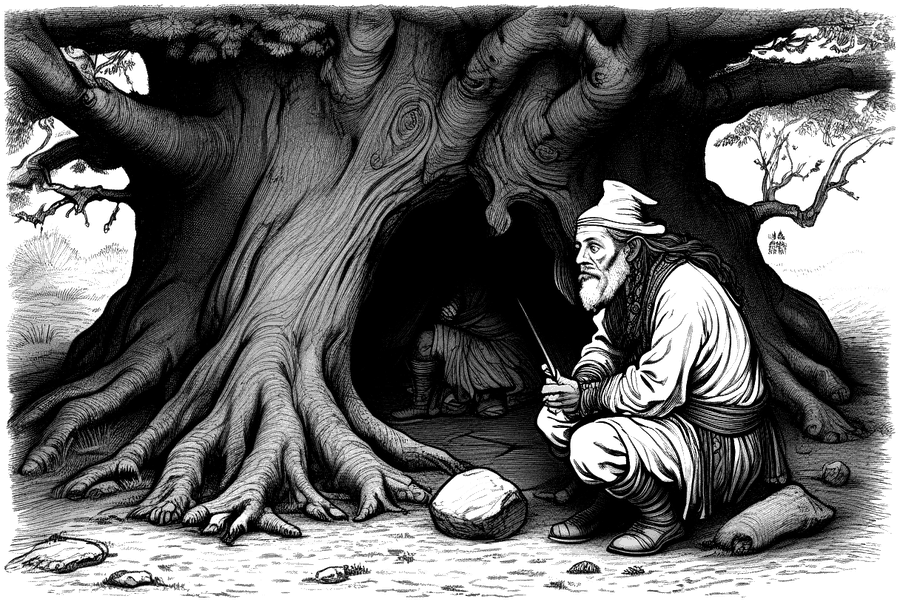
In the first winter the Penner built a fence. He was the spirit of walls, and he had never built one before, so he was very proud of it: a ring of posts as tall as the Bliksberg cedars, round the finest stag in the world. 'Now the stag is safe,' he said, which is what every gaoler says. Hofjor heard the stag calling and came over the snow, but the Penner had set watchmen on the posts and told them: let nothing with a crown through. So Hofjor shed his antlers. He dropped them in the snow on the tenth day of the month that bears his name, and he became an old bull with a bare head and his ribs showing, shuffling along. The watchmen laughed. 'Old Crownless,' they said. 'Let him in. He'll be dead by Thaw and save us the bother.' So in he went. Inside, he lay down beside the stag and chewed. Not the stag. The posts. All winter he chewed, a hand's width a night, while the watchmen watched the horizon for something with antlers. At Thaw the posts came down all at once, and the stag ran, and the old bull ran behind it with new antlers coming through like knives. That is why we gather antlers at the Shedding, and why the Antler Cathedral is built of shed antlers and not killed ones. It is also why, when a crownless elk lies down in the road, you go round it and say nothing rude. Hofjor mefø bjil fikisin: Hofjor hears the free hunter. He hears you too.

Moral
The one who looks least dangerous is the one who gets through the gate.
Heard
At the Shedding (10 Hofjor) in Fagervik, and in Kovavikian nurseries, where it is sung as Old Crownless in the Snow.

Utturi's Riddle

The Soumi of Valsiaria; told slowly, with pauses the listener must not fill

Sit. No, do not answer yet. You will see why. Utturi walks the edge of the forest at dusk. He has a lion's body, a scorpion's tail and the face of an old man who has heard everything twice. He stops travellers and asks them one riddle, always the same: What can you break by saying its name? A Manttamite came once with a drum and shouted 'Silence!' at once, very pleased with himself. Utturi ate him, drum and all. A merchant from Merland thought about it for nearly a minute, which for a Merlishman is a fortnight, and said, 'A promise.' That is a good answer. Utturi ate him too, because he said it too soon. Then came Nuuja Keskaanen, a charcoal-burner's daughter, with a basket of honey for the roots. She heard the riddle. She sat down on a root. She said nothing. The Lamp came up, went over and went down. Utturi waited too, because he is patient, and patience is the oldest god there is. At dawn she stood up, put the honey at his feet and walked past him into the forest, and he let her. She had answered. She had not broken it. Her grandson was the first Prince, the one who out-stared the war elephant, and the Princes say they learned how from her. Sululo jashe on puhai: the silent man is strong. The silent woman, my grandmother says, does not get eaten. You may laugh now. That was the joke.

Moral
Answer slowly, if at all.
Heard
In Valsiarian forest villages on the Silent Days (the 10th, 20th and 30th of each month), told in gestures until sunset and finished aloud after.

Ozena the Ferrywoman

Fuempild Astellians of the Orcosian river towns; told at the Ferrying

In the Grey Sweat the ferrymen died first, because everyone who was dying wanted to cross the river to the temple, and the river carried the sickness. By the third summer there was no ferryman left at Mantena, and the dead were piling up on the wrong bank. Ozena of Mantena was a ferryman's widow. She took her husband's boat. She crossed nine times a night, with the dead in the bottom of the boat and the dying in the bow. She took a coin from each of them, because Tunarejo, the dark ferryman, must be paid, and she said that if she crossed for nothing he would think she was poaching his trade. She set the coins on the graves on the far bank, one to a grave, so that the dead could pay their own fare when he came for them. She never caught the Sweat. People said she was dead already and Tunarejo had lent her back. On the ninth night of Tunarejo in 349 she rowed out at dusk and did not row back. In the morning the boat came ashore empty, with every coin she had ever taken stacked on the thwart. The Sweat was gone by Isgard. That is why the Ferrying lasts nine nights, why we leave coins on graves, and why we leave the door open: in case she is crossing with someone of ours. The Lion-Pontiff has never made her a saint, but the river towns have. Her night is the last of the Ferrying, and every boatman on the river rows one empty crossing for her, with an oar left in the rowlock.

Moral
Pay the ferryman, even when you are the ferryman.
Heard
At Mantena and every Fuempild river town on the ninth night of the Ferrying (9 Tunarejo).

Wawa Who Would Not Pay

The Tsuruma of Ritata; told every Sail-Dipping in the Brave Tavern

Wawa was a ferryman in the west of Ritata in the days when the sea-princes of Kushi took a toll on every crossing, one cash in ten. Wawa paid it for thirty years. Then, in 641, the Kushi toll-clerk came down to the slip with his string and his brush, and Wawa said: 'The ferry is alive. Ships are counted like people. She has worked thirty years and never been paid a cash. Her toll is her wages.' The clerk wrote it down, because clerks write everything down, and took it back to Kushi, where it was read aloud at the Ridge Court as a joke. That was the mistake. Every ferryman in the west heard the joke and stopped paying on behalf of his boat. Then the fishing boats stopped paying. Then the merchant ships gave themselves names and stopped paying too. Within a year Kushi was at war with a whole coastline of boats on strike, and it lost. Kushi came back for Ritata in 828 and beat it, and the Duke went and swore his fealty to an emperor on the far side of the sea, on dry land, where an oath sticks. But Wawa's ferry is still at the slip, and it still has not paid. Niko ri munasa chi sema iami: an oath at sea is a wave. Wawa never swore anything. He just stopped.

Moral
Nobody can make you keep paying a debt you never swore to.
Heard
In the Brave Tavern and along the western slips of Ritata at Sail-Dipping (Rocadones).

Songs

Seven Towers and a Ladder

The Roof-Runners of Shifton, and every tavern in Merland · Any night; loudest on Smithsday, after the casualty lists come out

Seven towers in Shifton town,
seven scales to weigh a crown,
seven clerks to count it twice,
and one tall ladder, oiled and nice.
Up the ladder, soft as snow,
whisper to the door below:
one for the Moot and one for the Hands,
and a silent coin where the lantern stands.
If the brass scale tips and there's no wind,
sell your boots, the Runners have been in.

Sung to the tune of a Forgefire hymn, which is half the reason the Moot banned it. The thieves' cant is the joke: a lantern is a watchman, a silent coin a bribe, and to whisper a door is to pick its lock.

Two Shillings a Day

Merlish recruits and the mercenary companies hired at Macham and Shifract · Recruiting season, all through 834; on the march east

Oh, I left my loom at Macham
and I left my mother's door,
for a man in a hat at the Coal Gate said
two shillings, and maybe more.
Two shillings a day, my darling,
and a musket that isn't mine,
and a Calloway loan to pay for the war,
and a box at the end of the line.
Two shillings a day, two shillings a day,
and the Weathervane counts us on Smithsday,
but it never prints our names.

Sung to an old Gatefair jig, faster each verse. Recruiting sergeants have tried to stop the last verse, and Agnes Pellbury printed it on the front of The Shifton Weathervane in Haymonth.

The Long Winter

The Norse of Kovavikia · Ashnight, at the Grudge-Telling; and at winter funerals

In the year the ice came walking
the white elk lay down at the door;
we counted the children at Breakice,
and counted them twice, and no more.
Somin fetskelk flodalkarin,
the snow remembers the dead.
The glacier came down in a single year
and sat where the hall had been;
we buried my father in Isgard
and in Thaw he could not be seen.
Somin fetskelk flodalkarin,
the snow remembers the dead.

A dirge for 525, sung with no instrument at the pace of someone walking in snow; the Fjallic refrain means 'the snow remembers the dead'. Raugarian officers have banned it in Kovavikian garrisons this year, because the conscripts have started singing 'the Huntress' where 'the glacier' should be.

Old Crownless in the Snow

Kovavikian and Raugarian children · The Shedding (10 Hofjor); a clapping game all winter

Old Crownless in the snow,
where did all your antlers go?
Left them on the Shedding day,
and the Penner looked away.
Old Crownless, chew the gate,
one post early, one post late;
Thaw comes, the fence comes down,
and Crownless runs with a brand-new crown!

The last line is shouted, and whoever shouts it last is the Penner in the next round. Kjelheim grandmothers dislike it as a Fagervik song, and sing it anyway.

The Spider's Wedding

Caravan drivers on the Hajhian roads · Around the fire on long hauls; at weddings, where it is thought lucky

A merchant's daughter of Csorke town
wed a Spider in a black silk gown.
He swore by his horse and he kept his word,
and she said nothing, which was absurd.
On the wedding night he slept like a stone;
she took his mask and she took his roan,
she took the loot of a hundred roads,
and now it's the Spiders that pay her tolls.

Every singer adds a verse listing what else she took, and the record, set at a wedding in Babadszalkado, is forty-one. The Tetmik Spiders pretend to find it funny.

Down the Long Water

Raftsmen of the Witfordge · All night on the fur-rafts, Thaw to Isgard, in time with the poles

Down the long water, the Worm's own vein,
pole, lads, pole, and pole again.
White sturgeon, white sturgeon, swim by the bow;
black sturgeon, black sturgeon, not now, not now.
Vecsatorvasza, mind the shoal,
the river wants someone, but not the whole.
Down the long water to the salt and the sea,
pole for the money and pole for me.

Sung one line to a man down the length of the raft; whoever drops his line buys the beer at the next landing. Kjelheimers think it blasphemous to call the Witfordge 'the Worm's own vein' in a work song, and the raftsmen think no Kjelheimer has ever poled a raft.

The Bells of the Hill

Mothers of Litta, Ortonzania · Bedtime, every night; more often in winter, when the spires are said to lengthen

Seven spires and a door of bone,
count them twice and you'll walk home.
Hush now, sleep, don't hum that song,
the spires have waited very long.
One for the warden, two for the gate,
three for the scholar who stayed too late,
four, five, six for the dead in rows,
and seven for the one that grows.

A lullaby that makes children count the Winedihul spires, since a child who cannot count them is the one the hill wants. Litta children learn early that the seventh spire is the tallest, and learn not to ask why.

Four Chains Hold Her

The Kettlekin gas-hands of Brasswhistle's Drift · At shift-change on the Drift, and at every launch on Kettlemoot (12 Haymonth)

One for the boiler and one for the bag,
one for the fixer and one for the brag!
Ketti tik zeptaz, ketti tik zeptaz!
Four chains hold her, and the Drift stays up.
Up in the vent-smoke, over the town,
nobody sinks her and nobody's down.
Ketti tik zeptaz! Ske ketti fe, tsak!
Four chains hold her, and a fifth for luck.

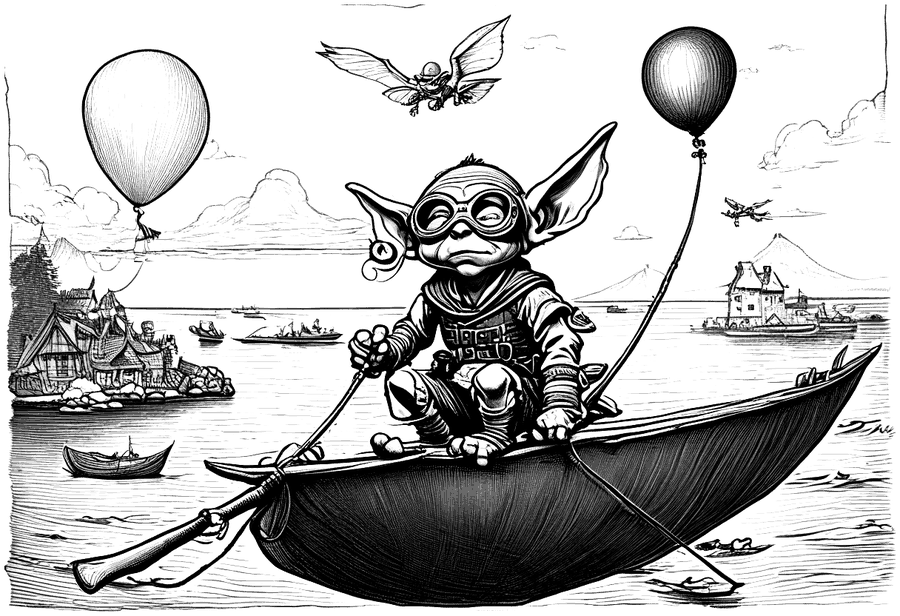
The Kettletalk refrains mean 'the kettle is singing' and 'if the kettle is silent, run'. The last line was 'and nobody's stuck' until this spring, when the fifth chain went on; Boiler Purists sing the whole song slowly, which is the worst insult in Kettlekin music.

The Queen's Collection

Norse hunters and fishers of the Northern Isles · Winter nights in the fish-sheds; new verses are added on Ship-Gift (29 Isgard)

Here is the Kittiwake, white in the mast,
she sailed for the whale and she sailed too fast.
Here is the Elkhorn, the Sister, the Wren,
forty-one ships and three hundred men.
Pretty ship, pretty ship, sail away north,
the Queen has a shelf for whatever you're worth.
And here is a new one, a Kushi hull,
with an eye on her bow and her hold still full.

Every verse names a ship, and the islanders claim there is one for every hull in the Hrafjor Ice. Bjørga Femsdottir of Gogur has used the song to name eleven figureheads and found it wrong about four; the Kushi verse is new this summer, for the Jun-maru.

Nobody Owns the Well

Qashari drovers and well-keepers of Asraha, Masha and Al Tubar · At every well while water is drawn; loudest at Wellwater, the first rain of the water-year

Down goes the bucket, the rope is long,
the well is older than any song.
Nakh hadoob daqar al!
Nobody owns the well.
Up comes the water, sweet and grey;
the stranger drinks before we may.
Ramooq al dahar lar sanaf!
The well gives water to the stranger.
Three days a guest, and on the fourth
we fill his skins and point him north.

Call and answer: the one on the rope sings the lines and everyone else answers with the Qashari refrains. At the Well of the Successors the courtiers sing the first refrain softly, since the Successor-Caliph's oldest title is Keeper of Wells.

The Shah's Elephants

Kavarri children of Kahpia · A clapping and counting game; sung in the streets at the Kneeling of the Elephants (1 Thaw)

One for the Shah on his elephant high,
two for the elephant holding the sky,
three for the Colossus, gold on its tusk,
four for the drum that brings rain at dusk,
five for the war and six for the crown,
and seven for the one who will never kneel down.

Every Kahpian adult knows the seventh line is not about an elephant: it means Ankhorra. Jowshian children sing 'six for the crown he can't keep', and get smacked for it.

Starboard Bench, Larboard Bench

Elladan rowers of Kaporesia · On the benches of every Kaporesian galley; at Sail-Dipping in Rocadones

Starboard bench, your oars are bent,
your captain sneezed and still he went!
Larboard bench, your mother swam
to Lefka for a Kettlekin man!
Pull for the harbour, pour the wine,
Rhaikein bonasas tor keteidea,
give wine to the sea and she'll treat you fine.

The benches trade improvised verses, each ruder than the last, until the coxswain calls the Elladan refrain, 'give wine to the sea'. Spitting in the water during the song ends it and starts a fight.

The Ship Comes Home

Tsuruma crews of Kushi and Ritata · Sail-Dipping in Rocadones, and the naming of a new hull

Dip the sail to the cape and the shrine,
dip it low for the dead of the line;
Kiyaaha ri mobamosa zu sobimi,
the shrine is watching the ship.
Name her by dark or she'll name herself,
rice on the shrine and a lamp on the shelf;
Mobamosa ri goni zu ratomi,
the ship comes home.

Sung slowly, with a bow at each refrain; both refrains use the sea form of the verb, so the singer promises nothing. Ritatan crews have sung 'the ship comes home' louder since the Duke's oath of 833, and Kushi officers have taken to treating it as a political song.

The Queen Rides

The Queen's Wings of Hajhia, and now most Hajhian riders · In the saddle in 834; sung at a walk and roared at the charge

Feathers on our backs like a storm coming in,
and the Emperor's claim is his grandmother's skin.
Tyelelka veng tük gyöm veng,
the Queen rides, and we ride.
She sleeps in a tent, and the tent moves on;
the Emperor dreams, and she's already gone.
Biföcsgel vengő!
Ride with the wind!

Made up in Thaw 834 by a lancer of the Queen's Wings and heard all over Erencszasz by Rocadones; the Vengri refrains mean 'the Queen rides, and we ride' and 'ride with the wind'. Balsozhian troopers sing it too, with ruder words about the grandmother.

Horn to Horn

Rhunari of the Hornlands and the Woolly Steppe · Hornday (20 Tunarejo), chanted by the crowd through the pushing contests

Horn to horn and hide to hide,
the Mother holds up either side.
Ndagaaya daa ngawaghaya!
Stand, and do not run!
Push till the sun goes red and low,
push till the crooked horn lets go.
Hoghoo ndagaa, hoghoo ndagaa,
the earth stands, the earth stands.

The crowd chants for both pushers at once, so nobody can say whom they cheered. This year mothers in the Hornlands have been heard humming it with the words left out.

Sayings, proverbs and curses

PeopleSayingMeaningWhen it is said
Angshire“A struck coin and an unstruck tale.”Trust what can be weighed, not what is told.Closing a bargain, or refusing to believe a traveller's story.
Angshire“Gabingdon, see me through.”A charm to the Mule of Gates for a safe road.Touching a gatepost when setting out; fleeing thieves say it too.
Angshire“He's had a disappointing season.”Flat understatement for ruin.Of a man who has lost his ship, his house or his leg.
Angshire“May your ledger never balance.”The worst Merlish curse: a life of debts, audits and lawsuits.Across a counting-house table to a cheat. In Shifton it is grounds for a lawsuit of its own.
NorseRøfan hvo ul vahas kræson
“The oath does not die with the man.”
Oaths and grudges are inherited.At the Grudge-Telling on Ashnight, and when a youngster takes on a dead father's feuds.
NorseRostovund bjanyl
“The Worm sleeps.”
A Kjelheim greeting and a prayer in one; the answer is the same words.At the door of a Kjelheim house, and after an earth tremor.
NorseFikisin biver ul
“The hunter does not forget.”
A quiet threat: the grudge is kept.Said softly to a man who has wronged you. Kovavikians say it of Raugarians this year.
VengrianTólócs ígyer muka csodor
“A broken oath is a dead horse.”
Breaking your word is as final as losing your horse on the steppe.Taught to every child; carved over fort gates; quoted at oath-breakers before they are given to the wind.
VengrianTörgel csodor törest gipegyönd
“Your horse will forget you.”
A curse: may you die and nobody, not even your horse, grieve you.To oath-breakers, horse-thieves and, this year, the Emperor's tax-riders.
VengrianBiföcsgel vengő
“Ride with the wind.”
Go well, and go fast.The common farewell from one rider to another; shouted at the charge by the Queen's Wings.
SoumiSululo jashe on puhai
“The silent man is strong.”
Restraint is strength.Carved over doors in Valsiari; said to a child who answers too quickly.
SoumiHoka oi luumuili
“An elephant does not run.”
Great things move in their own time, and cannot be hurried.To anyone in a hurry, and to anyone who thinks the Manttamite crusade will be over by winter.
AstellianPonozos nu jiasarear cafias soa
“A lie does not live in the light.”
What is hidden is already half a sin.Painted over the Sun Treasury door in Orcos; said on Lionsday, when nobody may keep a secret.
AstellianNoro vusienon cafias soa
“Give bread in the light.”
Charity should be public, so the Lion can see it.Ilbarescians say it while pointedly giving none to an Orcosian.
AstellianCuetano noro vusienon
“The river gives bread.”
What Ondaria's floods take, her silt gives back.At Floodwake (1 Ondaria). In Mantena this year it is said through the teeth.
ElladanRhaikein bonasas tor serderos
“Give wine to the harbour.”
Pay the spirits of a place before you ask anything of it.Before casting off; also said of bribing a harbour-master.
ElladanKeteidea siboun rephe
“The sea takes the captain.”
Whoever is in charge pays for it in the end.When an officer is blamed for a crew's mistake; said cheerfully at a captain's funeral.
TallianTofino mosi zinlo banosi
“The camel remembers every debt.”
Debts come back, with interest.To a slow payer; also before a caravan sets out, as a warning to cheats.
TallianTofino miomatere
“The camel laughs.”
Luck is coming, or something lost is about to turn up.When a lost thing is found, or when a camel makes that noise, which means money within the month.
TallianPepattere tomo rolia tofino
“Sing the camel a song.”
Pay what you owe, and a little extra.The last line of every Tallian story; also said to a debtor who is about to pay flat.
QashariDuhoor dahar dun rathar
“A guest is water in the desert.”
A guest is precious and must be kept alive.Welcoming anyone to a tent. Flokburgh courtiers twist it to 'a guest is an Eye in the house'.
QashariTham thawool al wazesh nabeef
“May your well run dry.”
The worst Qashari curse: may you have no water and no guests.Almost never said aloud. Said to someone's face, it ends friendships and sometimes starts feuds.
QashariDihrah al shadeet
“Mercy is a deep well.”
Forgiveness costs nothing and never runs out.When forgiving a debt or a blood-price.
KavarriPovar zinghar hikfoz
“The elephant remembers the king.”
Loyalty and grudges both last a long time.Of royal favour and royal revenge alike; muttered between the Colossus's legs.
KavarriZinghar duhur hast
“The king is a guest.”
Rulers come and go; the land and the elephants stay.Muttered at coronations. Jowshians say it of the Shah with relish.
TsurumaNiko ri munasa chi sema iami
“An oath at sea is a wave.”
A promise made at sea does not bind on land.Of a husband's promises, a captain's word and the Duke of Ritata's fealty.
TsurumaMunasa ri shachimi chiki munasa ri chanosemi
“The sea gives and the sea takes.”
Fortune turns. The sea form of the verbs makes even this proverb non-binding, which is the joke.On hearing of a wreck or a windfall; said at sea, never on land.
HalmiMeolgo ma monutmu seon reon ma tahammu
“The sea forgets, but the clan remembers.”
Feuds outlive storms.When an old grievance comes up, and of Kushi, always.
HalmiWiga ma nyankyo ma iramu
“The mountain is a grandmother.”
Respect the peaks and the old; both are patient.To a young person who boasts, and to Kushi surveyors who want to build on a peak.
HoarfolkGrêrn drokholk thaz grêrn brozârg
“A dead father is a good father.”
The Worm must stay dead.Taught to every child; said now and then of real fathers, at the funeral feast.
HoarfolkDrel dathul drikhri thrûn
“The mountain will forget your name.”
The gravest Hoarfolk curse: may your name be cut from the record wall. The verb is in the 'unstruck' form, for things not yet cut in stone, so it is a threat that can still be withdrawn.To a contract-breaker before the shame-wall hearing; spat at Open Forge factors this year.
HoarfolkGrêrn ûrkhakhê
“Do not wake the father.”
Do not dig too deep, and do not make trouble.On Wormwake Eve as a tunnel is sealed, and to anyone singing too loudly after the shift-bell.
BretbornNimir e mos ar nimir nos e lir
“We remember, and we do not read.”
Keep the history, leave the script alone.The commonest Bretborn proverb; said when anyone produces an Elder rubbing.
BretbornHeva e mos bret
“The ash remembers the fire.”
Nothing is ever entirely over.When the Gates of Bretbury are mentioned, and when an old quarrel flares.
BretbornSerir sa dhae nen tae
“They will forget your name.”
A curse: may your memory-name be struck from your family verse.To anyone who reads the Elder script aloud. Said by a Bretborn, it is rarely an empty threat.
RhunariNdagaaya daa hoghoo ndagaa
“Stand, and the earth stands.”
Hold your ground and the Grey Mother holds with you.Taught to every calf; said before battle and before a pushing contest.
RhunariYuwa ǂoru ngoro ba
“Your horn is crooked.”
You are a liar. Rhun has no other way to say it.Fighting words. Said in public, it ends in a pushing contest or a notched horn.
KettlekinSke ketti fe, tsak
“If the kettle is silent, run.”
Silence means pressure is building.In every workshop; said of quiet boilers, quiet bosses and quiet volcanoes.
KettlekinKetti zeptaz zop plangko ga
“The kettle sings and the sky opens.”
A blessing on a launch.Shouted as the ropes are let go on Kettlemoot, and as any balloon lifts.
GlassbornC·C'·C'ˈ | C~D♭~A♭~D♭
“The glass does not forget.”
What a Glassborn has heard, it keeps.Rung to anyone who repeats a question. Qashari traders use the English as a warning not to lie to a Stray.
GlassbornCC·E·F | C~F~E | C·E·A·Gˈ | Cˈ
“Many people make one song.”
Glassborn act only in chorus.Rung by the Choir. Caravan-masters quote it when a crew must pull together.
Dragons (Wyrmtongue)Kel vesh SĀRR
“A word binds the king.”
Ankhorra is bound by any promise it makes, and so is anyone who rules.The Kahpian courtiers' proverb, heard at every oath-taking.
Dragons (Wyrmtongue)Gashhul WĒNN
“The sea is hungry.”
Some debts must be paid whatever the vote.The Lantern Cove pirates' toast before every vote.
Dragons (Wyrmtongue)Rāt vōr tar shāllen
“Fire does not go into the river.”
Vyrnax will not cross running water.A charm said by Vengrian grandmothers below Foleleyme, without knowing the words.
Dragons (Wyrmtongue)Zēm ZĒMM
“The Worm dreams.”
The dragons are the Worm's dreams, and the dreamer is not finished.Cut in the dragons' own tongue over every tunnel the Hoarfolk seal on Wormwake Eve, as a warning to anyone who reopens it.

Books, broadsheets and scrolls

The Shifton Weathervane

Edited by Agnes Pellbury; printed on a Kettlekin press · Weekly since 744; this summer's issues
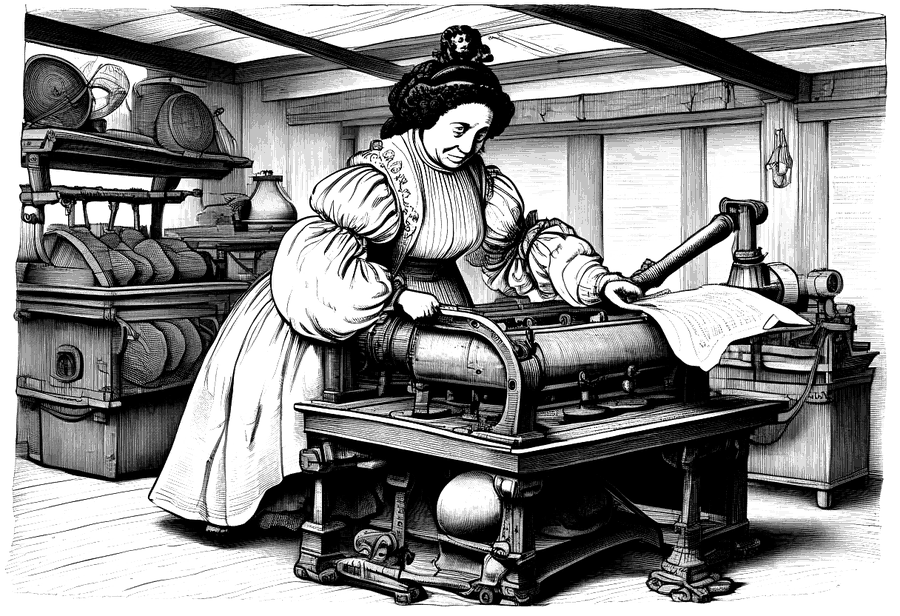
The Shifton Weathervane, drawn in pen and ink

The first broadsheet on the continent: shipping news, prices, court cases, scandal and, every Smithsday this year, the casualty lists, in numbers. It also prints the songs the Moot bans, a week after the Moot bans them.

Where
Any Merlish market on Smithsday; a week late in Fagervik, Orcos and Balsozha.
Price
1 d in Merland, 2 d elsewhere
Rumour
Agnes Pellbury keeps a second list with the names, and is waiting for the right week to print it.

The Ucillamope Almanack for 834

The Computists of the Ucillamope Library · Printed in Isgard 833; issued yearly since 312
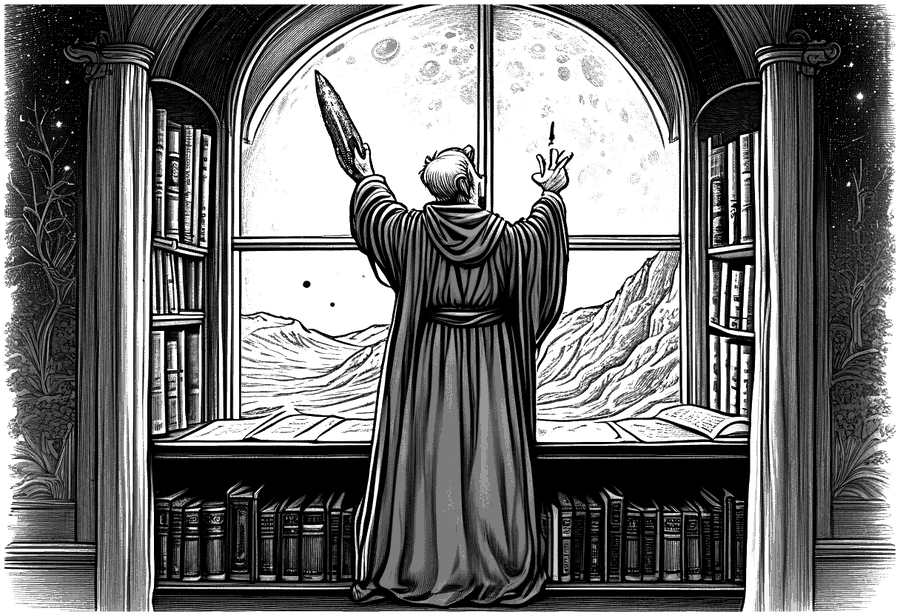
The Ucillamope Almanack for 834, drawn in pen and ink

The year's Reckoning: the months, the Ash Days, the Lamp's phases, the tides at twelve ports and the festival dates of every faith. It did not predict the Comet of Thaw, and the Library has issued a slim correction.

Where
Booksellers in Shifton, Orcos and Fagervik, and the stall at the Library's Lower Gate.
Price
3 sh; the correction 4 d
Rumour
The correction is thinner than it should be, because three pages of the Library's own comet tables were cut out before printing.

What the Comet Means

Doctor Obadiah Fennick, 'Astrologer to Three Courts', none of them named · Thaw 834; now in its fourth edition
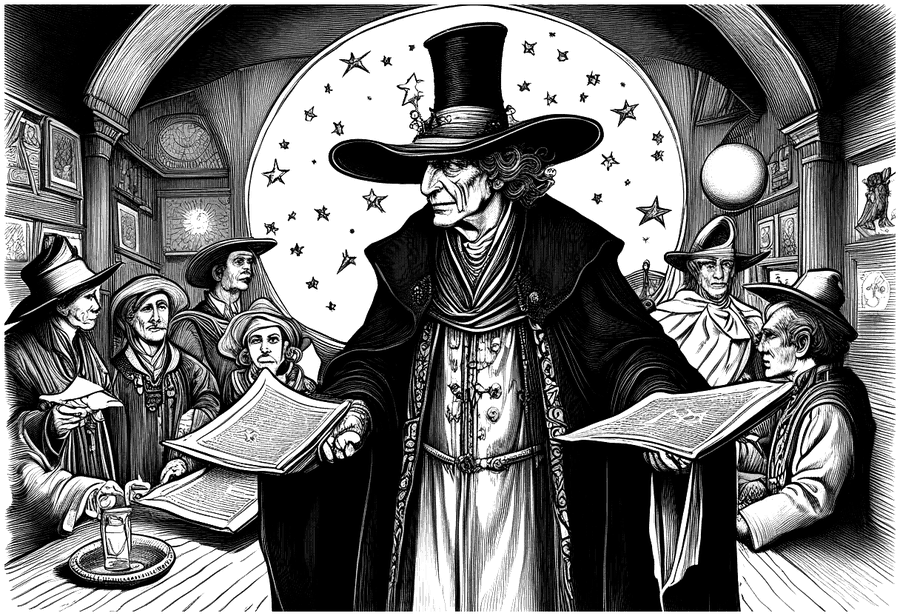
What the Comet Means, drawn in pen and ink

A broadsheet that proved the Comet of Thaw foretold a Merlish victory. Each new edition proves something else, and the fourth proves the comet foretold the fourth edition.

Where
Hawkers in Shifton, Macham and Shifract, and pinned up in every alehouse.
Price
2 d
Rumour
Fennick has been seen buying passage on the Kamiechia sky-lane, which some read as a prediction.

A Garden of Two Readings

Compiled by Vezhan Turdashani, poet of the Poets' Garden · c. 790, with additions every year since
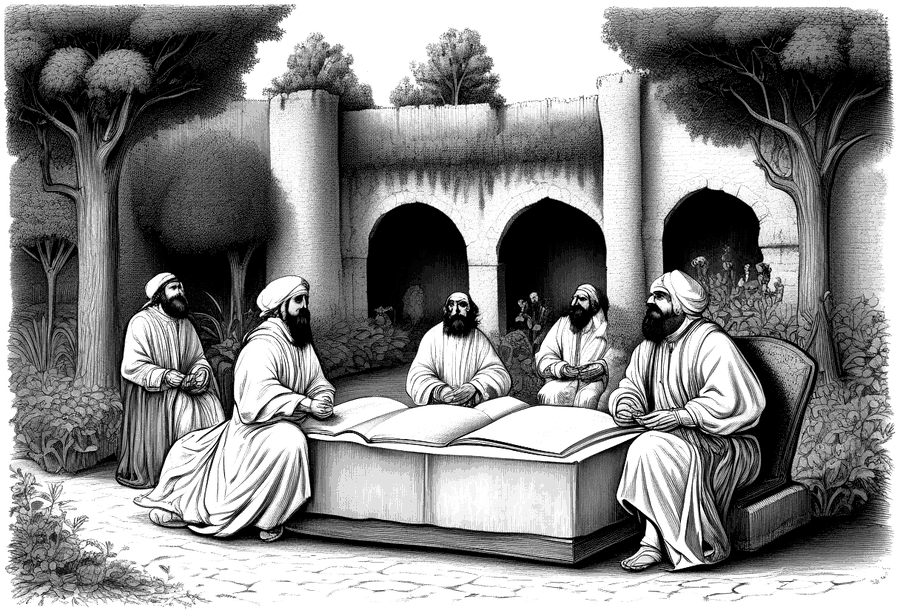
A Garden of Two Readings, drawn in pen and ink

Two hundred Kavarri court poems written so that every line can be read as praise or as insult, each printed with its 'safe' reading beside it. The Shah's censors approved the whole book, which is the best joke in it.

Where
Booksellers at the gate of the Poets' Garden in Shahpabad; copies turn up in Meedihar.
Price
12 siglos (about 1½ cr)
Rumour
Poem forty, read the second way, names the courtier who sold the Jowshian war plans.

The Book of Wells

The scribes of the Keeper of Wells at Qaqah; the current copy by Zumaadah al-Sazeeqi · Begun after the First Wells Compact of 41; recopied every ten years, last in 830
The Book of Wells, drawn in pen and ink

Every well from Qaqah to the Mashan coast, with its depth, its taste, its guardian spirit and its guest-customs. It leaves out the Glass Waste entirely.

Where
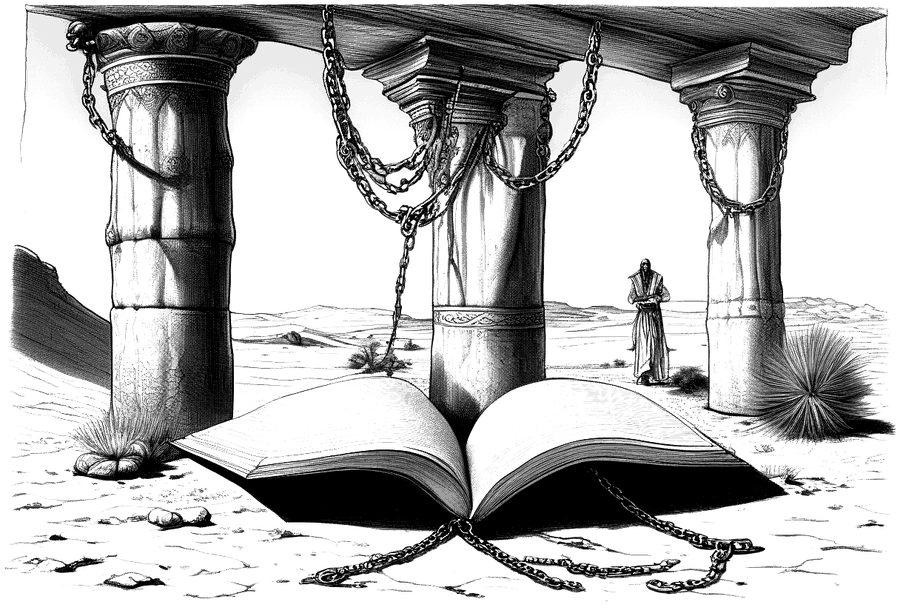
The Scriptorium at Qaqah; worn copies hang on chains in the larger caravanserais.
Price
2 mithqal (about 2 cr 6 sh), or free to a caravan-master who swears to send back corrections
Rumour
The 830 copy lists one well more than the 820 copy, in the middle of the Glass Waste, and no scribe admits to adding it.

The Blank Book of Qulaashah

Qulaashah al-Radeeghi · 455, in the Glass Waste
The Blank Book of Qulaashah, drawn in pen and ink

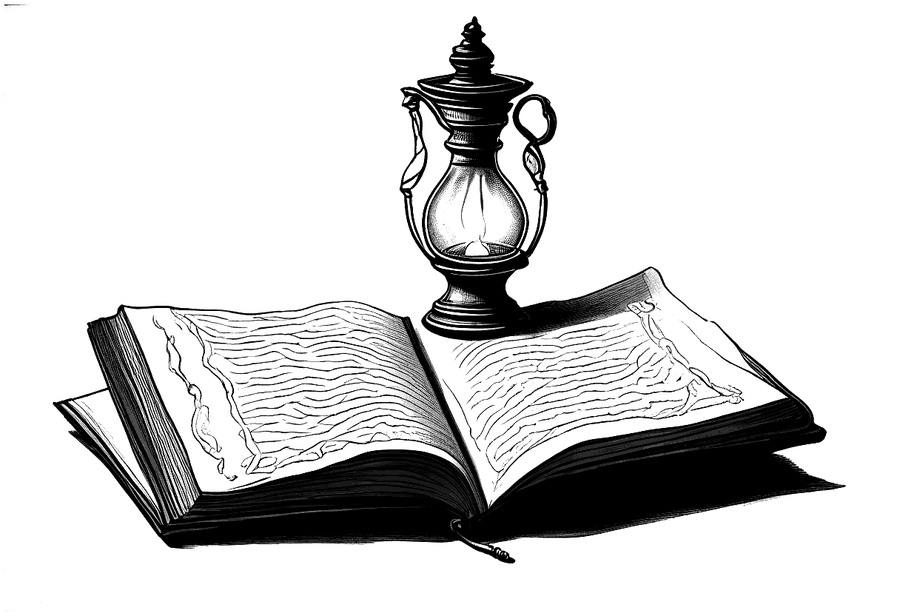
The notebook the scholar carried into the Waste to copy an inscription, three hundred pages, every one blank and worn as if from long use. It is the Scriptorium's most visited object and its least read.

Where
The Scriptorium at Qaqah, shown under a scribe's eye.
Price
Not for sale. A look costs a gift to the Scriptorium, usually 1 cr.
Rumour
Nisdah al-Naleeti held page 211 up to a lamp and swears she saw the pressure-marks of writing.

A Gathering of the Memory, as Overheard

Humphrey Vellacott, a reader of the Ucillamope Library · 791
A Gathering of the Memory, as Overheard, drawn in pen and ink

An Angshire scholar spent nine Ashnights crouched outside Mistwood root-houses writing down whatever he could hear. He got about a third of the Memory, much of it wrong, and the Bretborn bought and burned the whole first printing.

Where
Under the counter in Fagervik and Shifton; one copy in the Library's closed room.
Price
25 cr, if you can find one
Rumour
Vellacott's notes have eleven lines where the Hollow Verse should be, and nobody knows who sang them to him.

The Hundred Pibbets

Set down by Tippet Rivetsong, from anybody who would talk · First printed 819; new stories added every Kettlemoot
The Hundred Pibbets, drawn in pen and ink

A chapbook of stories about Pibbet Brasswhistle: the stolen oars, the first flight, the descent into Foleleyme and ninety-seven more. They contradict each other freely, and Kettlekin say they are all true.

Where
Brasswhistle's Drift, the Kettle Coast, and any print shop with a Kettlekin foreman.
Price
6 cogs (about 1 sh), or one new Pibbet story
Rumour
Kekkap Patchsilk, who flew with Pibbet, says exactly one of the hundred is true, and that it is the dullest.

The Honey Psalter

Lirada of Fuensada and the poets of the Honey Years · The 470s
The Honey Psalter, drawn in pen and ink

Three hundred short psalms to Mieles, Ondaria and Rocadones from Orcosia's golden age. Every Orcosian child learns the bee-psalms, and nobody admits the ones to the Lion are the weakest.

Where
Temple stalls in Orcos and Chuejon; the illuminated edition from the Sun Treasury's own copyists.
Price
1 sun-real (about 1 cr 1 sh); illuminated, 20 cr
Rumour
One psalm, read with every second line left out, is a recipe for black-honey wine that the Sun Temple's physicians call poison.

Rutter of the Chain

Yakomama ke Hatamasa, navigator of the Kushi Admiralty · Revised 831; first rutter after the Ichi-maru's voyages of 604
Rutter of the Chain, drawn in pen and ink

Sailing directions for every island of the Chain: harbour marks, shrines to dip to, tolls, water, and the bearings of the Lamp of the Chain. The best book a sea-going hero can own.

Where
Ship-chandlers in Kamiechia and at the Sea Exchange in Meedihar.
Price
One string of cash (about 1 cr 5 sh)
Rumour
The new edition leaves out a channel near Tebek, and Kushi officers are quietly buying up the old ones.

The Articles of the Captaincy

The founders of the Free Captaincy of Tebek, by vote · 821, amended at every Admiral's election
The Articles of the Captaincy, drawn in pen and ink

The law of Tebek and Lantern Cove: shares, votes, the plank, marooning, and who may sit on the Feeding Barge. Every pirate is supposed to own a copy and most use it to light pipes.

Where
Free from the Ledger Clerks in Lantern Cove; sold as curiosities in Shifton.
Price
Free in the Cove; 1 sh in Shifton
Rumour
Article Thirteen, on feeding the deep, was added in pencil in 821, and nobody has ever voted on it.

The Book of Pauses

Anonymous, a priest of the Church of the Silent War · About 600
The Book of Pauses, drawn in pen and ink

A hundred sayings of the Silent War, each followed by a blank half-page for the reader to wait over. Soumi read it slowly and Manttamites read it angrily.

Where
The Quiet Temples of Valsiari, and the Quiet Quarter in Shifract.
Price
1 elephant mark (1½ sh), paid without a word
Rumour
Manttamites claim the blank pages hide the real teaching in lemon-juice ink, and have been caught warming them over candles.

Shame-Wall Rubbings of Gravdalla

Unlicensed rubbing-sellers at the gate of Gravdalla Deep · Fresh sheets whenever the wall gets a new line
Shame-Wall Rubbings of Gravdalla, drawn in pen and ink

Charcoal rubbings of the names and broken contracts cut into Gravdalla's shame-wall, sold as a scandal sheet. Human merchants buy them to learn who not to deal with.

Where
Outside the upper gate of Gravdalla Deep, and in Fagervik's iron market.
Price
3 d a sheet
Rumour
The best seller this summer is not from the shame-wall at all: it is the line the record-keeper Gravdal Khêzdis cut in the record wall about being refused the lower galleries.