Play Books Atlas

Factions & orders

Realms go to war, but orders, guilds and churches decide how. Every faction below cuts across borders, and none of them is united: each holds smaller factions that want different things, and the cracks between them are where adventurers find work.

The Successor's Eyes, drawn in pen and ink
On this page
  1. The Thetletown Church
  2. The Counting-Houses
  3. The Powder Moot
  4. The Lanternwrights
  5. The Order of the Unread Script
  6. The Hunt of Hofjor
  7. The Manttamite Crusade
  8. The Leopard Wardens
  9. The Hornmoot
  10. The Successor's Eyes
  11. The Wyrmwatch
  12. The Quiet Hands
  13. The Ashworth Circle
  14. The Brethren of the Black Ledger
  15. The Board of Nine
  16. The Sun Temple
  17. The dread powers
  18. Court factions in the great realms

The Thetletown Church
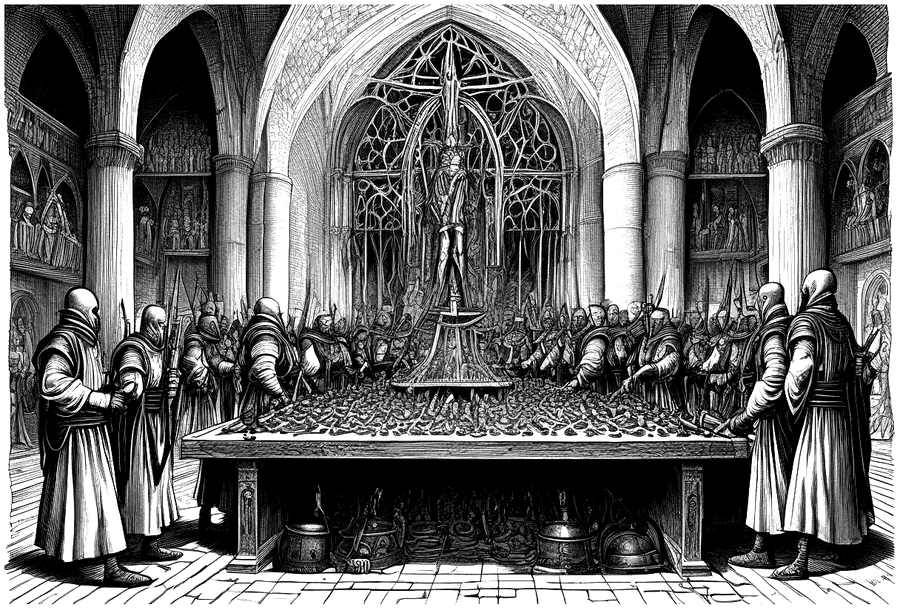
The faith of Uxbridmanch · Merland, Ortonzania, Balsozhia · led by Archsmith Wulfstan Hale
The Thetletown Church, drawn in pen and ink

The largest organised faith in the world, and the richest. It blesses trade, craft and lawful war, and permits lending at interest. Its clergy sit on both sides of the war.

  • The Anvil. War-preachers who call the struggle against Balsozhia holy, though Balsozhia shares the faith. Strong in Merland.
  • The Bellows. Merchant clergy close to the banks, who want peace and profits and quietly fund both sides.
  • The Rust-Watch. Inquisitors who hunt worshippers of Coldharbour the Unforging. They suspect the Ashworth Circle and are probably right.
Life & lore
Feast days
Forgefire, 1 Uxbridmanch, is the Church's great day: every forge is relit, apprentices are bound and Archsmith Wulfstan Hale strikes the year's first coin on the mother-anvil at Thetletown. On Tool-Wake, 14 Thaw, pilgrims walk the Lutondole Forest near Totrinch and dip worn-out tools in its springs. On Ashnight the priests put out the altar-fires last of all, and at New Fire they relight them first.
Daily life
A parish priest wears a leather apron over grey wool and a small iron hammer at the belt, and is expected to know a trade: most are smiths, wheelwrights or clock-menders. Clergy eat together in the chapel forge-hall: pease pottage, black bread and small beer, with mutton on Smithsday. Novices sleep in the loft over the chapel forge, which is warm in Longnight and unbearable in Haymonth.
Oaths & rites
A novice is ordained by forging his own hammer-head and swearing on it 'to finish what I start'. Rank goes by hammers: a priest carries one, a canon two, the Archsmith three. A priest caught praying to Coldharbour is 'unforged': his hammer is broken over the anvil and he is handed to the Rust-Watch. Clergy are buried with their hammer on the chest and their head towards the forge.
What they say
Merland's commonest oath, 'The anvil keeps its word', means a contract blessed in church will be enforced, and debtors hear it as a threat. Outsiders say a Thetletown priest will bless both armies before breakfast and bill them both by noon. A sneeze at a wedding is Coldharbour coughing rust, and the couple must touch iron at once.
History
The Church began as the guild-chapel of the smiths of Thetletown, and its first Archsmith was elected by the hammermen. In 701 a church council went further than the Synod of Totrinch and called lending at interest 'forging with time', and Josiah Calloway opened his bank the same year. The Rust-Watch was founded in 744, the year the first broadsheet press was found rusted solid.
Members
Canon Hereward Bastock is the loudest Anvil preacher in Shifton; he reads the casualty lists from the pulpit every Smithsday and wants the war declared holy. Father Aldous Wren of the Bellows arranges loans to both sides and wants peace before the banks fail. Inquisitor Margaret Thorne of the Rust-Watch keeps a list of names and wants proof against the Ashworth Circle.
This year
The Archsmith is the First Burgess's uncle, so the Anvil preaches the war from every Merlish pulpit while Balsozhian priests of the same Church bless the Emperor's cannon. Canon Bastock has asked the Archsmith to unforge the Balsozhian clergy, and has had no answer. The Church preached the Comet of Thaw as a spark from the Smith's hammer, which settled nothing.
The war
The Church sits on both sides of the war. Its field hospitals boil everything in the Tent Sea at Erencszasz, and its gravewatchers have gone to the front. In Witfordge, Father Gyemos Lory hides boys from the Balsozhian press-gangs in his bell-loft, and the Anvil in Shifton is trying to decide whether he is a hero or a traitor.
Money & law
Marriage at the anvil costs 1 sh to 1 cr, and every contract the Church blesses pays a tithe of one part in twenty. The Bellows lend at interest through a counting-room in Macham. Church courts fine idle apprentices 1 d a day. A priest who breaks a contract is defrocked and his hammer is sold towards the debt.
Healing
The Church runs hospitals in Shifton, Macham and Balsozha's Lake Palace. It heals wounds for 5 sh, dresses burns with lime-water and linseed oil and boils every pot and blanket. Priests treat the cold of the undead with hot iron held near the skin. The clergy's own complaints are forge-cough and burn-scarred hands, and old priests are pensioned off to ring the bells.

Adventure seed. Canon Bastock wants a sealed letter carried to the Archsmith at Thetletown before Forgefire. The Bellows will pay twice as much to have it lost on the road.
The Counting-Houses

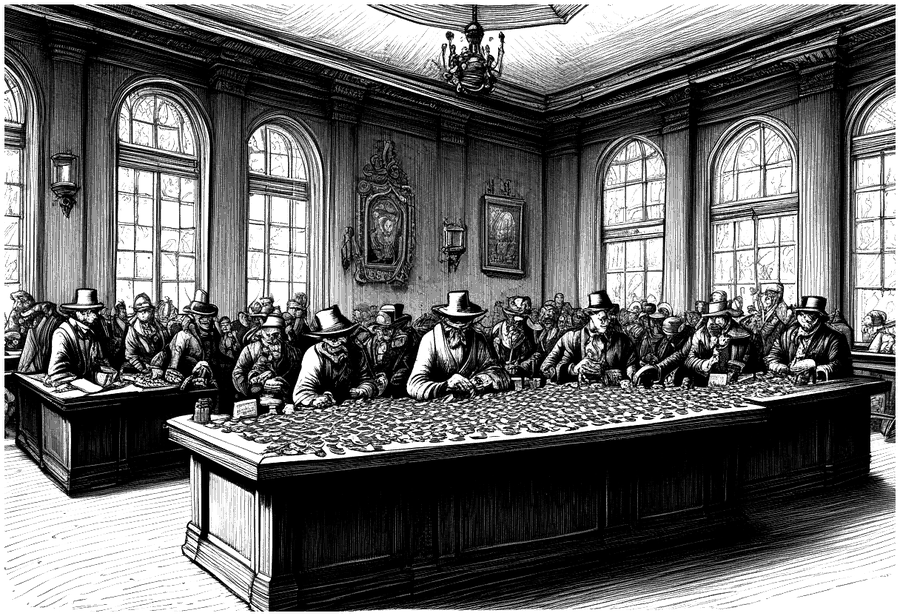
Shifton, Macham, Torkburgh, Meedihar · no single leader
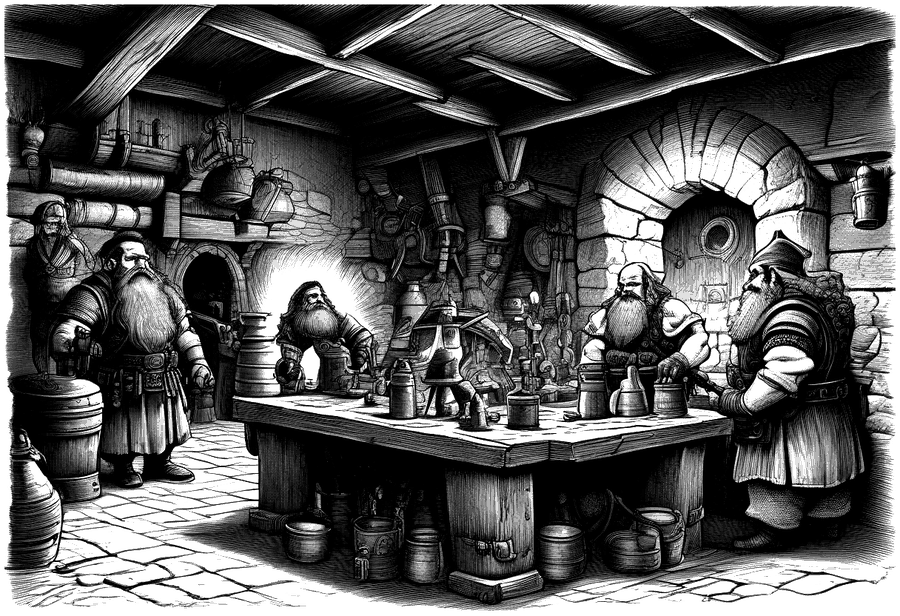
The Counting-Houses, drawn in pen and ink

The banks of Merland lend to kings, buy cities' debts and set the Shifton Standard. They are the reason Merland can fight a war it has no army for.

  • Calloway & Daughters. Old money under the matriarch Edith Calloway, now lending heavily to Queen Dorottya. If Hajhia falls, so does the house.
  • The Torkburgh Lanterns. Deep in Balsozhian silver and dinars, they want peace on any terms before the dinar collapses.
  • The Paper Men. Young bankers who want Shifton to print notes like the Company. The Guild of the Scales calls them heretics.
Life & lore
Feast days
Forgefire, 1 Uxbridmanch, is the bankers' new year: the Guild of the Scales weighs the year's first crown in Macham, and every house opens a new ledger. Quarter-days, the last day of Thaw, Rocadones, Reaping and Isgard, are when deposit fees fall due, and clerks work through the night. No debt may be called on the Ash Days, so the partners close the vaults and go gambling like everyone else in Merland.
Daily life
A junior clerk earns 1 sh a day, works at a slanted desk from the dawn bell until the lamps are lit, and wears a black coat with paper cuffs that he changes at noon. Clerks eat chop-house mutton and drink coffee in the houses under the Counting-Towers, where Calloway paper is priced by the hour. Partners live on Moot Square, and clerks lodge four to a room off Lantern Row.
Oaths & rites
A clerk is articled for seven years and swears on his house's first ledger never to reveal a countersign. A partner is made by being given a key to the vault, and is unmade by having it taken back. A clerk who sells a countersign is handed to the Moot and hanged as a forger; the house pays for the rope and writes it off. Bankers are buried with their account books closed.
What they say
Shifton says 'Borrow from Calloway, pay the Daughters', meaning a debt outlives the man who signed it. Speculators believe the brass scales on the Towers tip before bad news, and pay scale-watchers for their logs. Children dare each other to touch the Elder breastplate in Calloway's first counting-house, which Josiah Calloway bought from a man who went back into Winedihul for the helmet.
History
Josiah Calloway founded his bank in 701, and the Guild of the Scales was chartered in 712 to set the Shifton Standard. The Lantern Bank of Torkburgh grew out of the Torkburgh family's wool trade. Robert Calloway married Anne Torkburgh, so the two great rival houses are cousins who do not dine together.
Members
Maud Calloway runs the Meedihar house and is quietly selling Company notes before they fall. Ralph Torkburgh, senior partner of the Lantern Bank, holds more Balsozhian dinars than any man alive and wants peace on any terms. Nathaniel Quarles, twenty-six, leads the Paper Men and has printed sample Shifton notes, which Master Weigher Hugh Allard of the Guild of the Scales wants burned.
This year
Edith Calloway, sixty-six, has lent so heavily to Queen Dorottya that if Hajhia falls, so does the house. The Calloway scale tipped twice in Rocadones, and Calloway paper fell in the coffee-houses. A Torkburgh banker lost a letter to the Quiet Hands' Whisperers in Mieles and has voted very strangely in the Moot ever since.
The war
Merland fights a war it has no army for, on Calloway loans, at taxes of one part in fifteen. The Lanterns are deep in horse-dinars, worth 0.7 of a crown and thinning, and their Balsozhian partners walk the Towers in pairs. Mercenary captains in Macham are paid in letters of credit, which the Lanterns cash at a discount of a tenth.
Money & law
Deposits cost 1% a season to keep, and loans run at 12–20% a year. Letters of credit can be cashed at branch houses in Shifton, Macham, Torkburgh, Shifract, Orcos and Valsiari, and in Meedihar after a wait, and they are useless without the countersign. Counterfeiting the crown is a hanging matter, and defaulters sit in the Ledger House at Shifton until their families pay.
Healing
Bankers keep Library-trained physicians who bleed them for apoplexy every quarter-day. Clerks suffer the crooked back and the coffee-shakes, which the Church's hospital on Moot Square treats. Junior clerks get ink-lip from licking their quills, and it is cured by breaking the habit.

Adventure seed. Nathaniel Quarles needs a sample Shifton note carried to the Print Yard at Meedihar. The Guild of the Scales has already hired someone to stop it arriving.

The Powder Moot

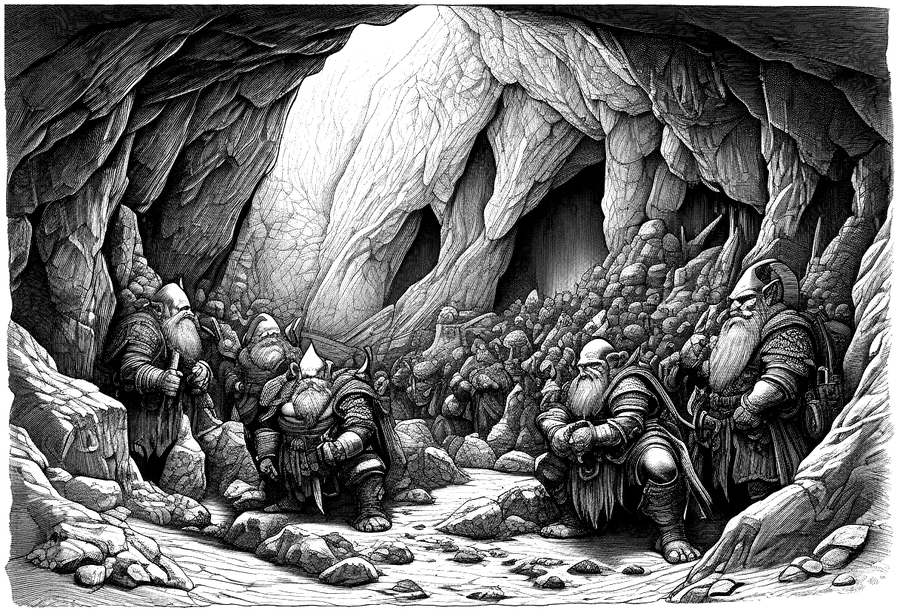
Hoarfolk gunsmiths and powder-makers · all seven holds · led by Grand Fusewarden Brannoc of Gravdalla
The Powder Moot, drawn in pen and ink

The Moot holds the secret of thunder-salt and licenses its use to human foundries. By Hoarfolk law it sells to all and sides with none. That law broke last year.

  • The Old Anvils. Traditionalists who want the neutrality law enforced and the Open Forge expelled.
  • The Open Forge. Led by Hold-master Duvra of Silverhold, who sold siege cannon to Balsozhia and says the law was always a fiction.
  • The Marrow-Delvers. Miners digging ever deeper for marrow-salt to sell to Bretborn riflemen and Kettlekin gas-works. The oldest Hoarfolk call them dragon-feeders.
Life & lore
Feast days
The Moot's own feast is the Day of the First Thunder, 14 Hofjor. Every Gravdalla forge-tower fires one blank charge at noon, and each of the other holds answers with a single shot. On Wormwake Eve, 6 Rostovund, every hold seals one old tunnel. This Reaping the full Moot of Anvils meets at the Thousand-Step Hold to vote on expelling the Open Forge.
Daily life
A Fusewarden spends the shift in the mixing-galleries in felt slippers and leather gloves, with no iron on the body, because one spark ends the shift. Powder-hands eat smoked trout, mushroom stew and black bread baked on forge-heat, and never eat in the galleries. Everyone smells of sulphur and everyone coughs, and the hammer-beat of the forge-towers tells the time instead of bells.
Oaths & rites
An apprentice burns his first pinch of thunder-salt on the anvil and must not flinch. A Fusewarden swears on the Moot's ledger-stone 'to sell to all and side with none', and his name is cut into Gravdalla's record wall. A member who sells the recipe is cut into the shame-wall and sent up for life. The Moot's dead are cremated, and their ash is mixed into the hold's powder.
What they say
The Moot's saying is Kharn bagokh thaz grumrok zâl khoz, 'A gun without salt is cold iron', and every human foundry knows it is a threat. The oldest Hoarfolk call the Marrow-Delvers dragon-feeders. Merlish gunners believe Moot powder will not fire at a Hoarfolk because it has Hoarfolk ash in it. Half of that is true.
History
Thunder-salt was first mixed at Gravdalla Deep in 612, when alchemists blew the roof off a gallery, and the Moot was formed within ten years to keep the recipe among the holds. The neutrality law was cut into the ledger-stone in 634, the year the forge-towers were lit. It held for two centuries, until the Open Forge sold siege cannon to Balsozhia in 833.
Members
Lenhal Hozgrim, speaker of the Old Anvils, has counted the votes for expelling the Open Forge three times and comes up one short every time. Hold-master Duvra of Silverhold says the law was always a fiction and is buying votes in ingot-marks. Gravdal Thurn, the Moot's factor in Shifton, is quietly packing in case the Merlish Moot seizes his warehouses.
This year
Grand Fusewarden Brannoc has said nothing about Gravdalla's sealed lower gates, and his silence is costing the Old Anvils votes. Teggap Gearbiter's Kettlekin cannon, which needs no Hoarfolk design, has vanished from Macham along with its maker, and the Moot's agents are asking after both. Gravdalla now buys marrow-salt from Silverhold, which the Old Anvils call buying from the enemy.
The war
The Open Forge's cannon are going down the river to Erencszasz by barge, and Hoarfolk factors are spat at in Merlish towns. Raugaria wants Gravdalla guns for its regiments, and the Old Anvils will not sell until the Open Forge is expelled. Thunder-salt has doubled to 2 cr a pound since the sale, and Raugarian hunters cannot afford powder.
Money & law
The Moot licenses thunder-salt to human foundries at 1 cr a pound, and a foundry's yearly licence costs 50 ingot-marks. A Gravdalla hand-gonne costs 20 cr. Unlicensed salt from the Stair porters costs 3 cr a pound. Anyone who sells powder without a licence is sent up for life, a broken contract goes on the shame-wall, and the Moot lends only to other holds.
Healing
Powder burns are dressed with goose-fat and snow. Blast-deafness is so common that Fusewardens talk in hand-signs in the galleries. Delvers with grey lung are retired at sixty. The Bone-Rite forbids healing with marrow-salt, so a marrow-burned Delver gets cold iron bands on both wrists, at 2 sh a pair from Gravdalla smiths.

Adventure seed. Lenhal Hozgrim needs one more vote before Reaping. A Silverhold Fusewarden will change sides if someone brings his brother back across the Balsozhian lines.

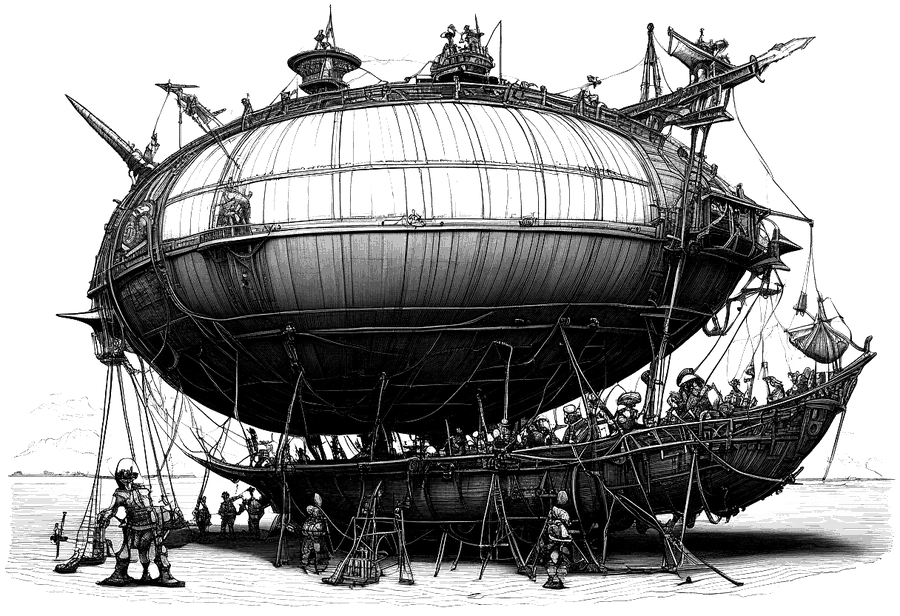
The Lanternwrights

The Kettlekin guild of sky-ship builders and crews · led by Chief Whistle Nix Coilgrabber
The Lanternwrights, drawn in pen and ink

The guild that holds the secret of marrow-gas and builds every sky-ship in the world. Pibbet Brasswhistle founded it. Kettlekin live short lives, and he has been dead thirty years.

  • The Chartered. Crews licensed by Kushi to fly from the Sky-Docks. Respectable, well paid, and called collars by the others.
  • The Free Balloonists. Kettlekin who fly for the Free Captaincy of Tebek, and who think the Chartered sold the sky to a prince.
  • The Boiler Purists. Old crews who refuse to fly on marrow-gas, because they believe the gas-works are waking Foleleyme.
Life & lore
Feast days
Kettlemoot, 12 Haymonth, is days away. Every balloon goes up and the year's best idea is shouted from the Drift's Bell Deck, and this year the Boiler Purists will force a vote on grounding the gas-ships. Pibbet's Day, 9 Ondaria, marks the founder's first flight in 791. At New Fire every crew relights its boiler, and at Kamiechia the fire is taken from the Ridge Palace's hearth.
Daily life
A Lanternwright crew works in sixes: two on the boiler, two on the bag, one on the ropes and a captain who shouts. They eat six small meals a day of fried grubs, boiler-stewed fish and sugarcane, and drink sweet tea from tins. Chartered crews wear blue collars and sleep in the Kettle Quarter at Kamiechia, and Free Balloonists sleep in their hulls. Every tool is brass, because iron sparks.
Oaths & rites
An apprentice joins at six, earns a work-name for her first real repair and a captain's whistle for her first solo flight. The guild's secrets are kept in the Book of Sixes, and each master holds one sixth of it. A member who sells the gas-recipe is put in a tethered basket and the tether is cut over the sea. The dead are burned in a boiler or let go in an old gas-bag.
What they say
The guild's motto is Zak tak dun vel, 'Six hands make a ship', and it is painted on every hull at the Drift. Nobody sinks a balloon, even in war. Outsiders say a Kettlekin can hear a leak across a valley, and the Chartered say a Free Balloonist can hear a purse across one.
History
Pibbet Brasswhistle founded the guild after his flight of 791. In 804, the year he died, he tied the first two hulls of the Drift together over Foleleyme. The Great Pop of 806 blew the roof off the first gas-shed, and gas has been stored in sixes of small tanks ever since. In 812 Kushi granted the Kettle Quarter to the Chartered, and the guild has argued about it ever since.
Members
Works-Master Tokka Gaugewright runs the Foleleyme gas-works and denies everything. Bubbo Envelope-Stitcher of the Chartered wants the Free Balloonists hanged. Kukket Coalhand, forty-one and old for a Kettlekin, leads the Boiler Purists, and still flies a coal-fired hot-air kettle that she built herself.
This year
Foleleyme is smoking, its vents glow at night and marrow-wraiths walk the pipe-galleries, yet Chief Whistle Nix Coilgrabber says the Drift is safe while the mountain only smokes. His foreman Dattit Mox-Zrum-Zin wants the three hottest vents capped and has been refused. The guild has forbidden its crews to talk to the Wyrmwatch post on the ridge.
The war
Every sky-ship in the war fills at Foleleyme, and Lanternwright crews fly for both alliances. Kushi offers Chartered crews double pay to fly for the Compact, and some Free Balloonists have fled to Tebek rather than take it. Gas has risen by half since Rocadones, and the Drift's yards are booked until Isgard.
Money & law
Marrow-gas sells at the Drift for 4 cr a barrel, and filling a small sky-ship's envelope at the works costs 30 cr. Guild dues are a sixth of a crew's pay, in cogs. The guild's one law is 'who fixes it owns it'. A member who hoards a design or seals another's valve is thrown out of the workshop moot, and a gas-thief hangs from a tether for a day.
Healing
Gas-cough from leaking envelopes, sky-sickness, scalds and lost fingers are the wounds of the trade. Crews carry goose-fat, lint and climber's leaf, and swear by ginger. Marrow-burn at the works is treated with cold iron rings. Kettlekin live about forty years, and the old get the Rattle from coal smoke.

Adventure seed. Kukket Coalhand will pay in cogs for proof that Foleleyme breathes faster when the gas-works draw. Nix Coilgrabber will pay in crowns for the same proof, to burn it.

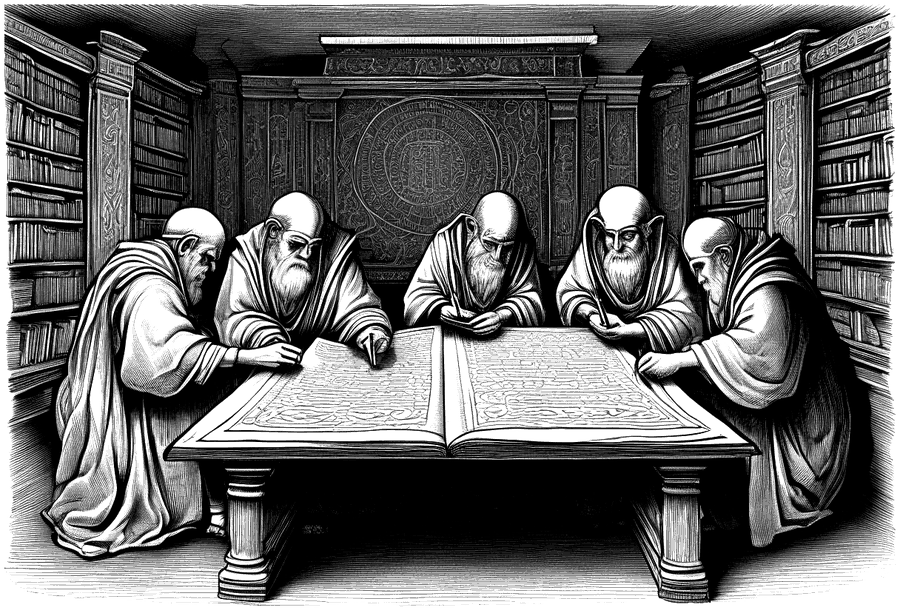
The Order of the Unread Script

Scholars of the Elder script · Ucillamope, Orcos, Qaqah · led by Master Reader Ysolda Marren
The Order of the Unread Script, drawn in pen and ink

Three centuries of scholars trying to read the Elder Crowns' writing. They have learned to sort the glyphs, guess at a few dozen words, and argue.

  • The Orcosian Readers. The scholarly core, who publish everything they learn.
  • The Successor's Scribes. Asrahan members who share nothing and want one thing: proof that the caliphs are the Crowns' heirs.
  • The Silent Scholars. Bretborn members who joined to make sure the script is never read, and who quietly destroy the best work.
Life & lore
Feast days
On the Sorting, 10 Reaping, every chapter-house reads aloud the year's new guesses at Elder words, and the Order votes on which to keep. The Orcosian Readers publish their year's work on Lionsday, 21 Rocadones, when nobody may keep a secret, and the Successor's Scribes stay at home that day. New members are admitted at New Fire.
Daily life
Readers queue at the Library's Lower Gate at dawn with ticket and ink, and work by lens and daylight because flame is banned. They eat bread, olives and Allavillo honey at their desks. This year they are searched to the skin on the way out. Rubbings are taken with heel-ball on rice paper, and a Reader's thumbs stay black for life.
Oaths & rites
A novice is admitted when she can sort a tray of two hundred glyphs into their families in a single day. Members swear on a blank page never to destroy a rubbing, and the Silent Scholars swear it with a straight face. Readers who die at their desks are buried in the Readers' Yard under a slate cut with the shelf-mark of their last book.
What they say
The Bretborn say Nimir e lir thedeir ar nimir e lir, 'We read the stones, and we weep', and say it to Readers as a warning. Copyists believe that reading a glyph aloud by mistake brings on a nosebleed. Allavillo innkeepers say you can tell a Reader because he reads the bill twice and then argues about the third word.
History
Library scholars founded the Order in about 530, after they found the same glyphs on stones in Orcos, Qaqah and Ortonzania. In 788 its librarian of thirty years retired to Asraha with copies of every rubbing; he was a Successor's Eye, and the Order still uses his catalogue because it is the best it has. In 799 an expedition to the Asrahan necropolis came back with the word Shifract and nothing else.
Members
Dame Margery Coulter, a Reader, pays 2 cr for clean rubbings of Winedihul Warden armour. Nura, the Successor-Caliph's heir, is one of the Successor's Scribes and wants proof that her father's line goes back to the Crowns. Lis of the Pale Door, a Silent Scholar, has burned three of Nisdah's notebooks this year.
This year
In Mieles a reading-room at the Library was found empty of its reader and one rubbing, and Bretborn are being searched at the gate. A Glassborn Stray has chimed at the inscriptions in Qaqah, and Magheeqah al-Fahaqi believes she has found a repeated phrase in the Chiming. Master Reader Ysolda Marren suspects three Eyes among her scholars and has chosen not to find out which.
The war
Queen Dorottya will give a barony for proof that the Réka marriage was never lawful, and every side has sent readers to the Library to find that proof or bury it. Paper is dear because the Hajhian rag trade has stopped. The Keeper of the Lock has banned three Balsozhian copyists for carrying lamp-oil.
Money & law
Members pay dues of 1 sh a month. The Order pays 2 cr for a clean rubbing and 10 cr for one from a Warden's helmet. Pelaejo the Bright runs the rubbings room and sells copies to all three parties at once. Destroying a rubbing is the Order's one crime, punished by expulsion and a letter to the Keeper of the Lock, who cuts off hands for theft.
Healing
Readers suffer lens-squint and the scholar's stoop, which the Library's School of Physic treats for 2 sh. Copyists who spend weeks near Elder ruins complain of headaches and of seeing glyphs behind their eyelids. The Order calls this glyph-fever and prescribes a month of reading novels.

Adventure seed. Dame Margery Coulter has a rubbing that matches the Chiming note for note. She needs it carried to Qaqah without the Silent Scholars or the Eyes finding out.

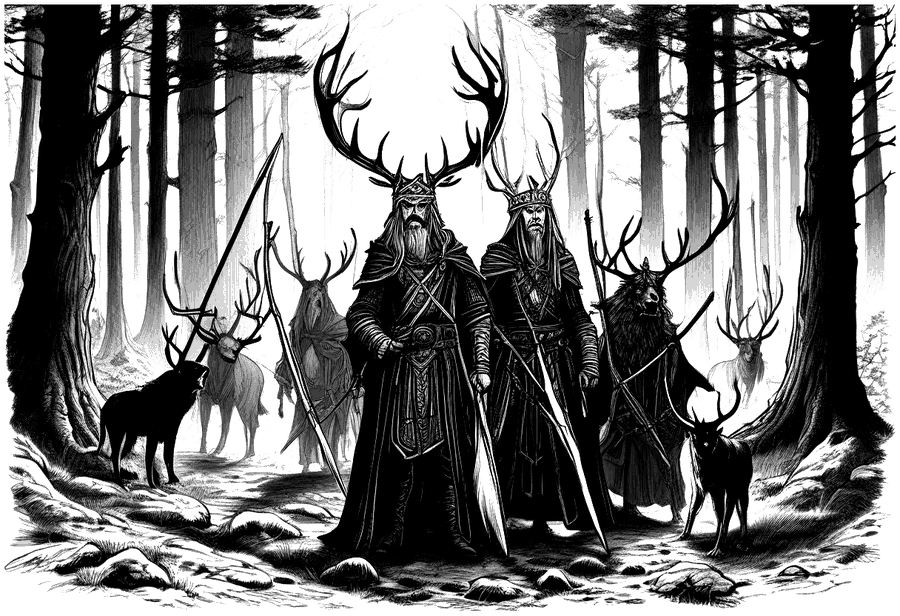
The Hunt of Hofjor

The warrior-priesthood of Raugaria · led by High Huntress Sigrun Kvaldottir
The Hunt of Hofjor, drawn in pen and ink

Hunter-priests who rule the Theocracy and fight its wars with the longbow.

  • The Antlers. The High Huntress's loyalists, holding the cathedral and the army.
  • The Wild Hunt. Zealots who want war on Orcosia as well as Hajhia, and who think Sigrun is soft.
  • The Kjelheim Remnant. Old families inside the priesthood who secretly feed the insurrection.
Life & lore
Feast days
The Shedding, 10 Hofjor, is the Hunt's holiest day: antlers are gathered, the year's holy hunts are drawn by lot, and in a selection year the sacred hunt for the High Huntress goes into the Bliksberg. The Loosing, 30 Ondaria, opens the Penner's Gate at Fagervik, and every prisoner in the Theocracy runs for the forest with a day's start. On holy days priests count the years from 214.
Daily life
A hunter-priest wears undyed wool, an elk-hide jerkin and an antler-tip at the throat, and carries a yew longbow taller than himself. Lodge-priests eat what they kill, elk, hare and smoked trout with lingonberries, and avoid stored grain when they can. Their lodges have no locks, because walls and chains belong to the Penner.
Oaths & rites
A novice becomes a hunter-priest by tracking an elk alone, killing it and bringing its antlers to the lodge. Oaths are sworn on a nocked arrow. A priest who betrays the Hunt is turned out into the Bliksberg with a day's start and hunted by his own lodge. The dead are laid on platforms in the forest, and their bows are broken and burned beneath them.
What they say
Raugarians say Fikisin ratråm ul gohørnin, 'The hunter does not fear the night', and insurgents add 'because he sleeps behind Fagervik's walls'. A living stag walking into the Antler Cathedral's nave means a new High Huntress will be chosen. Wetland villagers say the Hunt takes their sons and the Kjelheim rebels feed their daughters.
History
The first High Huntress was chosen by sacred hunt in 214, and the first antler shrine was raised at Fagervik in 402. The Penner's Gate was cut in 600 for the first Loosing. In 791 the priests ruled that buried hacksilver belongs to whoever finds it, because coin is a chain, and Raugarian farmers have been digging up their own fields every spring since.
Members
Huntsman-Priest Resto Pekråmsson of the Wild Hunt leads the Kennels and wants war on Orcosia. Liva Tetsdottir is the Wild Hunt's best tracker; she has been asked to hunt insurgents and has not said yes. Snorv Bjelksson, a verger of the cathedral, is quietly one of the Kjelheim Remnant and passes messages under the pine boughs.
This year
A white stag has been seen on the Fagervik inlet three times this summer, and the Antlers fear it is a sign against Sigrun. This year's Shedding lot fell to a Kovavikian for the first time, and someone in the Wild Hunt has paid to make sure he never comes out of the forest. The insurgents have promised to free this year's prisoners before the Loosing.
The war
The Hunt has sent its longbow regiments east against Hajhia, and the insurrection burns in the wetlands behind them. Brother-Hunter Henk Bjarsson has written to Fagervik four times asking for his parish's sons back. The Hunt wants Gravdalla guns, the Old Anvils refuse to sell, and the archers say they prefer bows anyway.
Money & law
The Hunt mistrusts stamped coin, so tithes are paid in hacksilver by weight and in hides. Antler-tips are sold to pilgrims in the cathedral Close, which the Master Weaver wants forbidden. Slavery is the worst crime in the Theocracy. There are no prisons: the guilty are turned out into the Bliksberg and hunted.
Healing
Lodge-priests pack arrow wounds with moss, stitch them with boiled sinew and treat marsh ague with willow-bark. Winter-black among the eastern regiments ends with the saw. Every veteran has crooked bowstring fingers, and priests who can no longer draw a bow retire to weave antlers into the cathedral vault.

Adventure seed. Liva Tetsdottir will hunt the Kovavikian lot-winner if she is ordered to. She would rather someone reached him first and walked him out of the Bliksberg alive.

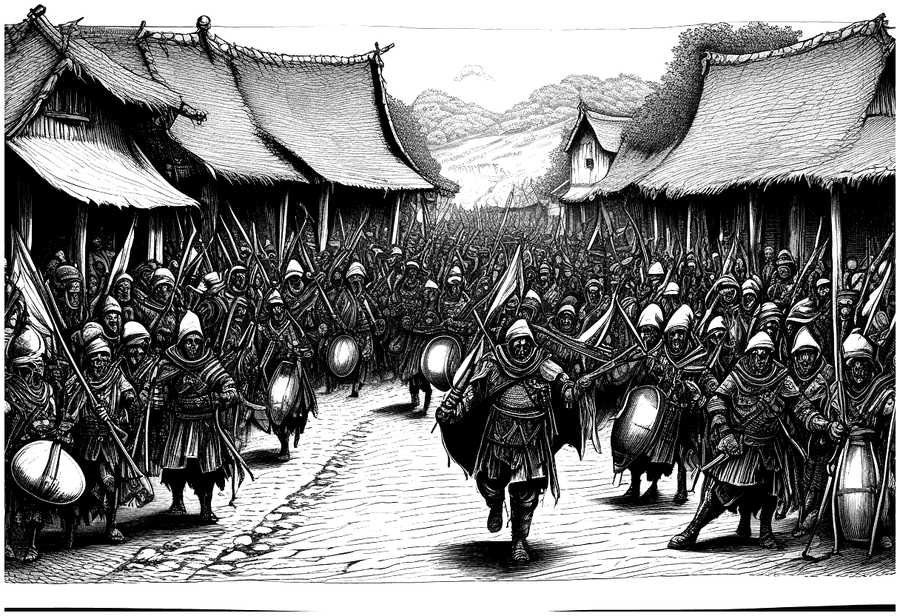
The Manttamite Crusade

The loud heresy of the Silent War · Valsiaria, Kaporesia · led by Preacher-General Aune Halkola
The Manttamite Crusade, drawn in pen and ink

A crusade against the established Silent Church, marching through Valsiaria with banners and drums, which is to say, blasphemously.

  • The Loud. The militants, who want Princess Emese's peace salon closed by force.
  • The Reconcilers. Preachers who think the two churches can be reunited and are hated by both.
  • The Kaporesian Cells. Gun-runners buying hand-gonnes from the Open Forge and smuggling them north.
Life & lore
Feast days
On the Long Silence, 20 Thaw, Manttamites drum from dawn to dusk outside every Quiet Temple and call it the Long Noise. Their own feast is Manttama's Shout, 9 Rocadones, the day the prophet first preached aloud. In Kaporesia, Manttamite villages drum the end of the monsoon in Haymonth loud enough to be heard ten miles away.
Daily life
A crusader wears a red sash over Soumi homespun and carries a drum, a pike or both. Companies quarter themselves on villages, eat the winter stores and make every host declare aloud for the loud war. Mornings begin with shouted prayer, meals are eaten talking, and anyone silent at table is fined a mark.
Oaths & rites
A convert is baptised by shouting his own sins in the market square until a preacher calls him clean. Crusaders swear their oaths on a drum-head. A Manttamite who keeps silent in the face of wrong is drummed out of camp. The dead are buried with a drum on the grave, and their kin beat it once a year.
What they say
Manttamites quote the Silent Church's proverb Sululo jashe on puhai, 'The silent man is strong', and finish it themselves: 'and the loud man wins'. Soumi children are told that Manttamites have no tongues, only drums. River villages say you can hear a crusade company a day before it arrives and smell it for half a day after it leaves.
History
The prophet Manttama taught that the silent war must be fought in the world, and the Silent Church exiled him for saying so out loud. His teaching took root among Kaporesian hemp-growers and dock-hands, who had never liked staring contests. This year's crusade was proclaimed by Preacher-General Aune Halkola, who has never been known to lower her voice.
Members
Hehailla Syvela, a former temple novice, preaches under the Quiet Temples of Valsiari every night. Jypyn Loniluunen, a Reconciler, wants the two churches reunited and needs protection from both of them. Rhimeun Mamaridou, an Elladan oar-captain of the Kaporesian Cells, runs muskets north under sugar sacks.
This year
Manttamite drummers have marched through every Silent Day since Thaw, and the Valsiari watch fines them 2 elephant marks a shout. The Loud want Princess Emese's peace salon closed by force. A Manttamite preacher has challenged Sister Hiiva Puolanen to a staring contest, and the Loud say that if she loses, the Silent Church must open its doors to them.
The war
Valsiaria refuses to fight, and the crusade marches through it anyway, drawing soldiers away from the rivers where the Bloom is spreading. The Kaporesian Cells buy hand-gonnes from the Open Forge and smuggle them north in rope bales and timber rafts, so Ortonzanian frigates search every hemp boat. Crusaders kill Rot Communion Gardeners on sight.
Money & law
The crusade lives on tithes that are shouted out in public, so everyone hears who gave how little. Like the Silent Church, the Manttamites forbid lending at interest; unlike it, they buy guns. Valsiarian law fines every shout 2 marks, and carrying an unlicensed hand-gonne through Ortonzania is a hanging matter.
Healing
Drummers suffer split hands and ringing ears. Crusaders scream under the surgeon's knife, which the Silent Church thinks shameful and they call honest. Companies coming up from Kaporesia bring marsh ague, treated with Utturi bark at 1 sh a dose. Silent Church physicians treat wounded Manttamites free and in silence, which the crusaders find unbearable.

Adventure seed. Jypyn Loniluunen wants an escort to a secret meeting between a Silent abbot and a Manttamite preacher. Both churches have sent someone to make sure it fails.

The Leopard Wardens

The order of Asheena the High Leopard · Haruwayha · led by First Warden Ilvaren of the Ninth Lamp
The Leopard Wardens, drawn in pen and ink

Bretborn-led leopard-priests who plant forests at the desert's edge and hunt those who salt the land.

  • The Green Edge. Grove-planters and healers, the heart of the faith.
  • The Hunters of the Barren. Militants raiding across the Jowshian and Tubari borders.
  • The Lamp-Keepers. Bretborn elders who guard the Memory and would kill to keep the script unread.
Life & lore
Feast days
Groving, 18 Hofjor, is the order's great day: every family plants a tree on the desert edge, and the leopard-priests hunt that year's salters. On the night of the first rain each Warden lights a lamp in the Grove-Temple for every tree that died in the dry season. The Bretborn Lamp-Keepers sing the Memory through Ashnight with the rest of their people.
Daily life
A Warden wears a cloak of cotton dyed with spots, never real leopard-skin, and carries a planting-spade and a bow. Wardens eat dates, millet and goat's milk, and only meat they hunted to eat. They sleep in grove-lodges walled with living acacia. Every day begins before sunrise with watering the youngest line of saplings.
Oaths & rites
A novice must raise a leopard cub for a year before she is admitted. A Warden swears 'to plant more than I take' and plants the sapling that will be her grave-tree. The dead are buried beneath it on the desert edge, so the green line is also a graveyard. A Warden who sells grove-timber is stripped of her cloak and sent into the Barren with one waterskin.
What they say
The Lamp-Keepers say Aessipan eilth nos e bin, 'The old tree does not run', of the order's habit of never retreating. Jowshians say a Warden can smell salt on a man's hands across a market. The Lamp-Keepers teach that Qalisar's words to mortals were 'Do not read the stones', and some of them would kill to keep the stones unread.
History
The leopard-priests held their highlands against the Caliphate in 607–616, and the Desert Stair was built afterwards to hold back the sand. In 693 three dry years killed half the green belt, and the Green Edge replanted it in eleven. Leopard Bretborn have led the order since their Memory was joined to the worship of Asheena.
Members
Warden Saihia ith Nagun of the Green Edge heals in the Grove-Temple and wants the Mirqah Cavern sealed. Hakiw al-Daneeli, a Hunter of the Barren, raids across the Jowshian border with leopards trained to track. Tor ith Heneth, a Lamp-Keeper at Thuq, collects Elder rubbings from the Sag ruins only so that he can burn them.
This year
First Warden Ilvaren of the Ninth Lamp has sworn to bring the Mother of Moulds' crown to Haruwayha, and the Wardens are hunting the Rot Communion up the Kaporesian rivers. The Hunters of the Barren have come home with seized Tubari salt-carts and cannot agree whether to sink the salt in the sea or sell it. A blade of watered steel is offered to whoever kills the Najrah Cyclops.
The war
Haruwayha fights for Kahpia against Jowshia. Leopard-priest infantry march through Kahpia, take nothing and plant trees wherever they camp. Matir al-Ghadeezi wants every Warden home by Groving to save the new line, and Jowshians who once bought the Wardens' salve now curse them.
Money & law
Wardens heal for 5 sh a wound or a sapling planted, and their glass-eye salve sells at 3 sh a pot through Haruwayhan pedlars. Asheena's faith gives gifts, not loans, so the order keeps no treasury beyond its seed-stores. In Haruwayha cutting down a fruit tree is a hanging offence, and anyone who salts land dies at the Wardens' hands.
Healing
The Wardens are the finest healers on Qabahrah. They clean wounds with boiled water and wine, splint crushed limbs with green acacia that tightens as it dries, and treat glass-eye with salve from the Grove-Temple. They carry marrow-salt to burn the Bloom out of a hand for nothing. Their own complaint is cat-scratch fever, caught from their cubs.

Adventure seed. Saihia ith Nagun has heard the Mirqah Cavern breathing cold. She wants it sealed before the Lamp-Keepers find out what is written inside.

The Hornmoot

The council of Rhunari clans · the Hornlands · led by Moot-Mother Gruva Stands-Unmoved
The Hornmoot, drawn in pen and ink

The clan council of the rhino-folk. It settles disputes, blesses mercenary contracts, and has never had to choose between clans at war until now.

  • The Savanna Clans. Herders of the Hornlands, loyal to Kahpia as long as the Shah respects them.
  • The Woolly Clans. The northern branch, sworn to Queen Dorottya of Hajhia.
  • The Grey Walls. Mercenary companies who fight for pay. Two of them stand in Balsozhia's army, facing their woolly cousins.
Life & lore
Feast days
Hornday, 20 Tunarejo, is the Moot's great day: the year's deeds are carved on horns, horn-debts are paid or forgiven, and pushing contests settle the year's quarrels. Grey Wall contracts run from Uxbridmanch to Uxbridmanch and are blessed by the Moot at the end of the war season. The woolly clans hold the Soaking at the Satorbapios Springs from Thaw into Mieles.
Daily life
The Moot sits in the Ring, a circle of trampled earth a quarter of a mile across on the Hornlands savanna, where no grass is allowed to grow. Delegates drink sorghum beer, eat millet with curds and sleep in the open, because a roof is something to push against. Every evening the herders polish their horns with fat and ash.
Oaths & rites
A calf gets a voice at the Moot when the master horn-carver cuts its first deed. A Grey Wall becomes a champion when the Moot accepts his first contract and he carves its terms into his horn. A liar's horn is notched, and a shaved horn means exile. When a Moot elder dies, the body is laid out on the savanna and the horn is kept in the Moot's horn-house.
What they say
Every Moot opens with ǂoru kunu gandoonguu ngaǂoo ǂoruma ha ndagaa, 'One horn breaks, but many horns stand.' Kahpians tell of a Grey Wall who held a bridge alone for a day because his contract said 'until relieved'. Merchants say a Rhunari horn-scrip is better than a Calloway letter, because nobody has ever needed a countersign to trust one.
History
The first Hornmoot united the savanna clans in 412 after a pushing contest that lasted three days and killed nobody. In 563 the Dry Years killed half the herds, and the clans still owe a horn-debt to the Kahpian shahs who opened the royal wells to them. In 810 the Moot forbade firearms to every Rhunari for ever, and the Grey Walls sold theirs at a profit.
Members
Gaakowa Cuts-Clean is the master horn-carver, and her carving is accepted as a sworn word in any court on Qabahrah. Tawawa Speaks-Last is the Moot's Caller, who walks from clan to clan to summon a Moot; this year she has been told to stay at home. Kabaawa Holds-the-Ford, a woolly trader in Gogur, carries letters between the two branches.
This year
Moot-Mother Gruva Stands-Unmoved has called no Hornmoot this year, which is news in itself, because a Moot would have to choose between clans at war. Mbahowa Splits-the-Line has written to ask what happens if he meets his woolly cousins in battle. Woolly Rhunari carrying Hoarfolk horn-guns have been turned away from the Satorbapios pools, and the Moot has not said whether that breaks the ban of 810.
The war
The woolly clans ride with Queen Dorottya, and two Grey Wall companies stand against them in Balsozhian pay, so Rhunari will charge Rhunari for the first time in a century. Kahpia's Grey Walls are owed six months' pay and hint that Jowshia pays on time. Herders refuse to sell grain to Grey Wall quartermasters until the companies march home.
Money & law
The Moot blesses each mercenary contract for one head of cattle in ten from the first season's pay. A Grey Wall soldier costs 3 sh a day and a champion 1 cr. Horn-scrip passes as coin because no Rhunari has ever defaulted on one. There are no prisons: a thief repays three times over in cattle.
Healing
A cracked horn is bound with rawhide and resin and then cut clean by the master carver, because a crooked horn does not heal. Woolly Rhunari cure hide-rot at the Satorbapios Springs. Grey Walls come home with the broken shoulders of charges that hit a wall. Old delegates get hoof-crack in the dry season, which they treat with fat and mud.

Adventure seed. Tawawa Speaks-Last has been told to stay at home. She wants a bodyguard to walk her to every clan anyway, because a Moot uncalled is a war unstopped.

The Successor's Eyes

The Asrahan intelligence service · led by the Veiled Vizier, whose name is not spoken
The Successor's Eyes, drawn in pen and ink

The reason the Caliphate seems to have no foreign policy: it has a hidden one.

  • The Well-Watchers. Domestic agents who keep the desert sheikhs loyal.
  • The Far Eyes. Agents abroad, in Orcos, Shifton, Lantern Cove and the Ucillamope Library.
  • The Old Eyes. A faction loyal to the Caliph's exiled cousin, who has a claim and a following.
Life & lore
Feast days
The Eyes keep the Unspoken Night, at the dark of the Lamp in Haymonth, more strictly than anyone: no name is spoken, and it is the one night agents abroad may meet. At Wellwater, the first rain, the Veiled Vizier renews every commission with a sealed cup of Qaqah water. Abroad, agents keep the local feasts loudly, so as to fit in.
Daily life
An Eye lives as someone else: a kohl-seller, a lady's maid, a copyist or a ship's clerk. Reports travel home in date-boxes and kohl-pots with false bottoms and are read in the Court of Shade at Qaqah. At home the Well-Watchers ride with the desert sheikhs, drink their coffee and count their rifles.
Oaths & rites
Recruits are chosen and never volunteer. A recruit swears on an empty cup 'to be water: seen through and never seen', and her own name is not spoken again inside the service. A traitor is drowned in a well that is then sealed, the only time Qashari law permits fouling a well. A dead Eye is buried under whatever name she was using.
What they say
In Qaqah people say Zayood zayyaad wis zayoodoo duqaar zayyaad, 'The caliph follows, and the people follow the caliph', and glance at whoever might be listening. Shifton children are told the Veiled Vizier has no face, only a veil. Courts change their servants often and never let a Qashari copyist work alone.
History
The Court of Shade has housed the service since 702. In 788 an Eye who had been the Orcosian Readers' librarian for thirty years retired, sent the Lion-Pontiff a letter of thanks and sailed home with every rubbing they owned. The Old Eyes formed around Mundhir, the elder son passed over for Harith, and now serve his son, Faris the Exile.
Members
Lawin al-Bareeri has sold kohl and dates by the Ucillamope Library for fourteen years and reports on everyone who buys. Nudhaarah al-Rufakhahi watches the Glassborn from a camp on the edge of the Waste. Zallaad al-Bakadi, a Well-Watcher, rides with the desert sheikhs and hangs informers on their own wells.
This year
A Glassborn Stray has walked into the Scriptorium at Qaqah, and the Eyes have surrounded it and are arguing about what to do. Faris the Exile is said to have been seen at Soraidah, and the Old Eyes are recruiting. The Far Eyes are counting cannon and grain in Erencszasz while the Caliph leaves Queen Dorottya's envoys unanswered.
The war
The Well-Watchers keep the sheikhs loyal while the Caliphate fights the Company, and the Far Eyes find out which Sea Lords are moving gold to Kushi. Agents in Shifton and Orcos sell the Caliph the northern war's secrets, and he buys from both sides. The Eyes hunt the Speaking Lens as though it were a weapon.
Money & law
Eyes are paid in mithqals through a well-keeper in each city, who hands over a cup of water with the coin at the bottom. An unmasked Eye is worth 50 cr to the Orcosian court and more to the Old Eyes. Betraying the service means death in a well.
Healing
Eyes abroad must use local physicians, so they learn to fake every illness except their own. Poison is the service's real trade, and agents carry charcoal and milk against it; glass-eye is treated with kohl and Leopard Warden salve. Agents who come home after twenty years abroad often cannot sleep without the noise of strangers.

Adventure seed. A kohl-seller by the Ucillamope gate offers a mithqal to anyone who will carry a sealed date-box to Lantern Cove. The box is addressed to the Old Eyes.

The Wyrmwatch

Watchers of the dragon lairs · all peoples · led by Watch-Captain Hroth of Gravdalla
The Wyrmwatch, drawn in pen and ink

An old order that keeps a watch-post near every dragon lair. For a century it was a joke. Since Foleleyme began to smoke, it has been recruiting.

  • The Slayers. Those who want to kill the dragons in their sleep while they still can.
  • The Speakers. Those who want to wake one, carefully, and talk to it.
  • The Worm-Wakers. A secret cult inside the Watch that wants every dragon awake, and the Worm with them.
Life & lore
Feast days
On Wormwake Eve, 6 Rostovund, every post pours a cup of ale on its doorstep 'so the neighbour sleeps'. On Tally Day, 30 Reaping, every post sends its year's tally-book to Gravdalla, and Watch-Captain Hroth reads them all before the passes close. Since Foleleyme began to smoke, the Ferrying has been kept at every post with a lamp left burning towards the lair.
Daily life
A watchman lives in a stone hut within sight of a lair. He eats salt fish, oatcake and whatever the nearest village will sell him, and writes three lines in the tally-book every dawn: smoke, sound, tracks. Posts hold from two men to ten, and they talk in whispers. Most watchmen are Hoarfolk, Norse or Vengrian, and all of them are cold.
Oaths & rites
A recruit swears on a dragon-scale kept at Gravdalla 'to watch and not to wake'. Promotion goes by years at a lair: a corporal has kept one post for five years, and a sergeant has seen a dragon move. A watchman who wakes a dragon on purpose is thrown from the nearest height. The dead are buried facing the lair, still on watch.
What they say
Hoarfolk watchmen say Kârd torg drakost gor skalk dath, 'The stone sings when you strike it'; the Speakers take it as advice and the Slayers as a warning. For a century villagers called an idle man 'as busy as the Wyrmwatch'. Since Foleleyme began to smoke, nobody says it.
History
The Watch was founded in 672, a year after Hrimgard came down on the Hoarspine Stair, by Hoarfolk and Norse who agreed that somebody ought to be looking. The Long Sleep began in 700, and for the next century the Watch was a joke whose posts were sold off one by one. By 830 it had eleven posts and forty men.
Members
Watch-Sergeant Kozh Zhona holds the Foleleyme ridge post with nine recruits, all hired since Thaw. Watch-Sergeant Dukhdur of Saski has kept the post under the Crown for thirty years and has seen Hrimgard's tail twice. Ottilie Brack, a Merlish gunner turned Slayer, has worked out how much powder it would take to bring down the roof of every lair, and wants a cannon.
This year
The Watch is recruiting at 3 sh a day. Hroth has been seen going down past Gravdalla's sealed gates and coming back up, which no one else has done. The Watch reports that Hrimgard has moved on its flank and Ankhorra moved during the Comet of Thaw, and Corporal Buk on Hrafjor has begun talking to the ice. Somebody in the Watch is a Worm-Waker, and the tallies no longer agree.
The war
The Slayers want Balsozhia's cannon turned on Foleleyme, and the Emperor has refused. The Watch fears that a cannon fired in the Hoarspine passes will wake Hrimgard. Its recruits are deserters, gas-hands and men too old for the levy, and the Lanternwrights forbid their crews to talk to it.
Money & law
Wages have been 3 sh a day since Thaw, paid every quarter in ingot-marks from Gravdalla. Posts sell copies of their tallies to the Ucillamope Library and to broadsheet astrologers at 1 sh a page. Watch law forbids taking anything from a lair, and a watchman caught with a scale is dismissed and his name cut on Gravdalla's shame-wall.
Healing
Watchmen suffer winter-black, sky-sickness and loneliness, roughly in that order. A man who has listened to a dragon breathe for too long gets the lair-shakes, a tremor that comes on at night, and is treated with mushroom ale and a transfer. Burns from Foleleyme's vents are packed with goose-fat at the ridge post.

Adventure seed. Watch-Sergeant Kozh Zhona's own count says the Foleleyme vents breathe once an hour. Someone has changed his tally-book to read once a day, and he wants to know who.

The Quiet Hands

The thieves' guild of Merland · led by the Hand of Hands, identity unknown
The Quiet Hands, drawn in pen and ink

The guild that once robbed the Counting-Towers. See also thieves & guilds.

  • The Ledger-Men. Forgers of letters of credit.
  • The Roof-Runners. Burglars, who still talk about the Towers job.
  • The Whisperers. Blackmailers who own at least six burgesses of the Moot.
Life & lore
Feast days
The Hands forbid work on the Ash Days, because a purse lifted then 'is not binding', and spend the Five Days at the gambling tables picking winners instead. Lampless nights are working nights. Shifton taverns mark no fixed day for the Towers job, but sing Seven Towers and a Ladder whenever the watch is out of earshot.
Daily life
A Hand looks like anyone: a clerk, a chimney-sweep, a burgess's maid. Roof-Runners sleep by day in garrets off Lantern Row, and Ledger-Men work at slanted desks like any counting-house clerk and earn more. Members knock twice, pause, then once, and never whistle under the Towers' bridges, because whistling is their signal and the watch arrests first.
Oaths & rites
Membership costs 10 cr and a tenth of everything afterwards. A recruit needs a sponsor and one job done clean, and swears on a stolen key never to rob another Hand or 'talk to the camel'. An informer is fed to the Worm: dumped in a well or the river. Dead members are buried with their picks, which their families dig up and sell within the week.
What they say
Shifton says 'The hand you see is not the hand that takes.' Knocking twice, pausing, then once on any door is said to bring the Hands, or bad luck. Nobody knows who the Hand of Hands is, and the taverns' guesses include a burgess, a bishop and Edith Calloway herself.
History
The Hands robbed the Counting-Towers once, and the gold has never been seen since; the banks still argue about which tower lost the most. Some say it lies hidden in the Ravine at Kilho. The guild's forgers learned their trade from the Ledger House, where half of them served time for debt.
Members
Silas Coombe runs a pawnshop on Lantern Row and fences for the Hands at a third of value. Crispin Vowles, the best Ledger-Man in Macham, can forge a Calloway letter in an evening but not its countersign, and wants one. Jenny 'Quickthumb' Marlow, fifteen, is the best dip in Torkburgh and wants to be a Roof-Runner.
This year
The Whisperers own a letter lifted from a Torkburgh banker in Mieles, and he has voted very strangely in the Moot ever since. The Hands and the Powder Moot both want Teggap Gearbiter's cannon. A scale-watcher's log shows the Calloway scale tipping the night before each of the Hands' known burglaries.
The war
The war has filled Merland with letters of credit, and the Ledger-Men forge them faster than the banks can change countersigns. Refugee groats and thin dinars make it easy to pass weeping coin. Whisperers sell the casualty lists to families a day before the broadsheets print them.
Money & law
Fences pay outsiders a third of value and members half. Lockpicks cost 3 cr, and a Merlish bank lock is the hardest in the world to pick. The law brands thieves with a T on the second offence and hangs forgers of the crown. The Hands' own law breaks the hand of anyone who robs a member.
Healing
Roof-Runners break ankles and fall through skylights. They use a bone-setter on Lantern Row who asks no questions and charges 1 sh, double the honest rate. Branded thieves pay herb-wives to blur the T with lye, which hurts more than the brand. Ledger-Men are half-blind by forty from small writing.

Adventure seed. Crispin Vowles has forged a perfect Calloway letter for 2,000 cr. He needs someone to get its countersign from the Meedihar house before Maud Calloway sells up.

The Ashworth Circle

Rumoured necromancers · Ortonzania · leadership unknown
The Ashworth Circle, drawn in pen and ink

The Rust-Watch says it exists. The Prince of Ortonzania says it does not. The Winedihul Crypt says nothing.

  • The Prince's Hand. Necromancers said to serve the crown, raising the dead as labourers and spies.
  • The Crypt-Born. Members who are no longer alive.
  • The Penitents. Former members trying to destroy Winedihul from inside.
Life & lore
Feast days
If the Circle meets, the Rust-Watch says, it meets under the Prince's Rock at Shifract on the Ash Days, when no contract binds and no court sits. Penitents say it keeps the Ferrying, 1–9 Tunarejo, in reverse, calling the dead back instead of seeing them off. The Prince keeps every ordinary feast publicly and devoutly.
Daily life
Nobody admits to being a member, so daily life is guesswork. The Rust-Watch says Circle men wear a hemp cord under the cuff and smell faintly of quicklime, and Shifract tailors now sell cuffs that button tight. In Litta, dead labourers have been seen hauling hemp at night, and the hemp market opens to find it already baled.
Oaths & rites
Penitents say a member is sworn in a crypt by a corpse that speaks the oath first. The rumoured penalty for leaving the Circle is to go on serving it after death, and that, they say, is what the Crypt-Born are. Brother Ivo Fenn says that anyone who has bargained with Winedihul carries a ring of cold on the wrist.
What they say
Ortonzanians say 'He's bargaining in Winedihul' of a man selling something he does not own. Merlish broadsheets print cartoons of Prince Godric shaking hands with a skeleton, and Ortonzanian magistrates fine anyone caught with one 5 sh. Sailors will not say 'Winedihul' aboard ship.
History
The first Ashworth princes walled Winedihul's lower gates in 611 and paid a family of Litta masons, the Brandes, to keep the walls patched; the last of them died in 780 and nobody checked the walls again. In 733 a Merlish scholar went into Winedihul to bargain and came back twenty years later, younger. The name 'Ashworth Circle' was first heard in Shifract the year he returned.
Members
Brother Ivo Fenn, a Penitent, says he once served the necromancer and now maps the Wardens' beats. Inquisitor Margaret Thorne of the Rust-Watch believes the Prince bargained with Winedihul and pays 100 cr for proof. Anselm Grey, the Prince's coroner at Shifract, signs more death certificates than Shifract has funerals, and the Rust-Watch would like to know why.
This year
The Circle denies commanding the Hollow Legion, which is the first thing it has ever admitted to. The Prince's envoys rode out to meet the Hollow Marshal in Rocadones and came back silent. Brother Cedric Vane, who claims to be a Penitent, is hiring men to carry marrow-salt into the deepest hall.
The war
Ortonzania's soldiers are on the Balsozhian front, and rumour says the Prince's Hand raises the dead as labourers and spies to make up the numbers. Balsozhian agents in Shifract offer gold to anyone who can say what the Marshal wants. Merlish officers fear the Circle is real, and fear even more that it is on their side.
Money & law
Necromancy is a crime everywhere: Orcosia burns necromancers at noon, and Ortonzania hangs them quietly. The Rust-Watch pays 100 cr for proof of a bargain with Winedihul. Winedihul relics fetch fortunes in Shifract's black markets, and their buyers rarely live long. The Prince brands anyone caught on the Winedihul hill.
Healing
The touch of the Crypt-Born leaves a cold that spreads from the wound and greys the hair. Thetletown priests treat it with cold iron and prayer, and Orcosians with sunlight. Penitents who have left the Circle have cold hands for life and sleep with a lamp lit. Families who fear a bargain bury their dead with salt in the mouth.

Adventure seed. Anselm Grey has signed a death certificate for a man who still works the Litta hemp market. The Rust-Watch wants the body, and the man would like to keep it.

The Brethren of the Black Ledger

The government of the Free Captaincy of Tebek · led by Admiral Mae Corrin
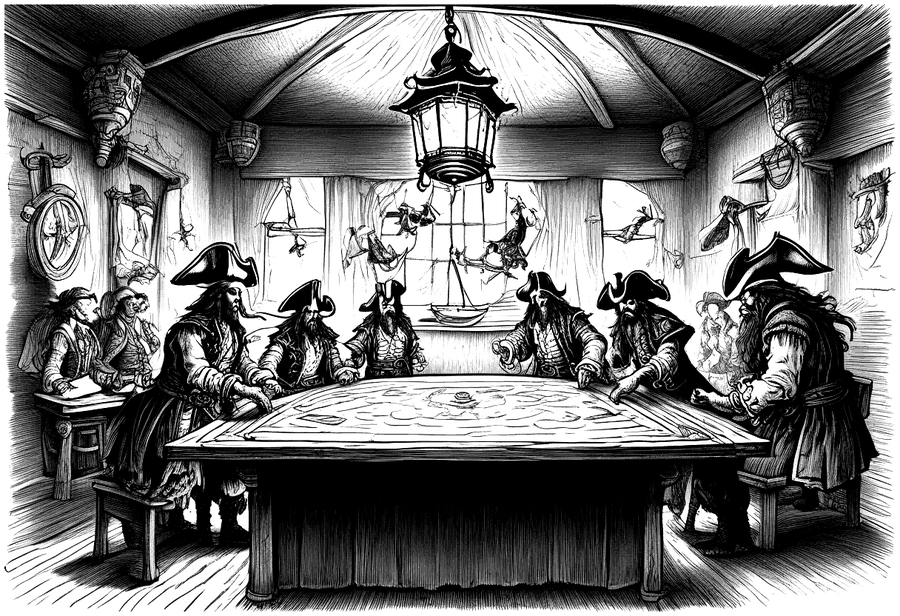
The Brethren of the Black Ledger, drawn in pen and ink

Every captain who brings a prize to Lantern Cove gets a vote. The Admiral is elected every three years, and none has yet survived a full term.

  • The Sea Captains. Old-school pirates who want to go on raiding Kushi convoys.
  • The Sky Captains. Kettlekin aviators who want the Captaincy to become the first sky-power.
  • The Ledger Clerks. The accountants who actually run the place, and who want to turn piracy into a trading republic before Kushi turns it into a gallows.
Life & lore
Feast days
Every captured ship earns a lantern on the harbour wall of Lantern Cove, lit with a feast on Gallows Wharf. Founding Day, 9 Thaw, marks the declaration of 821. On Share-Night, the last night of Isgard, every prize is paid out before the Ash Days make debts uncollectable. Murrowmaw's Feeding falls on every Lampless night.
Daily life
The Brethren govern from the Ledger Hall on the harbour, where clerks in stolen Company coats keep the books of every prize. Captains drink and trade votes at the Lantern and Lamp by Gallows Wharf. Admiral Mae Corrin eats nothing she has not watched being cooked.
Oaths & rites
A captain joins the Brethren by bringing a prize into Lantern Cove and signing the Black Ledger in tar. A new Admiral is sworn on the Feeding Barge and pours the first bucket of blood into the water. Under the Articles, theft from a shipmate means marooning and murder means the plank, by crew vote. No Admiral has yet survived a full three-year term.
What they say
Sky Captains say Nup gald spom stel fupketti, 'Steal the gold, but fix the airship', and Sea Captains say the Kettlekin have their priorities backwards. Sailors swear that the Noskirk monster is Murrowmaw's tail and that the Brethren's offerings keep it fed. The Ledger Clerks are said to read Murrowmaw's temper from the colour of the slick.
History
The pirates took Jinsan in 821, when Kettlekin crews flew three stolen sky-ships to the isles, and the first Admiral was killed within a year. In 822 a crew had spent a whole hold of forged Company notes in the Cove, so the Ledger Clerks printed a note-checker's guide for captains, and they have run the treasury ever since. The Drowned Market sank in the earthquake of 826.
Members
Maggik Gasbag of the Sky Captains wants the Captaincy to become the first sky-power. Haidos Kemnides, an Elladan deserter, is the Ledger Clerk who keeps the real books. Captain Jack Sallow of the Merry Widow, an Angshire Sea Captain, is standing for Admiral on a promise to raid the Kushi convoys every month.
This year
Mae Corrin's term ends in a month and three captains want the chair; one of them is said to be buying knives. The Sea Captains claim she has been short-feeding Murrowmaw's tail to save money. In Rocadones the sky-pirate Hiccup came home with a Kushi toll-chest, and three captains claim the share.
The war
Kushi convoys carrying northern silver are fat prizes, and Company dhows fleeing the Asrahan invasion are fair game to the Sea Captains and customers to the Clerks. The Sky Captains say Merland has offered them a fee to prey on the Kamiechia–Balsozha sky-lane. Kushi's Admiralty is gathering marines, and the Brethren hint that Murrowmaw guards their harbour.
Money & law
The black doubloon, worth 0.8 cr, is prize-gold stamped with a lantern. A share in a prize costs 10 doubloons, and prize goods sell for a third of their worth. The Ledger takes a tenth of every prize for the Captaincy and charges the Feeding to every captain's share. Divorce costs a doubloon, and stealing from a shipmate is a hanging on Gallows Wharf.
Healing
Ship-surgeons are deserters with saws who charge a doubloon a limb, and Halmi shamans heal fevers by trance and are trusted more. Pox comes in with every prize and scurvy with every long voyage. The Brethren keep a store of limes in the Ledger Hall and ration them by vote.

Adventure seed. Haidos Kemnides will sell the true book of the Feeding tallies before the election. Whichever candidate buys it will win, and the other two know where he drinks.

The Board of Nine

The government of the Mashan Trade Company · led by Governor Layla Saizaydi
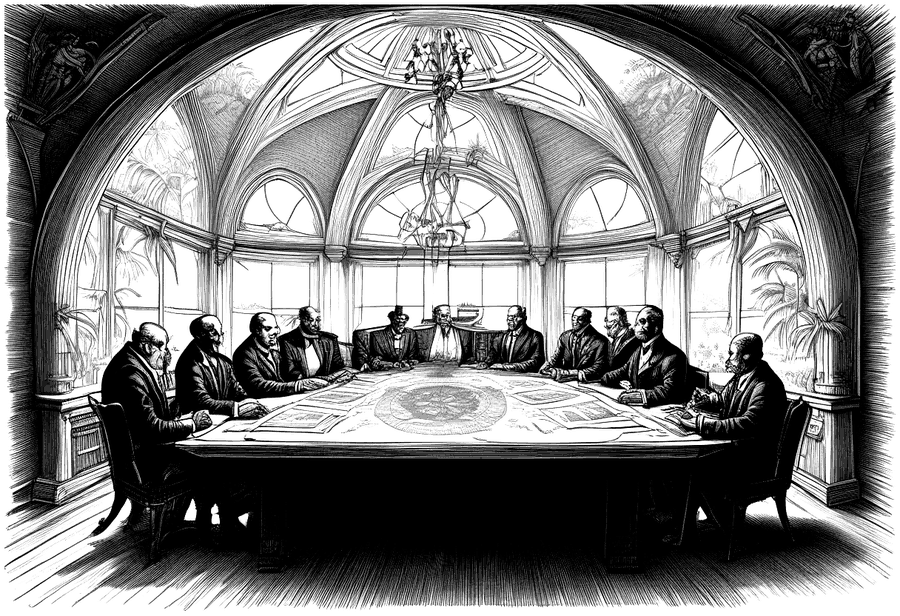
The Board of Nine, drawn in pen and ink
  • The Sea Lords. Shipping magnates moving gold and families to Kushi.
  • The Land Lords. Plantation owners who cannot move their land and want to fight.
  • The Printers. Those who control the presses, and therefore the value of money.
Life & lore
Feast days
Charter Day, 12 Thaw, marks the Company's founding in 750. The Nine walk the inlaid floor of the Sea Exchange, a clerk reads the dividend in every market, and the Print Yard prints a commemorative note worth nothing. When the Kushi convoy is sighted, Convoy Day closes Meedihar. The Board keeps Wellwater and the Unspoken Night with the Qashari majority.
Daily life
A director wears white cotton and a gold seal-ring, takes coffee on the Exchange gallery at dawn and meets in the Nine Chamber above the dome, at a table with ten chairs. The Board's clerks eat date-bread at their desks and are searched for ink at the Print Yard gate. Every servant of the Board is registered, numbered and paid in notes.
Oaths & rites
A seat on the Board is bought, not inherited: it goes to the largest shareholder in each ninth of the Company. A director is sworn in by sharing water from one cup with the other eight. A director who goes bankrupt breaks a clay tablet bearing his name on the Exchange steps and leaves the Board within the hour. The tenth chair is kept empty for the Tenth Seat.
What they say
Clerks say Nakh buraat wazi al nabeef, 'A dry well has no friends', of a director whose ships stop coming home. The Tenth Seat is said to be a ghost-director who sits at the table on foggy mornings and votes against every dividend. When the chalk boards at the Exchange go blank, the city is about to fall.
History
The Board was formed at the end of the Mashan Rebellion in 750, when the merchant ports broke from Kahpia. The first notes came off the Meedihar presses in 760. In the Ink Panic of 788 forged notes flooded the floor and the Board burned a whole printing in the square. After the Pepper Crash of 789, the men who bought up cheap estates became the Land Lords.
Members
Rokhan Zelvari of the Printers wants the Board to print more. Zulaamah al-Rumashahi, a Land Lord near Kulparand, drills her pickers as militia and wants the Board to fight. Rashaad al-Fumeeqi, a Sea Lord with forty ships, has already sent his wives and grandchildren to Kamiechia and keeps a fast dhow at the Ledger Docks.
This year
The Board is moving its gold to Kushi in secret, and traders have noticed the empty carts going out to the Ledger Docks. A printing plate went missing from the Print Yard in Rocadones. Governor Layla Saizaydi has offered ten crowns for every Sand Ledger forger, payable, inevitably, in notes.
The war
The Caliphate invaded in 832, its army is two weeks' march from Meedihar, and Saizayd is on the front line. Sag has torn up its pact. Hired regiments drill in front of the dome, the Land Lords want the Exchange's gold spent on soldiers, and the Sea Lords want it in Kushi. Notes fetch 7 crowns in Flokburgh ports.
Money & law
The Company note has a face value of 10 cr and is worth that only in Company ports. Sales tax is one part in twenty-five, the lowest in the world, and a share in a Kushi convoy costs 50 cr. Forgers are hanged. Anyone who knowingly passes a forged note is branded on the hand and serves twenty years' indenture, and insurance fraud costs the hand that signed.
Healing
The Exchange keeps a physician on the gallery for directors who collapse when prices move, and he charges a note a visit. District physicians charge 2 sh, half price for employees. Marsh ague is treated with Utturi bark at 1 sh a dose plus tax, and the Company pays a posted price for every finger a cane-cutter loses.

Adventure seed. Rashaad al-Fumeeqi's dhow sails the night the gold goes. He needs guards who will not ask what is in the chests; the Land Lords pay double to anyone who does.

The Sun Temple

The Fuempild priesthood · Orcosia · led by the Lion-Pontiff Ximeno III
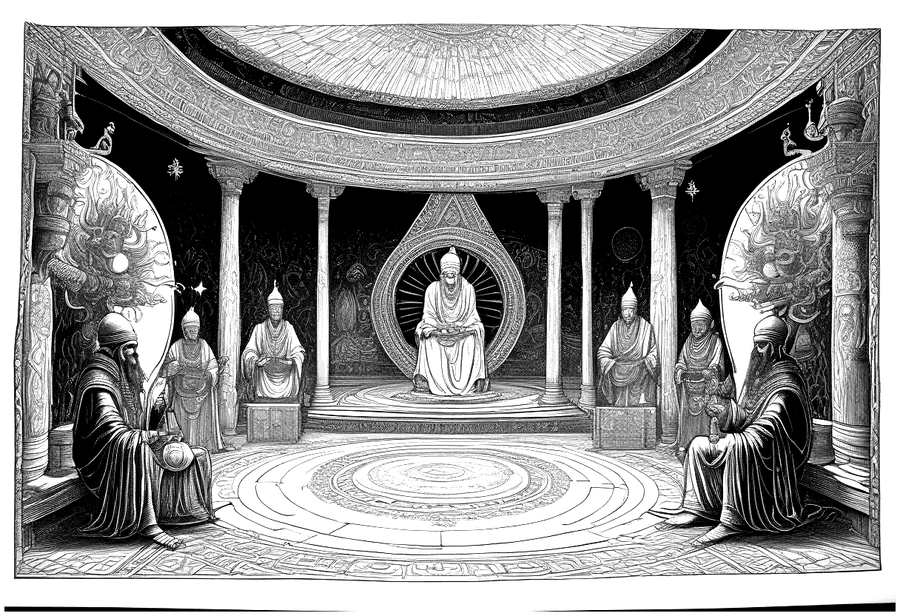
The Sun Temple, drawn in pen and ink
  • The Lion's Mouth. Priests who want Orcosia to declare for Hajhia.
  • The Golden Pride. Priests bribed with Balsozhian dinars, who have not yet noticed the gold is thin.
  • The Readers. Scholar-priests who care more about the Ucillamope Library than about the war.
Life & lore
Feast days
Lionsday, 21 Rocadones, is the Temple's great day: the Lion-Pontiff blesses the sun from Lion Hill, and penitents shout their secrets on the hill steps before noon. Hiving (1 Mieles), Floodwake (1 Ondaria) and the Ferrying (1–9 Tunarejo) belong to the Lion's family. Every day at noon, every temple bell in Orcosia rings once for the Lion at his height.
Daily life
Priests wear saffron linen and shave their heads 'so the sun can see their thoughts', and they work, eat and heal only by daylight. Meals are bread, olives, figs and honey, eaten at noon in the open. Priests live in unshuttered cells on Lion Hill, and nobody in the Temple may close a door in daylight.
Oaths & rites
A novice is ordained at noon on Lionsday by gazing at the sun's reflection in a bowl of water until the Pontiff says enough. Priests take a sun-name, such as the Bright. Confession is public and at noon, and a priest who keeps a secret on Lionsday loses his sun-name. Priests are buried facing east, with a coin for Tunarejo.
What they say
Orcosians say Luedeo detoso sue zila, 'A good name is gold', and since the war the Golden Pride's critics say it with a weighing motion of the hand. People say a priest who will not meet your eye at noon has been paid in dinars. Necromancers are burned at noon 'so the Lion sees'.
History
In 347, during the Grey Sweat, the Temple founded its first Graveguard, an order of priests who sat with the dead in the plague-pits. The Ilbarescian schism of 511–513 split the faith, and in 512 the Sun Treasury mint moved inside Lion Hill. In the Honey Years of the 470s, Temple Readers bought every reading-lens Rago of Pasba made, for the Ucillamope Library.
Members
Father Vechejo the Bright of the Golden Pride hears confessions on Lion Hill and pays in thin dinars. Father Moralejo the Noonday leads the Lion's Mouth and preaches every noon that Orcosia must declare for Hajhia. Pelaejo the Bright, a Temple Reader, runs the Library's rubbings room and quietly sells copies to all sides.
This year
Every envoy in the world is in Orcos, and Ximeno III is still deciding. The Temple says the Comet of Thaw was the Lion's eye turning south. In Rocadones two Glassborn Strays walked through the Lion Gate and the bronze lions made no sound. The Lion's Mouth reads that as a rebuke, and the Golden Pride does not read it at all.
The war
The Temple has drawn up levy rolls, and every young man knows his name is on one. Golden Pride priests spend Balsozhian dinars that the Treasury changers take only at 0.7, and they have not yet noticed the gold is thin. Grain in southern Orcosia costs four times its peacetime price, and people queue from dawn for the Temple's bread-dole.
Money & law
The Sun Treasury keeps gold for a tithe of a tenth and strikes the sun-real, worth 1.1 cr, which it is an insult to Rocadones to refuse. Fines for confessed crimes go to the Treasury. Sun-falchions blessed at Orcos sell through the Temple's agents in Shifract for 12 cr. The faith takes tithes and forbids interest.
Healing
Sun Temple healers are among the best in the world: 5 sh a wound, by daylight only, dressed with honey and sun-dried linen. Kiln-eye among Glassworks men is treated with honey drops. The priests suffer sun-blindness from their noon devotions, and old priests are led about Lion Hill by novices.

Adventure seed. Father Moralejo wants a Balsozhian dinar weighed in public on Lionsday to shame the Golden Pride. He needs someone to take one from Father Vechejo's confession-box first.

The dread powers

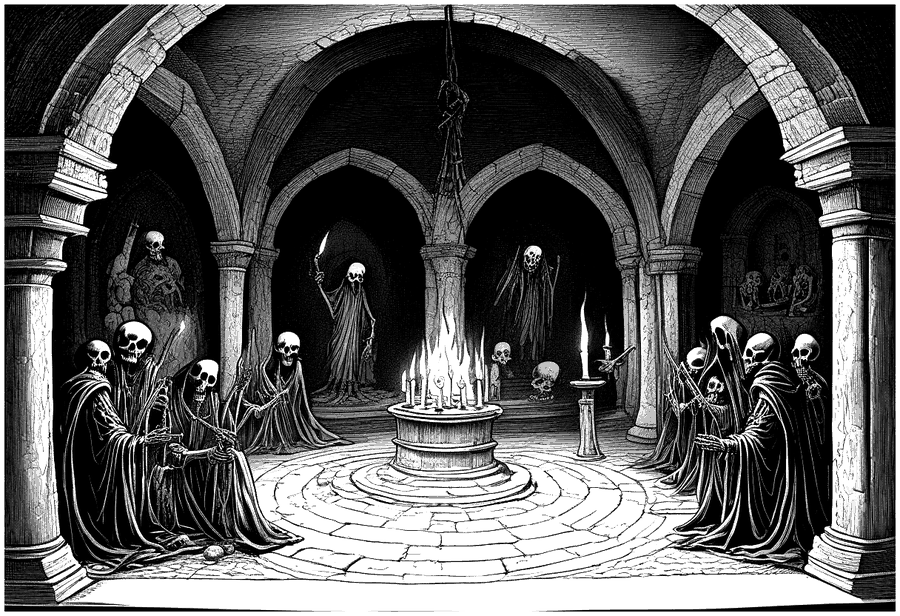
Not every power in Kidaneland wants a crown. These want something worse, and most courts would rather not admit they exist. All of them are tier IV or V threats at their heart, and every one of them is a good last enemy for a gamebook. The Ashworth Circle belongs with them.

The Hollow Legion

The dead of Winedihul · Ortonzania · commanded by the Hollow Marshal
The Hollow Legion, drawn in pen and ink

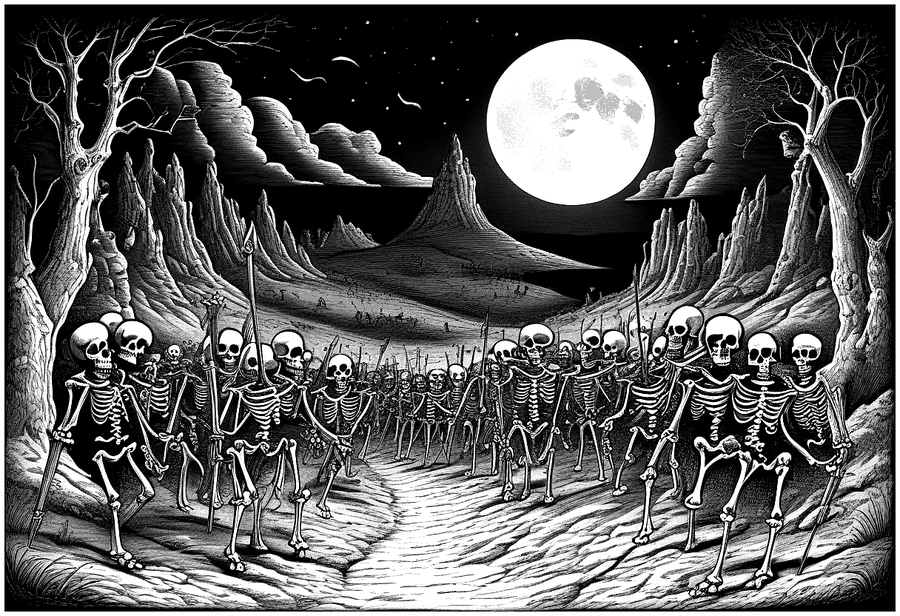
Since spring, farmers around Litta have seen columns of the dead marching on the Midmanch road at night, and found fresh graves empty in the morning. The Ashworth Circle denies that it commands them. The Penitents say the Legion answers only to the necromancer of Winedihul, who wants an army before the living finish their war.

  • The Wardens. Skeletons in Elder armour who guard the crypt and never leave it.
  • The Diggers. The newly dead of Litta's churchyard, digging towards something under the hill.
  • The Marshal's Hundred. Dead riders in black barding, led by a skeleton in an iron crown, who have been seen as far as the Prince's border forts.
Life & lore
Feast days
The Legion marches most on Lampless nights, and the Hollow Marshal rides on the three nights before the Lamp is full. Penitents say the Wardens stand to attention at the Elder solstices, 21 Rocadones and 21 Isgard. Litta dreads the Ferrying, 1–9 Tunarejo, when custom says doors stand open for the dead, and it has cancelled its Ondaria quarter-day fair.
Daily life
The Legion does not eat or sleep. By day the Diggers lie in turned earth under the Winedihul hill; by night they tunnel towards something beneath it, and columns march the Midmanch road. The clink of rusted mail and a smell of turned earth mean a column is passing. Hooves with no horses breathing mean the Marshal's Hundred.
Oaths & rites
The Legion has one rite of its own: it marches in old Ortonzanian drill and halts at milestones as if for roll-call. Litta now buries its dead with salt in the mouth and their hands tied with hemp and cold iron wire. Border-fort soldiers swear 'to the Prince living'. A destroyed Warden is laid face down, so it cannot see its post.
What they say
Litta children chant 'Rusted hat and rotten shield, / Grandad's marching from the field.' Many believe a Legion soldier stops if you call it by its living name, and several widows have tried. Coaching inns hang an iron horseshoe upside down over the door 'so the luck runs out on him'.
History
Ortonzanian chronicles record a King of Iron who led riders on the Midmanch road in 520 and was buried with his crown near Litta, though no grave was ever found. In Thaw 834 the sexton Walter Pyke found three graves opened from inside, and in Mieles thirty. The Marshal first rode on the last night of the Comet of Thaw.
Members
The Hollow Marshal, a skeleton in an iron crown, may be the King of Iron. Ned Hobday, a corporal killed at the Battle of Swaren in 829, has been seen marching in his own helmet and is known by the dent in it. Elias Pyke, Anne Pyke's grandfather, digs with the Diggers, and she will pay to have him back in his grave.
This year
The Marshal's Hundred has been seen at the Prince's border forts, and the Wardens stand closer to the crypt gate than ever, as if drawn up to meet something. Children have walked from Litta to the spires singing, and two were seen passing the Wardens untouched. The Prince forbids anyone to enter the Crypt.
The war
Ortonzania's soldiers and best cavalry are on the Balsozhian front, so the Marshal rides unopposed. The dead of old battlefields have joined the Legion in the helmets they died in. Merlish broadsheets call it a Balsozhian hoax, Balsozhians call it a Merlish one, and Merlish officers fear the Hundred will strike the League's rear.
Money & law
A blessed sun-falchion costs 12 cr in Shifract, an iron grave-cage 2 cr in Midmanch, and a blessed horseshoe 2 sh. Gilbert Rowe offers 200 cr for the iron crown, and the Rust-Watch offers more to destroy it. A plate of Warden armour fetches 100 cr. The Prince brands anyone caught on the hill and hangs grave-robbers; looting a Legion soldier is legal and nearly worthless.
Healing
Legion blades are rusted, and their wounds turn to grave-fever with clenched jaws. Litta's herb-wife packs them with honey and garlic, and a Thetletown hospital cleans them properly for 5 sh. Survivors of the Hundred complain of a cold in the bones that no fire warms. People who come back from the crypt will not sleep in the dark.

Adventure seed. Sergeant Osric Dunn says the Legion drills a manoeuvre Ortonzania stopped teaching in 520. He wants the old drill-book from Shifract before the Hundred tries it on his fort.

The Rot Communion

Plague-cult of the Green Sleeper · Kaporesia, Valsiaria · led by the Mother of Moulds
The Rot Communion, drawn in pen and ink

A grey-green rot is creeping out of the Kaporesian rainforest along the rivers. The sick grow lichen on their skin and stop feeling pain, and in the last stage they walk into the jungle and do not come back. The Communion calls it the Sleeper's blessing and spreads it on purpose: when enough of the world is green, they say, the dragon will wake and the rot will rule it.

  • The Bloomed. Plague-walkers in the last stage, who no longer speak and cannot be stopped by pain.
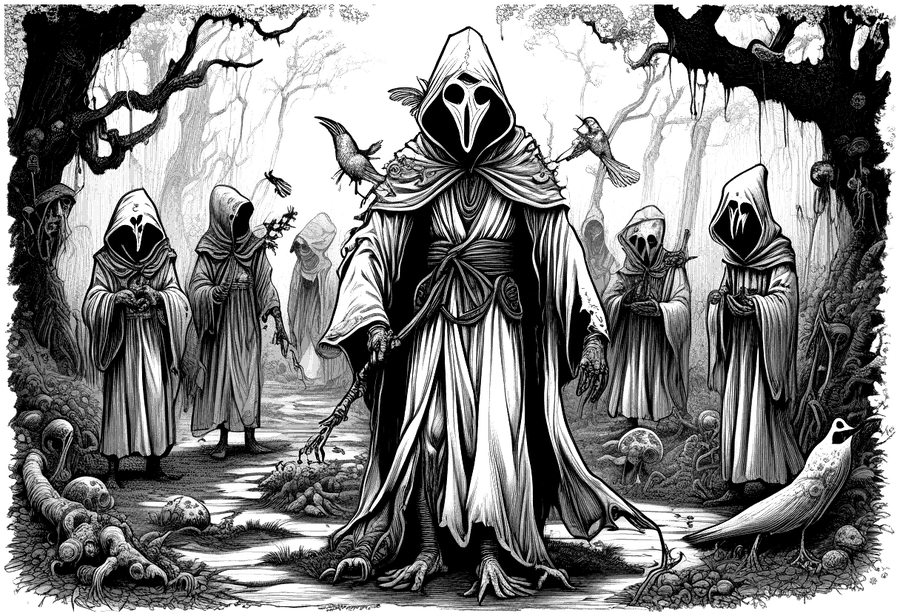
  • The Gardeners. Living cultists in beaked masks who carry the spores in censers from village to village.
  • The Mercy. Healers inside the Communion who secretly want a cure. The Leopard Wardens hunt all three.
Life & lore
Feast days
The Communion's holy season is the Kaporesian monsoon in Hofjor and Rocadones, when the Sleeper drinks. On one night in Rocadones the Mother hears it turn over, and drums sound from the drowned temple. At Floodwake, 1 Ondaria, Gardeners float spore-boats among the candle-boats. On the first of every month a censer is burned at the edge of the jungle.
Daily life
Gardeners travel as herbalists and pilgrims and put on the beaked mask only to swing the censer. The Bloomed walk without speaking or feeling pain. The Mother lives in a drowned temple inland, attended by the Bloomed. Living members eat river fish and jungle fruit, refuse salt, and smell faintly of rotting fruit.
Oaths & rites
A Gardener is initiated by breathing spores from the Mother's own censer and surviving the first green on the skin, and swears 'to tend the garden until the Sleeper wakes'. Members' dead are left in the jungle for the rot, which they call planting. A new high priestess must be crowned with fungus by the old one, and the Mother has named no successor.
What they say
Valsiarian river folk now say 'Green on the doorstep, fire in the hearth', meaning that you burn whatever a stranger touched. Kettle Coast families who carry oil to the Sleeper on Oil-Night swear the Communion has nothing to do with them. Children are told that Gardeners can smell a healthy child.
History
The Mother was Deteuga Rephidou, a Lefka midwife who went into the jungle for medicines in 826 and came back in 829 crowned with fungus. That year Lefka herb-sellers began swinging censers in the market and were fined for littering. The Bloom had first been reported above Lefka in 828, and the Leopard Wardens noticed it in 831.
Members
Kyrmos Thalides, once harbour-master of Lefka, leads the Gardeners along the coast. Lumia Kesvanen was a Silent Church nun until the Communion took her village, and now carries a censer north. Gouxy Belirkinides, the Mother's former apprentice, leads the Mercy and says she is close to a cure.
This year
The Mother says she has heard the Green Sleeper turn over. Gardeners have been seen as far north as Kutio, and Prince Aarno has closed three river towns. Bloomed attacked two Kettlekin crews leaving oil for the Sleeper, the first time the Communion has struck at the Kettlekin.
The war
The war draws soldiers away from the rivers, so Gardeners walk with the refugee columns unchallenged. Manttamite boats carry the Bloom upriver along with the guns, and Manttamite crusaders kill Gardeners on sight. Balsozhian agents are said to have offered gold for Bloomed to use as weapons, and the Mother refused, because gold does not grow.
Money & law
The Communion pays its people nothing; they work for the Sleeper. It buys lichen scraped from walkers at 5 sh, illegally. Kaporesia pays 5 cr for a Gardener's mask and 20 cr for a Gardener taken alive, and Kaporesia and Valsiaria offer 500 cr between them for the Mother's head. Carrying spores and selling a Bloomed body are both capital crimes.
Healing
The Bloom brings mould on the skin, a sweet smell and then a slow walking death. Burned out early with fire or marrow-salt, at 5 cr a pinch, it can be stopped. Washing in running water within an hour of meeting a censer helps a little. The Thetletown hospital at Myrnamon refuses the infected, and leopard-priests burn the Bloom out of a hand for nothing.

Adventure seed. Lumia Kesvanen has written to her old abbess in Kutio asking to come home. Either she wants to be cured, or the Communion wants a censer inside the convent.

The Wormwakers

Death-cult of Rostovund · Kovavikia and the Raugarian wetlands · led by the Bone Speaker
The Wormwakers, drawn in pen and ink

Kjelheim teaches that the Worm only sleeps. The Wormwakers mean to wake it, and they believe it must be fed: they drown offerings in the marshes and cut the Worm's rune into the white bone of the Rib Temple in Gogur. The insurrection uses them, and is afraid of them.

  • The Bone-Masked. Cultists in masks carved from rib-bone, who raid by night.
  • The Drowners. Marsh priests who keep the marsh horrors fed and say the horrors are the Worm's fingers.
  • The Quiet Kin. Sleepers inside the Raugarian priesthood, waiting for the Bone Speaker's word.
Life & lore
Feast days
Rostovund, the Dead Worm's month, is the cult's holy month. On Wormwake Eve, 6 Rostovund, while Kjelheimers pour offerings into the cracks 'so the Father sleeps', the Bone-Masked pour blood 'so he wakes'. The Drowners feed the marsh horrors when the fen-ice breaks in Thaw, and the cult raids hardest on Lampless nights in the long dark.
Daily life
By day Wormwakers are trappers, fur-traders and marsh fishers, and the Quiet Kin are Raugarian priests. Drowners live in reed huts on the Bostrand and Hvamstan fens and eat eel, duck and whatever the horrors leave. A rune cut into a doorpost, a bone on the doorstep or a drowned dog in the well means a house has been marked.
Oaths & rites
A Bone-Mask carves his mask from the rib of an animal he has drowned and cuts the Worm's rune into his chest, swearing on the Rib Temple's bone in Gogur. A Wormwaker who betrays the cult is drowned in the fen with a stone in each hand. The cult drowns its own dead as offerings, so the Worm gets everyone in the end.
What they say
Fen-folk say 'Feed the fen and the fen feeds you', and the Drowners mean it literally. When an eel catch fails, villagers say the Drowners fed the horrors first. Many believe the bone masks show the faces of the people their wearers have drowned.
History
The Wormwakers say they are older than the Theocracy, and the first record of them is from 525, when masked men drowned a Raugarian priest at Gogur to stop the Long Winter. The glaciers stopped, and the cult took the credit. In 817, the Year of Two Winters, they drowned a Kovavikian jarl's son in the Gogur river, and the second winter broke a month early.
Members
The Bone Speaker leads them unseen; Gogur rumour says he is a Kjelheim priest of the Rib Temple. Skorri Hvinsson, a sable-trapper of Solkesvog, has twice been tried as a Bone-Mask and twice acquitted. Ragnu Velksdottir, a Drowner of the Bostrand fens, sells eels in Hvamstan market and is never short of them.
This year
The Rib Temple's bone grows frost on the hottest days, someone keeps cutting the Worm's rune into it at night, and raids have doubled since Foleleyme began to smoke. The Bostrand eel catch failed in Mieles. A Raugarian priest was found frozen upright in a forest shrine near Vasvolfos, holding a Wormwaker mask.
The war
The insurrection uses the Wormwakers and is afraid of them, and the Kjelheim Remnant feeds them information. The Huntress's archers have gone east and left the wetlands to the cult. Some say the Bone Speaker wants the war to last until the Worm wakes.
Money & law
The cult trades in fear, and its Drowners sell fen-eels cheap. Raugaria pays 5 cr for a mask and 20 cr for a cultist taken alive, and turns captured Bone-Masks out into the Bliksberg to be hunted. Rib-bone masks sell to collectors in Fagervik for 2 cr, though owning one is suspicious.
Healing
Their bone knives leave jagged wounds that fester. The half-drowned suffer marsh lung, a wet cough treated with steam and pine-tar, and marsh ague is treated with willow-bark. Cultists who cut the rune too deep get rune-rot, a weeping scar that they pack with fen-mud, which makes it worse.

Adventure seed. Ragnu Velksdottir has never been short of eels, even in Mieles. Fjella Rondsdottir will pay to know what the Drowner baits her traps with.

The Hollowed of Ember Deep

Marrow-mad Hoarfolk · the Sunward Range · led by Delve-Master Kord, if he still lives
The Hollowed of Ember Deep, drawn in pen and ink

The Marrow-Delvers of Ember Deep dug deeper than any hold should, into seams where marrow-salt grows like ice. Those who breathed its dust began to glow from within and stopped needing sleep. Last winter they sealed the hold from the inside. Traders hear hammering through the rock, and at night a light shows in the vents.

  • The Lit. Hoarfolk veined with glowing marrow-crystal, stronger and faster than any living dwarf.
  • The Wraith-Callers. Smiths who bind marrow-wraiths into blades and armour.
  • The Last Shift. Miners still trapped inside, who want out and are tapping messages through the walls.
Life & lore
Feast days
The Hollowed keep no calendar, because the Lit do not sleep; the Last Shift still counts shifts by tapping on the walls. Sunhold says Ember Deep kept the day it broke into the Cold Garden as a feast, until it stopped keeping anything. On Wormwake Eve this year Sunhold sealed two tunnels instead of one, both facing Ember Deep.
Daily life
The Lit work without rest, hammering and digging deeper, and need neither sleep nor much food. Traders at the sealed gate hear hammering through the rock and see a light in the vents at night. Sunhold's Hoarfolk keep cold iron on every door and sleep in shifts, so that someone is always awake.
Oaths & rites
The Lit no longer keep Hoarfolk rites and do not remember their names. The Wraith-Callers bind marrow-wraiths into blades at the forge in a rite nobody outside has seen, and the blades hum. Sunhold has cut the names of Ember Deep's lost into its own shame-wall, which is the worst thing one hold can do to another.
What they say
The Hoarspeech saying Torg thaz ûkum khol gorrôld thaz zûlk thrimar, 'We are stone, and other people are flesh', has gained a line at Sunhold: 'and the Lit are neither.' Miners now say 'Dig for the marrow, find the Worm.' Sunhold miners believe the Lit can hear through stone, and no longer sing at work.
History
In 829 Ember Deep's Marrow-Delvers broke into a seam they named the Cold Garden, where marrow-salt grew like ice on the walls. The first miners to breathe its dust worked three shifts without rest and were praised for it. Last winter, under Delve-Master Kord, the hold sealed itself from the inside, and Sunhold's ingot-mark trade with it stopped in the middle of a shipment.
Members
Delve-Master Kord leads them, if he still lives. Ember Thethgrim, once the hold's best bladesmith, is said to lead the Wraith-Callers, and his maker's mark has turned up on blades sold in Shahpabad. Ember Makhith, a shift-chief of the Last Shift, taps her name through the wall every dawn so that Sunhold knows she is alive.
This year
The Last Shift is tapping messages through the walls, and Derith Zokgrokul of Sunhold, who is decoding them, says they ask for rescue. One message reads: 'We have found the bottom, and it is looking up.' The Wraith-Callers have begun selling marrow-bound blades through Sunhold smugglers. The Powder Moot has sent no help.
The war
Bretborn riflemen and Kettlekin gas-works want marrow-salt, and the Lit dig more of it than any hold. Their blades have turned up on both sides of the Asraha–Mashian War. The Grey Walls who guard the Shah say they would rather fight Lit Hoarfolk than go unpaid.
Money & law
Marrow-salt costs 5 cr a pinch, and a Lit's crystal veins are worth a fortune. A wraith-bound blade fetches 40 cr from Sunhold smugglers. Hoarfolk law sends up anyone who digs too deep, but the Lit went down instead. Sunhold pays 50 cr for proof of Kord's death and cuts anyone caught trading with Ember Deep into its shame-wall.
Healing
Breathing marrow-dust brings marrow-burn, glowing veins and burns from inside, which rest and cold iron ease. Ordinary weapons do the Lit 1 damage, and marrow-salt shot costs 1 cr a ball. Sunhold healers wrap victims in cold iron chain and sit with them. Anyone who stays too long by Ember Deep's vents begins to glow and stops sleeping.

Adventure seed. Ember Makhith's dawn tapping stopped three days ago, and now another hand taps her name. Derith Zokgrokul wants someone to ask the wall a question only Makhith could answer.

The Rusted Brethren

Servants of Coldharbour the Unforging · Merland, Ortonzania, Balsozhia · no one admits to leading them
The Rusted Brethren, drawn in pen and ink

The Thetletown Church's devil wants everything to rust back into stillness, and the Brethren help it along. They salt cannon barrels, rot ships' nails, crack boilers and slit sky-ship envelopes. Since the war began someone has been paying them well: Balsozhian dinars have been found in their caches, and so have Merlish crowns.

  • The Orange Hands. Saboteurs whose skin is stained with rust that will not wash off.
  • The Stillborn Forge. Smiths who make blades that rust inside the wound.
  • The Patrons. Whoever is paying. The Rust-Watch has two theories and no proof.
Life & lore
Feast days
The Brethren keep Forgefire, 1 Uxbridmanch, in reverse, salting a forge on the night when every other forge is relit. Their own feast is the Ash Days, when fires are out across the land and the world is as still as Coldharbour wishes. They strike hardest in Isgard, when the cold cracks iron, and on Smithsdays, when the foundries stand idle.
Daily life
By day they are workmen in foundries, shipyards and gas-works, and the Orange Hands wear gloves in all weathers. A satchel of salt, rust that will not wash off and a cracked boiler on a Smithsday are their signs. Foremen in Macham check their workers' hands, and Balsozhian gunners check their barrels every dawn.
Oaths & rites
A new Brother rubs iron filings and brine into his hands until they stain for good, and swears 'to let it rest'. Their dead are laid in salt water so that the bones rust. A Brother who repents to the Church has his hands scoured with sand by the Rust-Watch, which does not take the stain out but is thought good for him.
What they say
Merlish foundrymen say: 'Rust on the hands, salt in the bag, / Coldharbour's man is the one with the rag.' Miners never whistle underground, because Coldharbour answers whistling with rust and roof-falls. Some believe a Stillborn blade rusts in the wound because Coldharbour himself drinks from it.
History
The Brethren first appeared in 744, when the first broadsheet press was found rusted solid on the night before its first printing. The Shifton Weathervane came out a week late with a sermon against them, and the Rust-Watch was founded within the year. Since then they have been blamed for every sprung seam in Merland, and about a third of the time correctly.
Members
Inquisitor Margaret Thorne of the Rust-Watch hunts them and suspects the Ashworth Circle. Ezra Pilling, a Macham locksmith, is believed by the Rust-Watch to be a smith of the Stillborn Forge and has never been caught with a blade. Kor Rasász, a Balsozhian gunner, found dinars in a Brethren cache and was promoted for it.
This year
Someone is paying them well: Balsozhian dinars and Merlish crowns have both been found in their caches. Two Open Forge cannon on the barges to Erencszasz were found salted in Haymonth, barges have sprung their seams at Witfordge, and an envelope was slit at Kamiechia's Eleventh Tower. Ned Caxton, a Macham foreman, was hanged in Mieles for salting a cannon.
The war
The Brethren salt cannon barrels, rot ships' nails, crack boilers and slit sky-ship envelopes on both sides, and each side suspects the other of paying them. Merland's foundries hire guards at 4 d a day to watch their own workers. The Rust-Watch has two theories about the Patrons and no proof of either.
Money & law
Merland hangs saboteurs under the same statute as counterfeiters of the crown. The Rust-Watch pays 20 cr for an Orange Hand and 100 for a smith of the Stillborn Forge, and a Stillborn blade sells for 10 cr on the black market. Salting a Church-blessed forge is sacrilege as well as sabotage.
Healing
A Stillborn blade leaves flakes of rust in the wound, and untreated cuts turn within a week to 'Coldharbour's kiss', a lockjaw fever. Thetletown hospitals scour the wound with spirit and hot iron for 5 sh, and Macham herb-wives draw a lodestone over it. The Brethren's own hands crack and bleed from the brine, and they leave them untreated.

Adventure seed. Ezra Pilling has been asked to make a new lock for the Rust-Watch's evidence room. Inquisitor Thorne wants someone to watch him make it.

Court factions in the great realms

RealmFactionWantsFactionWantsFactionWants
KushiThe Ridge CourtNeutrality and the TollThe AdmiraltyTake the Captaincy's isles and the Company's portsThe Toll OfficeKeep both alliances paying
MerlandWar partyFight to the end for HajhiaPeace partyPeace before the banks failPaper partyPrint money and pay for everything
BalsozhiaHorse-lordsA war of riders, not gunsThe GunnersCannon and a new kind of armyMint-mastersA short war before the coin fails
AsrahaWell-keepersA holy caliphate that looks inwardDesert sheikhsPlunder from the CompanyThe Old EyesA new caliph
RaugariaThe AntlersThe Theocracy as it isThe Wild HuntMore warKjelheim RemnantThe old gods restored
HajhiaQueen's ridersVictory, whatever it costsOld nobilityTerms with ZsoltTallian merchantsOpen roads and no sides
ValsiariaEmese's salonPeace between her husband and brotherSilent ChurchOrder and silenceManttamitesA loud, holy war
KahpiaWar councilJowshia retakenElephant-priestsThe Colossus honoured, the dragon appeasedGrey Wall captainsTheir back pay