RulerHigh Huntress Sigrun Kvaldottir, Voice of HofjorCapitalFagervikPeople5.86M · NorseFaithFagervik Faith 88%, Kjelheim 12%WealthGrain, timber, hemp, game, honey; iron at GravdallaArmyLongbow regiments (two archers in three)
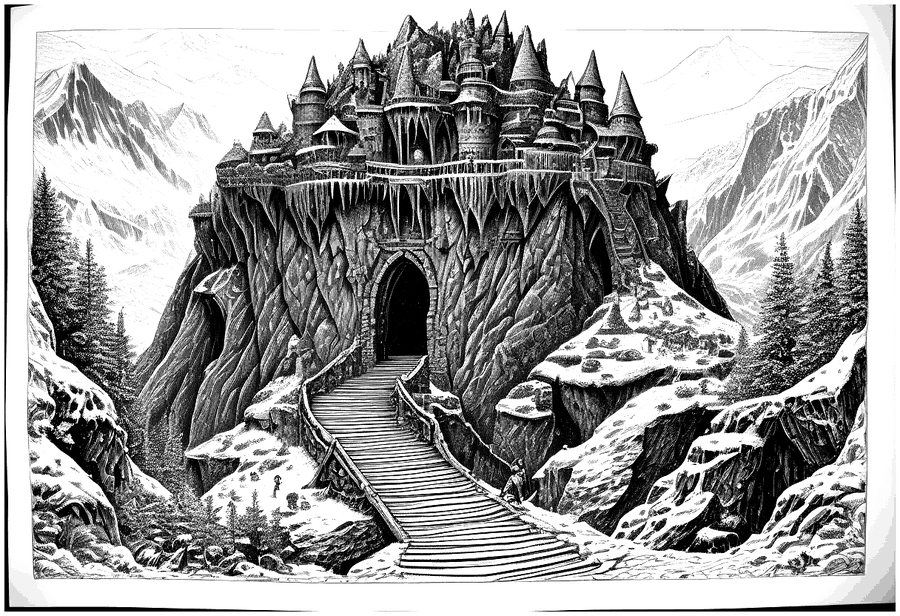
The largest realm by population is ruled by a priesthood of hunters. The High Huntress is chosen by a sacred hunt in the Bliksberg Forest. Raugaria holds two vassals, Ilbarescia and Kovavikia, and has joined Balsozhia's war against Hajhia. At home an insurrection is spreading through the wetlands, led by Kjelheim traditionalists who call the Theocracy a heresy against the old gods.
The Shedding on 10 Hofjor empties every village into the woods to gather elk antler, and the parish hunt-lots are drawn from a hat of birch bark. Wetland Kjelheimers still pour ale into the bog-cracks on Wormwake Eve (6 Rostovund), with the shutters closed. On Rush-Burning, the last night of Ondaria, fen villages fire the old reed thatch and the young leap the embers for luck.
Daily life
A wetland farmer breakfasts on rye porridge and smoked eel, drinks heather ale, and sleeps in a turf-roofed longhouse with the cow at the far end for warmth. Men and women both owe one evening in six at the parish butts behind the hunt-lodge. The countryside smells of peat smoke, wet wool and hemp rotting in the retting-ponds.
Customs
A suitor leaves the first kill of the season on the beloved's step, and if it is cooked, the answer is yes. At the wedding the couple run once round the steading boundary together so that neither is penned, and no Raugarian bars a door against a guest. The dead lie three days on a platform in the woods before burial, so that Hofjor may take his share.
Folklore
Fen children are told the marsh horrors are the Worm's fingers, feeling for the Penner's wall. A villager who moves into a town is teased with Renin er flytbrøn trulo banutåld, 'The wolf in a house is a dog.' A stag standing at a crossroads means a death in the parish before the next Shedding, and an owl in the eaves means a bowstring will snap.
History
In 791 a ploughboy in Selvikka Parish turned up forty pounds of cut silver rings, the largest hacksilver hoard ever found. The priests ruled that buried silver belongs to whoever finds it, because 'coin is a chain' and its old owner was dead. The boy bought a longship, and every spring since then half the parish has dug up its own fields.
People
Tove Hvinsdottir, an eel-wife of Hvamstan Parish, rows the fen-post between villages and carries more rebel letters than eels. Brother-Hunter Henk Bjarsson, the lodge-priest near Bostrand, wants his parish's sons home from the eastern levy and has written to Fagervik four times. Fjelm Dårksson was turned out into the Bliksberg in 829 and survived the hunt; he now sells his tracking at the Bowstring in Utstad.
This year
Wetland priests read the Comet of Thaw as Hofjor's antler pointing east, while Kjelheim cottagers called it the Worm opening one eye. The eel catch in the Bostrand fens failed in Mieles, and fen-folk say the Drowners are feeding the horrors first. Shepherds near the Sugarvines ruin report fresh spoil-heaps among the Elder stones and lights there on Lampless nights.
The war
The longbow regiments took two archers in three from the eastern parishes in Thaw, so this Haymonth the hay is being cut by grandmothers and girls. Each household owes the levy-priest twenty-four goose-feathered shafts a month, and bowstring hemp is taken straight from the retting-ponds for receipts nobody can cash. The wetlands say the Huntress takes their sons while the Kjelheim rebels feed their daughters, and the rebels pay for bread in good silver.
Market & law
Markets weigh hacksilver on brass beam-scales: a tenth-ounce snip (1 sh) buys a fat goose or four pounds of smoked eel, and a good yew bowstave costs half an ounce (5 sh). Pedlars cut Merlish crowns like any other silver. There are no prisons; brawlers pay silver to the lodge, thieves are turned out into the Bliksberg with a day's start, and slavers are hunted to the sea.
Healing
Marsh ague shakes the wetlands every third day from Haymonth to Reaping; herb-wives brew willow-bark, and those with silver buy Utturi bark in Kogenda at 1 sh a dose. Arrow wounds are packed with sphagnum moss and honey. Swamp-leech bites are burned out with a hot arrowhead, and lodge-priests heal for a share of the next hunt, never for coin.
Adventure seed. A Bostrand eel-wife has netted a rib-bone mask cut with the Worm's rune. She will sell it, and the dropper's name, for one ounce of silver.
Republic of Merland
Shifton League · leader
RulerFirst Burgess Edwy Calloway and the Moot of FiftyCapitalShiftonPeople4.49M · AngshireFaithThetletown Church 99%WealthTimber, grain, coal (Mavehambe), wine, cattleArmyCrossbow companies and hired steel
A merchant republic whose sales tax is the lowest on the continent, at one part in twenty. It is the banking heart of Kidaneland: letters of credit written in Shifton are honoured in every port. Fifty burgesses elected by the guilds sit in the Moot. They joined the war to defend Hajhia, but mostly to keep the Balsozhian empire from reaching the eastern sea.
Gatefair is being kept now (1–3 Haymonth): boundary stones are beaten with willow wands, field gates are hung with ribbon and road-tolls are waived. On Forgefire (1 Uxbridmanch) every village smithy is relit from the parish anvil and apprentices are bound. Cattle country keeps Drove-Off on 20 Reaping, when the herds leave for Macham with a fiddler walking in front.
Daily life
Farmhands eat bacon, pease pudding and a heel of bread before dawn and drink small beer at noon. Villages are half-timbered and thatched in the west and slate-and-soot grey round the Mavehambe pits, where women wear clogs and men come home black to the eyes. On Smithsday the market fills and someone reads the broadsheet aloud at the inn for a penny a head.
Customs
A Merlish marriage is a contract: clauses are read out before the priest, and he strikes the chapel anvil once for each one. A newborn is carried out through the field gate and back so that Gabingdon knows its face, and coffins leave by the gate as well, never the front door. Guests are fed gladly, but never be a three-day man.
Folklore
Hedgerow tales tell of the Stone-Shifter, the ghost of a farmer who moved a boundary stone and now walks the lanes with it on his back. The proverb everyone knows is 'A struck coin and an unstruck tale': trust the scales, not the teller. Miners never whistle underground, because Coldharbour answers whistling with rust and roof-falls.
History
In 744 a Kettlekin-built press printed the first broadsheet, and within twenty years every coaching inn kept a paid reader. In 788 the Deep Pit at Mavehambe flooded with forty men inside. The pit-captains then bought Hoarfolk steam pumps, and Mavehambe coal has gone dry-shod ever since, which is why Merland trusts Hoarfolk engines and is now furious with Hoarfolk gunners.
People
Hester Wainwright is reeve of a Caland village near Totrinch; she runs its broadsheet club and wants the war tax lifted from widows. Abel Coalby, a Mavehambe pit-captain, has quietly cut wages to 2 d a day and expects trouble by Reaping. Joan Fairley drives cattle on the eastern road and knows which Balsozhian border posts take bribes.
This year
The Lympsford Fault shook the south in Mieles, cracking the chapel tower at Thaxted and opening a spring in a dry field near Totrinch. Broadsheet astrologers are still selling Comet almanacs at 2 d. At this Gatefair one parish found its boundary stone forty yards from where it stood last year, and two villages are suing each other in Torkburgh.
The war
War taxes are now one part in fifteen, and every Smithsday the casualty lists are read in village squares after the market bell. Farm boys walk to the Macham hiring halls for 2 sh a day, so harvest wages have doubled to 6 d and Kettlekin gangs are hired to bring in the wheat. In the eastern dales by the Balsozhian border, beacon-fires stand ready and the cattle are driven west at night.
Market & law
Prices are in crowns: a fat bullock costs 3 cr, a cask of country wine 1 cr, and a sack of Mavehambe coal 4 d. Fines are scaled to wealth, so a brawl costs a labourer 1 sh and a burgess 2 cr, and thieves are branded with a T on the second offence. Moving a boundary stone earns a day in the stocks at the next Gatefair.
Healing
The Thetletown Church runs hospitals in the towns, but villages make do with the barber-surgeon (6 d for a bone) and the herb-wife. Pit-villages lose men to grey lung, which nothing cures; the Mavehambe Benefit pays a coughing miner 1 sh a week to sit in the sun. Physicians come out from Torkburgh at 2 sh a visit and another shilling for the road.
Adventure seed. A boundary stone near Totrinch moved forty yards overnight during Gatefair. Under its old bed the reeve found a sealed Calloway strongbox, and the box is ticking.
Principality of Valsiaria
Fagervik Compact · not at war
RulerPrince Aarno IV KaukovaltaCapitalValsiariPeople4.42M · SoumiFaithChurch of the Silent War 69%, Manttamites 28%WealthTimber, war elephants, game, clay; silver at SaskiArmyElephant-led infantry
Valsiaria is allied to Balsozhia and married into its imperial house, yet the Prince has refused to march. His wife, Princess Emese, is the Emperor's sister, and she is said to be pleading for peace. Meanwhile the Manttamite heretics have declared a crusade inside his borders. Valsiaria holds Igyoszavas and Kaporesia as vassals.
Villages keep the Silent Days (10th, 20th and 30th of each month) and the Long Silence on 20 Thaw, when quarrels are settled by staring at sunset. On Tusking (5 Mieles) the working elephants are washed in the rivers and their tusks oiled, and druids leave honey and blood at the roots of Utturi's great trees. This year Manttamite drummers have marched through every Silent Day since Thaw.
Daily life
Soumi families live in long log houses with clay-tile roofs, a sweat-hut at the back and a bench by the door for sitting quietly with neighbours. They eat rye flatbread, river pike, mushrooms in sour cream and the blue Kutio cheese. Timber villages work with elephants, and the loudest sounds in the forest are an elephant's rumble and the axes.
Customs
Courting couples sit together on the door-bench in silence, and the first to speak loses. Wedding vows are written, read by the bride and groom alone, and burned. Mourners keep nine days without speech, and a guest must let the host speak first; a raised voice under another's roof is the worst rudeness there is.
Folklore
Grandmothers say Utturi the Light Manticore walks the forest edge at dusk, and that anyone who sees its face will never lie again. The proverb in every mouth is Hoka oi luumuili, 'An elephant does not run.' An elephant trumpeting at night foretells a loud death, and a child born on a Silent Day is expected to become a judge.
History
In 655 the potters' village of Hintaatas burned on the Long Silence because nobody would shout a warning about a kiln fire. Since then every village has licensed a bell-child, chosen at seven, who may ring the alarm on holy days. The office is hereditary in some families and is the only noisy job in Valsiaria that carries honour.
People
Teppu Rauhala is mahout-master of the Kutio timber lines; he has sixty elephants and wants none of them sent to war. Ainu Kolmanen, a village judge of the Silent Church near Pylataskihi, once out-stared a defendant for two days and is said never to have lost. Ilmu Tarvonen, a former bell-child, now beats the drum for a Manttamite company.
This year
The Ulgan Fault has shaken the eastern counties three times since Thaw and split the clay pits at Kuhjarapa. Smoke from the Ouvaakosjar wildfires drifts over the western villages, and an avalanche on the Tarquinan slopes buried a shepherds' summer camp. Tulpio Tiger poachers took two ivory bulls at Kanpaa in Thaw and are holding a mahout's son for ransom.
The war
The Prince will not march, but the Manttamite crusade marches for him: companies quarter themselves on villages, eat the winter stores and make every host declare aloud for the loud war. Balsozhian and Merlish buyers bid against each other for grain and timber, so prices are up and the Prince has forbidden mahouts to hire themselves abroad. Kaporesian Cells float hand-gonnes north inside timber rafts.
Market & law
Coin is the Saski elephant mark (1½ sh): a working elephant costs about 1,000 marks (150 cr), a pike 1 mark, and a night's bench and supper half a mark. Lending at interest is forbidden, so village mills and boats are owned in silent partnerships that split the profit. Disputes go to a staring contest before a silent judge, fines are paid in silence, and killing an elephant means exile.
Healing
Silent priests treat fever with silence, cold water and willow, and druids sell honey-and-resin salves for axe cuts. River villages fear the Bloom, which has crept up from Kaporesia; anyone with mould on the skin is taken to the riverbank and the patch is burned off with a hot iron. Elephant-crush injuries are set by mahout bone-setters, who are better than any town surgeon.
Adventure seed. Teppu Rauhala's best bull elephant has vanished from Kutio without a sound, along with the Manttamite drummer who had been feeding it apples.
Orcosian Theocracy
Unaligned
RulerThe Lion-Pontiff Ximeno IIICapitalOrcosPeople3.79M · AstellianFaithFuempild gods 65%, Vengrian spirits 23%WealthTimber, honey, coal, white sand (glassmaking), gameArmyBalanced foot and horse; the Sunlancers
A sun-worshipping priest-kingdom of river valleys, ruled from Orcos by the Lion-Pontiff. Orcosia holds the Ucillamope Library, the greatest store of books on the continent, and the untranslated Salinty Idol. It is rival to Raugaria and Ilbarescia, friendly to Hajhia, and suspicious of Balsozhia. Every side is courting it this year.
Chief towns: Bustogollo, Mantena (flooded this spring), Orcos, Mondiejon, Dehermatmik.
Life & lore
Feasts
The river valleys keep the whole Fuempild year: Hiving on 1 Mieles with yellow-clad brides, Lionsday on 21 Rocadones, Floodwake on 1 Ondaria with candle-boats, and the nine nights of the Ferrying in Tunarejo. Every village also holds the Sweat-Mass on 3 Reaping for the dead of the Grey Sweat, with one bell rung for each family lost. The Ash Days are kept as a fast.
Daily life
Valley farmers eat bean-and-onion stew, flatbread with honey, river carp and watered red wine. Houses are whitewashed, with the sun-disc of Rocadones painted over every door, and straw bee-skeps stand in rows along the south walls. At noon the temple bell stops all work for the Lion's prayer, and on the coast the white-sand diggers walk home powdered like bakers.
Customs
Couples confess their secrets to each other before a priest the night before the wedding, because a marriage cannot begin in the dark, and they marry at noon in the Lion's sight. Nobody is buried after sunset; the dead go into the earth facing east with a honey-cake in the hand for Tunarejo. A host breaks bread for a guest at the open door, where the sun can see it.
Folklore
Every village tells the bees of a death, and the Year Without Bees (674) is blamed on a priest who forgot. Mothers teach Puevo nu iper, 'The lion does not hide.' A wasp in the house means a lie will be found out, and the Salinty Idol is said to speak one word a century, though nobody can agree which.
History
The Grey Sweat came up the rivers in 344 and killed one Orcosian in five before it burned out in 349. Whole villages were abandoned, and their sun-discs still stand in the woods above the Hontaleras. The survivors gave the Ferrying its present nine nights, and the Honey Years of the 470s are still talked about as the reward for that grief.
People
Orbela of Tazón keeps three hundred skeps near Allavillo and sells her honey to the Ucillamope librarians, who pay in sun-reals and gossip. Ondrejo of Sabiales, a river-priest of Ondaria in drowned Piozia Parish, is rowing from roof to roof to say the Floodwake rites early. Sefos of Zueco, foreman of the white-sand diggers, wants a guild charter and is willing to bribe for one.
This year
The floods at Mantena and Orco drowned the bottomland of three parishes in spring, and the beans rotted in the ground. In Rocadones two Glassborn Strays walked north through the valley villages without stopping, chiming at the sun-discs; one village has fenced off their footprints. Grain in the southern parishes now costs four times its peacetime price.
The war
Orcosia is still deciding, so the war comes to the villages as buyers: Balsozhian and Hajhian agents bid against each other for remounts, and a plough-horse fetches 20 sun-reals. Hajhian refugees with their flocks are camped in the river meadows, eating grazing the villagers need. The Sun Temple has drawn up its levy rolls, and every young man knows his name is on one.
Market & law
Coin is the sun-real (1.1 cr), and refusing one is an insult to Rocadones; Balsozhian dinars are taken only by weight. A skep of bees costs 3 sh, a pound of honey 4 d, and a sack of glass-sand 2 d at the pit. Crimes are confessed at noon with public penance and a fine to the Sun Treasury, and necromancers are burned at noon so the Lion sees.
Healing
Sun Temple healers charge 5 sh a wound and dress cuts with honey and sun-dried linen. Marsh ague shakes the deltas and flood-fever follows the high water. Any cure that borrows from the dead, from grave-moss to a hanged man's hand, counts as necromancy here, and herb-wives who sell such cures are burned for it.
Adventure seed. The village that fenced off the Strays' footprints says the prints are slowly turning to glass. The Readers and a Successor's Eye have both come to dig them up.
Principality of Ortonzania
Shifton League
RulerPrince Godric AshworthCapitalShifractPeople3.53M · AngshireFaithThetletown Church 52%, Silent War 32%WealthHoney, timber, grain, clay, hempArmyArchers, infantry, a strong fleet
A seafaring principality that has fought Merland three times, yet stands beside it now because both fear Balsozhia more than each other. The Winedihul Crypt, a necropolis with skeletal spires near Litta, lies inside its borders. The Prince's enemies whisper that he has bargained with what sleeps there.
Angshire villages keep Gatefair (1–3 Haymonth) and Forgefire, Soumi villages keep the Long Silence, and the mixed villages keep both and argue about the noise. Litta and the market towns hold a fair on every quarter-day. On Skep Night (30 Mieles) the honey-farmers carry lanterns round their hives and sing to them, which the Soumi neighbours tolerate in silence.
Daily life
Ortonzania is hemp fields, heath honey, clay pits and fishing hamlets; the fishermen eat salt herring and oatcake, and the inland farmers eat mutton broth and honey-bread. Mixed villages often have two chapels facing each other across the green, one with an anvil and one with no bell. Ropewalks and rendering vats make the coast smell of tar and wet hemp.
Customs
When an Angshire and a Soumi marry, the wedding is held twice: once loud, with a fiddler, and once silent. Since spring, graves around Litta and along the Midmanch road have been weighted with iron bars and watched for nine nights by the dead man's kin. Guests are offered honey on bread, and refusing it suggests the guest has come to steal the hive.
Folklore
Children dare each other to touch the milestone at the Litta crossroads after dark, and few now do. Angshire villagers say 'Gabingdon sees you through', while Soumi grandmothers answer Mikhuu jaalu lepu sunan, 'The forest hears every word.' A dog howling towards Winedihul means a grave will be empty by morning.
History
In 790 the Great Swarm came off the heath at Uutala, a cloud of bees a mile long that settled on the church and stayed a week. The parish took it as a blessing, built hives along every lane, and Ortonzanian heath honey has been exported to Merland ever since. The Beautiful Inn at Ouvaakosjar still serves the Swarm Mead first brewed that summer.
People
Martin Hollowell, sexton of the churchyard at Midmanch, sleeps in his church with a borrowed sun-falchion and keeps a tally of empty graves. Aili Rumorinen, a Soumi hemp-factor of Uutala, sells rope to the Admiralty and is buying silence about where some of it goes. Lieutenant Thomas Pell leads a press-gang along the coast and is hated in every fishing hamlet he visits.
This year
Farmers around Litta have seen the Hollow Legion marching on the Midmanch road at night, and children have gone missing there this year. The Ouvaakosjar wildfires have burned heath and hives along the Kauta Fork since Rocadones. The Lympsford Fault shook Quatford in Mieles and knocked the spire off a Soumi chapel, which the Angshire congregation opposite thought a judgement.
The war
Ortonzania has no border with the enemy, and the Hoarfolk close the Stair to armies, so its war goes by sea and by the long road through Merland. Press-gangs take fishermen for the fleet, and the Admiralty requisitions hemp at a fixed price below the market. Every parish must send honey for wound-dressings, and farmers say the Prince's border forts are being dug at night by labourers nobody pays.
Market & law
Prices are in crowns, as in Merland: a skep of heath honey costs 2 sh, a coil of hemp rope 1 sh, and a herring-boat 15 cr. Written law sets fines by wealth and brands thieves with a T. Since Mieles, digging up a grave is a hanging matter, and every householder within ten miles of Litta owes two nights of grave-watch a month.
Healing
Soumi healers use silence and willow, Angshire barber-surgeons set bones for 6 d, and honey goes on every wound. Fishermen catch the pox from ships in Botham. Villagers who have seen the Legion pass suffer grave-chill, a cold that will not leave the hands; the folk cure is a hot brick and a sprig of rosemary, and nobody has found a real one.
Adventure seed. Martin Hollowell's tally of empty graves includes his own wife's. He will guide anyone into the Winedihul hills who promises to bring her bones home.
Balsozhian Empire
Fagervik Compact · at war
RulerEmperor Zsolt ArpadvarCapitalBalsozhaPeople3.09M · VengrianFaithThetletown Church 45%, Vengrian spirits 35%, none 18%WealthHoney, timber, cattle, dyes, coalArmyHorse-archers: four riders in five
The largest realm by area and the most sparsely peopled. The emperors rule a sea of grass and taiga from Balsozha, a lake-side capital where the horse-lords gather at midsummer. Emperor Zsolt has invaded Hajhia to claim its crown. Many of his warriors keep no faith at all, trusting only horse, bow and blood.
The clans keep the Sitting of Snow (15 Longnight), river folk keep Breakice (1 Thaw), and at midsummer the riders gather round Balsozha. Lovers go to Sziksvagyalok Falls to swear behind the falling water, where the Severe Virgin cannot see them break their oaths. On First Milk (1 Mieles) every camp drinks the season's first mare's milk, and the eldest child gets the foam.
Daily life
Steppe families live in felt tents that come down in an hour; taiga villages live in log houses and the western Angshire villages in brick. Breakfast is mare's-milk curd and millet, eaten standing, with horse sausage at night and fermented milk at every hour. Women work the madder and woad fields for the dye trade, and the coal villages round Varcag and Wiscombe are black from roof to boot.
Customs
Every important promise is made outdoors, under the sky. A bride is courted by a race: if the suitor catches her horse before the far stone, she marries him, and everyone knows she can ride faster when she wants to. A rider is buried with his bridle, and his horse's skull is set on a pole over the grave facing the wind.
Folklore
Shepherds near Rocham say the Kecelcatorvas Monument reads itself aloud on Ashnight, in a voice like grass. Every child learns Tólócs ígyer muka csodor, 'A broken oath is a dead horse.' Never count a herd aloud, because the Wind Brothers will take the last one counted, and a white foal born in winter means a hard war.
History
The Great Murrain of 761 killed one steppe horse in three in a single summer, and families who had been rich in horses went on foot. The clans traced it to herds bought from the west, and to this day no Balsozhian buys a horse in Ondaria. Healers at the Satorbapios Springs first made their name nursing the surviving mares.
People
Senád Lády, a shepherd-woman of Csorke Shire, tracks Tetmik Spider brigands for the army at one dinar a day and says the army is not worth it. Dér Bicsvivár, a horse-coper of Delyma, knows every remount the levy has missed and sells the knowledge to both sides. Father Gyemos Lory, a Thetletown priest in a Witfordge village, has hidden nine boys from the press-gangs in his bell-loft.
This year
There were bread riots in Balsozha in Rocadones, and the thinned dinar has made village markets fall back on barter. In Hofjor a sea-wave struck the coast at Bingford, drowning the salt-pans and the herring sheds. The Comet of Thaw was taken by shamans as the Sky-Mother's whip and by Thetletown priests as a spark from the Smith's hammer.
The war
Four riders in five have gone to Hajhia, and the camps left behind are run by grandmothers, boys and the lame. Press-gangs work the river towns for barge-crews, and Witfordge villages must haul the Open Forge cannon barges along the towpath for a ration of bread. Every rider killed gets a carved beam in the Lake Palace, and the widows are called 'beam-wives'.
Market & law
Coin is the horse-dinar, now worth 0.7 cr and weighed by every changer, so many villages price goods in sheep or in sacks of millet. A riding horse costs about 12 cr, a sheep 3 sh and a felt tent 2 cr. Oath-breakers are given to the wind, and anyone may kill them, while horse-thieves are dragged behind the horse they stole.
Healing
Wounded riders are sent to the Satorbapios Springs, where they soak in the 41° water and are fed on bone broth. Shamans cure by trance and smoke, Thetletown physicians by the knife, and the taiga loses toes to winter-black every year. Camp flux has followed the army's supply barges up the Witfordge, and the villages nearest them boil their water.
Adventure seed. Senád Lády has found where the Tetmik Spiders hide the stolen pay-chests. She will not lead the army there, because her son rides with the Spiders.
Kingdom of Hajhia
Shifton League · invaded
RulerQueen Dorottya ErencCapitalErencszaszPeople2.36M · VengrianFaithVengrian spirits 66%, Tallian 18%, Silent War 15%WealthStone, sheep, coal, iron, dyes; silver at BabadszalkadoArmyMounted lancers and horse-archers
The kingdom of the open steppe, ruled since 833 by a queen her neighbour refuses to recognise. Balsozhian armies hold the north. The young queen rides with her army and has sworn not to sleep under a roof until the invaders are gone. Hajhia also holds a ruined Elder Crown city near Aroksparombek, and the hills of Tiszaujfa, where a monster is said to eat children whole.
The Vengrian clans keep the Sitting of Snow (15 Longnight), and the woolly Rhunari keep Hornday (20 Tunarejo) with pushing contests on the frozen grass. Tallian caravans hold Camel-Debt Night on 1 Reaping, when every tale told must end with a song owed to Poglianolino. The Shearing Moot in late Mieles brings every shepherd of a district to one pen to shear, trade and marry.
Daily life
Shepherds live in felt tents in summer and in stone byres in the hills round Kevecsa, where sheep and families share a roof in winter. Supper is mutton stewed with sorrel, sheep's cheese and flat barley cakes, washed down with fermented milk. Iron miners at Lenhalas Under and silver miners at Babadszalkado work beside the Hoarfolk and come home deaf from the hammers.
Customs
Vengrian marriages are sworn under open sky, with the bride's mother holding the horse's bridle; Tallian weddings must include a joke the whole camp laughs at. A guest is told 'Sit with my family' and is safe there for three nights, even from a blood-feud. The dead are carried out on their own horse, which is then led away riderless and given to the poorest neighbour.
Folklore
Every mother in the south warns that the Tiszaujfa Monster eats children whole and leaves the boots. Shepherds swear by Incs mobo kónyost okkan, 'The sky sees every word.' Tallian drovers say anything lost will turn up in the Loud Camel's saddlebag, and that a camel that laughs at you means money within the month.
History
Silver was struck under Babadszalkado in 711 by a shepherd chasing a ewe down a sinkhole, and the Hoarfolk founded Silverhold beneath it within a year. The Elder ruin near Aroksparombek was found by charcoal-burners in 694, when a forest fire burned the scrub off a stepped temple. Neither the shepherd nor the charcoal-burners got rich.
People
Sona Hedády, a shepherd-widow near Kevecsa, hides Queen's riders in her byre and Balsozhian deserters in her hay, and charges both. Zitede Loud-Debt, a Tallian caravan-master, has carried refugees south for a song apiece and is owed ten thousand. Khaghumu Never-Kneels of the woolly clans has vowed to stand at Vasvár until her horn breaks.
This year
The iron miners of Lenhalas Under have stopped working the night shift since they found the Tiszaujfa Monster's tracks in the spoil. Ash from Foleleyme has greyed the eastern pastures, and sheep there have the cough. The Tarquinan avalanche cut the southern drove-road in Thaw, so the hill flocks have stayed late on the summer grass.
The war
Balsozhian quartermasters in the occupied north take one sheep in five and a night's billet in every tent. About two hundred thousand people have fled south and east, and the Tent Sea at Erencszasz is a camp of a hundred thousand. Montaso Sharks rob both armies' stragglers, the Queen's riders burn the grass ahead of the invaders, and every pair of hands near Vasvár is digging earthworks.
Market & law
Coin is the steppe groat (8 d); a riding horse now costs 24 cr, double its price before the war, and a fat ewe 4 sh. Silver from Babadszalkado buys almost nothing that is not already in the Queen's commissary. Oath-breakers are given to the wind, horse-thieves are dragged, and since Thaw anyone caught selling grain to Balsozhia is hanged from a tent-pole.
Healing
Camp flux runs through the refugee camps, and the Thetletown Church's field hospitals boil every pot and blanket. Shamans ride in trance to ask the Sky-Mother for rain to clean the wells. Tallian drovers rub camel fat on saddle-sores and frostbite alike, and miners' wives treat Hoarfolk hammer-deafness with warm oil and patience.
Adventure seed. The Lenhalas iron-masters offer 500 crowns for the Tiszaujfa Monster's head. A refugee boy says it carried him off and set him down, unharmed, beside the camp.
Protectorate of Igyoszavas
Vassal of Valsiaria
RulerProtector Ilona Tabrady, appointed from ValsiariCapitalTabradozarPeople1.70M · VengrianFaithSoumi Druids 63%, Vengrian spirits 36%WealthCattle, gemstones, honey, gameArmyLight cavalry
A grassland protectorate of Vengrian horse-folk who mostly worship the Soumi forest-god of their overlords. Igyoszavas has gem mines, and the smoking Foleleyme volcano (11,812 feet). It raided Ilbarescia from 828 to 833, and the two realms still trade insults and hostages.
The herders keep the Sitting of Snow (15 Longnight) with their Vengrian cousins, but swear its oaths at the roots of Utturi's great trees. On Root Night (12 Hofjor) the druids pour honey and a cup of blood at the oldest oak in each district, and nobody rides a horse after dark. Gem-diggers wash the year's first stones in the river on 1 Thaw.
Daily life
Vengrian horse-folk graze cattle on the grass and live in timber longhouses learned from their Soumi overlords, with felt tents for the summer pastures. They eat beef broth, honeycomb and sour-cherry dumplings, and drink honey-beer. Gem-diggers work the river gravels with sieves, and since spring every roof near Foleleyme has a layer of grey ash on it.
Customs
Oaths are sworn outdoors, as all Vengrians swear them, but with one hand on a tree. A bride's dowry is counted in cattle and one raw gemstone, which the groom must not sell. The dead are buried among tree roots so that Utturi takes them, and a guest who refuses honey-beer is suspected of being Ilbarescian.
Folklore
Herders say the smoke on Foleleyme is Vyrnax breathing in his sleep and that he dreams of the Hoarspine. The old saying has a new meaning now: Hitin zügest gipegy zhaza bösz baj, 'The grass forgets the fire, but the earth remembers.' A cow that lies down facing the mountain is sold at once, before the next tremor.
History
In 798 Kettlekin scavengers found marrow-gas seeping from the vents of Foleleyme. Within six years Brasswhistle's Drift was moored over the gas-works, and the herders, who had never seen a balloon, began selling beef and honey to the sky. Grandparents still remember the first sky-ship coming down to buy a cow.
People
Hence Kivár, a cattleman of Pusztoroszent, sells beef to the Drift by the winch-load and wants a contract before the mountain does something worse. Druid Nusaa Taltusinen tends the Root Oak above Nadaros and has begun preaching that the gas-works must be cut loose. Csence Zenc, keeper of the Ilbarescian hostages at Hinkaaloki, is falling in love with one of them.
This year
Foleleyme has smoked since spring, and ash has fallen as far as Tabradozar; the cattle cough and the honey tastes of sulphur. The Lanternwrights say the Drift is safe while the mountain only smokes. Gem-diggers on the Ulvaki River have begun turning up stones that are warm to the touch.
The war
Valsiaria keeps its vassal out of the war, but Hajhian refugees cross the eastern border with their herds and eat grazing the Igyoszavan cattle need. Grain prices are four times their peacetime level, and the Protector has forbidden herds to cross from Hajhia without a licence. Sky-ships of both alliances fill with gas at the Drift, so Balsozhian and Merlish crews drink side by side in Kotti.
Market & law
Valsiarian elephant marks (1½ sh) and Hajhian groats both pass; a heifer costs about 20 marks (3 cr), and a river-garnet 5 cr in Tabradozar. In the villages oath-breakers are given to the wind, while the towns follow Valsiarian law and its staring contests. Felling one of Utturi's marked trees is punished by exile, and the druids mark more of them every year.
Healing
Druids treat cuts with honey, resin and moss, and set bones in birch-bark splints. The cattle have the ash cough, and so do some of the children. Gas-works labourers come down with nosebleeds and dizzy fits, and a few with marrow-burn; the druids hang cold iron round their necks and send them to sleep under the oaks.
Adventure seed. A gem-digger on the Ulvaki has found a stone that grows warmer whenever someone mentions Vyrnax. The Wyrmwatch and the Drift's Chief Whistle both want it.
A taiga land conquered by Raugaria only last year. The Kovavikians keep the old Kjelheim gods and resent the Theocracy's priests, and many have stopped worshipping at all. Gogur, the capital, is the largest city in the north. A great migration of wolverines is moving through the forests near Hofjor.
Kovavikians pour ale into cracks in the frozen ground on Wormwake Eve (6 Rostovund), and on First Sledge (1 Isgard) the whole village drives out on the new snow road. Breakice (1 Thaw) is kept on every lake. Since the conquest Raugarian priests also demand that the Shedding be kept on 10 Hofjor, and many villages send one old man with a basket to the woods and call it done.
Daily life
Taiga families live in squat log houses with moss stuffed in the seams and a stove that never goes out from Isgard to Thaw. They eat smoked elk, rye bread, lingonberries and frozen fish, and drink birch beer. Men and women trap sable and marten, cut timber, rob wild hives and mine coal, and the villages smell of tar, smoke and drying hides.
Customs
A betrothal is sealed by the couple carving their names together on a fence-post of the bride's father's yard. The dead are laid in shallow barrows on the hillside, never deep, because digging deep wakes what sleeps. A guest is given the bench nearest the stove, and refusing it means the guest thinks the house is cursed.
Folklore
Every child knows how the Long Winter of 525 began with a white elk walking into a village and lying down to die. Hunters say Som fåk bigryrelin pistbe renin burdpø, 'Snow hides the road, but the wolf finds it.' Rib-bone charms hang over cradles, and a stove fire that hisses means the Worm is turning over.
History
The Long Winter of 525 killed a third of Kovavikia in one year, and empty villages still stand in the forest with birches growing through their roofs. After the Year of Two Winters in 817, every village dug a frost-cellar and filled it with salted elk. The cellars are why Kovavikia did not starve when the Theocracy came, and the Theocracy has started counting them.
People
Skorri Hvinsson, a sable-trapper of Solkesvog, knows the wolverine trails and charges 1 cr a day to guide anyone through them. Sobotlik Tritasimdottir, a Kjelheim bone-priestess near Vasvolfos, keeps the old shrines and refuses to bless anything Raugarian. Pelk Strondsson, reeve of a village near Higlufsos, collects the Theocracy's tithes and sleeps with an axe.
This year
The wolverine migration has emptied traplines across the taiga and killed two woodcutters near Bjerksey. The Rib Temple's frost has every village asking its priestess what it means. Many Kovavikians have stopped worshipping at all, and Raugarian priests preach to half-empty lodges while the old shrines in the woods get fresh offerings.
The war
Conquered only last year, Kovavikia now sends its taiga archers south against Hajhia for the Theocracy, and its own villages are the ones that pay for it. Deserters hide in the deep forest and steal from the frost-cellars. The fur trade with the woolly Rhunari of the Hajhian steppe has stopped, so sable piles up unsold, and with the hunters gone the wolverines go unchecked.
Market & law
Hacksilver is weighed as in Raugaria; a sable pelt fetches 1 cr from the Gogur buyers, who sell it on for 3, a marten 3 sh, and an ice bear pelt 40 cr in Gogur. The Theocracy's law now turns thieves out into the forest with a day's start, though Kovavikians say the forest was never a punishment to them. Hiding a deserter means confiscation of the house, and hiding grain from the tithe means losing a hand.
Healing
Winter-black takes fingers and toes every year; the folk cure is rubbing with elk fat and snow, which is wrong, and the real cure is the saw. Wolverine bites fester and are washed with birch-tar and honey. Bone-priestesses set bones and sing over fevers, and there is not a physician in the land outside Gogur.
Adventure seed. Sobotlik Tritasimdottir has found a Raugarian priest frozen upright in a forest shrine, holding a Wormwaker mask. She wants to know who put him there before the garrison finds him.
Diocese of Ilbarescia
Vassal of Raugaria
RulerPrelate Inés of ChuejonCapitalChuejonPeople1.00M · AstellianFaithFuempild gods 55%, Vengrian spirits 38%WealthCattle, gemstones, game, honeyArmyLarge for its size: 7,500 levied
A small diocese of Fuempild priests ruled, awkwardly, by Raugarian overlords of another faith. It has the most soldiers per head in Kidaneland, because it has been invaded from every direction. Ilbarescia hates Orcosia, its mother church, more than it hates its masters.
Ilbarescia keeps Hiving (1 Mieles), Lionsday (21 Rocadones) and the Ferrying (1–9 Tunarejo), but always a day earlier than Orcos, so that its prayers reach the Lion first. On 8 Tunarejo the Ferrying turns into Valsaz Night, when every village lights a fire for the dead of the battle near Fuensada in 588. Vengrian herders in the hills keep the Sitting of Snow.
Daily life
Ilbarescian villages are built like small forts, with stone farmhouses round a walled yard and a watch-tower on the church. Families eat beef stew with wine, honeycomb, black bread and sheep's cheese. Every farmer drills with a pike after mass on rest-days, and the sound of a village is cattle bells and a sergeant counting.
Customs
A young man may not marry until he has served his two years in the levy, and brides wear yellow and a soldier's sash. The dead are buried facing east in their levy coats, with a honey-cake in one hand. Hospitality is generous but watchful; a guest's weapons are hung on the wall by the door, and anyone who mentions Orcos at table pays for the wine.
Folklore
Ilbarescians say the Lion-Pontiff is the Lion's tail and the Prelate is its head. The proverb is Noro vusienon cafias soa, 'Give bread in the light,' usually said while pointedly giving none to an Orcosian. Seeing a swarm of bees leave a hive towards Orcosia means a traitor in the village.
History
In 511, when Ilbarescia broke from Orcosia, the hill-parishes hid their church bells in the gem-pits so the Pontiff's men could not take them. Two bells were never found, and treasure-seekers still dig the old pits around Oranilluno for them. Ilbarescian emerald-cutting began as a hobby of the men who searched.
People
Marsela of Duervo, sergeant of the Alben levy, has trained three generations of pikemen and wants one quiet year before she dies. Brother Merulo of Piedales keeps a gem-pit chapel near Oranilluno and sells emeralds to Raugarian officers at a price that would shock the Prelate. Nacole of Tabefor, an Ilbarescian hostage, is held at Hinkaaloki in Igyoszavas, and her family is raising the ransom.
This year
The Mantenan flood swamped the lower meadows along the Hontaleras, and the cattle were driven into the churches. Igyoszavan raiders have stopped coming since 833, but both realms still hold each other's hostages. The Comet of Thaw has been preached as the Lion's anger at Orcos, and every parish has sent the Prelate a letter saying so.
The war
Ilbarescia marches with its Raugarian masters against Hajhia, the realm its priests failed to convert in the Sotacan Crusade, and it has called up 7,500 men from a million people. Hajhian riders now raid the eastern parishes in revenge, burning hay-ricks and stealing cattle. Raugarian quartermasters pay for supplies in hacksilver, which Ilbarescians weigh with open contempt.
Market & law
Sun-reals pass because nothing else will, and Ilbarescians call them 'Pontiff's buttons'; Raugarian hacksilver is weighed at 1 cr an ounce. A good milk cow costs 4 cr, a rough emerald 25 cr upwards, and a levy pike 3 sh. Law follows the Fuempild pattern of confession and penance, but desertion from the levy is punished by hanging from the church tower.
Healing
Every village has a levy surgeon, so wounds are treated better here than anywhere in the west, at 1 sh a stitch. Herb-wives use honey and wine on wounds and boil yarrow for fever. Since the flood, river-fever has come with the damp, and the Prelate's hospital at Ponyma takes the poor for nothing and the rich for a donation of a gem.
Adventure seed. Treasure-seekers digging for the lost bells of 511 have found something else in an Oranilluno gem-pit: a sealed Orcosian reliquary. The Pontiff's men want it back quietly.
Kaporesian Despotate
Vassal of Valsiaria
RulerDespot Kyros MyrnamidesCapitalMyrnamonPeople0.89M · ElladanFaithSilent War 53%, Manttamites 34%, Elladan spirits 13%WealthClay, hemp, timber, sugarcaneArmyArchers and marines
A hot, rain-soaked despotate on the southeastern coast, four-fifths jungle. The Despot pays tribute to Valsiaria and taxes the pirates who shelter in his coves. A ruined Elder Crown town sits right beside the village of Lefka, and treasure-seekers come and go.
Kaporesians keep the Ferrying (1–9 Tunarejo) with obols on every grave, and the Silent Church villages keep the Long Silence on 20 Thaw. Before the monsoon closes the tracks, Rain-Wine (last day of Mieles) is poured into every bay and river for the spirits of the water. Manttamite villages celebrate the monsoon's end in Haymonth with drums that the Silent villages can hear through ten miles of jungle.
Daily life
Four-fifths of the land is jungle, and villages are stilt-houses of bamboo and thatch over the rivers, reached by plank walks. People eat fish with rice, plantain, sugarcane and clay-pot stews with pepper, and drink palm wine. They cut hemp and cane, dig clay, and dive for pearls on the reefs, and every evening smells of wood smoke and wet leaves.
Customs
A suitor must pour wine into the bride's family's home bay and find a crew willing to row him there. Obols go on the eyes of the dead, and coastal villages give their dead to the sea from a canoe at dawn. Spitting in water is the worst insult, and a guest's first act is to pour a drop of wine for the house spirit.
Folklore
Grandmothers swear that Pibbet Brasswhistle stole his first oars from a Myrnamon fisherman, who still wants them back from the sky. Captains repeat Rhaikein bonasas tor serderos, 'Give wine to the harbour,' and most also give it before reaching for a rope. A green light in the trees means the Sleeper has turned over, and nobody walks inland from Lefka at night.
History
In 817 the Despot built the Teracleanian granaries above the floodline at Hubros after the Year of Two Winters, so that the land would never go hungry again. They were filled for ten years and emptied in three. Now they stand empty in the Dearth, and the villagers call them the Despot's Promises.
People
Chaisa Lornidou, a pearl-diver of Arosia Island, has found a black pearl bed and is keeping it from the pirates. Bastys Orinides, a Manttamite hemp-grower near Histhos, ships hand-gonnes north in his rope bales. Pipisis Kalenides, a herb-woman of Lefka, sells Utturi bark to treasure-seekers and has buried three of them this year.
This year
The Teracleanian Dearth has emptied the granaries, and rice costs four times what it did. The Rot Communion's gardeners have been seen in beaked masks on the upriver tracks, and villages along the Tartonzan have begun burning anyone with mould on their skin. Treasure-seekers are flooding through Lefka before the monsoon closes the tracks again.
The war
The war is a long way off, but it reaches the coast as buyers and searches. Kaporesian Cells run hand-gonnes north from the Open Forge, so Ortonzanian frigates stop and search every hemp boat, and fishermen are taken off for questioning. The Despot taxes the pirates in his coves twice over this year, and Merlish recruiters hire Kaporesian marines at 2 sh a day.
Market & law
Coin is the bronze obol (half a penny); a fish costs 2 obols, a pound of rice 8 obols this year, and a good pearl 100 cr in Myrnamon. The Despot's law is simple: tax, or the stocks, or the sea. Fouling a well or drowning a captive is a crime against the spirits, and the village punishes it by casting the offender out in a canoe with no paddle.
Healing
Marsh ague shakes every river village, and Utturi bark costs 1 sh a dose on the coast but 3 sh up the rivers. Swamp leeches are pulled off with tongs and the bites packed with salt. The Bloom is burned off early with fire, and the Mercy are rumoured to sell a better cure for anyone who knows the password.
Adventure seed. Pipisis Kalenides of Lefka sells a Bloom cure brewed from something in the Elder ruin. Three patients are cured; a fourth has walked into the jungle.
The war of two houses
The war of 834 is a family quarrel. The treaty that ended the Hajhian Campaign married a Hajhian princess, Réka Erenc, to the Balsozhian heir. Hajhian law lets a daughter inherit and Balsozhian law does not. When King Bence died without a son, the Balsozhian court declared the Erenc line broken and named Réka's grandson, Emperor Zsolt, as heir to both thrones.
flowchart TD
  L["Lajos Erenc
King of Hajhia, r. 780–819"]
  R["Réka Erenc
princess of Hajhia"]
  G["Géza Arpadvar
Emperor of Balsozhia, r. 771–806"]
  B["Bence Erenc
King of Hajhia, r. 819–833"]
  D["Dorottya Erenc
Queen of Hajhia, r. 833–"]
  A["Álmos Arpadvar
Emperor, r. 806–829"]
  S["Sigrid of Fagervik
Raugarian noble"]
  Z["Zsolt Arpadvar
Emperor, r. 829–
claims Hajhia"]
  E["Emese Arpadvar"]
  V["Aarno IV Kaukovalta
Prince of Valsiaria"]
  L --> B --> D
  R -- married --- G
  R --> A
  A -- married --- S
  A --> Z
  A --> E
  E -- married --- V
Who fights for whom
Attackers
Defenders
Balsozhian Empire
Kingdom of Hajhia
Raugarian Theocracy (ally, through Álmos's Raugarian marriage)
Valsiaria, though allied to Balsozhia, has refused to fight. Orcosia is still deciding.
What the war means for adventurers
Couriers, spies and smugglers are paid well. The northern passes of the Hoarspine are closed by order of the Emperor. Mercenary captains in Macham and Shifract hire anyone who can hold a sword, at 2 shillings a day. Queen Dorottya has promised a barony to whoever finds proof that the Réka marriage was never lawful. Rumour says that proof lies in the Ucillamope Library.
Other great houses
House Calloway of Shifton
The banking family behind Calloway & Daughters. The First Burgess of Merland is the matriarch's son, and the war he leads is paid for with his mother's loans. His uncle is the Archsmith of the Thetletown Church. Merland's enemies call this "the family firm".
flowchart TD
  J["Josiah Calloway
founds the bank, 701"]
  R["Robert Calloway
d. 780"]
  AT["Anne Torkburgh
of the Lantern Bank"]
  E["Edith Calloway
matriarch, b. 768"]
  TH["Thomas Hale"]
  WH["Wulfstan Hale
Archsmith of the Church"]
  ED["Edwy Calloway
First Burgess of Merland"]
  MA["Maud Calloway
runs the Meedihar house"]
  AG["Agnes Calloway
married into Kushi's Toll Office"]
  J --> R
  R -- married --- AT
  R --> E
  E -- married --- TH
  TH -. brother .- WH
  E --> ED
  E --> MA
  E --> AG
The Successor-Caliphs of Asraha
The caliphs trace their line to the Elder Crowns through a chain of names nobody outside the court has seen. The current line has a problem: an exiled cousin with a better claim, and the Old Eyes behind him.
flowchart TD
  Q["Qasim I
Caliph, r. 760–792"]
  H["Harith
Caliph, r. 792–820"]
  M["Mundhir
elder son, passed over"]
  Z["Zayd al-Qaqahi
Caliph, r. 820–"]
  F["Faris the Exile
claimant, backed by the Old Eyes"]
  N["Nura
Zayd's heir, a Scribe of the Script"]
  Q --> M
  Q --> H
  H --> Z
  M --> F
  Z --> N
The sea-princes of Kushi and the dukes of Ritata
Ritata was founded in 642 by a rebel cousin of the Kushi line, and the two houses have married and fought ever since. Prince Tadamori's wife is Duke Nobuyasu's sister, which made the war of 828–833 a family war, and made Ritata's oath to Balsozhia a family betrayal.
flowchart TD
  HY["Haruyoshi
Prince of Kushi, r. 620–650"]
  SK["Sadakiyo
his nephew; leads the Wawawan Rebellion"]
  KL["Princes of Kushi
seven generations"]
  RL["Dukes of Ritata
seven generations"]
  TY["Tadayoshi
Prince, r. 801–825"]
  TM["Tadamori
Prince of Kushi, r. 825–"]
  CH["Chiyo of Ritata"]
  NB["Nobuyasu
Duke of Ritata, r. 829–; sworn to Balsozhia"]
  HY --> KL --> TY --> TM
  HY -. uncle of .- SK
  SK --> RL
  RL --> NB
  RL --> CH
  TM -- married --- CH
Qabahrah & the isles
Across 2,700 miles of ocean to the southeast lies Qabahrah, the Sunward Continent: desert, savanna and tropical forest reaching far south of the equator. Flokburghers call it the Far Shore, and few have seen it. The only safe way there runs down a chain of islands held by the sea-princes of Kushi.
Qabahrah is where the Elder Crowns began, and where they ended. The same unreadable script found on the Salinty Idol in Orcosia is carved on standing stones all over the Asrahan desert: the Tulaisli Runestone, the Qulumei Megalith, the Alrad Column and the Besh Statue. It also appears on the Tuwaiyah Monolith in the Company's lands, the Godin Monolith in Sag and the Naqshahrke Monolith in Jowshia. Asrahan tradition holds that Bretbury lies under the Glass Waste between Zalfamaq and Jizayd, where mirages have led travellers astray for as long as anyone remembers. The rulers of Asraha take their title from it: caliph means successor, and they call themselves the Successors of the Crowns.
Two stranger echoes trouble scholars. A necropolis near Mar Shahr in Asraha is called Shifract, the same name as Ortonzania's capital, and the Torkleigh Graveyard near Tubar bears an Angshire name. Some say the Angshire people came from Qabahrah, fleeing the burning. The Moot of Merland would prefer that nobody said so.
Realms of Qabahrah
Asrahan Caliphate
Qabahrah · at war with Masha
RulerSuccessor-Caliph Zayd al-QaqahiCapitalQaqahPeople5.98M · QashariFaithThe Hidden Ones (all)Land2.8M sq mi, two-thirds hot desertArmyCamel cavalry and desert foot
The largest realm in the world by area: a sea of sand ringed with oasis towns. The Successor-Caliph claims the inheritance of the Elder Crowns and has invaded the Trade Company to take its ports. Asraha has had dealings with almost no realm on the Flokburgh Continent; Orcosia is the exception, because its scholars come to copy the inscribed stones.
Chief towns: Sainah, Alfalah, Musheebaa, Soraidah, Rafhakah. Five inscribed stones and nearly twenty undiscovered dungeons lie in its desert.
Life & lore
Feasts
Wellwater falls with the first rain at Qaqah, usually in Longnight, the southern high summer: every village well-keeper lowers a bowl of new rain into the well and the oasis towns race camels round the palms. In Thaw, Musheebaa keeps the Night of the Thousand Baskets for the date harvest. The Unspoken Night comes at the dark of the Lamp in Haymonth, when caravans halt and nobody says a name until dawn.
Daily life
Breakfast is dates, soured camel's milk and lashas, flatbread baked on hot stones. Herders live in black goat-hair tents, and oasis folk in mud-brick houses with wind-towers that catch the breeze. Everyone wears kohl and a veil against the glare. The usual sounds are the creak of the well-wheel at dawn and grumbling camels, and the usual smell is dung-fire smoke with cardamom.
Customs
A guest is spoken of, never to, for three days, and is given water before anything is asked of him. A groom proves himself by clearing silt from his bride's family well. A newborn's lips are wetted from the family well. The dead are buried in the sand at dawn, facing the wind, and their names are not spoken for a year while they become spirits of well or wind.
Folklore
Every child learns Nakh hadoob daqar al, "Nobody owns the well", before learning to count. Drovers say the Glass Waste is the Worm's skull, which Tugan trampled, and that the chiming of the Palace of Bells is its teeth grinding. A dust-devil crossing a caravan from the left means turning back. Anyone who follows a walking oasis is "married to the mirage" and is mourned on the spot.
History
The First Wells Compact of 41 made guest-right law, and the clans still recite the names of the forty signatory wells (without speaking them aloud, which takes some skill). In 702 a single red storm, the Night of the Red Wall, buried the caravan town of Rafhakah to its rooftops. The well-keepers moved it two miles upwind, and children still dig old doorways out of the dunes for coppers.
People
Rakkaad al-Dashari runs camel-strings on the Sainah–Alfalah road and wants his forty requisitioned camels back from the army. Tasheenah al-Nushaqahi, well-keeper of Meeniwam, shut her well to a troop of desert sheikhs' riders who would not unsaddle as guests, and both the Well-Watchers and the sheikhs now court her. Ramidh al-Hulanahi, a salt-cutter, guides scholars into the Glass Waste for three mithqals and never past the second mirage.
This year
A Glassborn Stray has stood beside the well at Aldasmah for forty days, chiming at noon, and the villagers bring it water out of courtesy, though it cannot drink. Orcosian copyists have come in greater numbers since the Comet of Thaw, and the licence to take a rubbing from the Alrad Column has doubled to two mithqals. In the tents they whisper that the Caliph's exiled cousin has been seen at Soraidah.
The war
The Asraha–Mashian War is the sheikhs' war. Desert riders go east for plunder and come home with bolts of Company cloth and bundles of paper notes nobody in the desert trusts. The army takes one camel in ten at Wellwater, so a good racing camel now costs twenty mithqals, twice the price before the war. Few villagers have heard of the northern war at all.
Market & law
Large sums are paid in the mithqal (1.3 cr) and daily ones in the copper qirat, a hundred to the mithqal, or a little over a penny. A loaf costs half a qirat and a skin of well-water nothing at all, by law. Salt, dates and kohl go out; cloth and iron come in. Fouling a well or refusing guest-right is punished with death: the guilty are walked to a dry well and left there.
Healing
Glass-eye blinds the careless. Kohl, veils and a leopard-priest's salve (about 3 sh from Haruwayhan pedlars) keep most people seeing. A glass scorpion's sting is treated with sweet camel's milk and a night bound to a tent-pole, so the visions cannot walk you off. Physicians are rare outside the towns, and well-keepers set bones and pull teeth for a gift of bread.
Adventure seed. The Glassborn at Aldasmah has begun drawing water and pouring it, cup by cup, towards the Glass Waste. The well-keeper will pay to learn who is calling for it.
The kingdom of the Magenta Elephant, whose shahs once ruled Jowshia and Masha too. Both broke away, and the Shah means to take them back. Kahpia is allied to Haruwayha, friendly with the Caliphate, and the Company's bitter rival. A great elephant migration is moving through its south near Chudeshk, and the Shushan Sepulchre near Esfabares is a necropolis in perpetual darkness.
On 1 Thaw, at harvest, every village with a temple elephant holds its own small Kneeling of the Elephants: the headman bows, the elephant kneels, and the millet beer is opened. Mahrang's Drum on 1 Isgard brings the rains with all-night drumming and verse contests under the baobabs. At Tusk-Washing on 9 Reaping, children scrub the temple elephant and keep any loose hair as luck.
Daily life
People eat millet porridge, goat stewed with tamarind, and sour sorghum beer from gourds. Houses are round, of mud and thatch, with magenta elephants painted round the door. Men wear wrapped cotton dyed indigo, and women wear brass anklets that tell you their village. Most people herd cattle or work millet and dye-root, and a village sounds of drumming, cowbells and an elephant trumpeting at the village tank.
Customs
Nothing is discussed until a gift has changed hands, so a suitor brings a goat before he says a word. A bride walks under the temple elephant's raised trunk, and a newborn's name is whispered first into an elephant's ear. The dead are buried sitting on a wooden howdah, facing east, because Tugan carries souls on his back. Nobody uses Tugan's name in a curse or steps over elephant dung.
Folklore
Povar zinghar hikfoz, "The elephant remembers the king", is said of loyalty and of grudges both. Grandmothers say the Colossus was built to show Ankhorra who rules, and that the dragon has not been seen since, "so it worked". If magenta run-off from the dye-pits turns the river pink before Isgard, the rains will be good. Lamps are never lit inside the Shushan Sepulchre near Esfabares, because they go out anyway.
History
Before 512, sacred elephants were painted with red clay. In that year a dyer of Harabnak boiled the roots of a thorn-shrub and got the magenta that every temple now uses, and Harabnak has grown rich on dye-root ever since. In 762 a cattle-plague, the Bloody Murrain, killed half the herds of the Hornlands, and many Rhunari clans first went into Kahpian service to eat.
People
Teshar Gondi, a mahout-priest at Esfabares, trims the lamps at the mouth of the Shushan Sepulchre and wants to know why the dark has crept three paces nearer since Rocadones. Haresh Zajaneshani, a grain-dealer in Tubailmi, is buying all the millet he can and calling it patriotism. ǂuziwa Kombowa, a Rhunari herd-mother, grazes the Shah's cattle near Vatanzful and has a son in the unpaid Grey Walls.
This year
A great elephant migration is moving through the south near Chudeshk. It has flattened the millet stubble of eleven villages, and nobody may lift a hand against it. Rumour says the war council will take temple elephants for the Jowshian front. Hoarfolk steel-traders from Sunhold are buying dye-root, and nobody knows why miners want magenta.
The war
The Jowshia–Kahpian War takes Kahpia's young men in the harvest month of Thaw, so women and Rhunari hired hands bring the millet in. Forest villages on the Jowshian border have been burned by both sides. Haruwayhan leopard-priests march through, take nothing and plant trees where they camp. Kahpians refuse Jowshian siglos, which are struck light, and a man caught passing one is suspected of rebel sympathies.
Market & law
Payment is in silver siglos (0.12 cr) and the copper pul, twelve to the siglos, which is about a penny. A gourd of beer costs one pul, a goat two siglos and a cow twenty. Dye-root, cotton, cattle and ivory from elephants that died naturally (by licence only) are sold. Killing an elephant earns a lifetime shovelling in the temple lines. Breaking an oath sworn on Tugan's tusk means death under an elephant's foot.
Healing
Elephant-priests heal at 5 sh a wound, or for a goat. Marsh ague haunts the river lowlands towards Jowshia, and Utturi bark comes up from the coast at 1 sh a dose when it can be had. Rhunari bone-setters are trusted for broken legs because "they know weight". A paste of elephant dung and ash is laid on snakebite, and it does about as much good as you would expect.
Adventure seed. Near Chudeshk the migrating herd will not pass the village of Gurdabad. The elephant-priests say something under the village tank frightens them and want it brought up.
Mashan Trade Company
Qabahrah · invaded
RulerGovernor Layla Saizaydi and the Board of NineCapitalMeediharPeople2.57M · Qashari, KavarriFaithThe Hidden Ones 83%, Kahpan gods 17%LandTropical forest, desert, savannaArmyHired regiments, about 11,000 strong
A realm run like a counting-house, with the lowest sales tax in the world (one part in twenty-five, under Merland's). The Company prints paper money at the Sea Exchange and trades furs and timber from Raugaria and Kovavikia through Kushi's ports. The Caliphate invaded it in 832, and Sag, its only ally, has abandoned it.
Charter Day on 12 Thaw (southern autumn) marks the founding of the Company at the end of the Mashan Rebellion in 750. In every market square a clerk reads the year's dividend, and plantation hands get a half-day and a cup of cane-spirit. The Qashari majority keep Wellwater in Longnight and the Unspoken Night in Haymonth. The Kavarri sixth keep the Kneeling on 1 Thaw with a hired elephant, which the Company invoices.
Daily life
Plantation folk eat rice with pepper-fish and drink sweet husk-tea. They live in whitewashed rows where every door is numbered and registered with the district clerk. They cut cane, pick pepper, log teak or haul cargo, and they are paid in Company tin tokens, which only the Company store accepts. The countryside smells of boiling cane and sounds of the noon bell that starts and stops the shifts.
Customs
Marriages are sworn twice, at the well before the Hidden Ones and before a Company notary. Guest-right holds, but a guest on a plantation is also written in the visitors' book. The dead are buried with their account settled: a family will borrow to clear a debt before the funeral, because "the ledger follows the soul". Tearing a note on purpose is bad luck and a fine.
Folklore
Clerks say Salood shabbaar kil ramooq dahhaar, "The merchant counts, but the host gives", usually as an excuse for not giving. The Tenth Seat is said to be a ghost-director who sits at the Board's table on foggy mornings and votes against every dividend. Pepper-pickers say a note that rustles on a still night is about to fall in value. Children play Audit, which is tag in which the one who is caught must explain himself.
History
The pepper price collapsed in 789, the Pepper Crash, and estates near Kulparand sold for the price of a mule. The men who bought them became the Land Lords. In 760 the first notes came off the Meedihar presses, and country people refused them for a generation. Jinazilah still keeps the Company's first plantation store, now a shrine of sorts, with its original tin tokens nailed over the door.
People
Zulaamah al-Rumashahi, a Land Lord with a pepper estate near Kulparand, drills her pickers as militia every evening and wants the Board to fight, not flee. Barik al-Yuthanahi tests notes by smell at the Jinazilah changing-table and claims he can nose out a Sand Ledger forgery at three paces. Mobezar Rebastandari, a Kavarri teak-boss, has stopped felling because no ship will carry timber past Asrahan patrols.
This year
Country markets are full of talk that the Sea Lords are shipping their families to Kushi. Farmers have started hoarding siglos and mithqals and paying their debts in paper. Forged notes good enough to fool a district clerk turned up at the Sarezdanza fair in Ondaria. The Board has offered ten crowns' bounty for every Sand Ledger forger, payable, inevitably, in notes.
The war
The Asrahan invasion of 832 is the Company's ruin. Raiders burn the outlying estates, and hired regiments garrison the walled towns and leave the villages to their own drilled pickers. Families have fled from Saizayd's hinterland to the coast or into Sag, which turns them back. In Flokburgh ports a note now fetches only 7 crowns, and at country stalls 6.
Market & law
Notes (face value 10 cr, and worth that only in Company ports) pay for land and cargoes, and siglos and mithqals pay for everything else. Sales tax is one part in twenty-five, the lowest in the world. Pepper, cane-sugar, teak and northern furs re-sold through Kushi are the staples. Debtors are indentured to a plantation until the debt is worked off. Forgers are hanged, and anyone caught knowingly passing a forged note has the hand branded with the Company seal and is sold into indenture for twenty years.
Healing
Every district keeps a Company physician who charges 2 sh, half price for employees and free for anyone injured on Company work if a clerk saw it happen. Marsh ague is common along the coast, and Utturi bark sells at the store for 1 sh a dose plus tax. Cane-cutters lose fingers, and the Company pays a fixed price for each one, posted in every store.
Adventure seed. A Kulparand pepper estate pays its pickers in perfect forged notes. Its Land Lord swears she cannot say where they come from and offers half of every bundle you trace.
Principality of Sag
Qabahrah · wary of all
RulerPrince Farrokh of MeybidCapitalMeybidPeople2.34M · KavarriFaithKahpan gods 84%Land0.72M sq mi, savanna and desertArmySmall: under 3,000
A large, thinly guarded principality that trusts nobody but Haruwayha. Sag is full of ruins: a ruined city near Habibifi, a ruined temple and sacred site near Shahjatama, a ruined fortress near Yeremran. Treasure-hunters from every realm pass through Meybid, and the Prince taxes them on the way out.
Digging season opens on the Ruin-Opening in Hofjor, when the southern autumn dries the tracks. Licensed guides parade their shovels through Mobaviche and the Prince's clerks bless the scales. On Baobab Night in Ondaria, families hang lamps inside hollow baobabs for their dead. Kavarri villages keep the Kneeling on 1 Thaw and Mahrang's Drum on 1 Isgard, when the rains close the ruins again.
Daily life
People eat baobab-fruit gruel, sorghum cakes and goat. Houses are towers of red mud-brick, built tall so the family can see who is coming. Half the men of Urin and Nababad hire out as diggers, porters or guides, and the women sell rope, water and lamp-oil to strangers at three times the honest price. A village smells of hot dust and goat, and the night is full of dogs barking at treasure-hunters.
Customs
Strangers must declare the contents of their packs at a village gate before they are given water, a custom the Qashari next door find appalling. Bride-price is paid in cattle, plus one find from a ruin. The dead are laid inside hollow baobabs, which the people believe the Grey Mother and Tugan share. Nothing from a ruin may enter a house until it has spent a night under a baobab.
Folklore
Diggers say Bazamdun hou, pu khour, "Give a gift, then sell", and leave a coin at every ruin's mouth before going in. Mothers say the Godin Monolith hums at noon on days when someone will die in the ruins. The ruined temple near Shahjatama is said to give one treasure to each digger, and to take back two from his children. Anyone who finds a skull in Sag must apologise to it.
History
In 788 a gallery under the ruined city near Habibifi fell in on forty unlicensed diggers. The Prince made guiding a licensed trade the next year, which made him far richer than any digger. Mobaviche's guild of guides still keeps the forty names chalked on its wall, and repaints them each Baobab Night.
People
Kuramesh Meivestani, the most expensive licensed guide in Mobaviche, has walked out of the Habibifi galleries alone twice and will not say what happened to her companions. Gurzin Hazari, the Prince's toll-clerk at Urin, guesses pack contents nearly as well as the Prince and wants a post in Meybid to prove it. Tirdun Vejuni of Kabnak buys finds that never pass the toll-house and sends them out with cattle.
This year
Since Sag tore up its pact with Masha, Company families have arrived at the eastern villages with carts of furniture, and the Prince has ordered them turned back. Asrahan riders have watered at the Taif Palm Grove near Yeremran without asking leave. Treasure-hunters from every realm are more numerous than ever, and a party of Ortonzanians asked very particular questions about the ruined fortress.
The war
Sag is in neither war, and its villages pay for that in nerves. Asrahan patrols cross the northern desert, Company refugees beg at the eastern gates, and the Prince's 3,000 soldiers are mostly at the toll-houses. Sazinaw (621) is still told as a warning. Diggers' wages are up, because so many young men have gone to fight for pay in Kahpia or Jowshia.
Market & law
Prices are in siglos (0.12 cr) and the copper pul. A licensed guide costs one siglos a day, a porter four pul, and a skin of water two pul to a stranger, which is legal here. The Prince takes one part in five of every find at the toll-house. An unlicensed digger forfeits his find and has his shovel broken over his back. Robbing a grave less than a century old earns burial in it.
Healing
Diggers get tomb-cough from the fine dust of sealed rooms. It is treated with steam from boiled baobab leaves, and it kills the old. Snakebite is common in the ruins, so every guide carries a knife and a black stone for the poison, and only the knife does any good. Kahpan elephant-priests heal at Meybid for 5 sh a wound. Out in the villages, herb-wives use acacia gum and honey.
Adventure seed. Kuramesh Meivestani offers to guide you into Habibifi for nothing, provided you come out carrying whatever her lost companions left on the third stair.
Emirate of Haruwayha
Qabahrah · fighting for Kahpia
RulerEmir Tariq, Warden of the High LeopardCapitalHaruwayhPeople1.67M · QashariFaithReligion of the High Leopard (all)LandForest and savanna highlandsArmyLeopard-priest infantry
The only realm of the High Leopard faith, a narrow green highland between the desert and the coast. Its leopard-priests plant groves at the desert's edge and hunt those who salt the land. Haruwayha has joined the war on Kahpia's side. The Najrah Cyclops haunts its hills near Fuluwai, and locals insist the Mirqah Cavern near Haruwayh is "totally empty".
On Groving, 18 Hofjor, at the turn into the southern winter, every family plants a tree on the desert edge and the leopard-priests hunt that year's salters. On the Seed-Fair at Jafinah in Reaping, highlanders trade seedlings and the year's best grafts. The Leopard Bretborn sing their verses of the Memory through Ashnight. Highland Qashari still give water without question on the Unspoken Night.
Daily life
Highlanders eat barley bread, goat's cheese, wild greens, figs and honey, and drink husk-tea brewed from the shells of a highland berry. Houses are of dry stone with turf roofs, and every yard has a fruit tree that may not be cut. Most people tend the terraces and the groves or work as Wardens. A village smells of wet leaves and woodsmoke, and you may hear a high leopard coughing in the dark.
Customs
A couple marry by planting a tree together and are not wed until it takes leaf. A child gets a sapling at birth. The dead go "back to the grove": they are buried under a sapling at the desert edge, so every year's planting line is also a graveyard. Hunting for sport or wasting food is a shame, and a guest who leaves food on the plate is not asked back.
Folklore
Mothers in Fuluwai tell children who will not eat their greens that the Najrah man prefers boys who taste of meat. They say Dihrah al shadeet, "Mercy is a deep well", when they forgive a debt. If a high leopard walks into a village, it is the goddess's judgement on whoever it passes. Children dare each other to shout into the Mirqah Cavern, which is "totally empty".
History
The Long Grove is a belt of acacia and tamarisk forty miles long, planted one family tree at a time since the Bretborn founded the faith. Takabukha keeps the stump of the first tree as a shrine. In 693 three dry years killed half the belt, and the Green Edge replanted it in eleven. The drought is the one time anyone remembers the Emir watering trees with his own hands.
People
Matir al-Ghadeezi, a Green Edge planter at Takabukha, wants every Warden back from the war by Groving to save the new line. Tor ith Heneth, a Bretborn Lamp-Keeper at Thuq, collects Elder rubbings from the Sag ruins only to burn them. Zaheelah al-Hareemi, a herb-healer of Baljedah, makes the glass-eye salve the pedlars sell all over Asraha and wants a proper price for it.
This year
Since Rocadones the Najrah Cyclops has been seen nearer Fuluwai, and two shepherds' boys are missing. The cold breath from the Mirqah Cavern has reached the terraces below it and killed a row of figs. Hunters of the Barren have come back from the Tubari border with salt-carts they seized, and argue about whether to dump the salt in the sea or sell it.
The war
Leopard-priest infantry are away fighting for Kahpia against Jowshia, so the groves are tended by children and the old. The Hunters of the Barren raid across the Jowshian and Tubari borders, and Tubari riders raid back at the desert-edge villages. Asrahan caravans still come, but the elders remember the war of 607–616 and keep watch. Jowshian prisoners are put to work planting.
Market & law
The mithqal (1.3 cr) and the copper qirat are used, but the faith forbids loans, so neighbours give instead and keep careful count. A grafted fig sapling costs ten qirat, honey five qirat a jar, and the glass-eye salve 3 sh in the towns. Cutting a fruit tree is a hanging offence, and so is salting land, though the Wardens usually get there before the hangman.
Healing
Leopard-priests are among the best healers in the world, and they charge 5 sh a wound or a day's planting. Their glass-eye salve is famous. Highland fevers are treated with willow and honey and a night in the grove-temple. The Najrah Cyclops leaves crushing wounds that the Green Edge splints with green acacia, which tightens as it dries.
Adventure seed. Two shepherds' boys taken near Fuluwai have been seen alive, tending a garden in the Najrah hills. The Wardens want to know what the Cyclops is growing.
Satrapy of Jowshia
Qabahrah · in revolt
RulerSatrap Mehrdad NastaniCapitalNastanPeople1.40M · KavarriFaithKahpan gods (all)LandTropical forest and wetlandArmyAbout 17,800: the largest per head on the continent
Once a province of Kahpia, Jowshia has rebelled before (488–497) and is rebelling again. The Satrap has called up every man who can draw a bow and declared his satrapy a kingdom in all but name. Al Tubar fights beside him. The Naqshahrke Monolith near Mahen Sang bears Elder Crown script.
Mahrang's Drum on 1 Isgard is kept louder than anywhere in Kahpia: wetland villages drum from canoes. In 834 the Kneeling of 1 Thaw split households, because the Satrap made an elephant kneel to him at Nastan and every village had to decide whose Kneeling to keep. Reed-Burning in Tunarejo clears the marsh edges before the rains, and the smoke hangs for a week.
Daily life
Jowshians eat rice, smoked eel and catfish in sour leaf-broth, and drink palm wine. Houses stand on stilts above the wet, joined by plank walks, and people travel by dugout. With every man under arms, women run the fish-weirs, the rice and the markets, and girls carry bows. A wetland village sounds of frogs, paddles and the twang of bows practising at targets on market days.
Customs
Bow-weddings are held the night before a levy: the couple are married, and the groom's bow is hung over the door until he comes home to take it down. Babies are named over the water so that Mahrang knows them. The dead are buried in long mounds shaped like an elephant's back, "so Tugan can carry them without stooping". Gifts still come before business, even at a recruiting table.
Folklore
Jowshians quote the Kavarri saying Semesh izantomvin venta nirde birikvin jedar san, "The shah has sweet words and sharp swords", with a sneer. Pilgrims say the Naqshahrke Monolith near Mahen Sang sweats before a battle. A white egret landing on a roof means the man of the house will come home. People spit before passing an elephant that belongs to the Shah.
History
In 771 the wetland rose two feet in one season and drowned the old fish-market at Bageshahr. The town was rebuilt on stilts, and so was every village that copied it. The custom of planting rice on floating reed-beds began then, and Jowshians claim it fed them through the rising of 488–497. Kahpians claim they taught it to them.
People
Zarvesh Kolmani, fisher-mother of Raybid, runs women's canoe convoys carrying rice to the front and wants the Satrap to pay for the canoes he keeps. Baparar Lurdizi, an old fletcher in Komeshcheh, makes three hundred arrows a day and has stopped sleeping. Bastur Nezdari hunts deserters for the Satrap's bounty, and every village hates and feeds him.
This year
Grey Wall captains have quietly asked Jowshian agents what the Satrap pays, and the villages talk of nothing else. Marsh ague is bad this winter, and Utturi bark costs four times its old price. Pilgrims and scholars still arrive at the Naqshahrke Monolith, and the Satrap's men search them all as possible Kahpian spies.
The war
The Jowshia–Kahpian War is everything here. Every man who can draw a bow has been called up, about 17,800 of them, the largest army per head on Qabahrah. Border villages have been burned, and elephant-proof stakes line the paths. Al Tubar's riders camp in the dry country. Haruwayha's leopard-priests fight on the Kahpian side, and Jowshians who once bought their salve now curse them.
Market & law
Jowshian siglos are struck light, at about 0.1 cr, and Kahpians refuse them, so the border trade is in salt, rice and fish. A smoked eel costs one pul, and a hundred arrows two siglos. Fish and reed mats go out and iron comes in, smuggled. A deserter's bow is broken in front of his village and he is staked in the marsh overnight. Most survive the night, though not all.
Healing
Marsh ague shakes half the wetland every third day. Utturi bark (4 sh a dose this year) helps, and the leech-wives of Qahpabas bleed the sick, which doesn't. Elephant-priests heal soldiers first. Arrow wounds are packed with honey and moss, and Komeshcheh's bone-setters are said to have pulled more arrowheads than anyone alive.
Adventure seed. Zarvesh Kolmani's canoe convoy keeps losing one boat a night in the reed-channels near Mahen Sang. No Kahpian patrol is that quiet. She will pay in light siglos.
A tiny desert emirate with a famous cavalry, allied to Jowshia and, oddly, to distant Kushi. Its hot springs at Nafhadawa draw pilgrims, and the Torkleigh Graveyard near Tubar, with its Angshire name, draws scholars.
Chief towns: Tubar, Liyah.
Life & lore
Feasts
Wellwater in Longnight is kept with a race of the Tubari riders from Liyah to the springs. Spring-Bathing at Nafhadawa opens on 1 Reaping, when pilgrims queue in the dawn steam and the bath-keepers bless the pools. On the Unspoken Night in Haymonth the riders unsaddle and sit silent with strangers. A small Kushi shrine at Liyah gets its sail-dip in Rocadones from envoys who have no sail to dip.
Daily life
Tubari eat dates, camel's milk, flatbread and, on feast days, a whole roast kid on rice. They live in tents of black hair or in the low stone houses of Liyah. Most work at breeding, training and riding camels, and many are paid as riders. Mornings at Nafhadawa smell of sulphur and wet stone, and most of the year the desert sounds of camel bells.
Customs
A Tubari rider gives his camel a secret name, which only he and the Hidden Ones know, and is buried with it whispered into the camel's ear. A groom must outride his bride's brother over a mile of sand, and brothers are known to lose on purpose. Guest-right is absolute. Bathers at Nafhadawa must leave one thing behind in the spring, and the bath-keepers fish it out every evening.
Folklore
Children are told that the Torkleigh Graveyard holds "the pale people who came out of the sea and went into the ground". They say Thaloosh hurk meerikhal kil zadhooloo qulaagh adoh, "The wind hides the road, but the stars show it", before a night ride. A camel kneeling without being asked is an omen of guests. The springs are said to run cold whenever an emir lies.
History
A well-keeper walled the springs at Nafhadawa in 455, and the Emirs have kept her bath-rules ever since: men bathe at dawn, women at dusk, and pilgrims bathe at noon in the hottest pool. In 790 a pilgrim from Merland copied the Torkleigh grave-names and took them home. Nobody in the Moot has admitted reading his notes.
People
Dariz al-Thudahahi, master of the camel stud at Liyah, has sold his best colts to the Satrap and wants them paid for. Hulaakah al-Saqeefi, chief bath-keeper of Nafhadawa, keeps a box of everything left in the springs for forty years and will show it for a mithqal. Mercy Halloway, an Ortonzanian antiquary, has camped at Torkleigh since Mieles and writes to Shifract every week.
This year
With the riders away, Liyah is a town of women, boys and old men, and it watches the Haruwayhan border. Pilgrims are fewer because of the war, but a Kushi envoy arrived in Hofjor and bathed at Nafhadawa for a month, which nobody can explain. Mercy Halloway claims one Torkleigh stone bears a Merlish surname still in use in Shifton.
The war
Al Tubar's 2,500 desert riders fight beside Jowshia, so most households have a man in the Jowshian wetlands, which the riders hate. Hunters of the Barren from Haruwayha raid the desert-edge salt pans, and the old men of Liyah ride out after them. The price of a riding camel has gone up by half, because the Satrap buys all he can get.
Market & law
The mithqal (1.3 cr) and the copper qirat are the coins. A racing camel costs fifteen to twenty-five mithqals, a bath five qirat, and a pilgrim's room at Nafhadawa a qirat a night. Camels, salt and spring-water in sealed jars are sold. As everywhere among the Qashari, fouling a well or refusing guest-right is death, and stealing a rider's camel is treated as murder.
Healing
The springs at Nafhadawa are said to heal stiff joints, rashes and grief, and they do help the first two. Glass-eye is held off with kohl. Riders home from Jowshia bring marsh ague, which the desert has never had, and the bath-keepers sweat them in the hottest pool. Physicians come only with pilgrims.
Adventure seed. Mercy Halloway has vanished from her camp at Torkleigh and left a fresh rubbing of a grave-name: her own, cut deep and weathered old.
The island realms
Principality of Kushi
Allied to the Compact
RulerPrince Tadamori of KamiechiaCapitalKamiechia, on TomamaPeople7.21M · Tsuruma, HalmiFaithSpirits of Shore and Hearth 60%, Mountain Grandmothers 40%HoldsEastern Tomama, Kuraji, the Chain, most of the southwestern islesArmyMarines and war-fleets
The most populous realm in the world is a sea power with no continent. Kushi holds the island route between the continents and charges the Toll of the Chain on every ship that passes. Its princes are allied to Balsozhia, Raugaria and their vassals, and to Al Tubar on the far shore. Kushi beat Ritata in the Ritatan Campaign (828–833) and has been uneasy ever since that Ritata found an imperial protector.
Chief towns: Kamiechia, Yeongdong, Nizu, Rorotoroto, Goamyang. The Mikagabohi Forest near Nizu is sacred.
Life & lore
Feasts
In Rocadones, at Sail-Dipping, every boat dips sail to every shrine it passes, the ancestors are fed rice-balls at harbour mouths, and new hulls are named. On Hearth-Sweeping, the last of the Ash Days, every house is scoured before New Fire. In Uxbridmanch, Nizu walks the Mikagabohi Forest in silence on Forest Night, and Halmi villages on Kuraji climb to their peaks for the Grandmothers.
Daily life
Kushi villagers eat rice, pickled fish, seaweed and radish, and drink barley tea. Houses are of timber with paper screens, and every hearth has its shrine-shelf. Shoes stay at the door. Most people fish, farm terraced rice or work in the timber yards that build war-junks. A fishing village smells of drying squid and pine-tar, and the Admiralty's press-gang drum is heard more often this year.
Customs
Introductions are formal and a small gift on arrival is expected. Marriages are made at the harbour shrine with both families' ancestors named aloud. The dead are burned, and their ashes are taken out to sea, because the dead are always at sea. On land a Tsuruma verb ends in -ka and at sea in -mi, and getting it wrong at a funeral is a grave insult.
Folklore
Every housewife says Hamihamima ri fumu goni zu meomi, "The spirits love a clean house". Fishermen say the Mikagabohi Forest moves one tree a year towards the sea, and when it reaches the shore the islands will drift. Seeing a white heron on a mast means a death at sea, and seeing two means a wedding. Children are warned that Tebek pirates eat children who whistle at night.
History
In 631, the Pox Year, the ports of the Chain buried a third of their people, and Tsuruma physicians learned to give children a mild pox from a scab, the practice called variolation. Every village now has a scar-mother who does it. In 604 the Ichi-maru was launched from a Kushi slip, and shipwrights of Rorotoroto still drink to her keel on the anniversary.
People
Mifu ke Bina, scar-mother of Nizu, inoculates children for 20 cash each and wants a licence to teach northerners. Hwakdang Sina, a Halmi shaman at Goamyang, has declared that the Grandmothers forbid the Admiralty's new slipway on her peak. Takimama ke Niyasu, timber-reeve of Rorotoroto, needs a thousand cedar trunks for war-junks by Isgard and has eight hundred.
This year
The Prince kept the northern envoys waiting, and villagers take it as a sign of a canny prince or a frightened one, depending on the village. The Admiralty is pressing fishermen into the marines for a strike on Tebek's isles, and some villages have hidden their boats. Since the Kamiechia–Balsozha sky-lane opened last year, Vengrian officers in fur hats have been seen haggling for rice in Goamyang.
The war
The northern war reaches the villages as convoy duty. Kushi is tied to the Fagervik Compact, so its fleet escorts Balsozhian silver and Raugarian furs, and Merland's privateers watch for them. Tebek's pirates take a convoy a month, and coastal widows say the Toll pays for everything except their husbands. Qabahran wars slow the southern convoys, so pepper and Company cloth are scarce.
Market & law
The string of cash (a thousand bronze coins, 1.5 cr) is cut as needed, so one cash is worth about a seventh of a penny. A bowl of rice and fish costs 25 cash and a night at a fishing inn 40. Rice, cedar, pickled fish and lacquer are sold. Desecrating a shrine is punished by exile to an islet without a shrine, and smuggling past the Toll by losing the ship.
Healing
Tsuruma physicians are the best surgeons in the world. A village doctor sets a bone for 300 cash and a city surgeon charges five times that. Pox still comes in with sailors, and the inoculated laugh at it. Shrine-priests treat sicknesses blamed on dirt or dishonour with purification and a very thorough bath, and many patients recover simply from being clean.
Adventure seed. The Admiralty's new slipway at Goamyang keeps sliding into the sea overnight. Hwakdang Sina says the Grandmother is pushing it, and the Admiralty wants a less mystical explanation.
Duchy of Ritata
Vassal of Balsozhia
RulerDuke Nobuyasu of NinakashiCapitalNinakashi, on TomamaPeople1.18M · TsurumaFaithSpirits of Shore and Hearth (all)HoldsWestern TomamaArmyTwo regiments of archers and foot
Beaten by Kushi in 833, the Duke of Ritata swore fealty to the Balsozhian Emperor, giving the steppe empire its first harbour beyond the sea. Ritata is allied, at least on paper, to Kushi, to Raugaria and to Valsiaria. Its roadside inns are famous: the Brave Tavern near Ninakashi and the Distant Deer near Tonan.
Ritatans keep Sail-Dipping in Rocadones with special care, because every Ritatan boat must now also dip to the Balsozhian horse-banner at Ninakashi. Inn-Lantern Night on the last day of Reaping hangs a lantern at every inn door for travellers who died on the road. In Uxbridmanch, at Tonan, the Deer-Calling is held: hunters bell for the rutting stags, and the Distant Deer serves venison free.
Daily life
People eat rice, chestnut cakes, river trout and mushrooms from the rainforest, and drink plum wine. Houses are cedar with deep eaves against the rain, and the roads have inns every ten miles. Ritatans are innkeepers, porters, archers, charcoal-burners and fishermen. Rain is always dripping somewhere, and since 833 you also hear Vengrian horse-bells, which are very loud in a quiet forest.
Customs
An inn's guest is given a bath before a meal, and refusing the bath is an insult to the house. Brides wear river-blue and cross a stream on the groom's back. Ashes of the dead go to sea with a small boat carrying a name-tablet. Since 833, Balsozhian officers have insisted on swearing oaths out of doors, and Ritatans now hold contracts in their gardens to be safe.
Folklore
Ritatans say Niko ri munasa chi sema iami, "An oath at sea is a wave", and point out that the Duke swore his fealty on land, which they find either reassuring or tragic. The Wawawan story is that a ferryman named Wawa stopped paying Kushi's toll and the whole west followed. A deer at an inn door means a lucky guest. The Brave Tavern is said to have never once run out of wine.
History
The Brave Tavern near Ninakashi has been run by one family since 640, before the Wawawan Rebellion, and its ledgers record which travellers paid and which did not. In 744 the Hekorokugo landslide buried the old road, and the present inland road, with its famous inns, was cut to replace it. Osawa's charcoal-burners still claim the landslide was Kushi's doing.
People
Taodeechia ke Sara keeps the Brave Tavern, refuses to serve Balsozhian officers in their boots and wants it written into the treaty. Nakaechia ke Gayasu, host of the Distant Deer near Tonan, quietly carries letters between Kushi agents and Ritatan archers. Dánász Jolt, a Balsozhian horse-master at Shirimama, is trying to breed a steppe horse that will not catch foot-rot in the rain.
This year
Balsozhian assessors have counted every rice paddy for the Emperor's tithe, and they counted the inns twice. Steppe horses landed at Shirimama sicken in the wet. The Duke is said to be sending one regiment of archers north to Balsozha, and villages are drawing lots. Kushi fishing boats have been seen sounding Ritatan harbours.
The war
Ritata is the one place in the isles where the northern war comes first. As the Emperor's vassal it owes archers and harbours, and Merlish privateers now treat Ritatan fishing boats as Balsozhian. Kushi is uneasy and patrols the border on Tomama. Debased horse-dinars have come with the officers, and they make every market argument longer.
Market & law
Ritatans pay in strings of cash (1.5 cr a thousand) and, reluctantly, horse-dinars at 0.7 cr, which changers weigh. A night at a good inn costs 60 cash with a bath and supper, and a pot of plum wine 15. Charcoal, cedar, river fish and plum wine are sold. A debtor works off his debt in the creditor's kitchen. Insulting an inn's household spirit is fined at the price of a new shrine.
Healing
Inns keep bath-houses, and a long soak is the first cure for most complaints. A village doctor trained in Kushi costs 200 cash. Foot-rot plagues the steppe horses and the soldiers who ride them, and Ritatan grooms treat it with cedar-ash and mocking laughter. Variolation is common. Rainforest coughs are treated with ginger and steam.
Adventure seed. A letter left at the Distant Deer names the Duke's archers who will sail north. Kushi, Balsozhia and the archers' mothers all want it, and the host has hidden it.
Free Captaincy of Tebek
Pirate republic · enemy of Kushi
RulerAdmiral Mae Corrin and the Brethren of the Black LedgerCapitalLantern Cove, on TebekPeoplec. 2.0M · Halmi islanders, deserters of every nation, KettlekinFaithThe Mountain Grandmothers, the Whistle, and whatever the captain believesHoldsTebek, Yeongseon, western HawonArmyPirate sloops and seven sky-pirate ships
Founded in 821 when Kettlekin crews flew three stolen sky-ships to the unclaimed southwestern isles and declared a republic of captains. The Free Captaincy raids Kushi convoys, sells to anyone, and is the only realm in the world that elects its ruler by counting loot. Kushi's Admiralty wants it burned; the Trade Company wants it bought.
Kettlemoot on 12 Haymonth falls this month in the southern winter, when every Kettlekin balloon in the Captaincy goes up at once and the year's best idea is shouted from the sky. On Share-Night, the last night of Isgard, captains pay out shares before the Ash Days make debts uncollectable. The Halmi of Yeongseon climb their peaks in Mieles to tell the Grandmothers what the pirates have done.
Daily life
Islanders eat breadfruit, grilled reef-fish, coconut and, after a good prize, Merlish cheese and Orcosian wine. Halmi villages have stilt houses of palm-thatch, and Kettlekin yards are shacks of salvaged hull-planks. People fish, mend sails, patch envelopes and render oil, and some get a prize-share. Villages smell of tar, fish and boiling glue, and hammering goes on in the yards all night.
Customs
A marriage is entered in a ship's book by its captain and witnessed by the crew. Halmi children are named by a shaman's omen and Kettlekin children by the first tool they grab. The dead go to sea in a hammock with a round shot at the feet, and Kettlekin hold their breath for the dead and let it out at once. Nobody sails without the Grandmothers' omen, not even the Admiral.
Folklore
The Halmi say Meolgo ma monutmu seon reon ma tahammu, "The sea forgets, but the clan remembers", and they mean Kushi. Sailors swear the Noskirk monster is only Murrowmaw's tail and that the pirates' offerings keep it fed. A sky-pirate who sinks a balloon will die by falling. If the travelling circus beaches on your island, someone will leave with it.
History
Before 821, western Hawon and Yeongseon were Kushi fishing islands. When the three stolen sky-ships came down, the Halmi elders voted to join the pirates rather than pay the Toll. On Yeongseon the vote is cut into a cliff, along with the elders' names. In 826 a fire in the Hawon envelope-yards burned for three days on leaked gas, and the Kettlekin rebuilt the yards a mile from any village.
People
Maljyo Hagi, headwoman of a Yeongseon fishing clan, sells reef-fish to every faction and votes with whichever captain sends gifts first. Dattit Patchvalve, envelope-wife of the Hawon yards, can sew a gas-bag in a day and wants the Sky Captains to make her a captain. Tobias Wendle, an Angshire deserter, farms yams on Tebek's back slopes and is pretending to Merland that he is dead.
This year
The Admiral's term ends in a month and every village is courted: three candidates are buying rounds, and one is said to be buying knives. The Free Balloonists' kites have taken two Company dhows, which annoys the Ledger Clerks, who wanted the Company as a customer. A Kushi press-gang landed on western Hawon in Rocadones and was eaten, by most accounts, by the sea.
The war
Tebek profits from every war. Kushi convoys carrying northern silver are fat prizes, and Qabahran refugees pay well for passage. Company dhows fleeing the Asrahan invasion are fair game to the Sea Captains and customers to the Clerks. Kushi's Admiralty is gathering marines for an attack, and Halmi villages on Hawon have started digging hiding-pits in the hills.
Market & law
Black doubloons (0.8 cr), Kettlekin cogs (six to the boiler, about a shilling) and anything else that glitters are taken. A coconut costs one cog and a patched sail ten doubloons. Prize goods sell at a third of their worth, so northern wool goes cheap. The Articles rule: theft from a shipmate means marooning on a dry islet, and murder means the plank, by crew vote.
Healing
Ship-surgeons are deserters with saws, and they charge a doubloon a limb. Halmi shamans treat fevers by trance and are more often right than the surgeons. Kettlekin with sky-sickness chew climber's leaf, which is smuggled in at a cog a twist. Burns from the gas-yards are dressed with aloe and cold seawater, and so are most other injuries.
Adventure seed. One of the three candidates for Admiral has promised Maljyo Hagi's clan their island back from Kushi. She wants proof before she votes, from Kushi's own charts.
The four island groups
Group
Islands
Where
Held by
Notable
The Northern Isles
Blikstur, Vopeid, Hrafjor
55–62°N, 350–470 mi north of the Flokburgh coast
Nobody
Glacier and tundra. Raiders off Malocsermat and Felderoy. The Feltonese Lighthouse, the Thorny Crypt and the Oakneth Effigy, which bears Elder Crown script.
The Eastern Pair
Tomama, Kuraji
About 416 mi east of the Flokburgh coast
Ritata (western Tomama), Kushi (the rest)
Temperate rainforest. Kushi's capital, Ritata's ducal seat, and the Natowatasean Lighthouse.
The Chain
Mutsu, Moro, Ichi, Shimisa
12–18°N, between the continents
Kushi
The only safe sea road to Qabahrah. The Kagagawan Lighthouse near Ichi. The Toll of the Chain is collected here.
Kushi (most); the Free Captaincy of Tebek (Tebek, Yeongseon, western Hawon)
Halmi fisher-clans. The Geocheon Tomb, a ruined mausoleum near Seongju, the Noskirk sea monster off Lantern Cove, pirates off Wansan and Dareh, and a travelling circus nobody can explain.
The island groups at home
The Northern Isles · life & lore
Feasts
In Hofjor, when the sea-ice opens, whalers who were ashore for Ship-Gift in Isgard burn a second toy ship on the Hrafjor shore for Skjoldis the Drift-Queen, "so she takes the toy and not the boat". Seal camps keep Wormwake Eve on 6 Rostovund by pouring oil into the ice-cracks if anyone is still out there, which is rare. In Reaping, when the camps break up for the year, they hold Last Boat with a fire and a reckoning of the summer's shares.
Daily life
Seal-hunters and whalers eat seal liver, dried cod, cloudberries and blubber, and rinse it down with smuggled aquavit. They live in turf huts and in upturned boats, and wear sealskin and eider. Nobody stays the winter except the Feltonese Lighthouse keeper and the raiders off Felderoy. A camp sounds of gulls, calving ice and boiling try-pots, and stinks of rendering oil for miles downwind.
Customs
There are no priests here, so Kovavikian hunters keep Kjelheim custom: a share of every kill is left on the rocks for the land. A summer marriage is a handfast in front of the whole camp, and it ends at Last Boat unless both partners re-tie it. The dead are buried under cairns and the ice bears dig them out anyway. Whistling on the ice calls the Drift-Queen.
Folklore
The hunters say Som fåk bigryrelin pistbe renin burdpø, "Snow hides the road, but the wolf finds it", and change "wolf" to "bear" on the isles. The ships frozen in the Hrafjor Ice are said to have crews still aboard, and on clear nights you can see their lamps. The Oakneth Effigy is either the oldest writing in the north or a Kettlekin joke. A raven landing on a boat means good seals.
History
In 525, the year of the Long Winter, the ice-cap reached Vopeid's south shore and drove off the last people who lived on the isles all year. The turf huts on Blikstur were theirs and are still used each summer. The Feltonese Lighthouse was built from wreck-timber on stone footings in the 760s by a Kovavikian whaling guild. It has had a keeper ever since, until this year.
People
Hådel Brosson, keeper of the Feltonese Lighthouse, has not lit the lamp or answered a boat since Hofjor. Sølva Krandottir leads the biggest seal camp on Blikstur and wants the Felderoy raiders paid off or hanged, whichever costs less. Røskut Bjegåmsson leads the raiders off Malocsermat and calls himself a jarl, and nobody has disagreed with him and lived.
This year
Kovavikians fleeing the Raugarian occupation of 833 have tried to stay the winter on Vopeid, which no one has done since 525. The Feltonese light is dark, and lights burn at night in the Thorny Crypt. Ice bears have been seen hunting in pairs on Blikstur, and their pelts fetch 40 crowns in Gogur, so young fools are out after them.
The war
This is the northern war's quiet edge. Balsozhian whalers now sail under escort, so the Felderoy raiders hit Kovavikian camps instead. Raugaria's conquest of Kovavikia sent exiles out here with nothing. Merlish captains pay raiders 2 sh a day to watch the Balsozhian sea-lanes, so some pirates are now on the Shifton League's payroll.
Market & law
Trade here is in hacksilver by weight, Hoarfolk ingot-marks and sometimes crowns. Seal oil sells at 2 cr a barrel on the beach, walrus ivory 1 cr a tusk, eiderdown 3 sh a pound, and an ice-bear pelt 40 cr in Gogur if you get it there. There is no law but beach-law: first boat ashore has the beach, and a thief is put ashore on Hrafjor with a knife and no boat.
Healing
Winter-black takes fingers, and the hunters' cure, elk-fat and snow-rub, is wrong but is the cure they have. Gum-rot (loose teeth and bleeding gums) comes by Ondaria and is cured with cloudberries and scurvy-grass. Ice-bear wounds go bad quickly and are washed with aquavit. Nobody on the isles is a physician, so bones are set by whoever drank least.
Adventure seed. Sølva Krandottir will pay hacksilver to anyone who rows to the Feltonese Lighthouse and finds out why Hådel Brosson keeps the lamp dark and the Thorny Crypt lit.
The Eastern Pair · life & lore
Feasts
Both Kushi and Ritata keep Sail-Dipping in Rocadones, but on Tomama the two sides now dip to different shrines at the same harbour mouth and count each other's bows. Moss-Day in Mieles is kept in the rainforest villages: the year's first moss is cut from the shrine-gates and burned for the ancestors. Kuraji climbs its peaks for the Grandmothers at the Kushi Forest Night in Uxbridmanch.
Daily life
Forest people eat rice, smoked salmon, fern-shoots, chestnut porridge and the mushrooms that grow on every fallen cedar, and drink cedar-tip tea. Houses are cedar on stone feet, with steep shingle roofs and a drying-loft. People log, gather mushrooms, burn charcoal, fish the rivers and keep the long road. The forest is always dripping, and smells of moss and woodsmoke.
Customs
Before a tree is felled, its spirit is asked, and the stump is given a rice-ball. Couples marry in the rain if they can, for luck. The dead are carried to the coast in a slow procession for the sea-burial, and a family that lives far inland may walk three days. Since the 833 border was drawn, a guest crossing between Ritatan and Kushi villages is offered water at the boundary post by both sides.
Folklore
Loggers say Damima ri mutanahemi zuke munasa ri mutanami, "The island does not move, but the sea moves", meaning that rulers come and go. Children are told that the Natowatasean Lighthouse was lit first by a fox. On Kuraji, a moss-covered stone with a face is a grandmother asleep, and you must not wake her. A cedar that falls without wind means a debt unpaid.
History
In 681 the Great Blowdown, a gale out of the east, flattened a third of the cedars on Tomama in one night. The timber built Kushi's fleets for fifty years and made Rorotoroto's yards rich. The Natowatasean Lighthouse was first kindled in 702 by a guild of salmon fishers, who still pick its keepers by lot.
People
Kuhashima ke Zunumori, a mushroom-broker of the Tomama border, buys from both sides and sells to both sides at a mark-up. Hanbeom Sajin, a Halmi charcoal-burner of Kuraji, has found an old road under the moss that runs straight into a hill. Satayoechia ke Kosesa, keeper of the Natowatasean Lighthouse this year, wants to retire and cannot, because the lot fell on her son, who has gone to sea.
This year
The new Kushi–Ritata border on Tomama runs through the middle of the village of Kubaroto and through one house, whose family pays both tithes. Balsozhian horse-soldiers on the Ritatan side have tried to ride the forest tracks and have lost horses to bog and foot-rot. Rorotoroto's yards want more cedar than the forest can spare, and the shrine-keepers are protesting.
The war
The Ritatan Campaign ended in 833, but the Pair still lives with its border. Kushi patrols the eastern side, and Ritatan archers and Vengrian officers hold the west. Smuggling mushrooms, salt and letters across is now a living. Both sides press loggers into service, and the northern war reaches the forest as Balsozhian fur hats and Merlish privateers off the coast.
Market & law
Both sides use the string of cash (1.5 cr). A basket of good mushrooms costs 30 cash, a cedar trunk 3 cr at the shore, and a smuggler's crossing of the border 100 cash. Cedar, charcoal, salmon and mushrooms are sold. Felling a shrine tree is punished by exile on either side. Since 833, crossing the border without a pass means a night in the stocks and a fine of a string.
Healing
Rainforest coughs, mushroom poisoning and logging injuries are the common troubles. Village doctors trained in Kushi charge about 200 cash for a bone. Grandmothers sort mushrooms for nothing and are never wrong, or at least never twice. Every village has a scar-mother for the pox. Hot springs on Kuraji are thought to cure most things.
Adventure seed. The old road Hanbeom Sajin found under Kuraji's moss runs into a hill carved with Elder script. Kushi and Ritata both want it, and it lies exactly on no border.
The Chain · life & lore
Feasts
Toll-Opening on 1 Thaw starts the convoy season. The Toll Office reads the year's rates from the cliff under the Lamp of the Chain, and every islander gets a cup of rice wine on the Prince. Sail-Dipping in Rocadones fills every harbour with dipping ships. On Pox-Night, 9 Mieles, Chain islanders light a lamp for each of the dead of 631.
Daily life
Chain islanders eat rice, flying fish, coconut, Qabahran dates and Merlish biscuit bought off ships, and drink palm toddy. They live in coral-stone houses with water-cisterns on the roof. Most work at the Toll, as pilots or water-sellers, or fish and mend ships. In a harbour you hear Chainspeak bargaining, the Toll bell and the creak of a dozen nations' rigging, and smell tar, spice and bilge.
Customs
A ship arriving dips sail to the harbour shrine, and its captain gives a small gift to the harbourmaster, which isn't a bribe, quite. Chain marriages are often between islanders and sailors, sealed at the shrine with salt from both home ports. The dead are burned and given to the sea. Pilots must never lie about the depth, and those who do are not buried, only dropped.
Folklore
The island proverb, in Chainspeak, is Nakh dahar, nakh mobamosa, "No water, no ship": the islands live because the ships must drink. Islanders say the Lamp of the Chain will go out the day the last Toll is paid. Cats on board are lucky and parrots are not. A ship that comes in without dipping her sail will leave without her captain.
History
In 631, the Pox Year, a third of the Chain died, and Moro's harbour was closed for two years. Tsuruma physicians on Ichi developed variolation from it. Before the Lamp of the Chain was lit in 799, convoys sailed only by day and with the monsoon. Old pilots of Mutsu still keep the hand-signals they used for night passages, and teach them to grandchildren who will never need them.
People
Heka ke Suharu, a toll-clerk at Ichi, is very good at spotting forged Company notes and is paid a bonus for each one. Dinggu Jongmae, a Halmi water-seller of Shimisa, owns three cisterns and wants a fourth, and is not particular how he gets it. Mihoroto ke Kumasa, an old pilot of Mutsu, will take a ship through Moro's reefs at night for a crown and a story.
This year
The Toll Office found forged Company notes in this year's takings and blames the southern free captains of Wansan and Dareh. Convoys from Qabahrah are late and thin, and Chain islanders are selling water to warships instead. A Glassborn Stray was seen standing on the deck of a dhow in Rocadones, and nobody has said where the dhow went.
The war
The Jowshia–Kahpian and Asraha–Mashian wars have cut the southern convoys: fewer dhows from Meedihar, and more refugees paying passage north. Company notes now trade at 7 crowns, not 9. Kushi's alliance with the Compact means Merland treats Chain harbours as enemy waters, and islanders sell to both sides. The Toll has risen, and pilots' fees have gone up with it.
Market & law
Ships pay the Toll of the Chain in cash, crowns, mithqals or notes at the Toll Office's rate. Islanders take everything at a 10% wartime fee. A cask of fresh water costs 2 sh, a pilot through the reefs 1 cr, and passage north 1 sh a day. Running the Toll costs the ship. Fouling a cistern is punished as in the desert, by death, a law the Qashari brought with them.
Healing
The Chain has the best surgeons outside Kamiechia, Tsuruma physicians who trained on the endless injuries of sailors. A bone costs 300 cash. Pox comes in with every third ship, and every child on the Chain is inoculated. Marsh ague comes north from the Qabahran deltas. Scar-mothers inoculate visiting northerners for half a crown.
Adventure seed. Heka ke Suharu has found a forged Company note in the Toll chest that came from the Prince's own convoy. He wants someone else to ask the question.
The Southwestern Isles · life & lore
Feasts
In the southern seasons the long rains come in Longnight, and Halmi clans hold Peak-Climbing in Mieles, after the rains, carrying first catches to the Mountain Grandmothers. On Sail-Dipping in Rocadones, Kushi officials make every Halmi boat dip to a Kushi shrine, and the clans dip with great care to their own peak behind it. Clan-Gathering on Tonghangju in Reaping settles feuds by song.
Daily life
Islanders eat reef-fish, octopus, taro, breadfruit and seaweed, and drink fermented coconut. Houses are of palm-thatch on stilts, and the clan's longhouse is the shaman's. Men and women both fish, dive for pearls and shells, and weave sails from pandanus. A village smells of drying fish and woodsmoke, and you hear children chanting genealogies, which they learn before they learn to swim.
Customs
Elders speak first, and a stranger who speaks before the eldest has asked will not be answered. Marriages are arranged between clans on different islands so that every family has a boat to flee to. Shamans name children in trance with an omen-word for what they will become. The dead are taken to the peak and left in a cave, and their bones are moved down to the clan cave a year later.
Folklore
Wyeo sa anyingjing, "Do not sail without the shaman", is said before every departure, even by Kushi officials. The Grandmothers are said to be patient, and to be waiting for Kushi to forget them. The Geocheon Tomb near Seongju holds the first Halmi grandmother who was not a mountain. The circus that comes and goes on the beaches is said to be the Grandmothers laughing.
History
Kushi conquered most of the isles in the 600s. The clans still date things from before or after the Kushi shrines, the first of which was raised on Beolgyo, where a clan cave had been. In 798 a tsunami struck Hwasun and the shamans had warned of it, so only nine died. Kushi officials have consulted shamans about the weather ever since, and pretend otherwise.
People
Hwakdang Jennael, a shaman of Tonghangju, is the most respected omen-reader in the isles and will not say whether Kushi or Tebek will win the coming fight. Mokdal Hyeonsi, a pearl-diver of Yeongju, found a black pearl worth 500 crowns and is being watched by every pirate off Wansan. Mibari of Betaramama is the Kushi governor's clerk on Beolgyo and is learning Halmi in secret.
This year
The travelling circus was seen on Yeongju in Hofjor and on Hwasun two days later, three hundred miles off, and no ship sailed between them. Pirates off Wansan and Dareh have grown bold, because Kushi's marines are gathering for Tebek. Lights have been seen at the Geocheon Tomb, and the Seongju clans are taking offerings up the hill.
The war
Kushi's Admiralty is gathering for an attack on Tebek, so the isles are full of marines who want food, boats and guides, and the clans give them as little as they can. Tebek's pirates raid Kushi-held villages and spare Halmi who have kin on Yeongseon. The northern wars hardly reach the isles, but Qabahran refugees and pearl prices do.
Market & law
Strings of cash (1.5 cr) are used in Kushi-held ports, and doubloons and pearls in the rest. A good pearl fetches 100 cr in the north and 30 cr on the beach. A string of dried fish costs 10 cash and a pandanus sail 2 strings. Building on a sacred peak is forbidden by clan law. Kushi law hangs pirates, and the clans exile a kin-abandoner to an empty islet.
Healing
Shamans treat fevers and madness in trance, and herb-wives treat cuts with breadfruit sap and coral-ash. Pearl-divers suffer the bends, which they call "the sea's grip" and treat by sending the diver down again slowly, which works. Pox is less common here than on the Chain. Kushi physicians live only in the governors' ports and charge northern prices.
Adventure seed. The circus has beached on Seongju below the Geocheon Tomb. Its ringmaster offers free tickets to anyone who will carry a closed box up to the tomb that night.
How the far shore touches the war. Kushi and Ritata are tied to the Fagervik Compact, so the Shifton League fears a second front at sea. The Company trades with Raugaria and Kovavikia through Kushi's ports, and Merland wants that trade broken. Queen Dorottya has sent envoys to Qaqah. The Successor-Caliph has not answered.
Fortresses & frontiers
Most of Kidaneland's walls were built against arrows and horsemen, and in 834 that is the problem. The Open Forge guns are on the Witfordge, and every castle between Balsozha and Erencszasz is digging earth in front of its stone. Across the sea the Chain bristles with toll-guns, Nastan hides behind stakes and Saizayd behind bought bastions. These are the great fortresses and frontier lines a hero is likely to meet, be refused at, or be paid to get into.
Every walled town and citadel on the map is on the Atlas (switch on Castles and Walled towns); the great fortresses and defensive lines below are under Fortresses & lines.
The great fortresses
Vasvár, the Iron Fort
star-fort · Kingdom of Hajhia
Held by
Queen Dorottya Erenc, through her castellan.
Garrison
About nine hundred lancers and horse-archers, two hundred woolly Rhunari of the clans sworn to the Queen, and three thousand refugees with shovels. It has no cannon at all, only two bolt-throwers older than King Bence.
Commander
Castellan Mivár Vence, 56, who carries a surveyor's chain instead of a sword and has worked out, without telling the Queen, that the old walls will not stand a week of cannon.
Look
Five low stone points laid out like a star in the grass, with a horse's tail hung on the gate for every rider buried outside, and a new ring of raw earth banks and ditches thrown up in front that spoils the shape. Tólócs ígyer muka csodor is carved over the north gate, and the Queen's standard flies from the gate-tower when the Wings are drilling outside.
History
Hajhian kings built Vasvár in 702 to watch the Cannon Road, which was then a road for salt and wool, and dug the deepest well on the steppe in its yard in 730. In 764 the garrison lived through a winter of wolves by eating its fodder and then its boots. The star was laid out to give archers a cross-shot at horsemen; nobody in 702 had seen a gun.
This year
The Open Forge siege guns are on the Witfordge barges, and every refugee who stops here is handed a shovel before bread. A Hoarfolk deserter from the Open Forge arrived in Rocadones and is teaching the garrison to pile earth against cannon, for a price nobody will name.
Inside
Water from the great well is free to anyone who digs for an hour, bread is ½ d when there is any, and Kolt Legivár sells remounts at 24 cr, double the peacetime price. Horse-dinars are refused at the gate on principle, and a stranger who says 'cannon' at Mona Givevár's table washes the pots.
Adventure seed. Mivár pays 50 cr for the day the siege guns leave Tuvartoszoma and 200 cr if one never arrives. Khaghumu Never-Kneels wants her Grey Wall brother found first.
Queen Dorottya Erenc, who has sworn not to sleep under its roof or any other.
Garrison
Four hundred household lancers, eleven hundred levy archers camped in the Tent Sea, and the Queen's Wings whenever she is in the city. Two Merlish field-guns bought with Calloway gold arrived in Thaw with one gunner between them.
Commander
Tömona Lász, Keeper of the Stone Ring, a widow of the old court who held King Bence's treasury keys and now holds his daughter's walls; she trusts ledgers more than nobles.
Look
A squat ring of grey fieldstone beside the lake, its round towers capped with felt-roofed timber hoardings, standing in a sea of a hundred thousand tents. Raw earth banks are going up in front of every gate, and the royal treasury's iron door is the only locked door in the city.
History
The Ring was raised after the Hajhian Campaign (580–592) to keep the crown and the treasury safe while the court rode the grass. Its walls are high and thin, cut for arrows, with no gun-ports anywhere. For two centuries its only siege was the midsummer camp, when every clan in Hajhia came to drink at the lake.
This year
The garrison throws up earth day and night against the guns coming down the Witfordge. A Balsozhian letter found in a refugee's boot names one of the Ring's gates, and nobody knows which riders keep it.
Inside
Gala Zory's Iron Bridle, the only roof the Queen's riders will enter, sells a bowl of mutton broth for a groat (8 d), gives it free at the back door to refugees, and takes Merlish crowns at full value. Strangers are refused the treasury court, and anyone selling grain to Balsozhia is hanged from a tent-pole.
Adventure seed. Tömona Lász pays 1 sh a day for carrying lake mud to thicken the north wall. The mud keeps turning up horse-skulls with Elder script scratched on the teeth.
The Balsozhian Empire, which took the town in the first weeks of the invasion.
Garrison
Some three thousand horse-archers rest and remount here in turns, with the two Grey Wall companies in Balsozhian pay, about two hundred Rhunari and the Open Forge gunners who are waiting for their guns. The walls are kept by four hundred dismounted riders who hate it.
Commander
Szazhumos Goszmozh, the Emperor's quartermaster for the Hajhian front, who has never ridden in a charge and counts every sheep the Empire takes, one in five.
Look
A drovers' town whose palisade has been doubled by a ring of horse-lines, with the Balsozhian horse-banner on the old toll-tower and a Grey Wall horn-standard beside it. Outside the south gate a gun-park has been swept, roped off and left empty.
History
Zsamronalsoz was a wool town where the northern clips were tolled on their way to Erencszasz, and its wall was built to keep sheep in, not armies out. Hajhian kings kept a toll-keep here from the 600s. In 834 it was the first Hajhian town to fall to Zsolt's riders, and it did not fight.
This year
This is where the Open Forge guns will come off the road and be dragged south to Vasvár, and the horse-lords still refuse to guard them. The wounded go north by cart every week to the Satorbapios Springs, sixty-four miles away.
Inside
Quartermasters take what they need and pay for the rest in thin horse-dinars weighed at 0.7 cr; anyone who can lay a gun is hired at 2 sh a day on the spot. Hajhians are shut out after dusk, and anyone with groats sewn in a sleeve is stripped and searched for letters.
Adventure seed. The gun-park is swept every morning by Hajhian boys, who are counting the Grey Walls' horns for the Queen. One of them has been caught, and hangs at noon.
The Balsozhian Empire, through the march-lord of the Merlish border.
Garrison
Six hundred horse-archers and a hundred and fifty foot from the brick villages of the west, who speak Angshire at home. It has one Open Forge field-gun, the only cannon on the Empire's eastern march.
Commander
Jogyámos Szakbory, march-lord of the Merlish border, who speaks Angshire better than Vengrian and sells cattle to both sides of it.
Look
A brick keep on a turf mound above the grass, ringed by a newer timber stockade, with a beacon-cage on the roof facing the Merlish dales. The horse-banner flies over the gate, and a horse's skull on a pole stands over the march-lord's door.
History
The first keep went up in 621, during the Balsozhian War, when Merland checked the Empire's push to the eastern sea, and the Merlish burned it twice. Angshire masons from the western villages rebuilt it in brick in the 700s and were paid in horses. It has not been besieged in two hundred years.
This year
From the roof the garrison can see Merlish beacon-fires stacked and waiting on every hill. Joan Fairley's droves still pass on the eastern road, and Brovil's gate is one of the posts she knows will take a bribe.
Inside
A felt tent costs 2 cr, a sheep 3 sh, and a night in the stable loft 4 d; Merlish crowns are taken quietly at the back gate. Merlish broadsheets are burned at the gate, and their carriers are dragged.
Adventure seed. Szakbory will sell Brovil's cannon to Merland for 1,500 cr and a pardon. Someone must carry the offer across the border without lighting a single beacon.
The Moot of Fifty, which pays for it with Calloway loans.
Garrison
Eight hundred crossbowmen of the Knabington companies with Merlish arbalests, three hundred hired steel at 2 sh a day, and six licensed cannon cast in Macham.
Commander
Agatha Brisley, Burgess-Captain of Knabington, a wool merchant elected to command because she was the only burgess who could read a siege plan; she bills the Moot for every bolt.
Look
Square red sandstone curtain walls with round corner towers, a double-portcullised gatehouse, and gun-ports knocked through the old merlons last winter. The Merlish ship-banner flies over the keep, with the beacon-basket beside it, stacked and dry.
History
The wool guilds of Torkburgh built Knabington in 623, during the Balsozhian War, and in the long peace it served as a toll-house, then a debtors' gaol, then a granary. The Moot put soldiers back into it in Thaw 834. Its well was dug by Hoarfolk in 790, which nobody mentions now.
This year
The casualty lists are read from the gatehouse every Smithsday after the market bell. The castle is the middle light of the dale beacons, and its watch has orders to drive the cattle west the moment the northern fire is lit.
Inside
The hiring table at the gate signs anyone who can hold a sword at 2 sh a day, and the armoury sells a Merlish arbalest for 60 cr. Hoarfolk are refused entry since the Open Forge sale, even the Powder Moot factors who sold the castle its powder.
Adventure seed. Agatha Brisley's books show twelve cannon paid for and six on the walls. She wants the other six found before the Moot's auditors arrive at Reaping.
The Republic, with the Foundry masters paying for the earth and charging the Moot for the bricks.
Garrison
Twelve hundred men from the Hiring Halls, the Foundry Ward's own crews on fourteen licensed cannon, and one Kettle-Fort in its shed. Kettlekin mechanics keep the pumps that fill the ditch.
Commander
Master-Gunner Hal Ruddock, a Foundry master who has fired guns at nothing but hillsides, would like the Hoarfolk licence to lapse, and says so at every Moot.
Look
Four angled bastions of brick-faced earth thrown round the Foundry Ward and the Coal Gate, with a wet ditch fed from the foundry's cooling ponds, so the moat steams in winter. Three chimneys stick up inside: the Kettle-Fort's shed, guarded as if it held the Moot's gold.
History
Macham's old wall was raised against Ortonzania during the Merlish Invasion of 459–463 and has been a row of shop backs ever since. The bastions were begun in Mieles 834, when word came that the Open Forge guns had reached Balsozha. They follow a plan copied from a Hoarfolk treatise that the Powder Moot says was stolen.
This year
The south bastion is half built, because the brickmakers went to the Hiring Halls for better pay. The Moot argues every month about whether to finish the Kettle-Fort, and Teggap Gearbiter, who built a cannon without the Hoarfolk design, is somewhere in the Ward.
Inside
Thunder-salt costs 2 cr a pound under licence, double last year's price, and Joan Tolley's Ladle and Tongs by the Foundry gate sells ale at 1 d to anyone with soot on their hands. Kettlekin without a Foundry token are turned out of the Ward after dark, since Teggap vanished.
Adventure seed. Hal Ruddock pays 40 cr to anyone who can fire the Kettle-Fort's boiler for one night without the Moot learning who lit it.
Fifteen hundred pikemen of the eastern levy, three hundred Raugarian longbowmen, and the Prelate's hospital, which fills a third of the inner ward.
Commander
Vivollo of Pidal, Captain of Ponyma, who learned the pike under Marsela of Duervo at Alben and keeps a tally of every hay-rick the Hajhian riders burn.
Look
A hill-town in two rings of walls, every church tower turned into a watch-tower and a pike-yard in every square. The Diocese's sun-disc flies over the citadel, with the Raugarian antler beside it, one hand lower.
History
Ponyma's walls went up during the Sotacan Crusade (565–568), when the priests who had marched to convert the steppe were driven back to this hill. The town held against Igyoszavan raiders from 828 to 833. The hospital was founded in the citadel's old granary and takes the poor for nothing and the rich for a gem.
This year
Hajhian riders raid the eastern parishes in revenge for the levy marching on Hajhia, and Ponyma's horse rides out after them every week and comes back without them. River-fever has followed the spring flood into the lower town.
Inside
Levy surgeons stitch at 1 sh a stitch, a levy pike costs 3 sh, and a rough emerald 25 cr from the officers' wives. A guest's weapons hang by the door, and anyone who praises Orcos at table pays for the wine.
Adventure seed. A Hajhian lance was left at Ponyma's gate with a letter offering the town's surrender to the Queen. It is written in the Prelate's own hand.
Prelate Inés of Chuejon, who rules from the cathedral and answers to Fagervik.
Garrison
The cathedral guard of six hundred, and two thousand levies drilling in the courtyards at any hour. Four bronze guns bought from Macham in 812 stand on the outer wall, blessed with honey every Hiving.
Commander
Fuendo of Masales, Captain of the cathedral guard, who drills the levy and quietly hires out veterans to anyone with silver.
Look
A cathedral on a crag above the river, wrapped in three rings of walls added one invasion at a time, so the outermost is the newest and the ugliest. Bells hang in the gate-towers instead of in the belfry, and the sun-disc flies above the Raugarian antler.
History
The inner ring went up in 511, when Ilbarescia broke from Orcosia and expected the Pontiff to come for it. The second was built during the Lotebolan Crusade (586–588). The third was ordered by Raugaria after it crushed the Ilbarescian Rebellion (735–739), and Ilbarescia paid for it.
This year
Seven thousand five hundred men have been called up from a million people and marched east in Hofjor, and the courtyards ring with sergeants counting the next draft. Below the third wall Tobiejo of Ranzales sells emeralds, and some say Raugarian secrets, to Orcosian buyers.
Inside
The Sisters of the Hive dress wounds for 1 sh, a levy coat costs 5 sh, and a confession at noon is free. Nobody passes the second ring without a pass from Fuendo, and deserters hang from the cathedral tower.
Adventure seed. Fuendo will hire a hero to escort twenty veterans to a buyer he will not name. The buyer is Hajhian.
The Raugarian Theocracy, in the name of Jarl-Protector Ulfar Brandsson.
Garrison
Twelve hundred Raugarian longbowmen and hunt-priests, and four hundred Kovavikian taiga archers who are not trusted on the walls at night. There are no guns; the Theocracy prefers the bow and cannot afford the powder.
Commander
Hvalgør Tensson, Garrison-Priest of Gogur, the hunt-captain who took the citadel in 833 and has been counting the town's frost-cellars ever since.
Look
A citadel of black timber on a stone base, on the hill above the Fur Market, with the Theocracy's antler banner on every tower and the Sledge Gate below. From the walls the Rib Temple's white bone can be seen, frosted on the hottest days.
History
Kovavikian jarls built the citadel after the Long Winter of 525, to guard the grain stores as much as the town. Raugaria took it in the Kovavikian Conquest (828–833) after a winter siege in which both sides ate elk and neither ate well. The garrison now sits in the city it conquered, and the city hates it.
This year
Most of the garrison's archers have gone south to Hajhia, so deserters raid the frost-cellars almost unopposed. Fennik Dalsson hides Kjelheim rebels under the Rib Temple's floor, a bowshot from the citadel gate.
Inside
A sable fetches 1 cr from the Gogur buyers and an ice-bear pelt 40 cr; Grem Tolvsson will sell the garrison's own stores at the back door. Nobody passes the Sledge Gate after curfew without a hunt-priest's token, and hiding a deserter costs the house.
Adventure seed. The frost-cellar tallies are a third too high. Hvalgør Tensson pays 10 cr to learn who feeds the rebels; Fennik Dalsson pays 12 to stop him.
The Theocracy, barely; the town and the harbour belong to the insurgents in all but name.
Garrison
Five hundred longbowmen of the High Huntress's household, holding a citadel built for fifteen hundred, because the rest went east. Two longships are drawn up inside the water-gate and cannot be crewed.
Commander
Ølvik Damrasdottir, Warden of Kogenda, a priestess of the Wild Hunt with orders to hold the harbour and not enough archers to see it from the walls.
Look
A turf-and-timber citadel on a mound in the wetland, ringed by a moat that is mostly reeds, with one stone gate-tower that the priests pretend is not there. The antler banner hangs from it; below, half the harbour is empty, because the crews ignore Fagervik's orders.
History
Raugarian priests hold that walls are a sin, so when Kogenda was fortified in 668, after the Raugarian Rebellion, the citadel was consecrated as a 'hunting blind'. It has been called the Blind ever since. In 791 a lightning-strike burned its hall and the town did not help put it out.
This year
The Raugarian Insurrection is spreading out of Kogenda through the wetlands, and the rebels buy bread in good silver while the garrison's pay is late. Jødørn Stekrodottir runs furs to Kushi ships under the citadel's walls, and the Warden lets her.
Inside
Utturi bark costs 1 sh a dose at the harbour and pork is cheap. The citadel's gate is shut to anyone who will not swear by Hofjor, which in Kogenda this summer is most people.
Adventure seed. Ølvik Damrasdottir wants a message carried to Fagervik asking for archers. Every road out of Kogenda belongs to the insurgents, who would read it first.
The Sun Temple of Orcos, for the Lion-Pontiff Ximeno III.
Garrison
Seven hundred temple levies, a lance of twenty Sunlancers who may not strike after sunset, and two Hoarfolk guns bought in 790, fired once a year at noon on Lionsday.
Commander
Orbeno of Cualles the Burnished, Sun-Captain of Torrio, a priest-soldier who must ask Orcos before he answers any envoy, and always does.
Look
Whitewashed walls with a sun-disc painted over every gate and, on the tallest tower, a great burning-glass ground in the Orcos Glassworks, turned towards the Ilbarescian border. The Lion banner flies at noon and is taken down at sunset.
History
Torrio was walled in 512, after Ilbarescia broke away, to watch the daughter church eighty-five miles off at Alben. The Lotebolan Crusade marched out of its gates in 586. The burning-glass was installed in the Honey Years of the 470s, and in 587 it set an Ilbarescian supply column alight at noon, which Ilbarescians still call cheating.
This year
Every envoy bound for Orcos passes through Torrio, and the Sun-Captain writes down what each one wore. Hajhian refugees are camped in the river meadows below the walls, and the levy rolls have been posted on the gate.
Inside
Sun-reals are the coin, and refusing one is an insult; a honey-cake costs 1 d and a Sun Temple healer 5 sh a wound. Ilbarescians are refused at the gate between noon and sunset, and grave-moss cures are burned along with whoever sells them.
Adventure seed. The burning-glass has started setting fires by itself on cloudy days. The Sun-Captain says it is the Lion's will and wants someone else to look at it.
A thousand marines and harbour gunners, forty-eight cannon in three tiers of galleries over the harbour mouth, and the flagship of the strongest fleet on the Flokburgh Continent lying under its guns.
Commander
Admiral Gervase Thorley, 60, Lord of the Admiralty Yards, who has fought Merland twice and now has to escort its grain convoys.
Look
A black rock at the harbour mouth cut with three tiers of gun-galleries, a chain-boom that can be winched across the harbour in a quarter-hour, and the Prince's tower on top. The Ashworth banner flies over a door in the rock that no harbour chart shows.
History
The Rock was first walled during the Merlish Invasion (459–463), when Merlish galleys burned the old harbour. Hoarfolk engineers cut the gun-galleries in the 690s, and the Rock's guns broke the Havesan raiders before the Battle of Swaren in 829. Rumour says the Ashworth Circle meets in its lowest cellar.
This year
The Prince is outfitting a ship for Qabahrah under sealed orders, and it loads at night through the Rock. Frigates from the Rock stop and search every Kaporesian hemp boat for hand-gonnes, and press-gangs work the waterfront.
Inside
Bess Marlow at the Anchor and Comb finds berths for 1 sh a day to Shifton and asks no questions. The lower gate is shut to everyone but the Prince's household, and anyone caught trying it is hanged for grave-robbing, which is the charge the Rock prefers.
Adventure seed. The sealed ship's crew is signed for double pay and no destination. One sailor has deserted and swears the hold is full of shovels and iron grave-bars.
Prince Godric Ashworth, as the northern anchor of his border forts.
Garrison
Four hundred archers and pikemen of the border, Angshire and Soumi in equal parts, with four licensed cannon. There is also a work-gang of about two hundred that appears on no pay-roll.
Commander
Captain Piers Garrow, Captain of the Stair Watch, who signs the work-gang's roll every morning and has noticed that nobody on it answers to their name.
Look
A new star of turf ramparts round an old stone toll-tower on the tundra at the foot of the Hoarspine, facing the road from the Stair. The Ashworth banner flies from the tower, and the ditches are deeper and straighter than any living gang could dig in a summer.
History
Torkauste began as a toll-tower for traders coming down the Stair, and for centuries its worst enemy was the wind. In Thaw 834 the Prince ordered ramparts, in case Balsozhia found a way over the ice the Hoarfolk will not let it climb. They were finished in three months.
This year
The Marshal's Hundred, dead riders in black barding, has been seen on the road below the fort. Soldiers here swear their oath 'to the Prince living', and they stress the last word.
Inside
Mutton broth costs 1 d, a wool cloak 5 sh, and a guide over the glacier 5 cr, though the fort hangs the guides it catches. Nobody may walk the ramparts between midnight and dawn, and the gate is barred from inside and out.
Adventure seed. Martin Hollowell, the Midmanch sexton, thinks his wife is on the Torkauste work-gang. He will pay everything he has to anyone who checks the roll at night.
Prince Aarno IV Kaukovalta, who keeps it shut and silent.
Garrison
Six hundred Soumi foot with elephant goad-lances, twenty-four war elephants, and a Manttamite company of three hundred quartered on the fort without anyone's leave.
Commander
Ilvaari Tuppela, Silent Warden of Valkea, who has kept the border closed to Hajhian herds all summer by out-staring their drovers one at a time.
Look
Whitewashed timber walls on stone footings, with elephant-gates twice as tall as they are wide and not a single bell. The Prince's banner flies over the gate, and since Thaw a Manttamite drum has hung beside it, which the Warden has not taken down and has not allowed anyone to beat.
History
Valkea was built in the 590s as the base for Valsiaria's conquest of Igyoszavas (589–600), and its elephant-lines are older than the Royal Stables. In 655, after the Hintaatas fire, it licensed its first bell-child. The bell-child's alarm is a drum, which the Manttamites find very funny.
This year
The Ulgan quake that split the Kuhjarapa clay pits cracked Valkea's east wall in Thaw, and the crack runs straight through the elephant-gate. Hajhian refugees camp across the border in their thousands, and the Manttamites want to let them in loudly.
Inside
Elephant marks are the coin: supper and a bench cost half a mark, a pike 1 mark. A raised voice inside the walls is fined a mark, and killing an elephant means exile.
Adventure seed. The Warden wants to know who is feeding apples to her elephants at night, because the elephants have started walking towards Hajhia.
The hold-line of the Thousand-Step Hold, under the law of the Moot of Anvils.
Garrison
Three hundred Hoarfolk gate-wardens with hand-gonnes, two gate-cannon in the rock behind the doors, and the wolf-watch, doubled since Thaw. One of the hold's gates was lost to a frost-wyrm and is now a wall.
Commander
Gate-Warden Hordith Khûmhalul, an Old Anvil who commands the gates and keeps the list of everyone refused passage; his wyrm-watcher Drakdur Ghîskul wants a cannon on the high gate.
Look
Two bronze-shod doors cut into the living rock at the top of the Stair, with gun-loops in the cliff above and the Wolf Post beside them hung with travellers' rags. No banner flies; the hold's rune is cut ten feet high above the lintel.
History
The hold claims to have tolled the Stair for two thousand years, and its ledgers go back further than the Ucillamope Library's. In 525 it kept the Stair open when every other pass froze and took in four hundred Kovavikians, whose descendants are still its porters. The Hoarfolk dead are walled into the Stair itself, so every traveller climbs over them.
This year
The hold has closed the Stair to every Balsozhian and Hajhian soldier, and both sides say this favours the other. In Reaping the Moot of Anvils meets behind this gate to vote on expelling the Open Forge.
Inside
The toll is 2 sh a walker and 1 sh a mule; thunder-salt is 1 cr a pound with a Powder Moot licence and salt 10 d. Soldiers of either army are refused, and toll-cheats are sent down the Stair without boots.
Adventure seed. Hordith's list of the refused has a name on it twice, in two different hands, and one of the hands is his own.
The thirty knights of the Boilerguard on the tower-tops, four hundred marines with fire-lances and rocket racks, and the three Iron Tortoises on the ridge road below. Up to twelve chartered sky-junks can moor at its arms.
Commander
Hodoechia ke Masori, eldest of the Boilerguard, deaf in both ears from ten years in harness, who commands the tower-top by hand-signal and has never lost a signal.
Look
A tall stone-and-black-lacquer tower on the ridge with mooring-arms reaching out at five heights, Kettlekin lifts clanking up its sides, and rocket racks under the eaves of every storey. The Prince's banner flies at the top, above paper lanterns for every crew lost in the air.
History
The First Tower was the first mooring of the Sky-Docks, built in 805, and every later tower copied it. After 821, when Kettlekin crews stole three sky-ships and founded the Free Captaincy, the Prince armed it, and it has been a fort that also takes passengers ever since. Boilerguard candidates stand their admission hour on its roof.
This year
Envoys of both alliances wait every morning in the tea-house at its foot, and the Kamiechia–Balsozha sky-lane is the busiest in the world. The Iron Tortoises are seen on the ridge road at night, and nobody will say why.
Inside
A passage to Shifton costs 6 strings of cash; Mina of Resamama's Cloud Inn below sells rice wine at 20 cash a cup. Free Balloonists are hanged from the third mooring-arm, and building a sky-ship without a charter is death.
Adventure seed. A Boilerguard harness has gone missing from the tower-top locker. It hisses, so Kuppo Ventwhistle says it can be found by ear, if someone will climb.
Duke Nobuyasu of Ninakashi, sworn vassal of the Balsozhian Emperor.
Garrison
Two regiments of Ritatan archers and foot, about two thousand four hundred, fifty Balsozhian horse-archers sent from Dánász Jolt's stud at Shirimama, and twelve bronze guns on the sea-terraces.
Commander
Kinuhi ke Temiharu, the Duke's castellan, a former shrine-keeper who still sweeps the castle's ancestor shrine twice a day and calls it a military duty.
Look
A stepped base of shore boulders laid without mortar, curving up like a wave, under white walls plastered with crushed shell and five storeys of layered roofs. Boats row in through a sea-gate under the keep, and from the topmost roof, where the ancestor shrine stands, the Balsozhian horse-banner flies over the Ritatan crane.
History
Sadakiyo founded the castle in 642 after the Wawawan Rebellion, and built the shrine on top because a rebel needed his ancestors closer than a prince's. The approach is a spiral of seven gates, each turning so an attacker must show his right side to the walls. Kushi besieged it in 830 after Tohetora and was beaten off by archers shooting from boats in the moat.
This year
Every Ritatan boat must dip its sail to the horse-banner at Sail-Dipping, and the shrines have been swept twice a day since 833 as an apology to the ancestors. Rüsmász Kelsence counts the Duke's paddies for the Emperor from a room in the second storey.
Inside
The Brave Tavern on the road outside serves rice and grilled eel for 30 cash. Kushi officers are refused the sea-gate, and anyone who does not bow to the shrine as well as the banner is taken to see the castellan.
Adventure seed. Kinuhi ke Temiharu has hidden a second Ritatan banner in the ancestor shrine. He needs it carried out before the Balsozhian resident's next inspection.
Kushi's Admiralty, through the Halmi clan elders of Changnam.
Garrison
Three hundred Kushi marines with fire-lances in peacetime, and twelve hundred Halmi clan levies who climb up when the beacons burn. Two bought cannon guard the harbour gate, and the rest is Kushi longbows.
Commander
Bongsu Ilchae, Wall-Elder of Changnam, addressed by everyone as Bongsu, who has walked the whole wall every month for thirty years and says the Grandmother has walked it with him.
Look
A grey dry-stone wall that follows the ridgelines for nine miles round the mountain behind the town, dipping to gates wherever a valley cuts it, with five beacon platforms on the peaks. At the summit stands a shrine to the Mountain Grandmothers, and from it flies the clan's long white streamer, never Kushi's flag.
History
Halmi mountain-walls are built for the whole town, not for its lord: when raiders came, every family carried its rice and its grandmothers up inside. The clans built this one in the 600s against the pirates who still haunt Wansan and Dareh, and sheltered the town inside it during the Pox Year of 631. Since 821 it has faced Tebek.
This year
The beacons were lit twice this spring for sky-pirate kites, and the second time the kites dropped on the beacon itself. Tebek's candidates for Admiral are promising Halmi clans their islands back from Kushi, and Changnam's elders are listening.
Inside
A Kushi fire-lance costs 8 cr from the marines' storehouse, and the shrine sells rice-cakes for a cash apiece. Nobody may carry iron through the Grandmother's gate at the summit, and the clan elders, not the marines, decide who sleeps inside the wall.
Adventure seed. Bongsu Ilchae has found a Tebek kite-anchor driven into the wall at the highest beacon. Someone inside the wall left a rope for it.
Two hundred and fifty marines, thirty cannon in batteries cut under the cliff, and two war-junks moored in the cove. A toll-boom of chained logs can close the strait in an hour.
Commander
Tehaechia ke Kuro, Master of the Toll Guns, who aims every gun himself on Lampless nights and has never sunk a ship that paid.
Look
Batteries of black stone terraced into the cliff under the Lamp of the Chain, each gun-port painted with a toll-number, and the boom's floats bobbing across the strait. The Prince's banner flies from the toll-house, and above everything the Lamp turns.
History
The batteries were cut between 799 and 812, as soon as the Lamp opened the Chain to sailing all year and made it worth defending. The old wooden Kagagawan Light stands as a ruin below them. Sazushima ke Nato, the collector, is honest and feared, and the guns are why.
This year
Shifton League ships pay a heavier toll here and are searched hold by hold. Tebek smugglers try to slip past on Lampless nights, and Tehaechia ke Kuro has sunk two this year.
Inside
The toll is reckoned by the hull; Company notes are taken only at 7 cr, not 9, and Heka ke Suharu gets a bonus for every forged one. Ships carrying Balsozhian silver are searched twice, and League captains are refused shore leave.
Adventure seed. A forged Company note in the toll chest came from the Prince's own convoy. Heka ke Suharu wants a stranger to ask the question he cannot.
The Brethren of the Black Ledger, under Admiral Mae Corrin, whose term ends next month.
Garrison
Whoever is in port: usually about fifteen hundred pirates, forty stolen guns of nine navies on the harbour wall, and the seven sky-pirate kites of the Mast Field. Every gun crew votes for its own gunner.
Commander
Abner Henshaw, Master Gunner of the Lantern Wall, a Merlish deserter elected by the gun crews, who can be unelected the same way and knows it.
Look
A long harbour wall of Halmi stone with a lantern hung for every captured ship, so the cove glows at night like a festival, and guns of every nation pointing out through gaps where the lanterns are not. Gallows Wharf is at one end, the Drowned Market at the other, and a black flag with a white lantern flies over the Ledger Hall.
History
The fisher-clans of Jinsan built the wall against storms, not ships. When the pirates took the town in 821 they hung the first lantern for the first prize, and the Brethren have voted on every gun added since. Beyond the wall are the waters of Murrowmaw, and the Feeding Barge goes out every Lampless night.
This year
Three captains want the Admiral's chair, and the gun crews' vote may decide it. Fewer Chain prizes are coming in because of the Qabahran wars, so the wall has more guns than lanterns this year.
Inside
A share in a prize costs 10 black doubloons, rum is a cog a cup, and the Drowned Market sells anything at low tide. Kushi naval officers are hanged on Gallows Wharf, and stealing from a shipmate is a hanging too.
Adventure seed. Abner Henshaw needs two votes to keep his post, and offers a gun-captain's share to any newcomer who will swear the Articles before the Admiral's election.
The Successor-Caliph Zayd al-Qaqahi; its well belongs to the First Wells Compact and so to every traveller.
Garrison
Two hundred camel cavalry and three hundred desert foot, half the usual number since the war drew the rest to the Company front. It has no guns, and the Successor's Scribes who copy the Elder stones keep a room in the north tower.
Commander
Radhaaf al-Lughasahi, Keeper of the Ribat, a veteran of the patrol wells who must by the Compact give water to anyone who asks, enemy scouts included, and does it with a face like a closed gate.
Look
A square fort of mud-brick on a stone footing, with round towers at the corners, a single gate facing the Glass Waste and a lamp-tower that burns all night. No banner flies, because names are not shouted here; the Successor's seal is painted on the gate in blue.
History
The ribat was built in 703, after Caliph Rashad sent three hundred riders towards the Gates of Bretbury and their saddles were found in a line on the glass. It marks the start of the Last Cairn line, which nobody may cross without the Successor's seal. In 788 its keepers saved the lower town when the dam broke, while Ghanaq the Grey ran for help.
This year
The patrols have gone to the Company front, and unlicensed treasure-seekers are slipping past the old wells towards the Gates. Seers in Jizayd dream of the bronze doors standing open, and Nisdah al-Naleeti wants a caravan.
Inside
Water is free, by law; a veil and Qashari kohl against glass-eye cost 3 sh, and a guide along the Waste's edge 5 cr. Crossing the Last Cairn line without the seal is death, and buying choir-glass costs a hand.
Adventure seed. Radhaaf al-Lughasahi gave water to a Mashan scout last month, by the Compact. The scout has come back with thirty friends, all asking for water.
Four thousand of the Company's eleven thousand hired soldiers, arquebusiers mostly, twenty bought cannon, and two of the Company's four sky-ships moored inside with Kettlekin crews. Every soldier's contract is on file, and so is his price.
Commander
Bashim al-Wutalahi, Colonel of the Ledger Regiment, a Qashari soldier-for-hire who negotiated a bonus for every week the walls stand and a larger one for leaving.
Look
Low angled bastions of coral rag and sand-filled timber thrown round the old town wall, each named after the Board member who paid for it, with the Company's ledger-and-anchor flag on every point. The Sea Exchange keeps a clerk on each bastion to count the powder.
History
Saizayd's old wall kept out Kahpian tax-collectors in the Mashan Rebellion (738–750). When the Caliphate invaded in 832, the Board hired Merlish engineers through Maud Calloway's house and built the bastions in a year, on credit. They are the only star-fort on Qabahrah, and they are not paid for.
This year
The Caliphate's army is on Saizayd's doorstep and two weeks' march from Meedihar. The town's traders have moved to the Exchange floor, and the Board is quietly moving its gold to Kushi.
Inside
Company notes pass at their full 10 cr here, an arquebus costs 30 cr, and a soldier's contract pays 2 sh a day in notes. Refugees are turned out of the bastions at dusk, and anyone caught passing Sand Ledger forgeries is hanged on the bastion that took the most of them.
Adventure seed. Bashim al-Wutalahi's contract ends on Wellwater. He has asked the Caliphate what it pays, and he wants a go-between who can carry the answer back.
Every man in Nastan who can draw a bow, about six thousand, with three hundred of Al Tubar's desert riders camped outside. There are no cannon; the Satrap has bows, stakes and fire-pots.
Commander
Varzin Golbadani, Master of the Stakes, a carpenter of the river villages who has planted a hundred thousand fire-hardened stakes and can tell you where each one is.
Look
Mud-brick walls faced with sloping rows of fire-hardened stakes, layer on layer, so the city looks like a porcupine in a swamp. A Kneeling-ground lies inside the main gate, and the Satrap's elephant-tusk standard flies over it.
History
Nastan held out for nine years in the Kahpian Intervention (488–497), when Jowshia first rose against the shahs. The stakes were begun in 829, when the Satrap declared his revolt and learned that Kahpia mounts its bought cannon on elephant-back. In Thaw 834 he made an elephant kneel to him here, which Kahpia calls treason.
This year
Kahpian gun-elephants are expected before the rains, and the wetland villages are cutting stakes for the outer rows. The Satrap hopes the Grey Walls will change sides, and has sent his offer in silver he does not quite have.
Inside
Jowshian light siglos are the coin, a fire-pot costs 2 siglos, and Baparar Lurdizi of Komeshcheh sells arrows at 2 siglos the hundred. Kahpian siglos are refused in revenge, and deserters are hunted through the reeds by Bastur Nezdari.
Adventure seed. Varzin Golbadani has found that one row of stakes on the river side has been sawn half through. He wants the sawyer found before the elephants come.
The Grey Walls, Rhunari heavy infantry in the Shah's pay, who are owed six months of it.
Garrison
Eight hundred Rhunari of the Grey Walls in horn-plate, with lances and great mauls and no firearms, by the Hornmoot's law. They guard the palace, and they could change sides in an afternoon.
Commander
Karawa Waits-at-the-Door, captain of the Grey Walls, who has offered to sell the company's loyalty to the first who pays and means it.
Look
A stone barracks-fort inside Shahpabad with a gate high enough for an armoured Rhunari to walk through without bowing, and a sand courtyard where the companies hold their pushing contests. Horn-standards carved with every company's deeds hang from the wall, and the Shah's magenta elephant flies above them, smaller.
History
The Grey Walls began in 711, when three Rhunari brothers hired themselves to a Kahpian shah to settle a debt of honour and found pay more reliable than honour. The barracks were built for them in the 720s. When the Hornmoot banned firearms in 810, the Grey Walls were the first to give theirs up, and sold them at a profit.
This year
The Shah has not paid since the turn of the year. The Grey Walls have hinted that Jowshia pays on time, and the Shah's war council is counting its elephants against their horns.
Inside
Sorghum beer is 1 d a jar at the barracks gate, and a horn-scrip carved by a Grey Wall is worth more in Shahpabad's markets than the Shah's siglos. Firearms are refused at the gate, and anyone who calls a Grey Wall a coward is invited into the courtyard.
Adventure seed. A crate of Sunhold swords in Saski Buzdgrim's yard is addressed to Nastan. Karawa wants it opened in front of witnesses before anyone decides whose it is.
Nobody. Prince Farrokh of Meybid claims it, and Asrahan patrols ride round it as if they did.
Garrison
No living garrison. Asrahan camel patrols of twenty to forty riders circle it from the Taif Palm Grove and treat anyone digging as a spy.
Commander
Khimqah al-Tubayahi, captain of the nearest Asrahan patrol, who has orders to keep diggers out and a private wish to dig.
Look
A ring of walls of grey stone fused at the seams as if poured, with nine towers, three still standing, and a gate whose lintel is carved with the Elder script. Nothing flies over it, and the sand inside the walls is smoother than the sand outside.
History
The fortress is Elder Crown work, older than the Burning of Bretbury, and nobody knows whom it was built against. Treasure-hunters from Meybid worked it for a century and found armour that stops a pistol ball, which the Hoarfolk now want to study. Expeditions stopped this year, when the Asrahan patrols arrived.
This year
A party of Ortonzanians asked very particular questions about the fortress in Meybid this spring. Thibhah al-Mulakhahi of the Taif Palm Grove counted one more palm than last year, standing just where the fortress's shadow falls at noon.
Inside
Nothing is for sale here; finds are sold in Kabnak to Tirdun Vejuni or taxed at the Meybid toll-house on the way out, and an Elder armlet fetches 20 cr from a Shifton fence. Diggers caught by the patrols are taken to Qaqah, and none has come back.
Adventure seed. Khimqah al-Tubayahi will look the other way for one night and one party, if they bring her whatever lies behind the third tower's sealed door.
Not a wall but a chain of ditched banks and gun-proof redoubts at the fords and road-crossings, running from the Stone Ring of Erencszasz past Vasvár to the eastern towns of Bogardkert and Koszavas. Every refugee who wants bread digs a yard of it, and the Queen's riders burn the grass in front of it so the invaders cross bare ground. It is meant to make the Open Forge guns stop and unlimber, not to stop them.
Built
834, dug by Queen Dorottya's levies, refugees and woolly Rhunari, laid out by a Hoarfolk deserter from the Open Forge.
Adventure seed. Diggers on the line near Bogardkert have struck a buried Elder wall running the same way. Mivár Vence wants to know whether to use it or hide it.
A chain of beacon-baskets on hills and church towers from Kilkneth and Nostery in the north to Knabington, Crenilton and Macham, a fire every twenty miles or so. When the northern fire is lit the whole border knows within a night, and the cattle are driven away from the border before dawn. Each beacon is kept by a parish warden paid 3 d a day and a bundle of dry wood a week.
Built
620s, during the Balsozhian War, by the parish wardens of the border dales; relit and restocked by the Moot in Thaw 834.
Adventure seed. Two beacons near Crenilton were lit in Mieles with no Balsozhian in sight. Somebody wanted the cattle moved, and Joan Fairley's herd went missing.
A ditch and bank joining the Prince's border forts from Torkauste at the foot of the Hoarspine south through Rautioki, Kuhti and Uutala to Jarvepo and Hupuntaani on the Valsiarian border. It faces the Stair and the Compact's ally beyond it, though Ortonzania borders no enemy. It is hundreds of miles long and was finished in a single summer, which is not possible.
Built
834, by order of Prince Godric Ashworth; dug, the farmers say, at night by labourers nobody pays.
Adventure seed. A farmer near Kuhti watched the dyke grow forty yards in one night. He counted the diggers and recognised his father, who died in 829.
Gun batteries on every inhabited island of the Chain, from Andari and Nishikako in the west through Totambayo and Ichi to Nishisaga and Kiga, so that no ship can reach Qabahrah without passing under Kushi's guns. Each battery flashes the next by mirror by day and by lamp at night, and the Toll Fort of Ichi under the Lamp is the strongest. Shifton League ships are searched at every one of them this year.
Built
799–815, by the Toll Office of Kushi, after the Lamp of the Chain was lit.
Adventure seed. The Kiga battery has stopped answering the mirror signals. The Toll Office says it is a broken mirror and is sending a war-junk anyway.
A line of watch-huts with shuttered marrow-lamps along the spine of the Hoarspine, from Lenhalas Under past the Thousand-Step Hold and the Tuuski Ravine to the post under Rostovund's Crown and on to Saski Hold. Bells are banned on the Stair in winter, so a wyrm moving is flashed from hut to hut in a code of long and short shutters. It warns of dragons and frost-wyrms, and both armies have learned to read it for each other's movements.
Built
672, by the Wyrmwatch, Hoarfolk and Norse together, a year after Hrimgard came down on the Stair; posts sold off after 700 and manned again since 833.
Adventure seed. The lamps flashed 'Hrimgard moves' down the whole line on a clear night in Rocadones. Watch-Sergeant Dukhdur under the Crown says he never sent it.
A wall of fused grey stone that runs from the ruined city near Habibifi past the ruined fortress of Yeremran and away north-east towards the Glass Waste, where it sinks under the sand. For forty miles it stands head-high and is used as a road by caravans; after that it is a line of mounds that camels will not step across. Treasure-hunters say it was built to keep something in, not out.
Built
Before year 0, by the Elder Crowns; nobody knows the year or the enemy.
Adventure seed. A Glassborn Stray has been seen walking the top of the Rampart northward, chiming at every tower stump. Kuramesh Meivestani will follow it for 100 cr a day.