| Marrow-salt | Hoarfolk deep seams; the Marrow-Delvers | 5 cr and up a pinch; a sparklock's small pinch is 2 cr; marrow-salt shot 1 cr a ball | Hoarfolk law forbids selling it to strangers. The Bone-Rite forbids healing with it, and Orcosia counts some of that healing as necromancy. | Burns the Bloom out of a wound and lights a sparklock. The oldest Hoarfolk say every pinch feeds the dragons' dreams. |
| Thunder-salt (gunpowder) | Gravdalla Deep and the Hoarfolk holds | 1 cr a pound at the source or the Stair's summit gate; about 2 cr on the coast this summer; 3 cr from porters without a licence | Sold only under a Powder Moot licence. Selling it unlicensed means being sent up for life; climbing the Stair with a lit fuse means banishment. | Doubled in price since the Open Forge sold cannon to Balsozhia. Raugarian hunters can no longer afford it. |
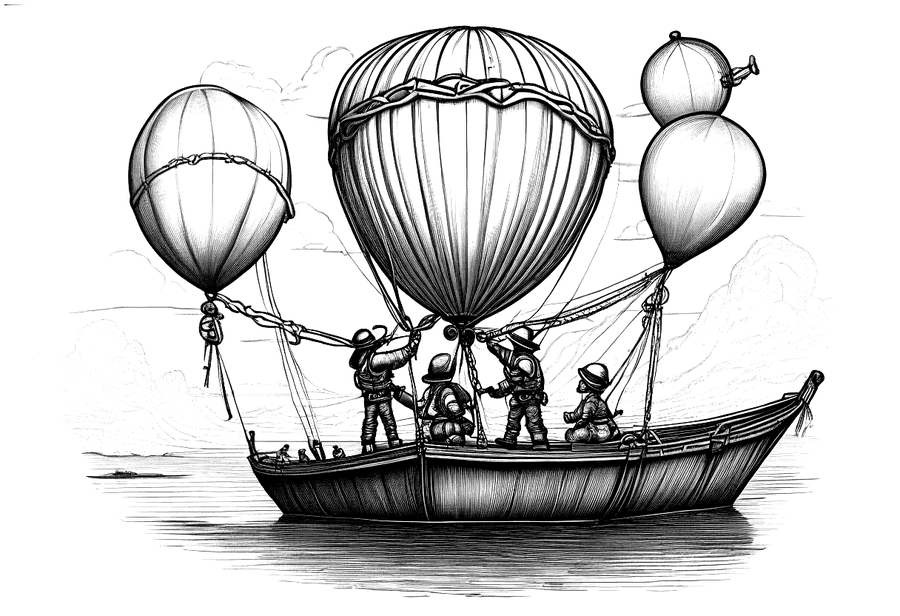
| Marrow-gas | The vents of Foleleyme, sold at Brasswhistle's Drift | 4 cr a barrel at the Drift; 30 cr to fill a small sky-ship's envelope at the works | Sold by the barrel only at the Drift. In Kamiechia it may be sold only through the Toll Office. | Lifts five times what hot air does, and burns like the sun if it catches. |
| Envelope silk | Kushi weavers, oiled and stitched by the Chartered Lanternwrights; patched with giant-spider silk | 2 cr a yard oiled; giant-spider silk 5 cr a pound raw in Myrnamon and Kushi | Building a sky-ship without a charter is death in Kushi, and selling envelope silk to the uncharted is treated as helping to build one. | A lantern-brig takes three envelopes. Tebek's pirate kites are patched with stolen silk and anything else that holds air. |
| Merlish broadcloth | Torkburgh and Macham fulling mills | 6 sh a yard, black; 4 sh in grey | Each bolt carries the Moot's lead cloth-seal; selling unsealed cloth as Merlish is fined at the bolt's value. Prize bolts sold in Lantern Cove go at a third of that. | Every burgess's black coat is made from it, and every forger of letters of credit wears one. |
| Orcosian glass and lenses | The Glassworks of Orcos, from Orcosian white sand | Reading-lens 3 sun-reals; burning-glass 4 sh; glass-sand 2 d a sack at the pit | Lenses for the Lamp of the Chain are ground under a Sun Temple seal, and selling a lens as 'Lamp-ground' without it is a noon penance. | The Honey Years made Fuempild lens-grinders famous; their reading-lenses are in every library from Fagervik to Meedihar. |
| Waste glass | The edge of the Glass Waste | 5 sh a slab for windows in Meedihar; 'Bretbury glass' 1 siglos a shard in Qaqah | The Caliph's law forbids selling Waste glass: the seller's hands are bound in glass-cloth for a month. The Company does not care. | Most 'Bretbury glass' comes out of a kiln in Qaqah. Glass from the heart of the Waste is never sold, because nobody comes back with any. |
| Choir-glass | Broken Glassborn | 10 cr a shard in Meedihar | The Successor-Caliph takes the hand of anyone caught buying it. | It rings when touched. Glassborn do not forgive the trade. |
| Furs | Kovavikia and the taiga, sold in the Gogur Fur Market | Sable 1 cr to the trapper, 3 cr in Gogur; wolverine 1–3 cr; fur cloak 2 cr; ice-bear pelt 40 cr | Theft from the Fur Market is punished by turning out into the taiga in winter. | Prices are down because the Hoarspine passes are shut. Kushi buys through Raugarian longships that ignore Fagervik. |
| Honey | Ortonzanian heaths, Orcosia, Igyoszavas | 2 d a pound in Litta, 4 d in Shifton and Orcos; a skep of bees 2–3 sh | Fuempild priests bless the Hiving swarms; stealing a skep in Orcosia is confessed at noon and paid for twice. | Remembered as a luxury since the Year Without Bees in 674. Orcosians put it in everything. |
| Pepper | Company plantations around Meedihar | 1 sh a pound in Meedihar; 5 sh in Shifton | Company sales tax is one part in twenty-five. Pepper-pickers are paid in tin tokens good only at the Company store. | Pepper-pickers say a note that rustles on a still night is about to fall in value. |
| Cane-sugar | The Company and Kaporesia | 3 d a pound in Meedihar or Myrnamon; 1 sh in Shifton | Company tax as above; Kaporesia taxes cane at the mill. | Elladan rowers chew it raw. Merlish children have never had so much, or so many bad teeth. |
| Kahpian coffee | Kahpia, sold through Meedihar | 2 sh a pound in Shifton; a cup in a Towers coffee-house 2 d | None, yet; the Moot is debating a coffee duty to pay for the war. | Bitter-bean coffee drunk from tiny cups at the Sea Exchange, and from large ones by Shifton clerks who never sit down. |
| Pearls | The Southwestern Isles and the Kaporesian reefs | 30 cr for a good pearl on the beach, 100 cr in the north; a black pearl 500 cr | Kushi law takes a tenth of every pearl; the Tebek Articles take a share by vote. | Halmi children dive for pearls from twelve. Divers go deaf in middle age. |
| Ivory | Kahpia (licensed, from elephants that died naturally) and the Valsiarian forests (poached) | 3 cr a pound at Kanpaa, 6 cr in Orcos | Killing an elephant is a capital crime or exile across the south; Kahpian ivory belongs to the temple without a licence. | The Tulpio Tigers sell carved tusk-stripes as charms at 2 sh. |
| Watered steel | Kahpia and the Sunhold forges, sold in Meedihar and Haruwayh | A true tier-4 blade 600 cr at the Sea Exchange; ordinary watered blades 40 mithqal in Haruwayh or 60 cr in Meedihar | None, which is why it is the only tier-4 blade you can simply buy. | The difference between 60 cr and 600 cr is whether the ripples go all the way through. Most buyers cannot tell. |
| Sunhold steel | The Hoarfolk of Sunhold, under the Sunward Crown | 3 siglos a pound at the mountain foot; a sword 50 siglos in Shahpabad | Breaking Ember Deep's seals brings Hoarfolk banishment and Kahpian law. | Sunward gold fetches a tenth less than lowland gold, because it is thought cursed. Sunward steel is not, yet. |
| Utturi bark | Valsiaria, from the Soumi druids' forests | 1 sh a dose | Felling one of Utturi's marked trees is punished by exile, and the druids mark more every year. | The only cure for marsh ague. Half of what is sold in the north is willow-bark with a Soumi accent. |
| Magenta dye | The dye-vats of the Elephant Lines, Shahpabad | Ground dye 5 siglos an ounce in Colossus Square; magenta silk 4 siglos a yard | Magenta is reserved for the Shah's court, the temple elephants and their priests; commoners may wear a single thread. | Dyers are stained to the elbow and can be picked out in any crowd in Qabahrah. |
| Madder and woad | The dye fields of Balsozhia and Hajhia | 4 d a pound of madder root; woad balls 3 d | Balsozhia has forbidden sale to Hajhia since the war began, so Hajhian dyers buy it from the Tallians at three times the price. | Worked by women in the Balsozhian fields; the root that makes Merlish red coats. |
| Kohl | Asraha and the Qashari oases | 2 qirat a pot | None. Every caravan-master requires it, and drovers without it are left at the last well. | Prevents glass-eye, which is cheaper than the leopard-priests' salve at 3 sh. |
| Company notes | The Print Yard at the Sea Exchange, Meedihar | Face value 10 cr; worth 10 only in Company ports, 7 cr in Flokburgh ports this summer, a third of face at Meybid | Forging one is a hanging matter; passing one knowingly means a branded hand and twenty years' indenture. | The Sand Ledger forges them; the southern free captains pay the Toll of the Chain in them. |